Sodium silicate, Na₂O·nSiO₂, is a glass made from silica sand and soda, sold as lumps of solid glass or dissolved in water as a viscous liquid, water glass. Grades are described by their ratio of silica to soda: the alkaline grades, at a weight ratio of about 2.0–2.5, carry more soda than the neutral grades at about 3.3.
In water systems a few milligrams of silica per litre lay down a thin silicate film on pipe walls that slows corrosion of steel, copper and lead, and keeps iron and manganese in solution. The same alkalinity and silica make it a detergent builder, a peroxide stabiliser in bleaching and a binder for cements, foundry sand and adhesives. It is alkaline and damages the eyes: wear eye protection.
Identity
Formula
Na₂O·nSiO₂
Ratio
SiO₂:Na₂O 2.0–2.5
CAS
1344-09-8
Sodium silicate, alkaline · water glassWhy Sodium silicate
Corrosion controlForms a protective silicate film on steel, copper and lead pipe at low doses.
Liquid or solidLiquid ready to dose or blend; solid glass for the lowest freight per tonne of silica.
Not dangerous goodsAlkaline grades in this ratio range are not regulated for transport under most SDSs.
Documented qualityEach offered batch comes with its Certificate of Analysis and safety data sheet.
What Nuroil does on every order
Why choose sodium silicate from Nuroil?
Checked against the batch CoA
Na₂O, SiO₂, ratio, density and insolubles are reviewed on the batch certificate before loading.
Ratio matched to the use
We confirm the ratio and solids your process needs before an offer, not after.
Packed to stay liquid
Sealed drums and IBCs, because liquid silicate skins and sets where it meets air.
One desk, firm offers
FOB, CFR or CIF from our Sharjah trade desk, usually within 24 hours.
02 TECHNICAL DATA
Technical specification.
Weight ratio SiO₂:Na₂O
2.0–2.5, by gradeCalculated from titrations
Na₂O (liquid)
About 12–15%Acid titration
SiO₂ (liquid)
About 29–33%Gravimetric / titration
Total solids (liquid)
About 44–48%Calculated
Density at 20 °C (liquid)
About 1.48–1.56 g/cm³ (47–52 °Bé)Hydrometer
Water-insoluble matter
0.2–0.4% maxGravimetric
Iron (Fe)
0.02–0.05% maxICP / colorimetric
Solid glass
Ratio about 2.0–2.5; Na₂O about 28–33%Titration
Appearance
Clear to slightly hazy, viscous liquid; colourless to pale green glass lumpsVisual
01LIQUID, RATIO ABOUT 2.0
Most alkaline
Higher soda for detergents, cleaners and peroxide bleaching, and a lower viscosity at the same solids.
02LIQUID, RATIO ABOUT 2.4–2.5
General use
The common alkaline grade for water treatment, binders and blending.
03SOLID GLASS
Lowest freight
Lumps of glass with no water to ship, dissolved under steam pressure at the user’s plant.
04NEUTRAL GRADES
Ratio about 3.3, on request
Less alkaline grades for silica sols, coagulant aids and cements, on request.
Selection guidance Tell us the use, the ratio and solids you work to, and whether you can dissolve solid glass on site, and we will confirm the grade and form.
The same silicate in two forms. The right one depends on what you can handle on site.
Property
Liquid
Solid glass
Silicate content
About 44–48% solids
About 100%
Freight per tonne of silicate
Higher, ships water
Lowest
Ready to use
Pump and dose
Dissolve under steam
Storage care
Keep closed and frost-free
Keep dry
Best suited to
Water treatment, detergents, bleaching, binders
Plants with their own dissolvers
03 HOW IT IS MADE
From sand and soda to water glass.
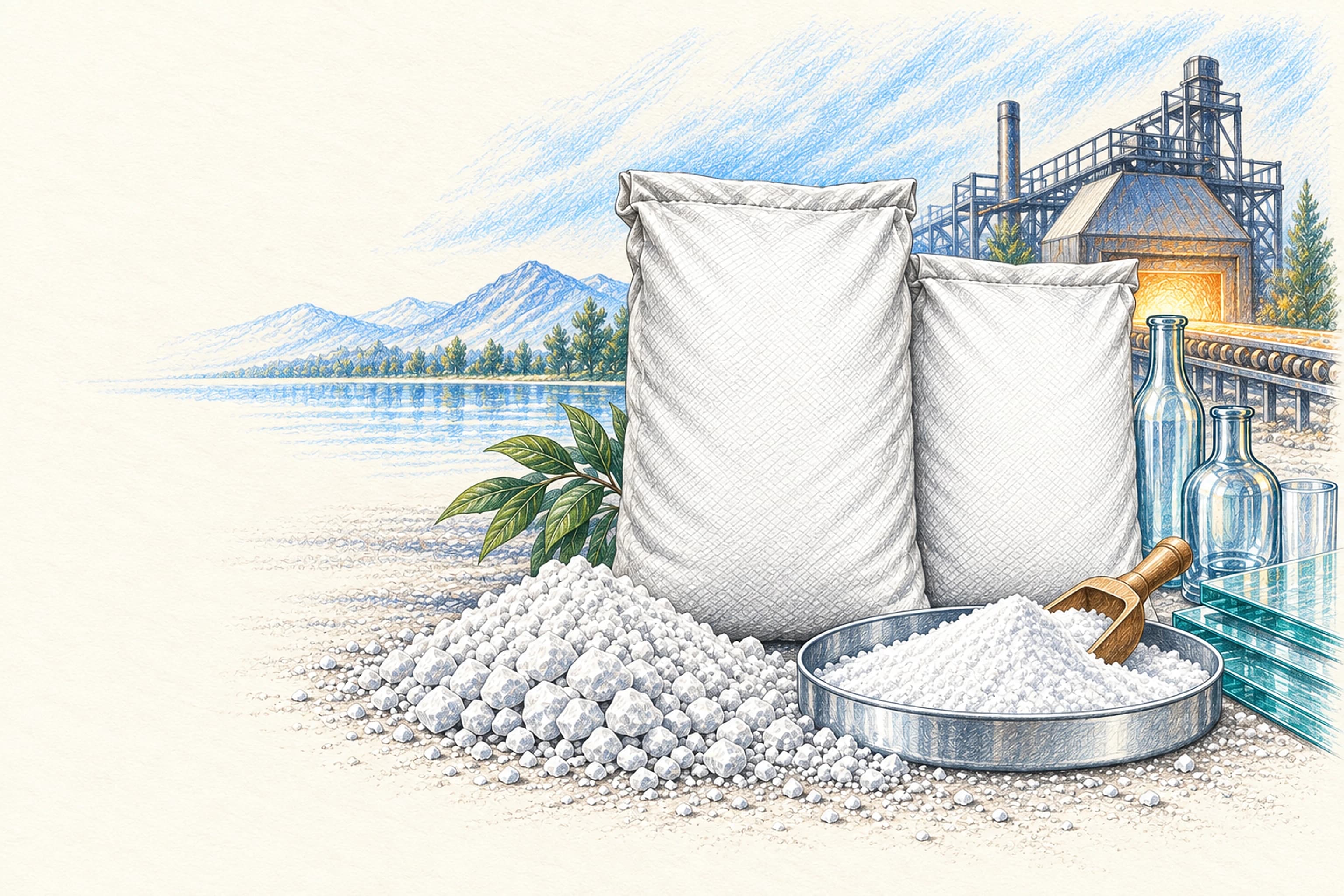
Silica sand and soda ash are melted together in a furnace at about 1,300–1,400 °C, releasing carbon dioxide, to form sodium silicate glass. The cooled glass is sold as lumps or dissolved in water under steam pressure to make the liquid. Some liquid grades are made directly from sand and caustic soda in an autoclave.
01
Sand and soda
Silica sand and soda ash, weighed to the target ratio.
02
Melting
The mix is fused in a furnace, giving off carbon dioxide, to form glass.
03
Dissolving
The glass is dissolved under steam pressure, settled and adjusted to strength.
04
Testing and packing
Each batch is tested for ratio, solids and density and filled into drums, IBCs or bags.
04 APPLICATIONS
Where it works.
01
Corrosion control
Silicate film against corrosion in drinking-water mains and closed and once-through systems.
02
Detergents and cleaners
Builder and corrosion inhibitor in powders, dishwash and industrial cleaners.
03
Peroxide bleaching
Stabiliser for hydrogen peroxide in pulp, paper and textile bleaching.
04
Binders and cements
Binder for foundry sand, refractories, acid-resistant cements and soil stabilisation.
05
Adhesives
Adhesive for paper tubes, corrugated board and laminates.
06
Silica and minerals
Feedstock for precipitated silica and zeolites; dispersant in ore flotation.
05 SAFETY & HANDLING
Alkaline. Protect the eyes.
This summary does not replace the Safety Data Sheet. Review the SDS and site procedure before first handling.
Danger
H315 Causes skin irritation.
H318 Causes serious eye damage.
H335 May cause respiratory irritation (some SDSs).
UN
Not regulated
Transport
Not dangerous goods, per most SDSs
01
Eye protection first
Alkaline grades can cause serious eye damage; wear goggles or a face shield, and gloves.
02
Keep from acids
Acids make it gel and release heat; keep it apart from acids and acid salts.
03
Clean spills at once
Dried silicate is slippery when wet and sets hard; wash spills away with plenty of water.
04
Protect glass and aluminium
It etches glass and attacks aluminium, zinc and tin; use steel or plastic equipment.
05
Exposure response
Rinse eyes immediately with plenty of water for at least 15 minutes and seek medical attention.
Closed, and not too cold.
StoreClosed, 5–40 °C
Liquid silicate skins over in air and thickens when cold; kept closed and frost-free it stays usable for a long time. Confirm the producer’s shelf life with the offer.
Keep containers closedAir dries the surface and carbon dioxide gels it; reseal at once.
Frost-free, not hotCold makes it viscous and freezing can separate it; avoid prolonged heat.
SegregateApart from acids, ammonium salts and aluminium, zinc and tin.
First in, first outUse the oldest stock first and keep the batch label with each lot.
Plan documentation early.
HS code2839.19
CAS number1344-09-8
EC number215-687-4
TransportNot regulated
GHS
Skin irritation; serious eye damage, for ratios of about 1.6–2.6 (per producer SDS)
Transport
Not regulated as dangerous goods for this ratio range, per most SDSs
Drinking water use
EN 1209 and NSF/ANSI 60 grades exist; confirm local approval for potable water
National regulations
Confirm the destination’s import requirements
06 PACKING OPTIONS
Choose your packing.
Pack sizes and container loads depend on the producer and form; the offer confirms them.
Small quantities
Drums
Plastic or steel drums of liquid, commonly 250–300 kg.
It is the weight ratio of silica (SiO₂) to soda (Na₂O). Alkaline grades, about 2.0–2.5, carry more soda and are more alkaline; neutral grades, about 3.3, carry more silica.
02How does sodium silicate control corrosion?
At a few milligrams of silica per litre it deposits a thin silicate film on metal surfaces, which slows corrosion and the release of iron, copper and lead into the water. It also raises pH slightly.
03Liquid or solid glass?
Liquid is ready to dose. Solid glass ships no water, so it costs less to move, but it needs steam dissolving equipment at your plant.
04Is it dangerous goods for shipping?
Alkaline sodium silicate in this ratio range is not regulated for transport under most producer SDSs. Very low-ratio grades can be; we confirm against the offered grade’s SDS.
05What is the HS code?
Sodium silicates other than metasilicates are usually classified under HS 2839.19. The CAS number is 1344-09-8.
06What documents come with a shipment?
A Certificate of Analysis and Safety Data Sheet, with the Certificate of Origin and shipping documents as required.
Include the ratio and solids, liquid or solid glass, quantity, packing and destination for a tailored offer. We reply with a firm FOB, CFR or CIF offer, usually within 24 hours.