Tetrasodium EDTA, 99% powder or 38–40% liquid, the chelating agent that holds calcium, magnesium and metal ions in solution in boilers, cleaners and process water.
Tetrasodium EDTA, the sodium salt of ethylenediaminetetraacetic acid, is a chelating agent: each molecule wraps round one metal ion, calcium, magnesium, iron or copper, and holds it in a stable, soluble complex. Ions held this way cannot form scale or react with soaps, peroxide or dyes.
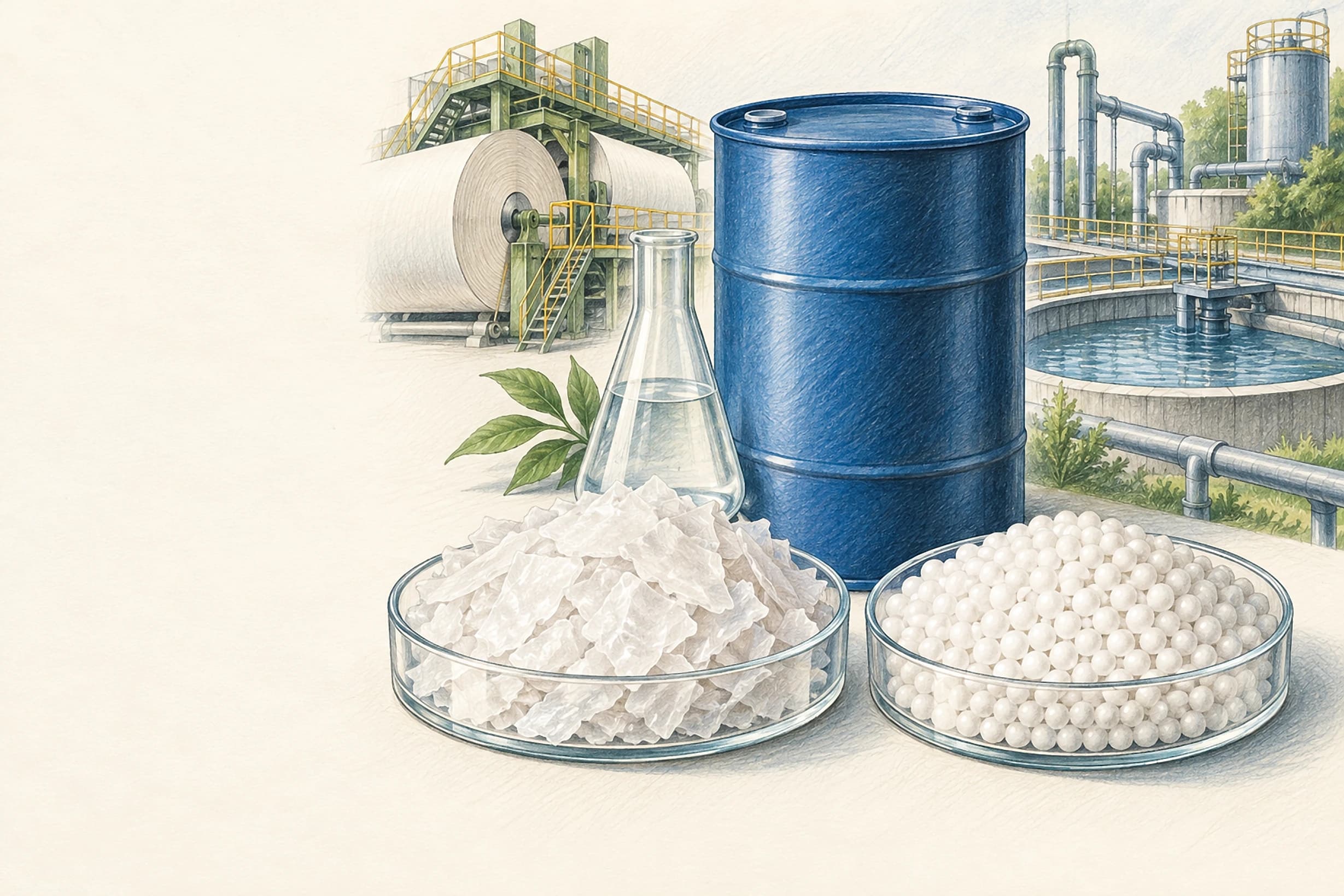
It is sold as a white powder, usually the tetrahydrate at 99%, and as a 38–40% alkaline liquid. Its strength is stated as chelating value, the milligrams of calcium carbonate one gram can hold. It is harmful if swallowed or inhaled as dust and damages the eyes, so handle it with eye protection.
Strong, broad chelationHolds calcium, magnesium, iron, copper and other ions across a wide pH range.
Powder or liquid99% powder for blending and export; 38–40% liquid for direct dosing.
Not dangerous goodsNot regulated for transport under producer SDSs, which keeps shipping simple.
Documented qualityEach offered batch comes with its Certificate of Analysis and safety data sheet.
What Nuroil does on every order
Why choose EDTA tetrasodium from Nuroil?
Checked against the batch CoA
Assay, chelating value, pH and iron are reviewed on the batch certificate before loading.
Strength compared fairly
We quote on chelating value, so powder and liquid offers can be compared on what they actually do.
Packed to stay dry
Lined bags for the powder, which takes up moisture; sealed drums and IBCs for the liquid.
One desk, firm offers
FOB, CFR or CIF from our Sharjah trade desk, usually within 24 hours.
02 TECHNICAL DATA
Technical specification.
Assay, powder (as EDTA-4Na·4H₂O)
99.0% minComplexometric titration
Chelating value, powder
215 mg CaCO₃/g min (typically 215–222)Calcium titration
Assay, liquid (as EDTA-4Na)
38–40%Complexometric titration
Chelating value, liquid
About 100–105 mg CaCO₃/gCalcium titration
pH (1% solution)
10.5–11.5pH meter
Nitrilotriacetate (NTA)
0.1–1% max, by producerHPLC / titration
Iron (Fe)
0.001% maxICP / colorimetric
Density at 20 °C (liquid)
About 1.28–1.31 g/cm³Hydrometer
Appearance
White crystalline powder; clear, colourless to pale yellow liquidVisual
0199% POWDER
Most chelant per tonne
The tetrahydrate powder for blenders, detergent makers and export, at about twice the strength of the liquid by weight.
0238–40% LIQUID
Pump and dose
Alkaline solution for dosing pumps, liquid detergents and continuous processes, with no dust or dissolving.
03TECHNICAL GRADE
Industry
For boiler and cooling-water programmes, cleaning, textiles, pulp and paper.
04COSMETIC GRADE
On request
Higher-purity grades for personal care, with the documents a formulator needs, on request.
Selection guidance Tell us the use, the water hardness or metals to be held, and how you dose, and we will confirm the grade and form.
The same chelant in two forms. The right one depends on how you blend and dose it.
Property
99% powder
38–40% liquid
Chelating value
215 mg CaCO₃/g min
About 100–105 mg CaCO₃/g
Chelant per tonne shipped
Highest
About half
Handling on site
Dissolve, control dust
Pump directly
Moisture sensitivity
Cakes if open
None
Best suited to
Blenders, powders and export
Dosing plants, liquid detergents
03 HOW IT IS MADE
From ethylenediamine to a chelant.
Ethylenediamine reacts with formaldehyde and sodium cyanide in caustic soda solution, releasing ammonia, to form tetrasodium EDTA. The solution is purified and sold as the liquid, or crystallised and dried to powder.
01
Ethylenediamine and formaldehyde
With sodium cyanide in caustic soda solution.
02
Reaction
Cyanomethylation builds the EDTA molecule; ammonia is driven off.
03
Finishing
The solution is purified, then sold as liquid or crystallised and dried.
04
Testing and packing
Each batch is tested for assay and chelating value and packed.
04 APPLICATIONS
Where it holds metals.
01
Boiler water
Chelant treatment that keeps hardness in solution and prevents scale on heat-transfer surfaces.
02
Descaling and cleaning
Removal of calcium and iron deposits from boilers, heat exchangers and pipework.
03
Detergents and soaps
Softens hard water so surfactants work, and stabilises bleach and fragrance.
04
Textiles
Holds metal ions in scouring, bleaching and dyeing for even, bright colour.
05
Pulp and paper
Stops metals breaking down hydrogen peroxide in bleaching.
06
Personal care
Stabiliser and preservative booster in shampoos, soaps and creams, cosmetic grade.
05 SAFETY & HANDLING
Harmful. Protect the eyes.
This summary does not replace the Safety Data Sheet. Review the SDS and site procedure before first handling.
Danger
H302 Harmful if swallowed.
H318 Causes serious eye damage.
H332 Harmful if inhaled.
H373 May cause damage to organs (respiratory tract) through prolonged or repeated exposure by inhalation.
UN
Not regulated
Transport
Not dangerous goods
01
Eye protection first
It can cause serious eye damage; wear goggles or a face shield, and gloves.
02
Control dust
Harmful if inhaled, and repeated inhalation of dust can damage the airways; use extraction or a dust mask.
03
Keep from strong oxidisers and metals
Keep it apart from strong oxidisers; the alkaline liquid attacks aluminium, zinc and copper alloys.
04
Keep out of drains
It carries metals through treatment plants; contain spills and dispose of them correctly.
05
Exposure response
Rinse eyes immediately with plenty of water for at least 15 minutes and seek medical attention.
Dry, sealed and away from metals.
StoreDry, sealed
The powder takes up moisture and cakes; the liquid is stable in closed plastic or stainless steel containers. Producers commonly state about two years. Confirm the shelf life with the offer.
Keep containers closedReseal bags at once; moisture makes the powder cake.
Dry, ventilated storeUnder cover, off the floor and out of humid air.
SegregateApart from strong oxidisers and acids; liquid away from aluminium, zinc and copper.
First in, first outUse the oldest stock first and keep the batch label with each lot.
Plan documentation early.
HS code2922.49
CAS number64-02-8
EC number200-573-9
TransportNot regulated
GHS
Acute toxicity (oral, inhalation); serious eye damage; organ damage on repeated inhalation (respiratory tract)
Transport
Not regulated as dangerous goods, per producer SDSs
Cosmetic use
Listed as Tetrasodium EDTA (INCI); cosmetic grade on request
National regulations
Confirm the destination’s import requirements
06 PACKING OPTIONS
Choose your packing.
Pack sizes and container loads depend on the producer and form; the offer confirms them.
Smaller orders
Lined bags
25 kg paper or woven bags with a polyethylene liner, palletised, for the powder.
The milligrams of calcium carbonate one gram of product holds in solution. It is the fairest way to compare grades: 99% powder is about 215 mg CaCO₃/g; 38–40% liquid about 100–105.
02How is EDTA used in boiler water?
In chelant programmes a measured dose keeps calcium and magnesium in solution so they pass out with the blowdown instead of forming scale. It is also used, at higher strength, to clean scale and iron oxide from boilers. Overdosing can attack steel, so dose to the hardness.
03What is the difference between EDTA-4Na and EDTA-2Na?
Tetrasodium EDTA is alkaline (pH about 11) and very soluble. Disodium EDTA is mildly acidic (pH about 4.5) and less soluble, and is preferred where a near-neutral product is needed.
04Is it dangerous goods for shipping?
No. Tetrasodium EDTA is not regulated for transport under producer SDSs, though it is classified as harmful and damaging to the eyes for handling.
05What is the HS code?
EDTA and its salts are usually classified under HS 2922.49. The CAS number is 64-02-8; the tetrahydrate is also sold under 13235-36-4.
06What documents come with a shipment?
A Certificate of Analysis and Safety Data Sheet, with the Certificate of Origin and shipping documents as required.
Include the form (powder or liquid), grade, quantity, packing and destination for a tailored offer. We reply with a firm FOB, CFR or CIF offer, usually within 24 hours.