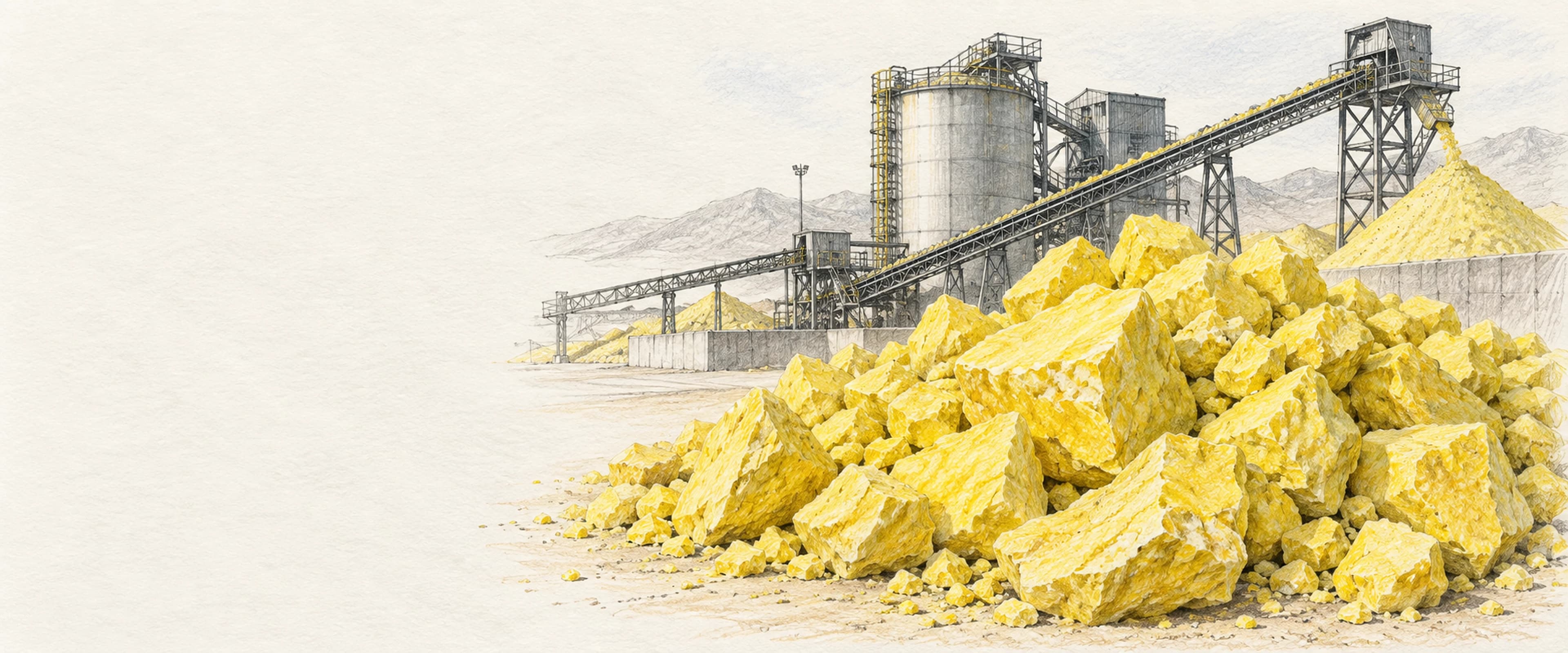
Most sulphur travels as a bulk solid, stockpiled outdoors at terminals and plants. Crushed sulphur has sharp edges that break into fines and dust as it is moved.
SULPHUR / A GUIDE
Forms of sulphur.Same element, different shape.
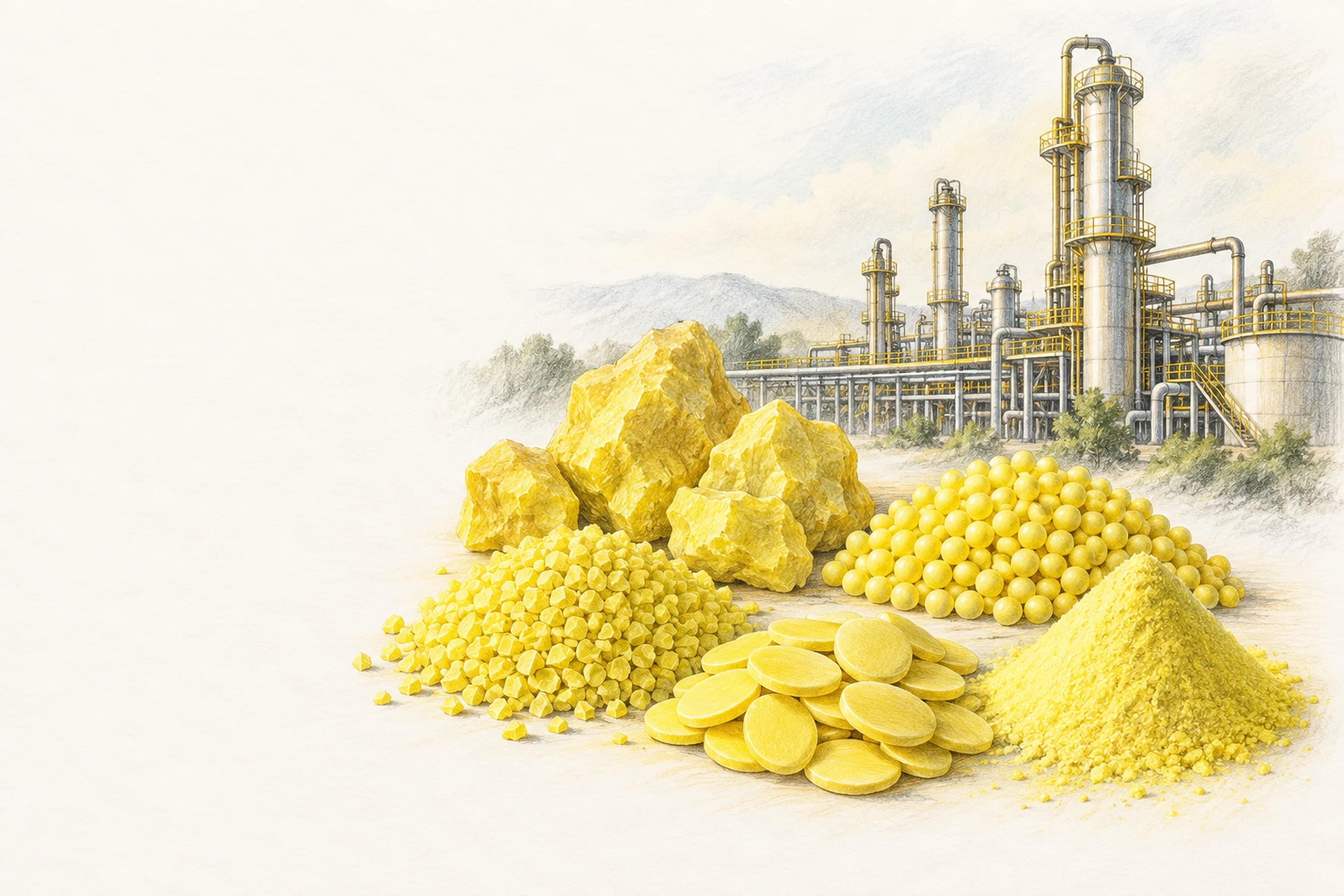
Elemental sulphur is solidified into lumps, slates, bricks, prills, pastilles, granules and powder, or moved molten. The form decides how it handles, how much dust it makes and where it is used.
Sulphur8 forms
Forms8solid and molten
Supplied by Nuroil5solid forms
Molten at~140°C
Granule size1–6mm
On this page
01 / WHY FORM MATTERSSolid sulphur
Solid sulphur
is hard to handle.
Forming molten sulphur into regular particles, such as granules, prills and pastilles, cuts dust and makes the product easier and safer to store, ship and dose.
Bulk solidMost traded
FormedLow dust
MoltenKept at ~140°C
PuritySet by spec
02 / THE FORMSEight ways
Eight ways
sulphur is supplied.
The first five are the forms Nuroil supplies. Open one for its specification and packing.
Granular sulphur
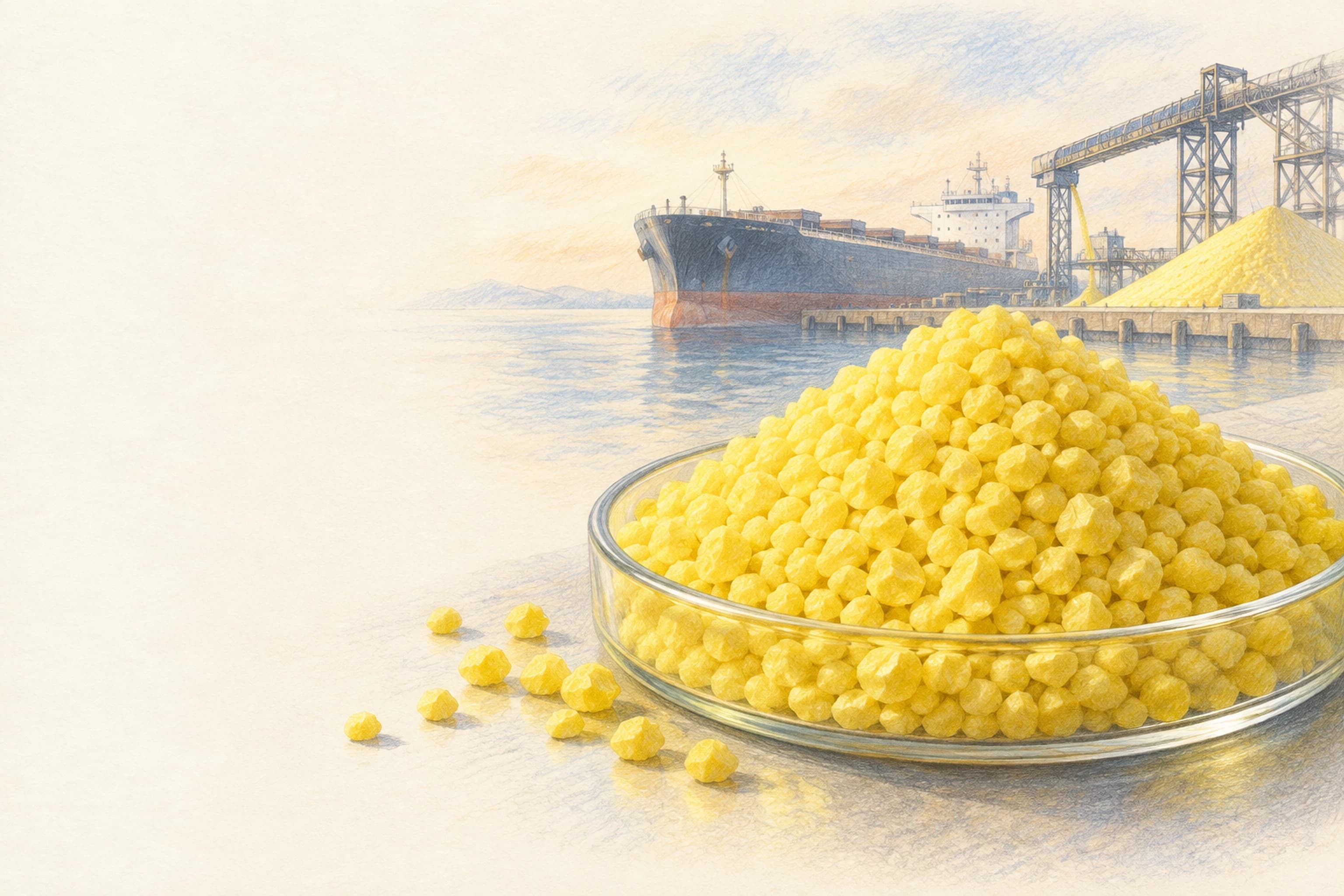
Seeds are coated with layer after layer of molten sulphur until they reach 1 to 6 mm. Dense, spherical and low in dust.
View specification ↗Lump sulphur
Irregular pieces broken from large poured blocks, with sharp edges that create fines in handling. Usually melted on site.
View specification ↗Prilled sulphur
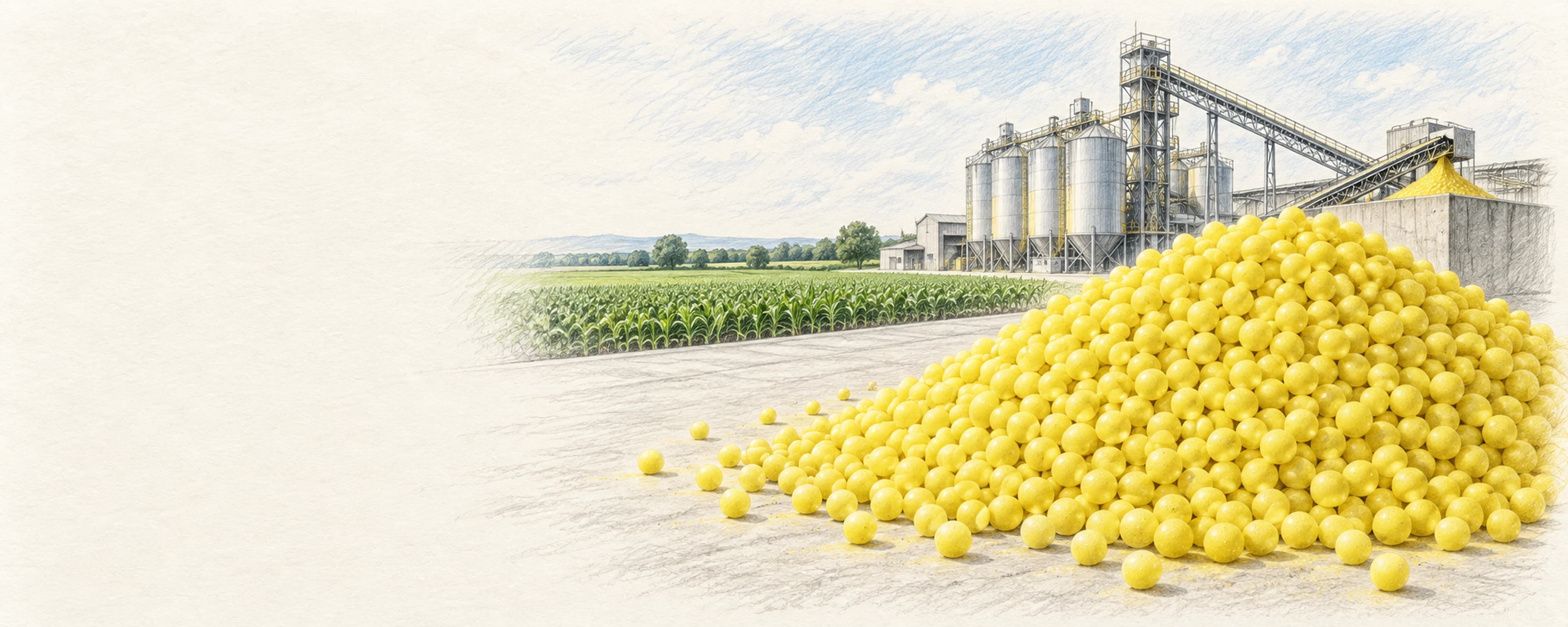
Molten sulphur streams into an agitated water bath and sets as spherical, uniform, low-moisture pellets.
View specification ↗Pastillated sulphur
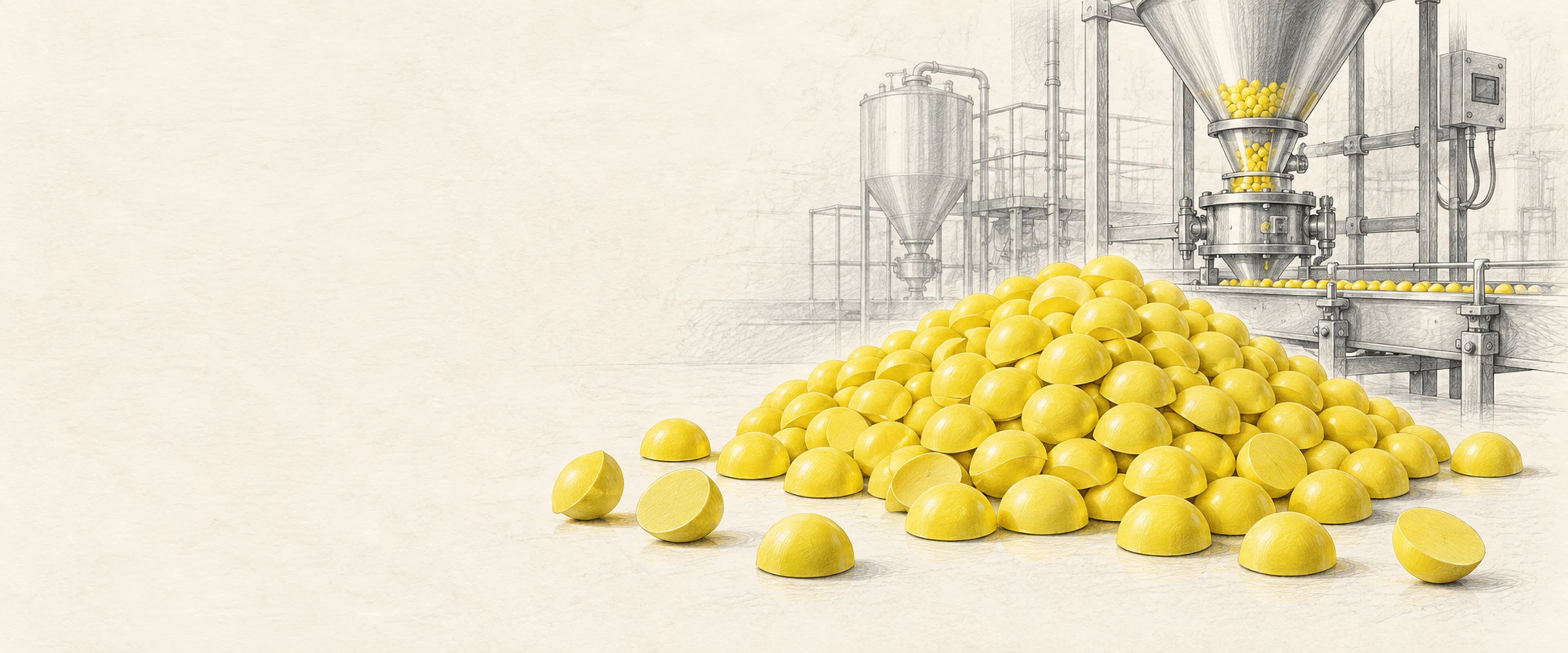
Metered drops set on a cooled steel belt as hemispherical pastilles with a small dimple and very even size.
View specification ↗Powder sulphur
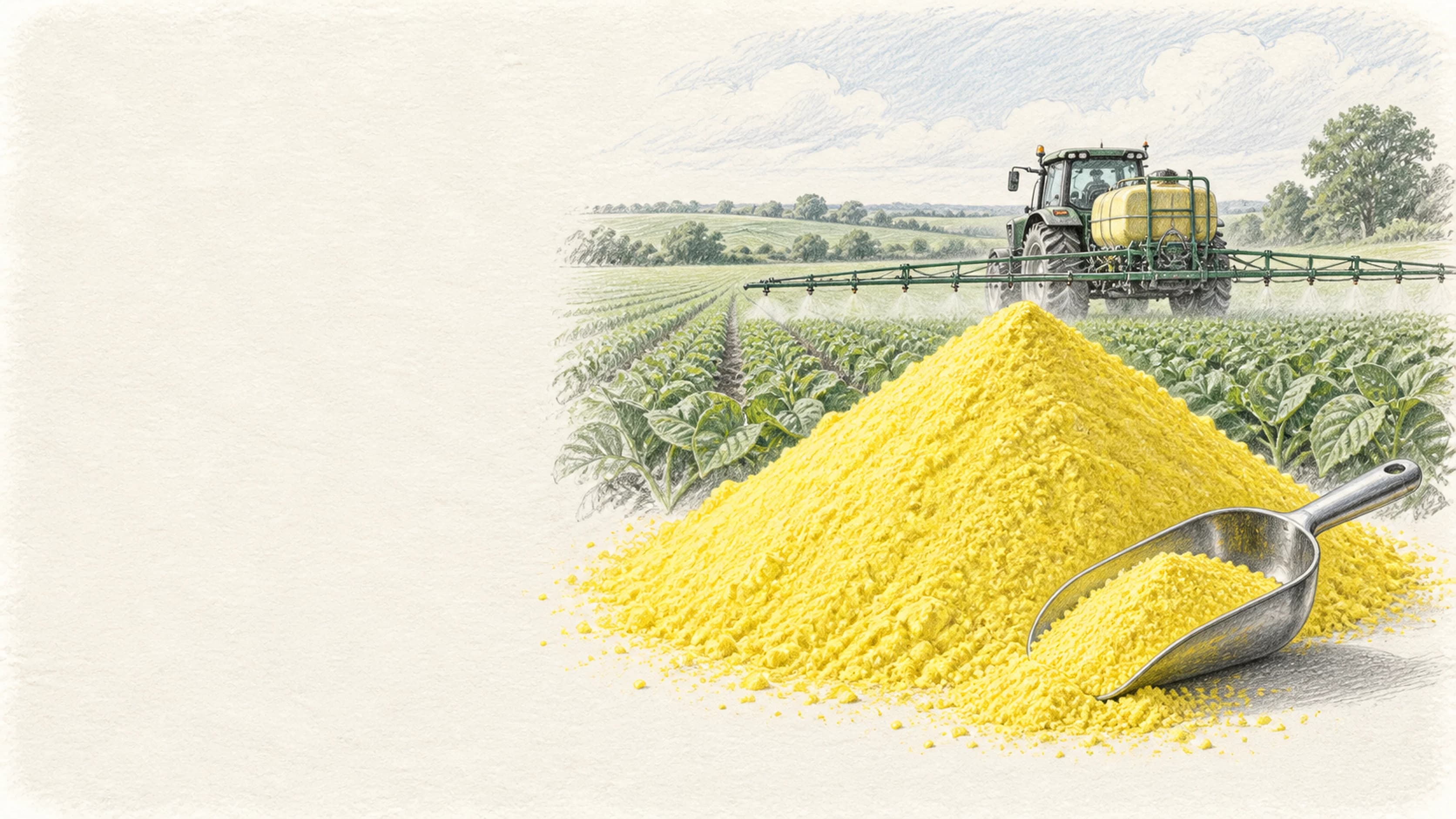
Solid sulphur milled to a fine powder for fast reaction and direct use in agriculture and rubber.
View specification ↗Slated sulphur
Molten sulphur poured as a 3 to 5 mm sheet on a moving belt, then broken at discharge. Low cost, high volume, about 3.5% fines.
Moulded sulphur
Refined sulphur cast into half-cylinder bricks of about 0.75 to 1.5 lb, used in oil refining, steel and secondary smelting.
Molten sulphur
Moved hot in insulated or heated tank trucks, railcars and ships, straight to sulphuric acid and chemical plants.
03 / SIDE BY SIDEHow the forms
How the forms
compare.
Shape, size and dust decide handling. Purity is set by the specification, not the form.
| Form | Shape | Size | Dust | Typical use |
|---|---|---|---|---|
| Granular | Spherical granules | 1 to 6 mm (2.4 to 4.4 mm typical trade) | Low | Trading, fertilizer and acid plants |
| Lump | Irregular, sharp-edged | Variable | High | Melting on site for acid production |
| Prilled | Spherical pellets | Uniform | Low | Fertilizer and chemical plants |
| Pastillated | Hemispherical pastilles | Very uniform | Very low | Precise dosing, chemicals |
| Powder | Fine particles | Fine, screened | Handle as dust | Agriculture, rubber vulcanisation |
| Slated | Flat irregular pieces | 3 to 5 mm thick | Moderate (about 3.5% fines) | Bulk stockpiling |
| Moulded | Half-cylinder bricks | 0.75 to 1.5 lb each | Low | Refining, steel, smelting |
| Molten | Liquid | Not applicable | None | Acid and chemical plants near the source |
04 / HOW THEY ARE MADEFrom molten sulphur
From molten sulphur
to a solid form.
Every formed product starts as liquid sulphur recovered from oil and gas.
- 01
Slating
A spread pan lays molten sulphur on a slow belt, cooled by air and water into a sheet that breaks at the head pulley.
- 02
Prilling
Perforated trays drop streams into a water bath; prills settle, are dewatered on screens, and undersize is remelted.
- 03
Pastillating
A rotary depositor meters drops at about 125°C onto a steel belt cooled from below; pastilles leave at about 70°C.
- 04
Granulating
A rotating drum sprays seeds with molten sulphur, cooling each coat; screens return undersize as new seed.
05 / MOVING SULPHURSolid or molten,
Solid or molten,
each has its rules.
Solid in bulk
Shipped in any clean bulk carrier, by rail or truck, or containerised in jumbo bags. Holds must be thoroughly cleaned first.
Jumbo bags
FIBC bags in containers suit smaller lots and buyers without bulk receiving facilities.
Molten
Kept near 140°C in insulated or heated tanks and ships. Tanks are dedicated, so return trips often run empty.
Frequently asked questions.
Form, purity, dust and supply.
Question not listed?
Share your grade, destination and packing and we will answer with the offer.
Discuss your requirement ↗01Which sulphur form should I buy?
Granular is the standard traded form: low dust and easy to handle. Lump suits buyers who melt on site. Prilled and pastillated suit plants needing uniform size, and powder suits agriculture and rubber.
02Does the form change the purity?
No. Form describes shape and size. Purity, ash, moisture and acidity are set by the specification, so confirm both before ordering.
03Why does dust matter?
Sulphur dust is a handling, fire and explosion hazard and a loss of product. Formed products such as granules, prills and pastilles keep dust low.
04Do you supply molten sulphur?
Nuroil supplies solid forms in jumbo bags and bulk. Share your requirement if you need molten delivery and we will advise.
05What documents come with a shipment?
A Certificate of Analysis with every delivery. Certificate of Origin, MSDS and inspection reports are available on request.
THE SULPHUR RANGE