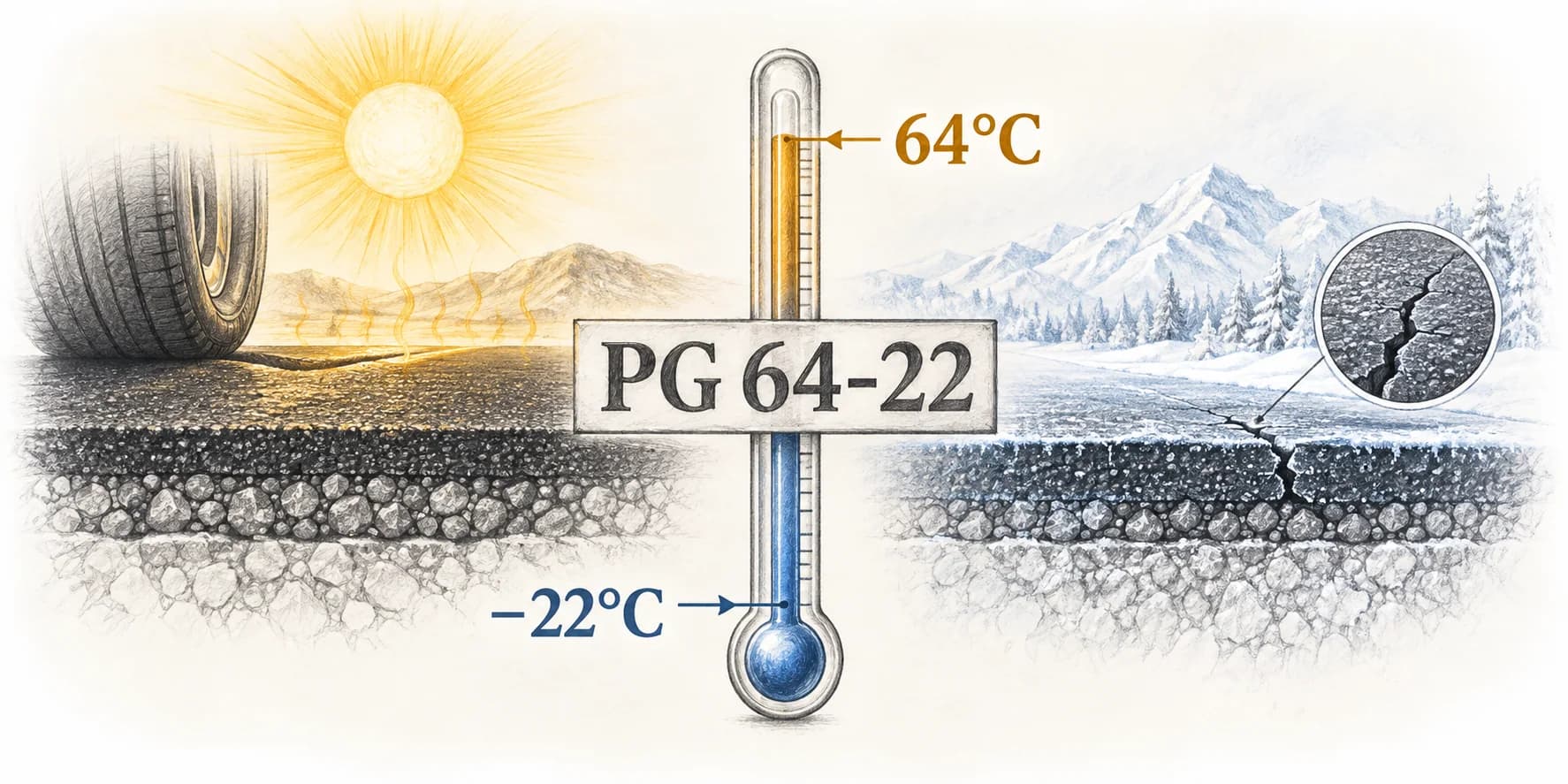
Performance Grade (PG) bitumen PG 64-16 is an asphalt binder formulated to perform under specific temperature conditions. It is categorised within the Superpave Performance Grading (PG) system, which ensures that the binder provides resistance to both high-temperature rutting and low-temperature cracking.
PG 64-16 bitumen offers a good balance of resistance to rutting in hot weather and cracking in colder temperatures down to −16 °C. It is ideal for moderate climates.
PG 64-16 bitumen is supplied to AASHTO M 320-16, the specification for performance-graded asphalt binder: a grade is assigned only after the binder passes all relevant tests at the specified temperatures on unaged and artificially aged samples, for a pavement design range of 64 °C to −16 °C.
Share the PG grade, or the project location if a grade has not yet been determined, and our team will confirm the fit and the supply arrangement.
Identity
Standard
AASHTO M 320-16
Maximum design temperature
Below 64 °C
Minimum design temperature
Above −16 °C
Performance grade bitumen · AASHTO M 320-16Why PG 64-16 bitumen
Graded for the climatePG grades are selected from project climate data, so the binder is specified for the pavement temperatures it will actually see.
Tested to your requirementShare the specified PG grade, or the project location, and the required testing certification when requesting a quote.
Full shipping documentationA Certificate of Analysis travels with every shipment, with the relevant DSR and BBR results. Certificate of Origin and MSDS are arranged on request.
Three UAE load portsFOB is quoted from Jebel Ali, Port Khalid or Sharjah Hamriyah; CFR and CIF destination-port offers are available on request.
Packed for your siteNew steel drums for heated handling, jumbo bags where compatible, or bulk for receivers with heated storage and circulation.
Trade risk handledThe Nuroil team manages transport, insurance, logistics and foreign-currency payments, and can discuss financing options with overseas buyers.
What Nuroil does on every order
Why source PG 64-16 from Nuroil?
DSR and BBR on the CoA
The Certificate of Analysis for each shipment reports the DSR and BBR results.
Grade plus location
Share the specified PG grade, or the project location if a grade has not yet been determined.
Drum to bulk
New steel drums, jumbo bags where compatible, or bulk for receivers with heated storage and circulation.
FOB, CFR or CIF
FOB Jebel Ali, Port Khalid or Hamriyah; CFR and CIF on request.
02 TECHNICAL DATA
Catalogue specification.
Average 7-day maximum pavement design temperature
Below 64 °C
Minimum pavement design temperature
Above −16 °C
Flash point
230 °C minAASHTO T48
Viscosity at 135 °C
3.0 Pa.s maxAASHTO T316
Dynamic shear G*/sin δ at 64 °C, 10 rad/s
1.0 kPa minAASHTO T315
Rolling thin-film oven test (RTFOT)
Residue conditioningAASHTO T240 / ASTM D2872
Mass change, after RTFOT
1.0% wt maxAASHTO T240
Dynamic shear G*/sin δ at 64 °C, 10 rad/s, after RTFOT
2.2 kPa minAASHTO T315
Pressure ageing vessel (PAV) temperature
100 °CAASHTO R28
Show all 13 propertiesShow fewer
Dynamic shear G*·sin δ at 28 °C, 10 rad/s, after PAV
5000 kPa maxAASHTO T315
Creep stiffness S at −6 °C, after PAV
300 MPa maxAASHTO T313
Creep slope m-value at −6 °C, after PAV
0.30 minAASHTO T313
Direct tension failure strain at −6 °C, 1.0 mm/min, after PAV
1.0% minAASHTO T314
PG 64-16 beside the grades nearest to it. The first number is the high pavement design temperature, the second the low; choose the grade your project’s climate data names.
Property
PG 64-10
PG 64-16This page
PG 64-22
PG 70-10
Maximum pavement design temperature
Below 64 °C
Below 64 °C
Below 64 °C
Below 70 °C
Minimum pavement design temperature
Above −10 °C
Above −16 °C
Above −22 °C
Above −10 °C
Polymer modified
Not stated
Not stated
Not stated
Not stated
Flash point
230 °C min
230 °C min
230 °C min
230 °C min
Viscosity at 135 °C
3.0 Pa.s max
3.0 Pa.s max
3.0 Pa.s max
3.0 Pa.s max
Elastic recovery
Not in the table
Not in the table
Not in the table
Not in the table
PAV ageing temperature
100 °C
100 °C
100 °C
100 °C
Typical use
Roads, parking areas and bridges
Highways, urban roads and service roads
Highways, local roads and bridges
Major roadways, runways and bridges
03 APPLICATIONS
Where it is used.
01
Highways and urban roads
Used in urban streets, highways, and rural roads that experience moderate climates. Ensures stability against rutting during warm seasons and resists cracking during mild winter conditions.
02
Parking lots and driveways
Ideal for commercial parking areas, driveways, and access roads where moderate traffic loads are expected. Provides durability under regular vehicle movement without deformation.
03
Industrial zones and service roads
Applied in industrial areas where occasional heavy vehicles are present, but traffic frequency remains moderate. Ensures the pavement can handle thermal stress from temperature fluctuations.
04
Bridges, flyovers, and elevated structures
Used on bridge decks, overpasses, and flyovers to prevent cracking from both traffic stress and temperature changes.
05
Airport runways and taxiways (light duty)
Suitable for airport taxiways and light-duty runways, where it offers moderate resistance to deformation under aircraft loads.
06
Pavement rehabilitation and overlays
Commonly used in asphalt overlays for pavement rehabilitation projects, improving the performance of older roads and preventing further deterioration.
04 SAFETY & HANDLING
Not classified cold. Handled hot, with care.
Performance grade bitumen is stored, pumped and loaded hot. The Safety Data Sheet for the offered grade decides its classification; review it before first handling.
Not classified
GHS Generally not classified as hazardous when cold. Check the SDS for the offered grade.
Hot product Handled hot: contact causes severe burns, and hydrogen sulphide can collect in tank headspace. Per SDS.
UN
Not regulated cold · UN 3257 when shipped hot, per SDS
Transport
Elevated temperature liquid, Class 9, when hot · per SDS
01
Hot product burns
Contact with hot bitumen causes severe burns. Wear heat-resistant gloves, face protection and covering clothing when handling it hot.
02
Hydrogen sulphide in the headspace
H₂S can collect in the headspace of heated tanks and tankers. Ventilate and test the atmosphere before opening or entry, per SDS.
03
Grade temperature
Use storage and application temperatures appropriate to the exact grade.
04
SDS controls
Follow grade-specific PPE, ventilation and hot-binder guidance on the Safety Data Sheet for the offered grade.
Handle the specified binder system.
Before orderingTesting package confirmed
Confirm the required PG testing package before ordering, and the heated storage and circulation at the receiving site.
Grade temperatureUse storage and application temperatures appropriate to the exact grade.
Modified gradesApply PMB recirculation and storage-stability controls where relevant.
CertificationConfirm the required PG testing package before ordering.
SDS controlsFollow grade-specific PPE, ventilation and hot-binder guidance.
Standards and test methods.
HS code2713.20
Transport, coldNot regulated
Transport, hotUN 3257
AASHTO M 320-16
US specification for performance-graded asphalt binder, as stated on the grade’s specification
ASTM D6373
Standard specification for performance-graded asphalt binder
AASHTO T315 / T313
DSR and BBR reference test methods
AASHTO T240 / R28
Rolling thin-film oven and pressure ageing vessel
AASHTO T48 / T316 / T314
Flash point, rotational viscosity and direct tension
National or state authority
May add traffic, climate or local test requirements; confirm the exact standard, grade and edition before ordering
05 PACKING OPTIONS
Drums, jumbo bags or bulk.
Packing availability is confirmed for PG 64-16 bitumen and the offered source. Container loads in the planner are typical planning figures; the offer confirms them.
Small quantities
Drums
New steel drums of 200, 180 or 156 kg, or customised, for containerised supply and controlled heated handling.
Typical loads used for planning. Your offer confirms the exact packing and load for the product and source.
720 ft containers
drums
556
Last 20 ft container
94% full
Minimum orderBy grade and packingShare your requirement; feasibility is confirmed with the quote
BulkTank containerFor receivers with suitable heated storage and circulation
DocumentsCoA with every batchSDS and Certificate of Origin on request
06 BEFORE YOU ORDER
Frequently asked questions.
01What does “PG 64-16” mean?
The 64 is the seven-day average maximum pavement design temperature in °C at which the binder resists rutting. The −16 is the minimum pavement design temperature at which it resists low-temperature cracking.
02How do I know which PG grade my project needs?
It is calculated from historical climate data for the specific project location and is normally stated by the design engineer in the project specification. It should not be estimated from general regional impressions.
03Is PG bitumen always polymer modified?
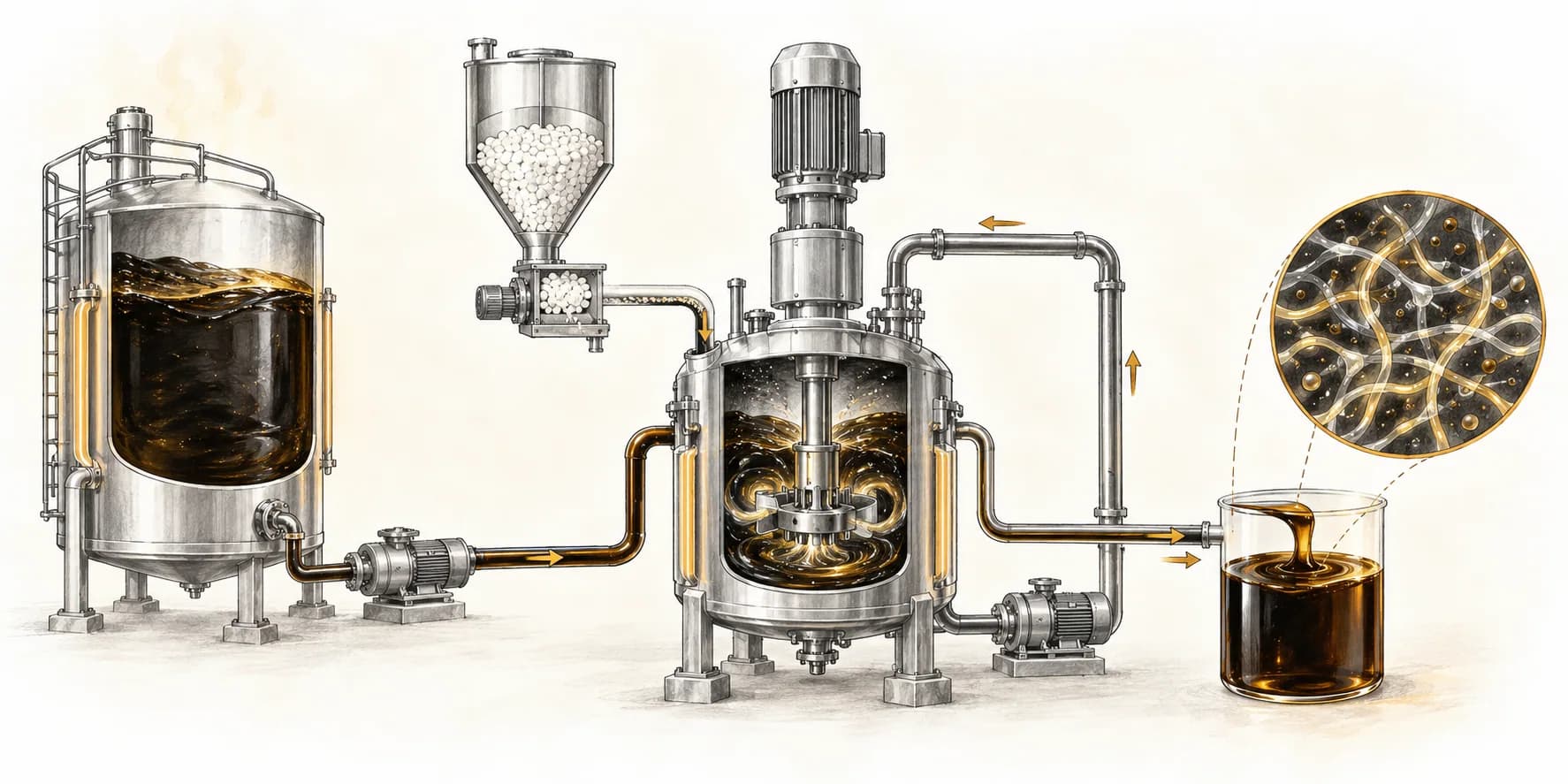
No. Moderate-spread grades such as PG 64-22 may be achieved with straight-run bitumen, while wider-spread grades such as PG 76-16 and PG 82-22 generally require polymer modification.
04What documents come with each shipment?
Every shipment includes a Certificate of Analysis with the relevant DSR and BBR results. Certificate of Origin and MSDS are available on request.
05What packing formats are available?
Drums, jumbo bags and bulk supply are available depending on grade, order quantity and the receiving facilities at destination.
06What Incoterms do you offer?
FOB is commonly quoted from Jebel Ali, Port Khalid or Sharjah Hamriyah. CFR and CIF destination-port offers are available on request.
07Can a PG grade be tested to my project requirements?
Yes. Share the specified PG grade, or the project location if a grade has not yet been determined, and the required testing certification when requesting a quote.
Include the PG grade, quantity, destination, project location if the grade is undetermined, testing specification and packing preference. Our team replies with a tailored offer. We reply with a firm FOB, CFR or CIF offer, usually within 24 hours.