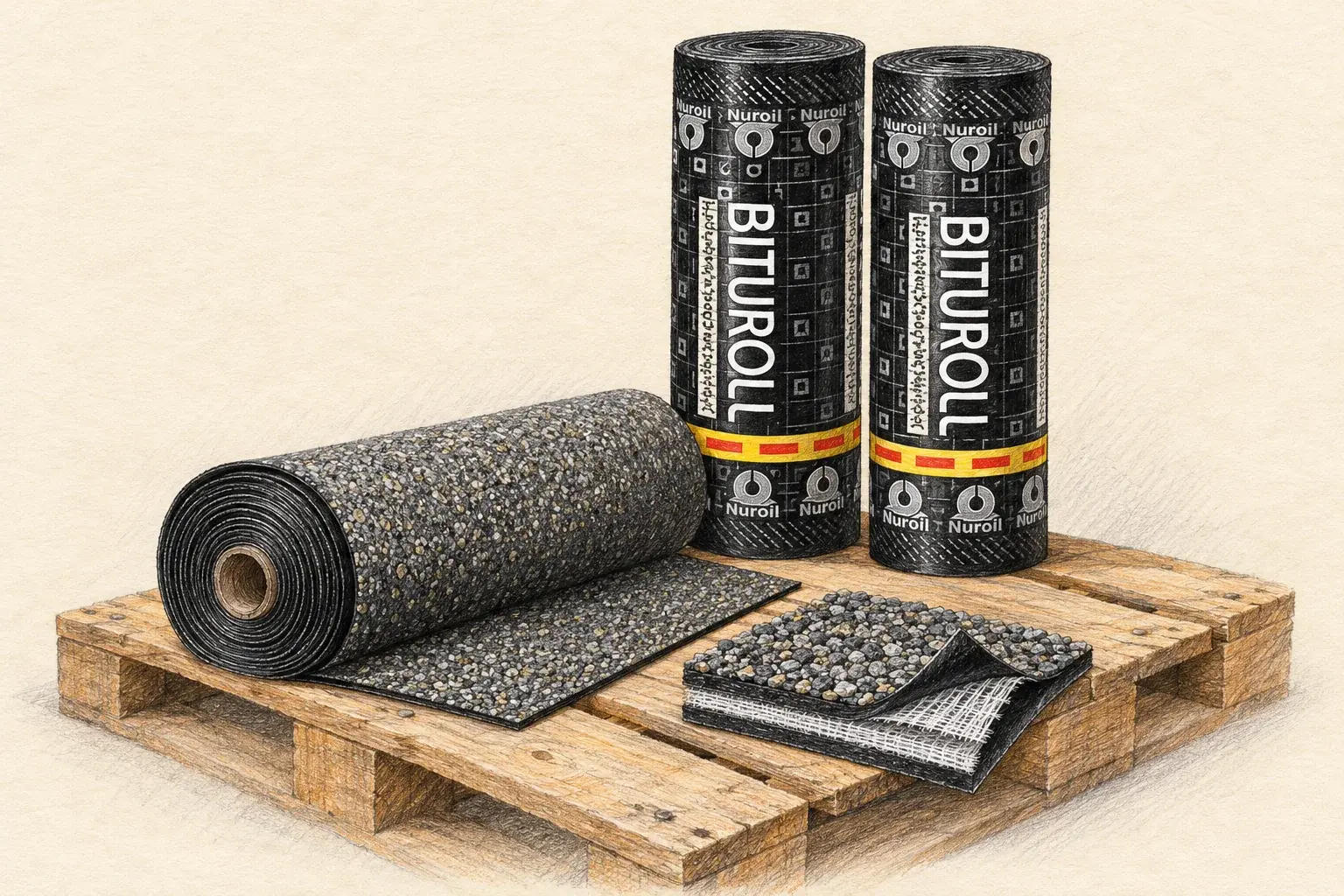
Fibre glass reinforced bitumen membrane is one of the most widely used sheets in building waterproofing, yet it is often specified out of habit rather than because it suits the job. Its glass carrier gives it a particular profile: stable and flat, easy to torch, economical, but with limited stretch. Matching that profile to the right parts of a building is what makes it perform.
Base layer in two-layer roof systems
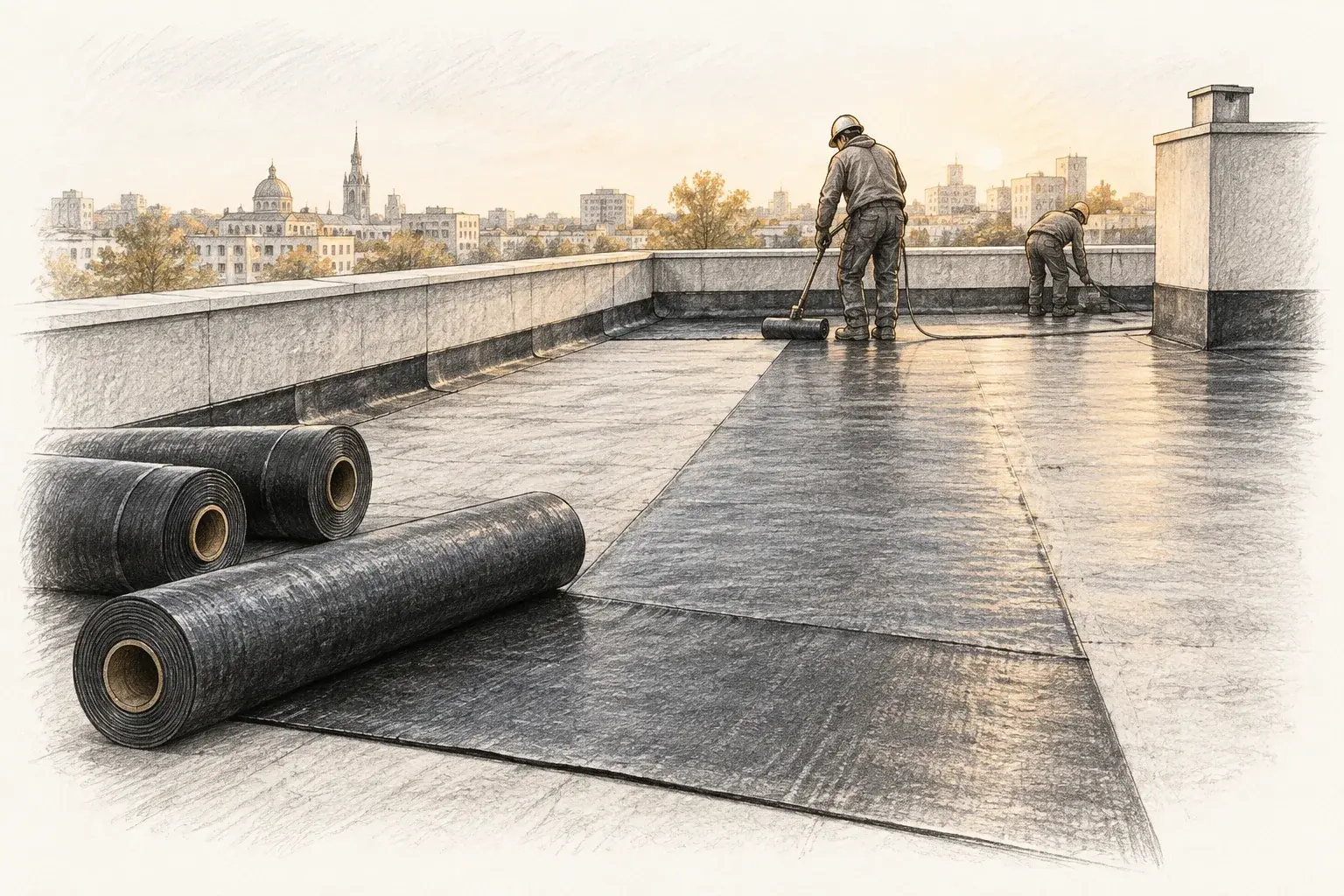
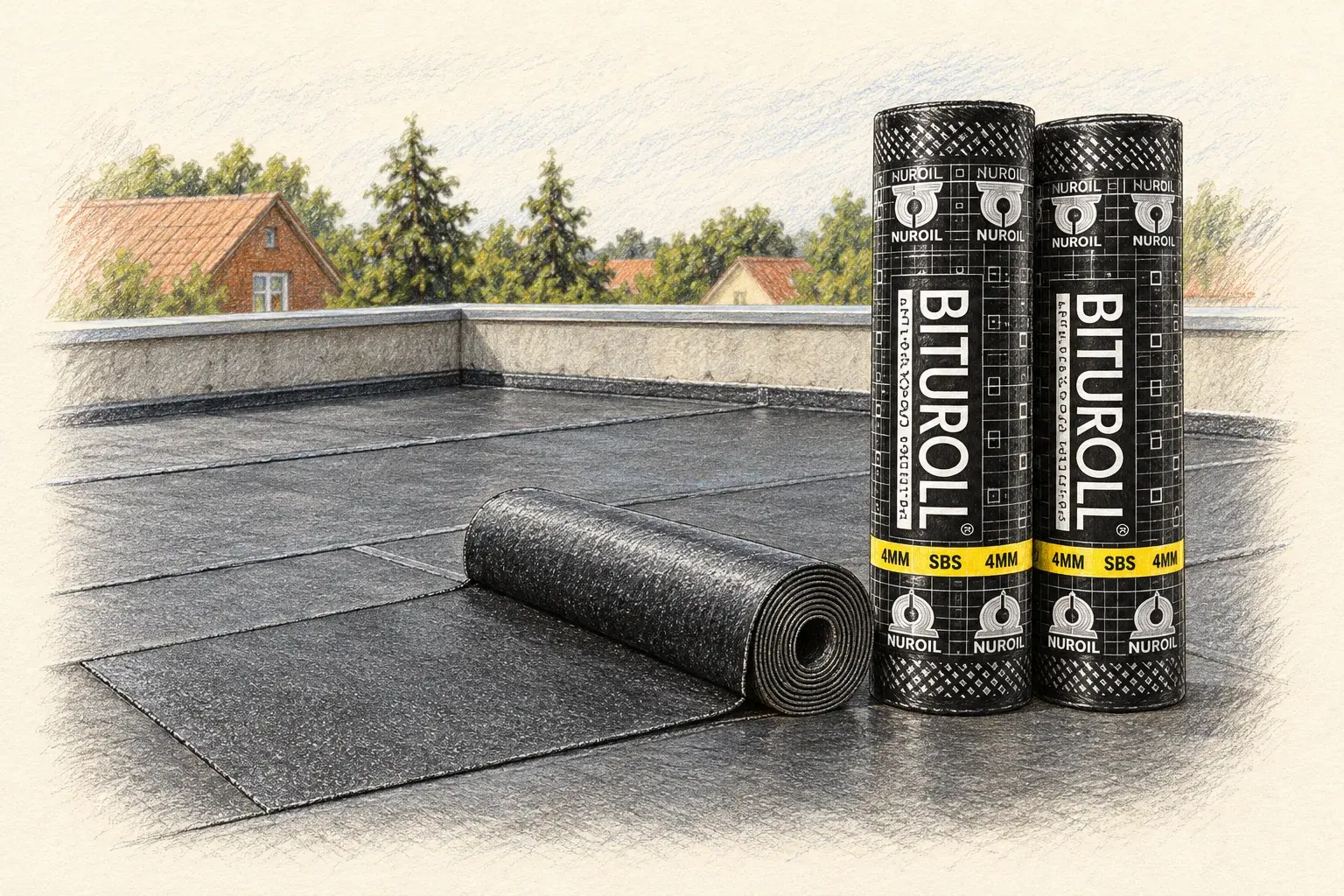
The most common and most suitable use is as the first layer of a two-layer torch-on or bonded roof. The glass base sheet is laid on a primed concrete deck or screed, and a tougher cap sheet, often SBS modified with polyester reinforcement and a mineral or sand finish, is laid on top with offset joints. The glass sheet does not wrinkle or shrink while the cap is torched over it, which helps the installer get flat, well-bonded laps. The cap sheet then takes the sunlight, foot traffic and movement.
Vapour control layers
On warm roofs, a vapour control layer sits under the insulation to stop moisture from inside the building condensing within it. Many bitumen vapour control layers use glass fleece reinforcement, sometimes with an aluminium foil, because the layer only needs to stay intact and resist vapour, not stretch. Datasheets for this type of product typically show elongation of only a few per cent, which is perfectly acceptable in a protected position below insulation.
Below-ground and foundation waterproofing
On rigid, well-cured concrete such as raft foundations, retaining walls and podium slabs, a glass reinforced sheet can be used where the structure is not expected to crack significantly. It must be protected from backfill damage by a protection board or screed. Where the designer expects shrinkage cracking or settlement, a polyester-reinforced sheet is the better choice because it can bridge a crack that opens after installation.
Under tiles, screeds and green roofs
Glass-reinforced sheets are often used as a waterproofing layer under ballast, paving or screed on terraces, where they are shielded from UV and traffic. On green roofs the waterproofing must also resist roots, which needs a sheet specifically tested and declared as root resistant; a standard glass sheet is not enough on its own.
Jobs where it is a poor fit
- Single-layer exposed roofs in hot climates, where large daily temperature swings move the deck.
- Metal or timber decks and other lightweight substrates that flex.
- Expansion joints and junctions with high movement.
- Areas with heavy foot traffic or plant maintenance without a protective layer.
- Locations where nails or mechanical fixings pass through the sheet, since glass mats have lower nail-tear resistance.
| Application | Fit for glass reinforced sheet | Notes |
|---|---|---|
| Base sheet, two-layer roof | Good | Pair with an SBS cap sheet |
| Vapour control layer | Good | Protected position, little movement |
| Rigid foundation or podium | Conditional | Needs protection board; avoid where cracking expected |
| Under paving or screed | Good | Protected from UV and traffic |
| Single exposed layer, hot climate | Poor | Use a reinforced SBS cap sheet |
| Lightweight or metal deck | Poor | Movement exceeds glass mat stretch |
Why matching the sheet to the job saves money
Using glass reinforced sheets where they fit lowers material cost without lowering performance, because the expensive properties of a polyester cap sheet are placed only where they are needed. Using them in the wrong place does the opposite: splits and failed laps on a moving deck cost far more to repair than the saving on the sheet.
Putting it into an enquiry
When requesting fibre glass reinforced membrane, say where it will go (base layer, vapour control, foundation) and what will sit above it. If you also need a cap sheet, include it in the same enquiry so thicknesses, finishes and compounds are compatible. Nuroil supplies both from established producers, with a certificate of analysis for each delivery; use request a quote or contact us to discuss quantities.