Every reinforced bitumen membrane has two parts that do different jobs. The bitumen compound, plain or modified with SBS or APP, keeps water out. The carrier buried inside it gives the sheet its strength, holds its shape and decides how much it can stretch before it tears. Much of the talk about membranes is about the compound. The carrier matters just as much, and the choice between glass fibre and polyester is one of the first decisions on any specification.
What a glass fibre carrier is
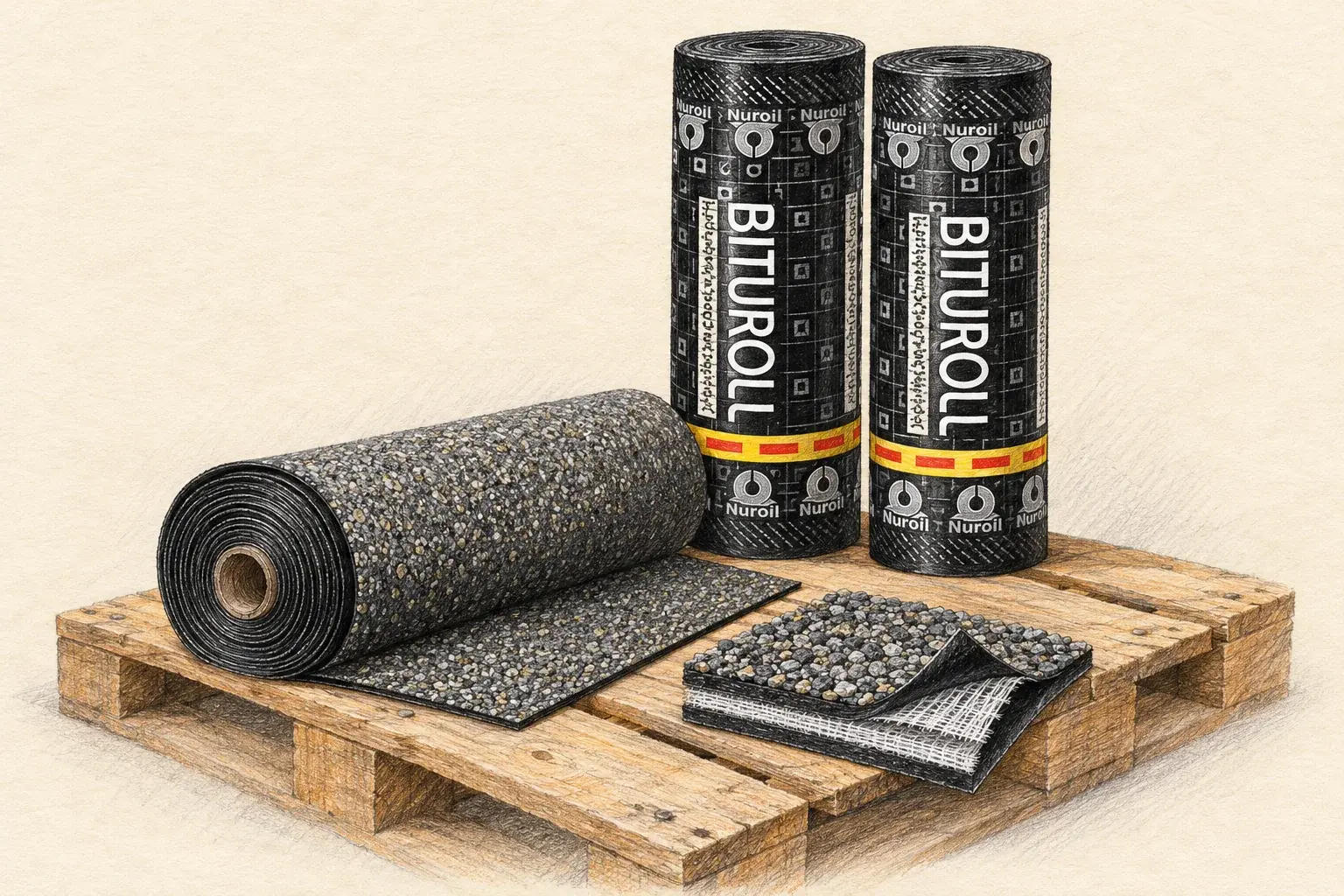
A glass fibre carrier is usually a non-woven mat (often called glass fleece or glass tissue) made from short glass filaments bonded together. Some products add longitudinal glass threads or use a woven glass scrim for extra strength. The mat is soaked in hot bitumen compound and coated on both sides, so it ends up in the middle of the finished sheet. In North America, SBS sheets built on glass fibre are covered by their own material specification, ASTM D6163, separate from the one for polyester-reinforced sheets.
How the two carriers behave
Glass has a high elastic modulus. It hardly stretches, and it does not soften or shrink with heat the way many plastics do. That gives glass-reinforced sheets very good dimensional stability: they stay flat and keep their size when the sun heats a roof or when a torch is played over them. Laboratory work comparing reinforcements to the EN 1107-1 dimensional stability test found that polyester-reinforced sheets moved much more than glass-reinforced ones, and that the type of reinforcement had more effect on stability than the type of bitumen compound.
The trade-off is stretch and toughness. A glass mat breaks at a low elongation, typically a few per cent, and has lower tear and nail-pull resistance than a polyester mat. Polyester carriers are much heavier in elongation (datasheets for polyester SBS sheets commonly declare around 40% in both directions) and resist puncture, tearing and building movement better.
| Property | Glass fibre carrier | Polyester carrier |
|---|---|---|
| Dimensional stability under heat | Very good | Lower; can shrink or ripple if overheated |
| Elongation at break | Low, a few per cent | High, tens of per cent |
| Tear and puncture resistance | Moderate | Good |
| Ability to follow substrate movement | Limited | Good |
| Typical roles | Base layers, underlays, vapour control, stable decks | Cap sheets, single-layer systems, exposed or moving roofs |
When glass fibre is the right choice
- Stable, rigid substrates. Cast concrete slabs and screeds that are well cured and not expected to crack much suit a glass-reinforced sheet.
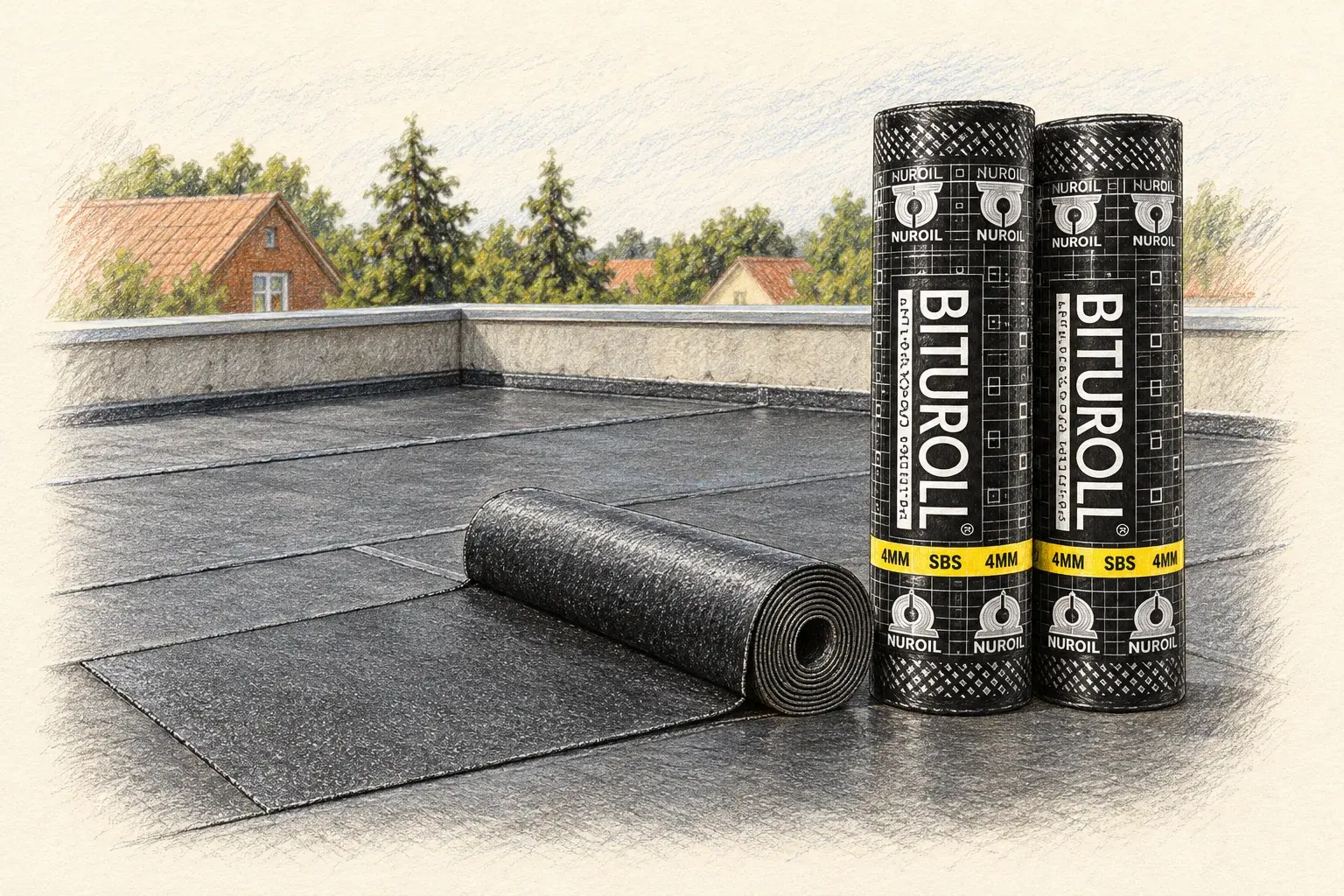
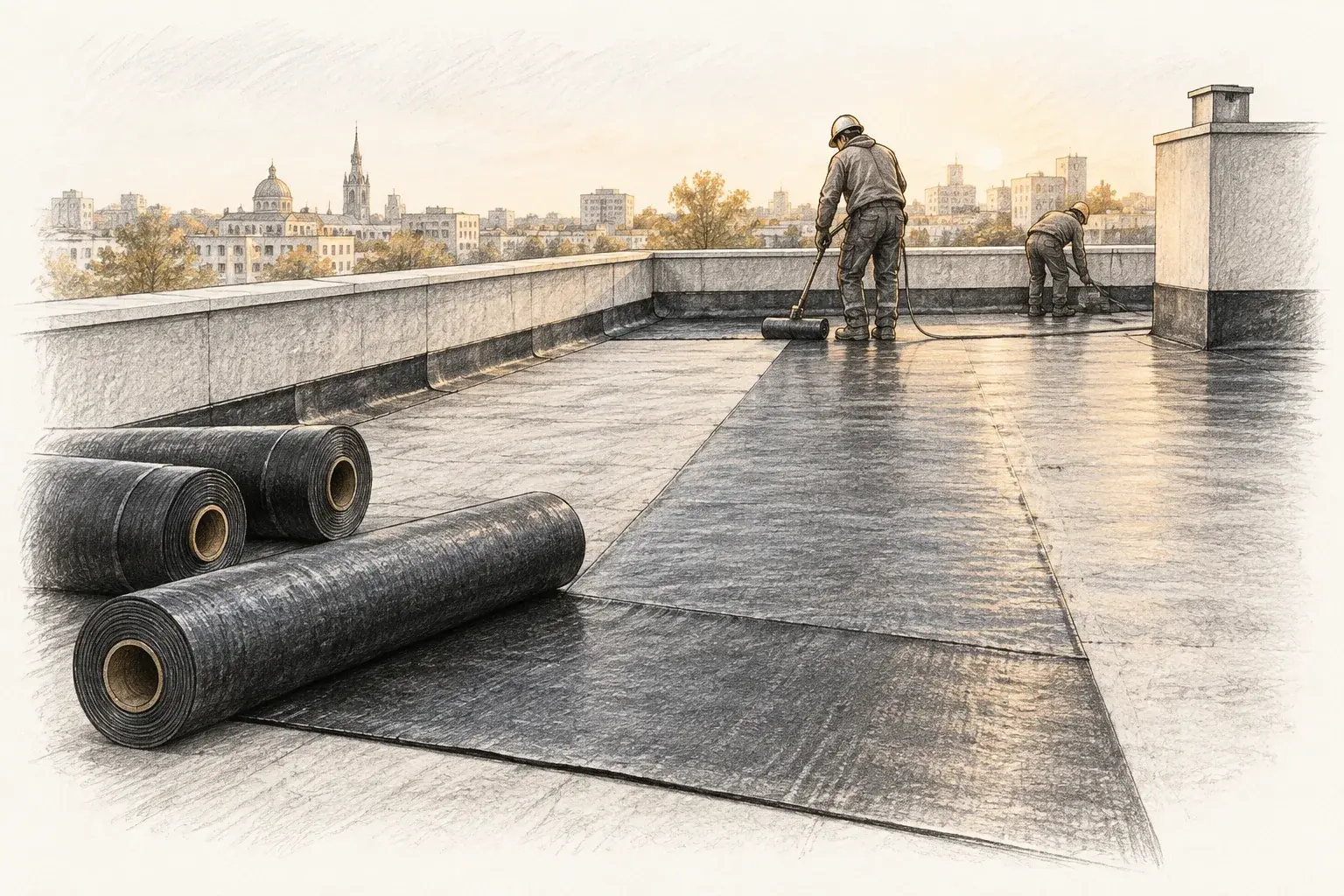
- Base layers in two-layer systems. A glass base sheet stays flat while the cap sheet is torched over it, and the cap sheet supplies the toughness.
- Vapour control and underlays. Many vapour control layers use glass fleece because the job is to stay put and resist vapour, not to stretch.
- Budget-sensitive work. Glass mats are generally cheaper than heavy polyester mats of similar strength.
When to avoid it
Glass fibre is a weaker choice where the membrane must bridge cracks or joints that open and close, on lightweight or flexible decks, on roofs with regular foot traffic, and as a single exposed layer in a hot climate where thermal movement is large. In those cases a polyester-reinforced SBS sheet, or a composite carrier of polyester and glass, is usually the safer specification.
Glass fibre gives a membrane stability; polyester gives it toughness. Pick the carrier for the movement and abuse the roof will see, then pick the compound for the climate.
Specifying the carrier in an enquiry
When you ask for a glass fibre reinforced membrane, state the carrier type and weight if your designer has set one, the compound (oxidised, SBS or APP), thickness, surface finish (sand, film or mineral) and roll size. Ask for the technical data sheet with tensile strength, elongation and dimensional stability values so you can compare it with alternatives. Nuroil can supply fibre glass reinforced membrane alongside SBS modified membrane for the cap layer; send the details through request a quote.