When a waterproofing membrane fails to bond, the primer is one of the first things investigators look at. Water-based bitumen primers are simple products, but they depend on the emulsion breaking and drying properly, and that depends on the weather, the substrate and the way the primer was stored and applied. This guide lists the problems seen most often and what usually causes them.
How a healthy emulsion primer behaves
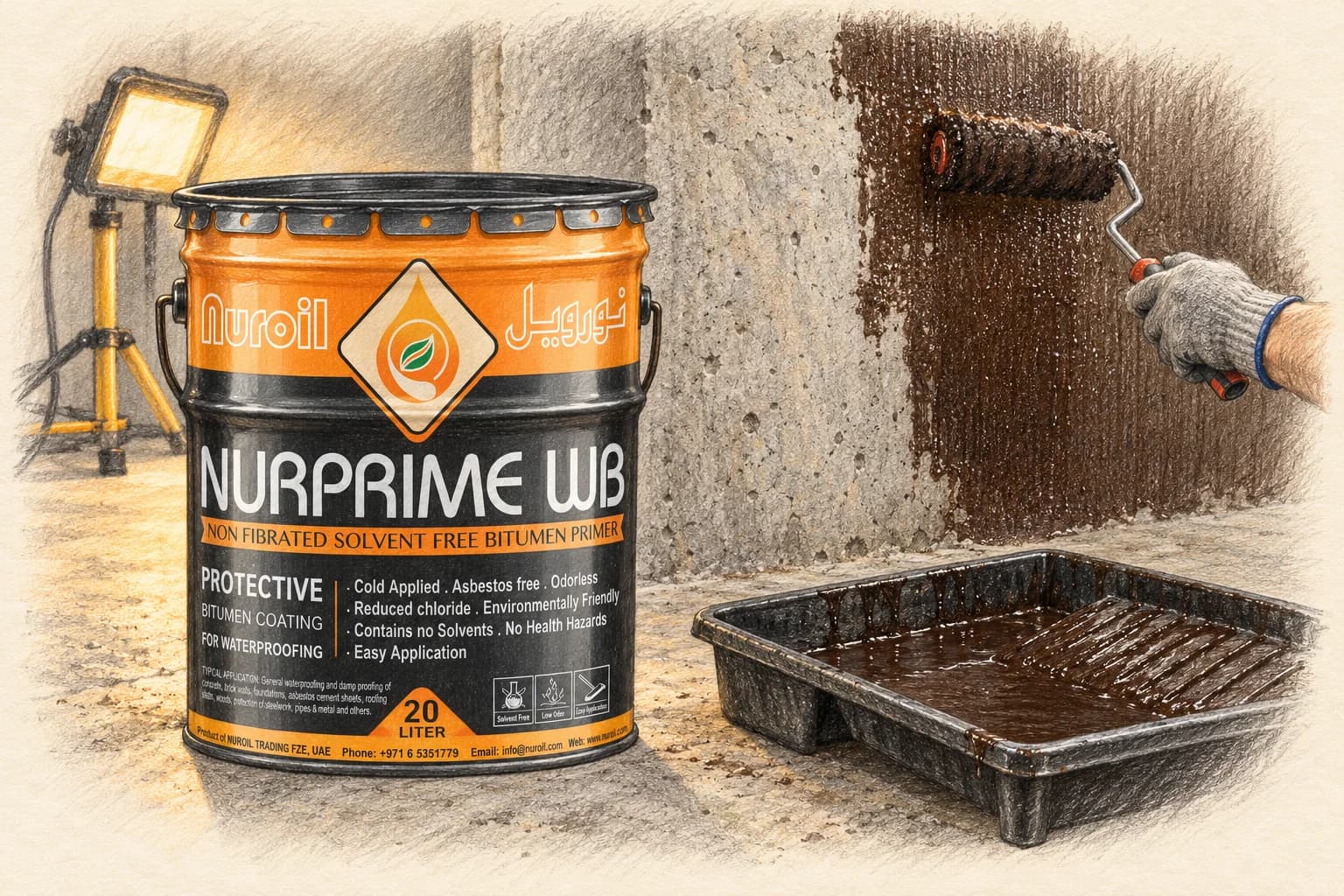
Freshly applied, the primer is brown. As water evaporates and soaks into the substrate, the bitumen droplets merge and the film turns black, loses its tack and becomes firm. A well-primed concrete surface looks uniformly dark and slightly glossy or satin, with no bare grey patches and no thick pools. Most faults show up as a departure from that picture.
Common faults
| Symptom | Likely causes | What to do |
|---|---|---|
| Primer stays brown and soft for hours | Low temperature, high humidity, poor airflow, thick application, wet substrate | Improve ventilation, wait, apply thinner coats next time; do not cover until black and tack-free |
| Primer washed off or streaked | Rain, dew or washing before the film dried | Let surface dry, remove loose residue, re-prime affected areas |
| Lumpy or grainy film | Product frozen in storage, mixed with another emulsion or contaminated | Stop using the batch; check storage history and report to the supplier |
| Bare grey patches | Missed areas, highly absorbent spots, too much dilution | Apply a second coat to those areas |
| Powdery or dusty surface under the membrane | Dust or laitance not removed before priming | Prepare the substrate properly; primer cannot bind heavy dust |
| Membrane blisters after laying | Moisture trapped by covering a primer that was not fully dry, or vapour from a damp slab | Check drying before laying; follow membrane maker's moisture limits |
| Skin in the container | Lid left open, long storage, heat | Remove and discard the skin; do not stir it in |
Weather-related problems
Most published drying times are measured at around 23–25 °C. In cooler or more humid conditions, an emulsion dries much more slowly, and night-time dew can re-wet a film that seemed dry in the afternoon. In very hot conditions the opposite can happen: the surface skins quickly while water is still trapped underneath. Data sheets typically ask installers to avoid extremely hot or damp weather and to protect freshly primed areas from rain, sun, frost and condensation.
Storage-related problems
A batch that has frozen often still pours, but it may not form a continuous film. Settling that will not remix and lumps that remain after stirring point to the same issue. Because these faults are hard to see until the primer is on the wall, check pails on delivery and keep stock above about +5 °C.
Compatibility problems
Primers are designed to suit particular membranes. A primer approved for torch-applied SBS membranes may not be recommended under a self-adhesive membrane or a liquid coating, and vice versa. Do not mix water-based and solvent-based primers, or primers of different emulsion types, in the same container. If in doubt, follow the membrane manufacturer's list of compatible primers.
If the primer is still brown, the membrane should still be on the roll.
Preventing repeat problems
- Record weather, surface condition and batch number on each primed area.
- Do a small adhesion trial with the actual membrane before full-scale work.
- Keep a retained sample of each batch until the job is signed off.
- Compare the CoA for each batch with the approved data sheet values.
Supply documents that help
When problems arise, traceability matters. Ask for batch numbers on every container, a CoA per batch and the TDS and SDS for the product. Nuroil supplies water-based primers with a CoA on every delivery and can arrange third-party inspection on request; contact us through contact us with batch details if you need support.