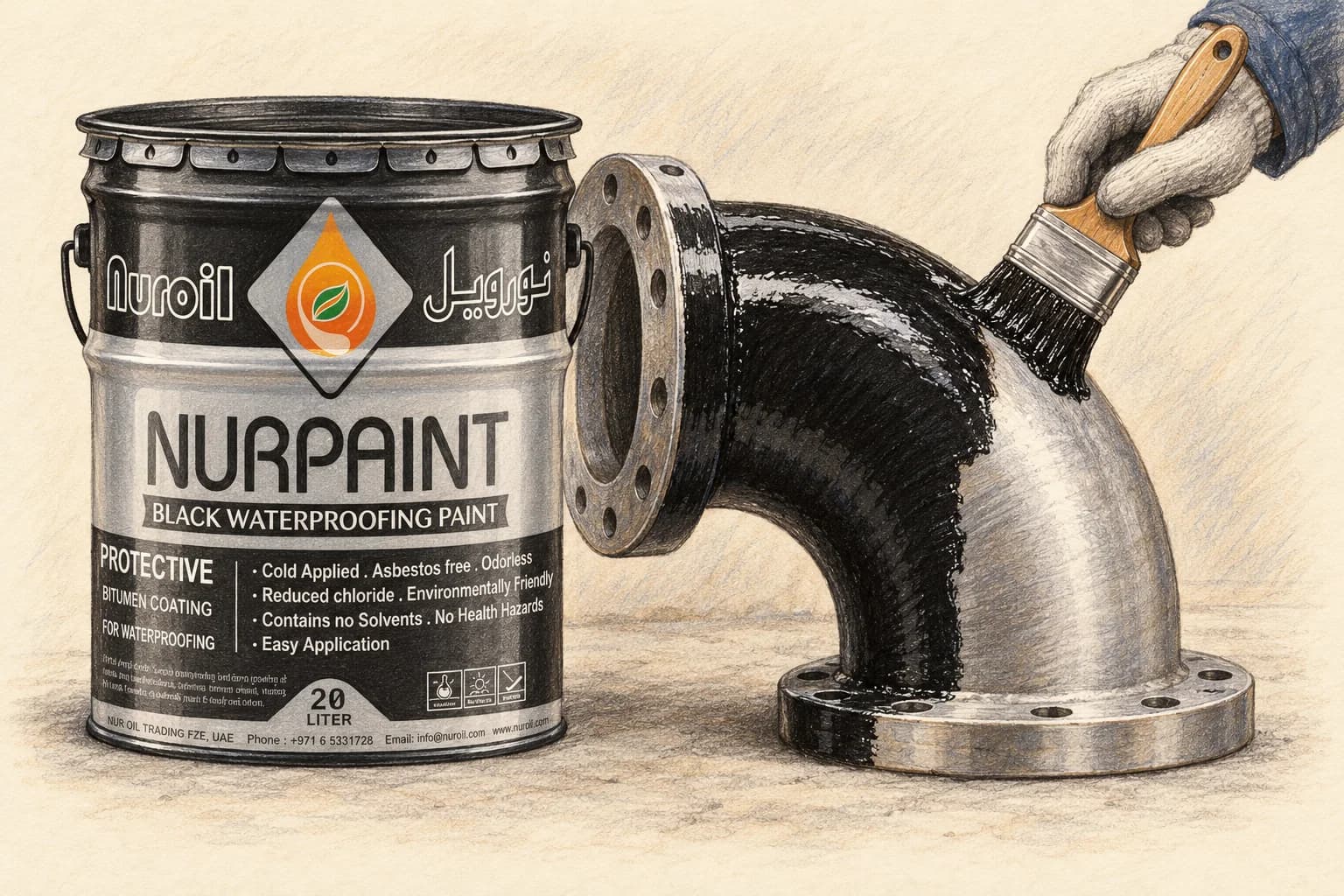
Black bitumen paint is widely used on steel that is buried, immersed or hidden: pipe supports, tank bases, fence posts below ground, gutters, manhole frames and the undersides of steel structures. It protects by forming a continuous, water-resistant film. What it does not do, according to several manufacturers' data sheets, is inhibit rust that is already there. The life of the coating therefore depends heavily on the condition of the steel underneath.
Why preparation matters more than the paint
Bitumen paint is a barrier coating. If it is applied over loose rust, mill scale or oil, the film bonds to that weak layer instead of the steel. Water and oxygen that reach the steel through pinholes, damaged areas or edges can continue corroding under the film, which then lifts and flakes. A thicker coat will not fix poor preparation.
Step by step
- Degrease. Remove oil, grease and cutting fluids with a suitable cleaner. Bitumen paint does not tolerate mineral oils, and oil left on the surface will soften the film and stop adhesion.
- Remove loose rust and scale. Wire brushing is the minimum on light rust. For heavily corroded or new steel with mill scale, mechanical cleaning or abrasive blasting gives a much better base.
- Treat remaining rust. Where some tightly adhering rust remains, a rust-inhibiting primer or treatment compatible with bitumen paint is recommended by several producers before the bitumen coat.
- Dry the surface. Solvent-borne bitumen paint needs a dry surface. Avoid painting when the steel is below the dew point or when condensation is likely.
- Stripe-coat edges and welds. Brush an extra coat on edges, bolts, welds and corners, where films are naturally thinner and corrosion starts first.
New galvanised and non-ferrous metals
Galvanised steel, aluminium and other non-ferrous metals have smooth, sometimes contaminated surfaces. Clean them thoroughly and check the paint data sheet; some products need a specific primer or etch treatment for adhesion on these metals. Where dissimilar metals touch, keep the coating continuous across the joint so moisture cannot collect at the interface.
Application on steel
On smooth metal, published coverage for black bitumen paint is around 8–11 m² per litre per coat, considerably more than on porous concrete. That higher spreading rate also means a thinner film, so manufacturers commonly recommend at least two coats, with the first allowed to dry before the second. Drying times on data sheets range from a few hours to touch-dry to around a day before recoating, depending on the product and conditions.
| Steel condition | Minimum preparation | Coating approach |
|---|---|---|
| New, clean, lightly oiled | Degrease | Primer if specified, then two coats |
| Light surface rust | Degrease, wire brush | Rust-inhibiting primer, then two coats |
| Heavy rust or scale | Mechanical cleaning or blasting | Primer, stripe coat, then two coats |
| Previously bitumen-coated | Remove loose coating, clean | Spot repair, then full coat |
Where bitumen paint is the wrong choice on steel
Bitumen coatings soften with heat and with contact with mineral oils and paint solvents. They are not suitable for hot surfaces such as boiler casings, flues and exhausts, or for areas regularly splashed with fuel or lubricants. In strong sunlight, black films absorb heat and may soften or craze over time, so exposed steel is often better served by another system. Drinking water tanks need a coating specifically approved for potable water contact.
Bitumen paint keeps water away from steel. It cannot reverse corrosion that has already started.
Ordering for steelwork
In an enquiry, describe the steel item, its exposure (buried, immersed, splash zone, sheltered) and whether the paint will be overcoated. Ask for the TDS, SDS and CoA, and confirm the recommended primer for your steel. Details of the black bitumen paint Nuroil supplies are on the bitumen paint page.