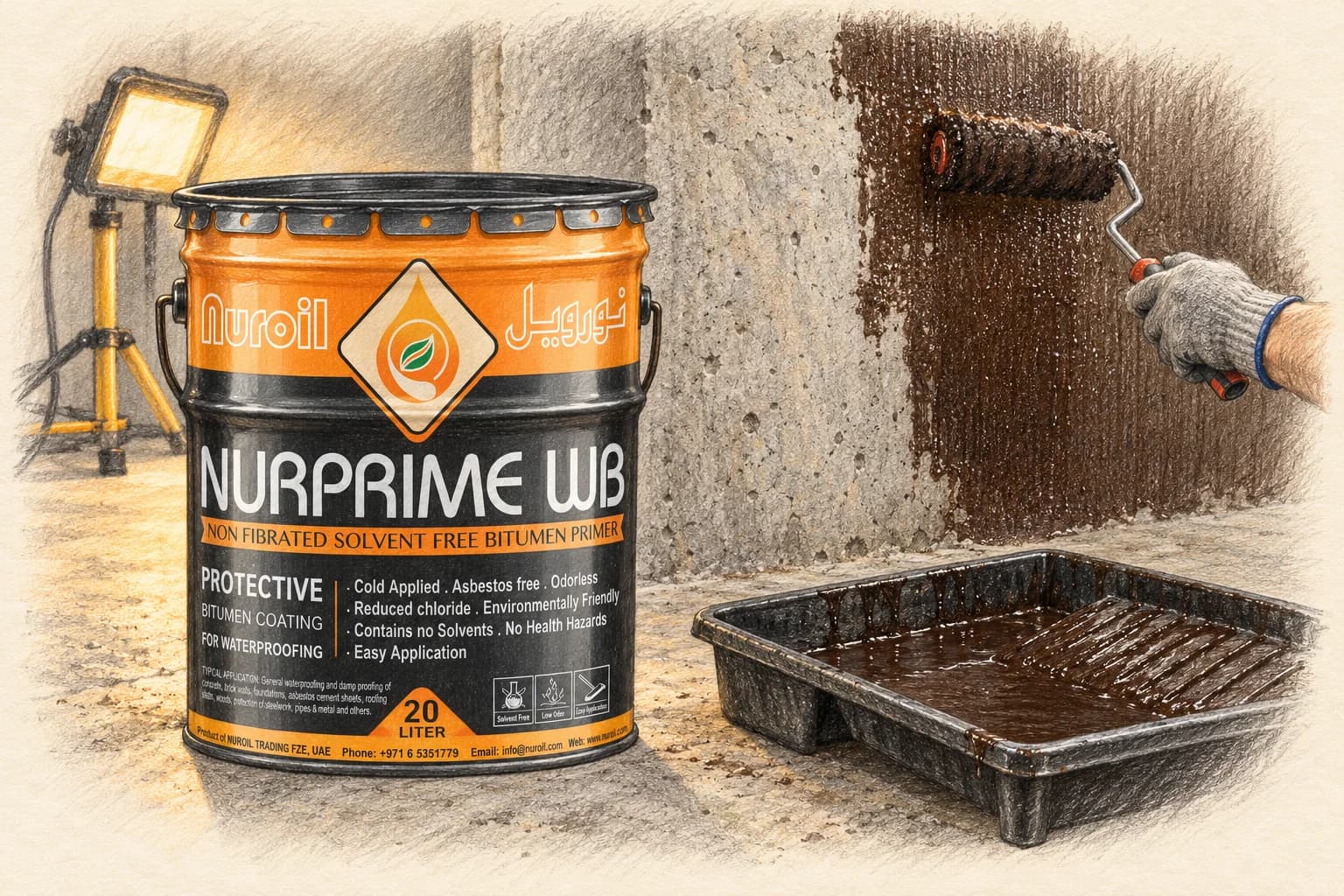
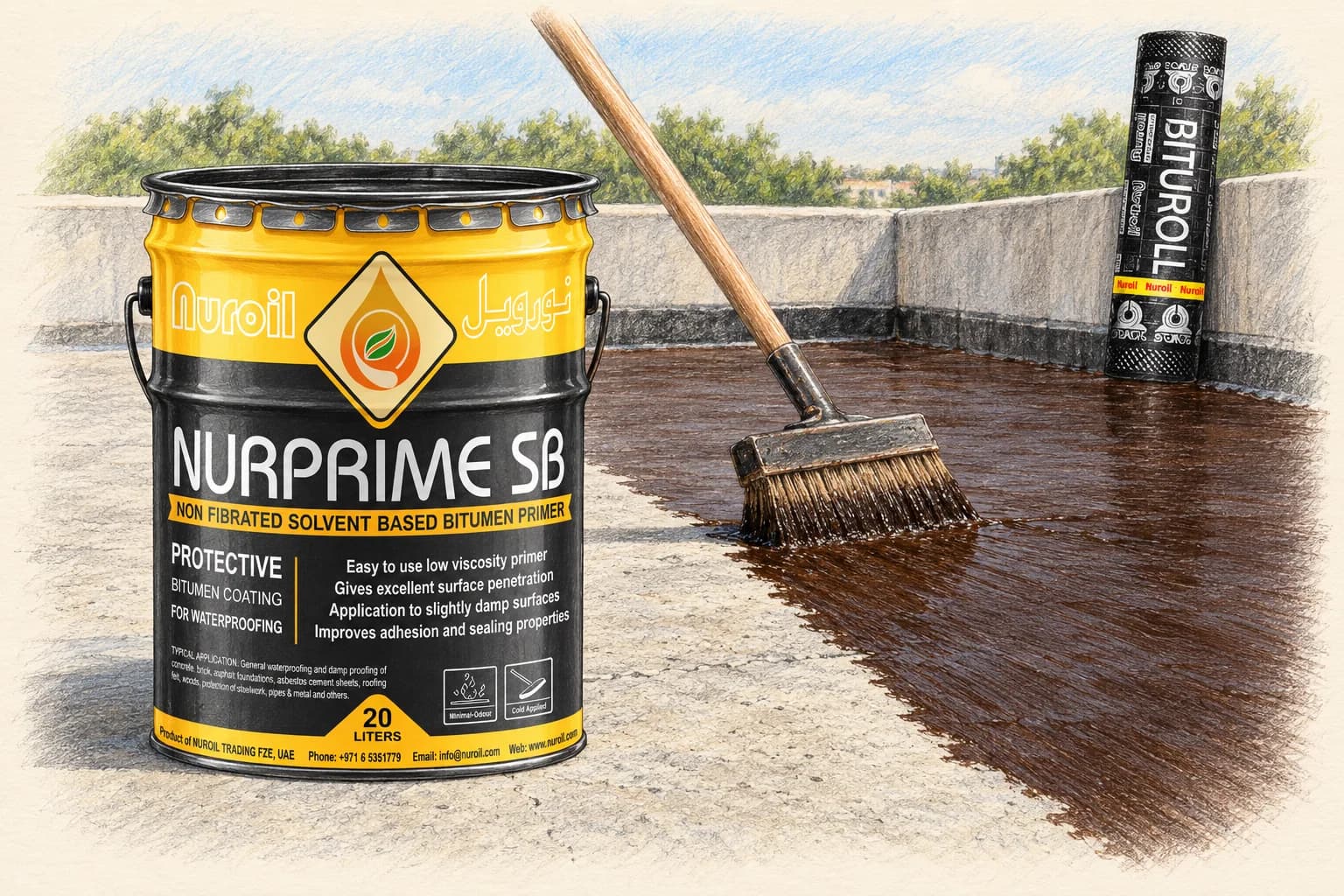
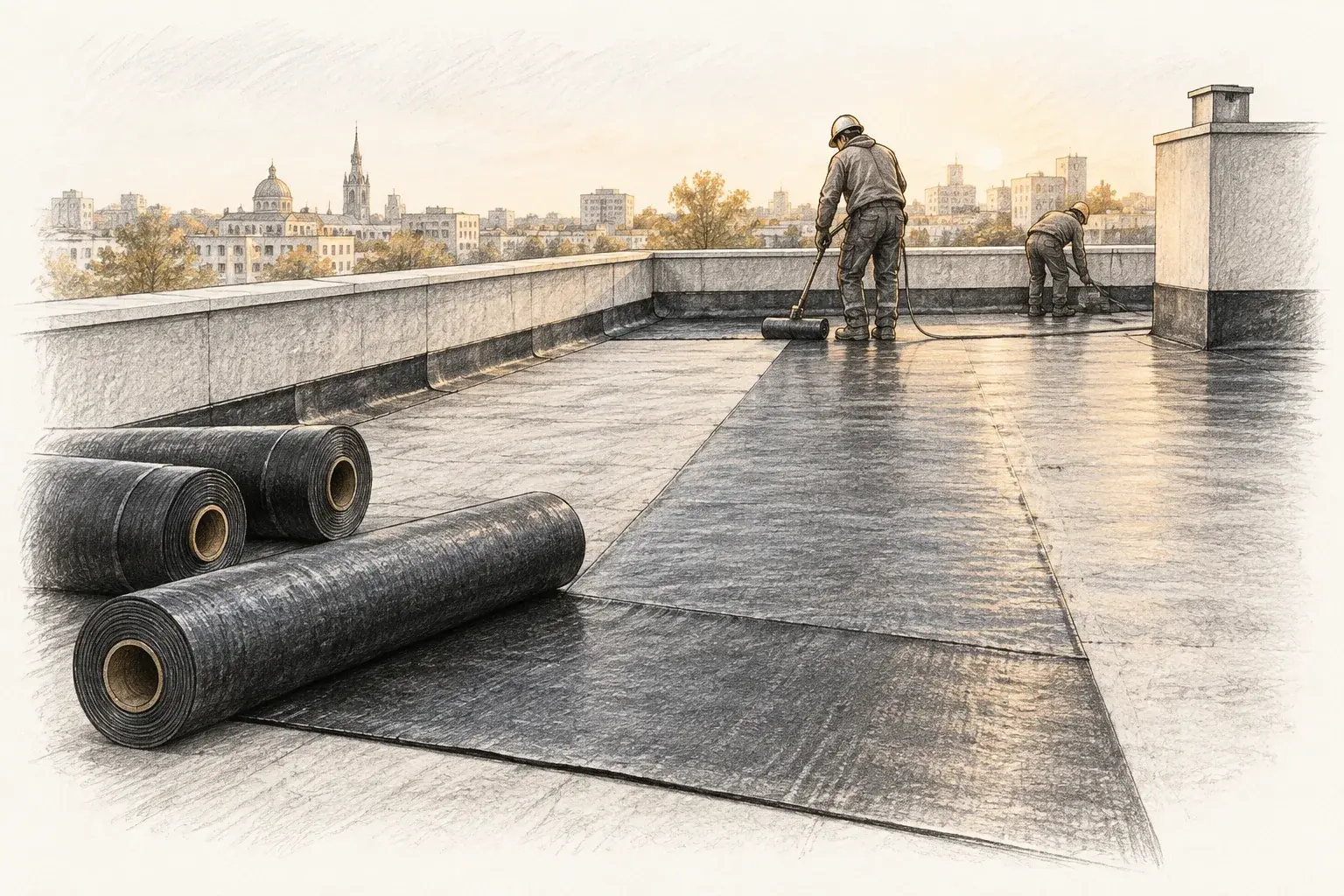
One of the main reasons contractors choose a water-based bitumen primer is that it is more forgiving of moisture than a solvent-based primer. Bitumen is carried as fine droplets dispersed in water, so a little dampness in the substrate does not stop it wetting the surface the way it can stop a solvent primer. That tolerance has limits, though, and most primer failures on new slabs and basements come from treating "damp" and "wet" as the same thing.
What the data sheets actually allow
Manufacturers' technical data for emulsion primers tend to use careful wording. Typical phrases are that the primer may be applied to matt-damp or slightly damp surfaces, provided the substrate is clean, free of dust and sound. The same documents usually exclude standing water, saturated concrete, frozen or thawing surfaces, and surfaces where frost is expected within about 24 hours.
Some data sheets go further and separate two moments: the primer itself can go onto slightly damp concrete, but the membrane that follows should only be laid once the primed surface is completely dry. That distinction matters most when a torch-applied or self-adhesive membrane goes on top.
Damp versus wet: a practical test
A matt-damp surface looks darker than dry concrete but has no shine and no film of water. If you wipe it with a dry hand or cloth, nothing comes away. A wet surface glistens, leaves water on a cloth and may have puddles in low spots or joints. Practical checks on site include:
- Look for sheen. Any reflective film of water means wait or dry the surface first.
- Check low points, construction joints and corners, where water collects after washing or rain.
- Tape a square of clear plastic sheet to the slab for a few hours. Heavy condensation underneath suggests moisture is still coming up from the concrete.
- Ask whether the slab is fresh. Young concrete releases water for weeks, and the membrane manufacturer may set its own minimum age or moisture limit.
Why too much water causes trouble
An emulsion primer works by losing its water. As the water evaporates or is absorbed by the substrate, the bitumen droplets come together and form a continuous film that grips the pores of the concrete. Excess water in or on the surface slows that process and can dilute the primer unevenly. The results are patchy penetration, a film that stays soft or tacky for longer than the data sheet suggests, and in the worst case primer that washes off or remains brown and milky instead of turning black.
Moisture trapped under a membrane is a separate problem. If the primer is still wet when the membrane goes down, vapour can lift the membrane and form blisters, especially on roofs and slabs exposed to strong sun.
Weather on the day
Damp substrate tolerance does not mean the primer can be applied in any weather. Data sheets generally give an application range in the order of +5 °C to +30 °C or a little higher, warn against very hot or very humid conditions, and ask for fresh primer to be protected from rain, condensation and frost until it has dried. In humid coastal climates, drying can be noticeably slower than the times quoted at 23–25 °C, so allow extra time before the next layer.
Damp is acceptable for the primer. Dry is required before the membrane. Plan the programme around both.
When a solvent-based primer is the better choice
If the surface is dry, the weather is cool and the job needs a fast turnaround, a solvent-based primer may dry more predictably. If the space is enclosed, flame or solvent vapour is a concern, or the slab cannot be dried completely, a water-based primer is usually preferred. Our page on solvent-based primers covers the alternative.
What to specify when buying
When you enquire for a water-based bitumen primer, state the substrate (new or old concrete, screed, blockwork, metal), whether it will be damp at application, the membrane system going on top, and the expected site temperatures. Ask for the technical data sheet showing the moisture and temperature limits, the SDS, and a certificate of analysis for the batch. Nuroil supplies primers with a CoA for each delivery and can arrange other documents on request through the quote form.