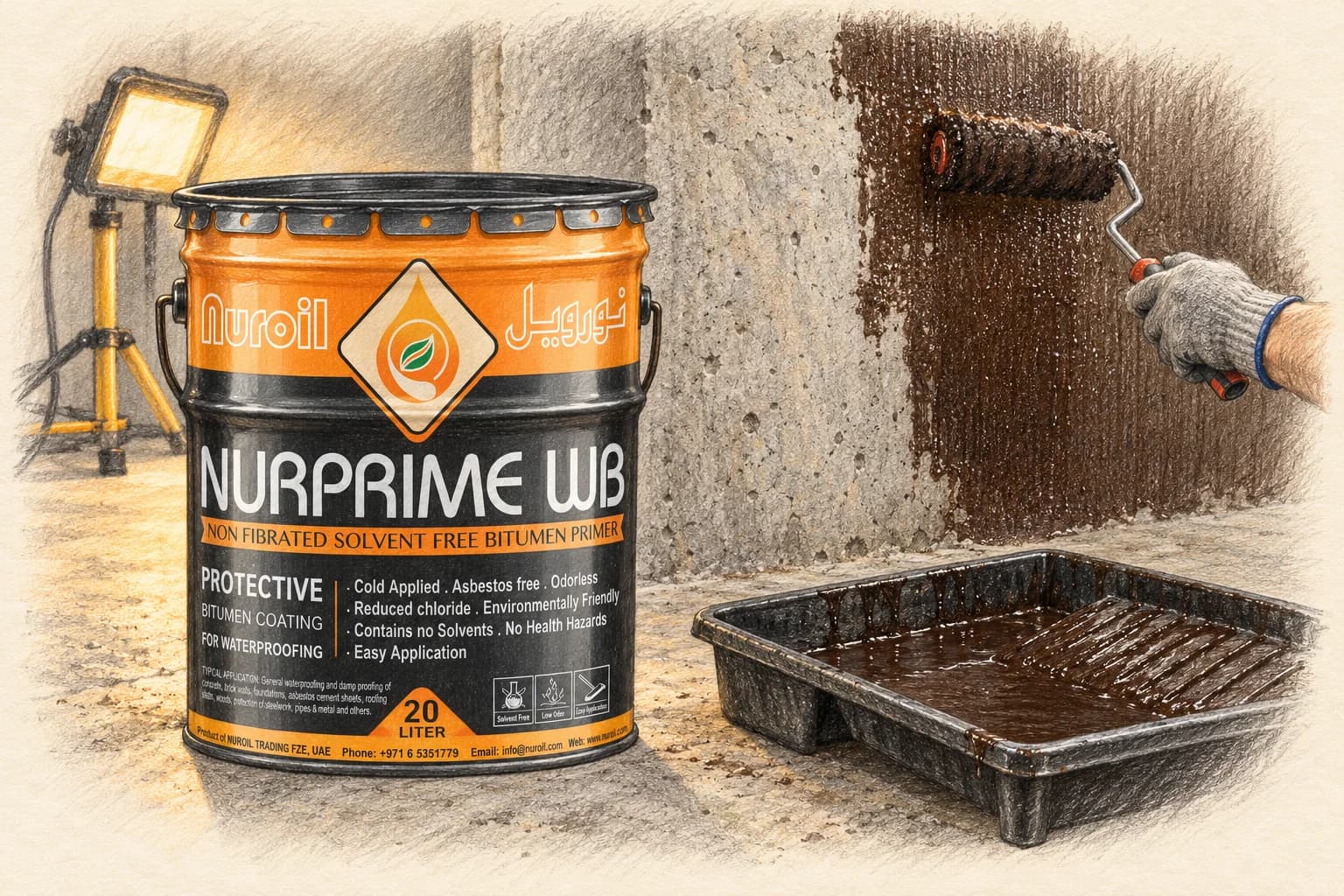
Basements, lift pits, service trenches, planter boxes and the inside faces of tanks share the same difficulty: there is little air movement. Solvent-based bitumen primers release flammable vapour as they dry, and in a confined space that vapour can build up to levels that are unpleasant, harmful and potentially explosive. That is the main reason specifiers switch to a water-based (emulsion) primer for this kind of work.
What changes when the solvent is water
An emulsion primer carries its bitumen in water rather than in a hydrocarbon solvent. The practical differences on site are:
- Low odour and no solvent vapour build-up, which makes work more tolerable for crews and neighbouring trades.
- Not flammable in the liquid state, which reduces fire risk during application, although the dried bitumen film itself will burn.
- Tools and spills clean up with water while the primer is still wet.
- Some tolerance of damp substrates, useful in below-ground structures where concrete rarely dries completely.
None of this removes the need to read the safety data sheet. Emulsions can contain small amounts of additives, and mist from spraying should not be inhaled.
Drying is the trade-off
Water evaporates slowly in still, humid air. Data sheets quote drying times at around 23–25 °C with normal airflow, often one to three hours to touch-dry, but in a closed basement those figures can easily double. Signs that the primer is not ready include a brown rather than black colour, tackiness that transfers to a finger, and a soft film that marks easily.
To keep the programme moving:
- Provide forced ventilation with fans that move air across the surface and out of the space, not just around it.
- Apply thin, even coats. Thick puddled primer in corners and at the wall-floor junction dries last.
- Avoid running heaters with open flames to speed drying; they add moisture and are a fire hazard near bitumen.
- Check drying at the coldest, least ventilated point before the next layer goes on.
Torch-applied membranes in confined spaces
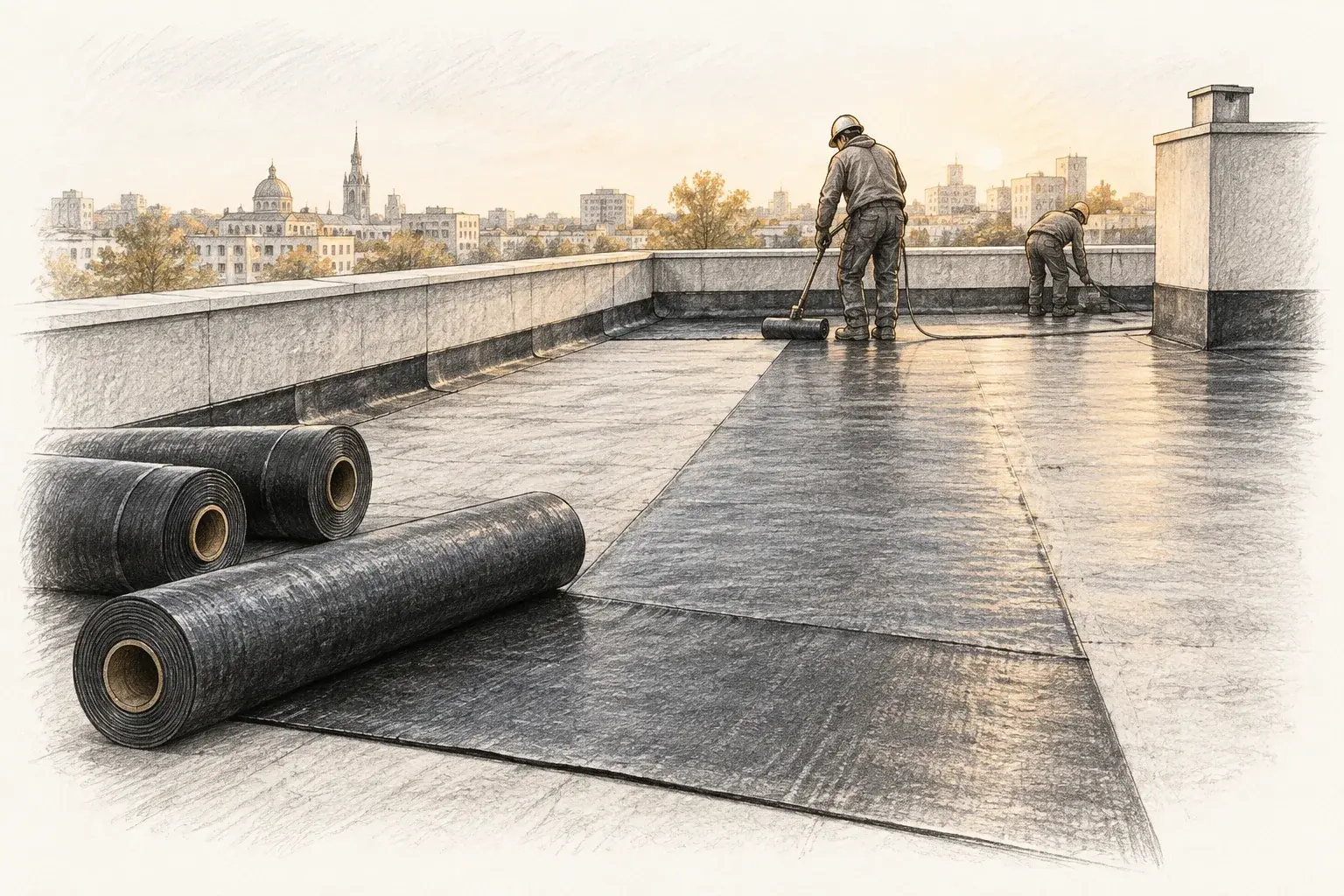
If a torch-applied membrane follows the primer, a water-based primer removes the solvent vapour hazard during priming, but the torching stage still brings open flame into a confined area. The primer must be completely dry first. Hot work permits, gas detection where required, fire watch and extinguishers are site safety matters that the primer choice does not change. Many enclosed-space jobs therefore pair a water-based primer with a self-adhesive membrane or a liquid-applied system instead. Whichever membrane is chosen, confirm with its manufacturer that the primer is on its list of compatible products.
Tanks and potable water
A general-purpose water-based bitumen primer should not be assumed to be suitable for surfaces in contact with drinking water. Where a coating will touch potable water, the product needs a specific approval for that use and its own instructions. Ask for evidence before specifying it.
Choosing water-based primer for an enclosed space removes the solvent hazard. Ventilation and drying time still need planning.
Comparison at a glance
| Factor in an enclosed space | Water-based primer | Solvent-based primer |
|---|---|---|
| Vapour during application | Mainly water vapour | Flammable hydrocarbon vapour |
| Drying in still, humid air | Slow | Usually faster |
| Damp substrate | Usually tolerated if not wet | Needs dry surface |
| Clean-up | Water while wet | Solvent |
Specifying for below-ground work
In an enquiry, describe the space (basement, pit, tank, trench), how it will be ventilated, the membrane or coating that follows and the pack size that suits access, since smaller pails are easier to carry down stairs and ladders. Ask for the TDS, SDS and batch CoA. Our water-based primer page lists the grades Nuroil supplies, and you can send project details through contact us.