Maize and sugarcane are both heavy users of nitrogen, and urea is the most common way it reaches them. Both crops also have long periods between planting and peak nitrogen demand, which makes timing and placement decisive. This guide sets out the main principles for each crop, drawing on extension guidance and field research.
Maize: supply ahead of rapid growth
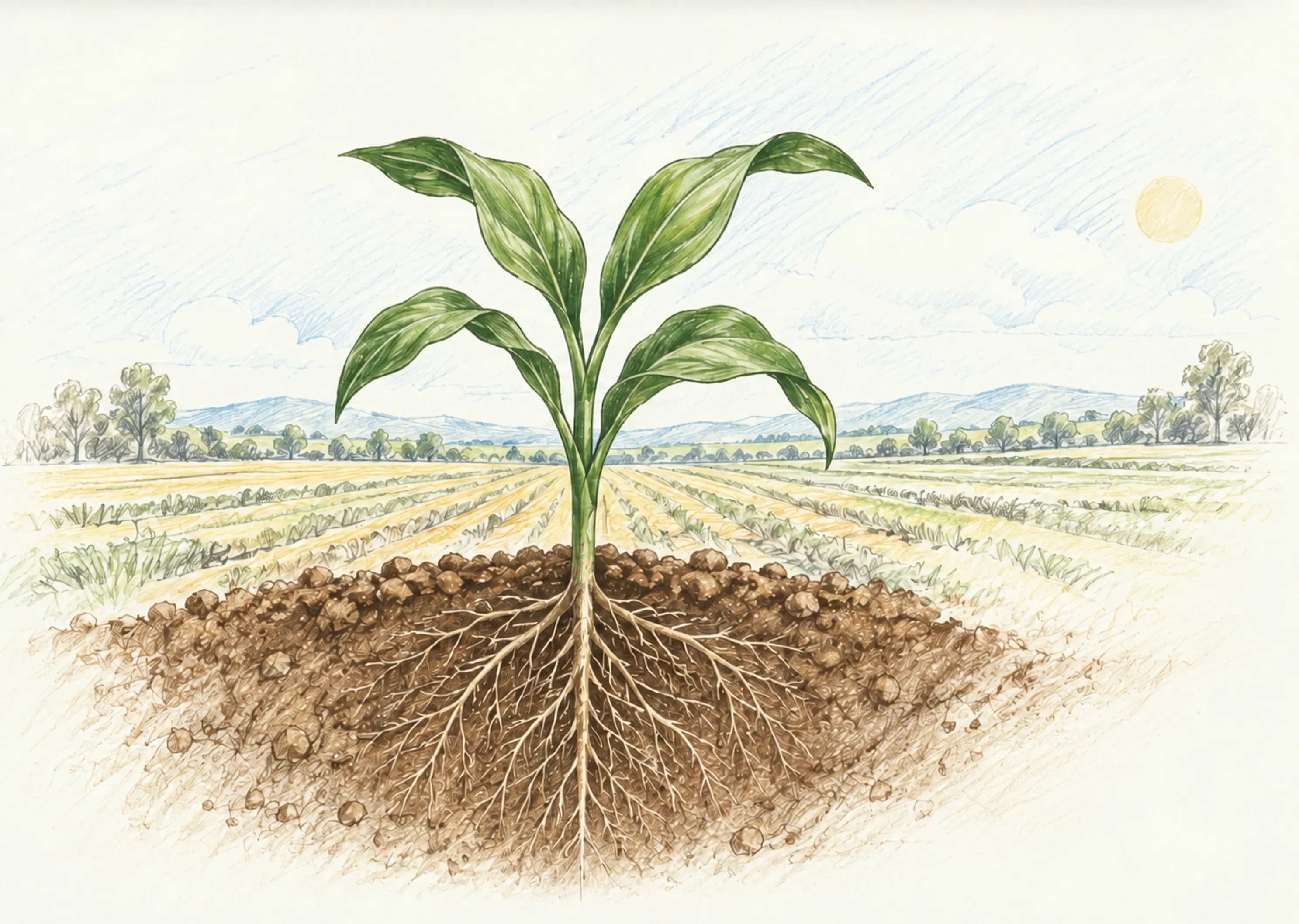
Maize takes up relatively little nitrogen in its first few weeks. Demand then rises steeply through the mid-vegetative stages, before tasselling. A common programme puts a portion of the nitrogen down at or before planting, often partly as DAP or a compound fertilizer, and side-dresses the remainder as urea during early vegetative growth.
- Side-dress timing. Applying around the V4 to V6 leaf stages places nitrogen in the soil before the rapid-uptake period. A field study in Brazil measured the greatest ammonia losses from urea applied late, at V10 to V12, and the best fertilizer recovery when urea was applied at V4 or V6.
- Proportion. Agronomy guidance commonly suggests applying around a quarter to a half of total nitrogen as a side-dress, adjusted to soil, rainfall and what was applied at planting.
- Placement. Banding or injecting nitrogen beside the row, or dribbling it between rows, loses less than broadcasting over the top. Where urea must be broadcast, incorporating it or applying just before rain or irrigation reduces volatilisation.
University extension trials in the United States note that urea left on the soil surface for the first few days without incorporation or rain is vulnerable to ammonia loss, and that urease inhibitors can reduce this risk for broadcast applications.
Sugarcane: split to match a long season
Sugarcane grows over many months and nitrogen applied in a single early dose is exposed to losses for a long time, particularly on sandy, low-organic-matter soils. Practices differ between plant cane and ratoon crops.
- Plant cane. A share of nitrogen is often applied in the planting furrow or soon after planting, with the remainder applied as the cane establishes and tillers.
- Ratoon cane. Nitrogen is usually applied after harvest once regrowth begins, often in two or three splits during the first months of regrowth.
- Splits on light soils. Florida extension work on sandy soils found that splitting nitrogen into more applications improved cane and sugar yields compared with fewer, larger doses.
- Band versus broadcast. Research on calcareous soils found that band placement of fertilizer gave higher cane and sugar yields than broadcasting in both plant and ratoon crops.
Not every trial shows a yield benefit from splitting; on heavier soils with lower losses, the main advantage may be more even application. Local sugar industry research stations provide the best guidance on rates and splits for each soil type.
| Factor | Maize | Sugarcane |
|---|---|---|
| Main urea timing | Side-dress in early vegetative stages | Split during establishment and early regrowth |
| Preferred placement | Banded, injected or incorporated | Banded beside the row and covered |
| Highest loss risk | Late surface application in warm, dry weather | Large single doses on sandy soils; surface urea on trash |
| Typical companion | DAP or compound at planting | Phosphate and potash at planting |
Reducing losses in both crops
- Cover or incorporate urea where possible.
- Time surface applications before rain or irrigation rather than after.
- Avoid applying urea onto crop residue or green cane trash on moist soil in hot weather, where volatilisation is high.
- Consider urease-inhibitor-treated urea where incorporation is impractical.
- Calibrate spreaders for the specific urea form and size being used.
Supply planning
Side-dressing windows in maize are short, and sugarcane programmes run across several months, so delivery schedules should follow the crop calendar. When requesting agriculture-grade urea, state prilled or granular, the size range your equipment needs, packing, total tonnage and preferred delivery split. Nuroil supplies urea with a certificate of analysis per delivery; use the quote form to share your schedule.