Bitumen membrane rolls are robust once they are on a roof, but before that they are surprisingly easy to damage. Heat makes the compound soft and sticky, cold makes it stiff, and rolls stacked the wrong way deform under their own weight. Glass-reinforced sheets add one more sensitivity: the glass mat has little stretch, so a crushed or kinked roll can crack. This guide covers what buyers and site teams should expect from packing to laying.
How rolls are packed
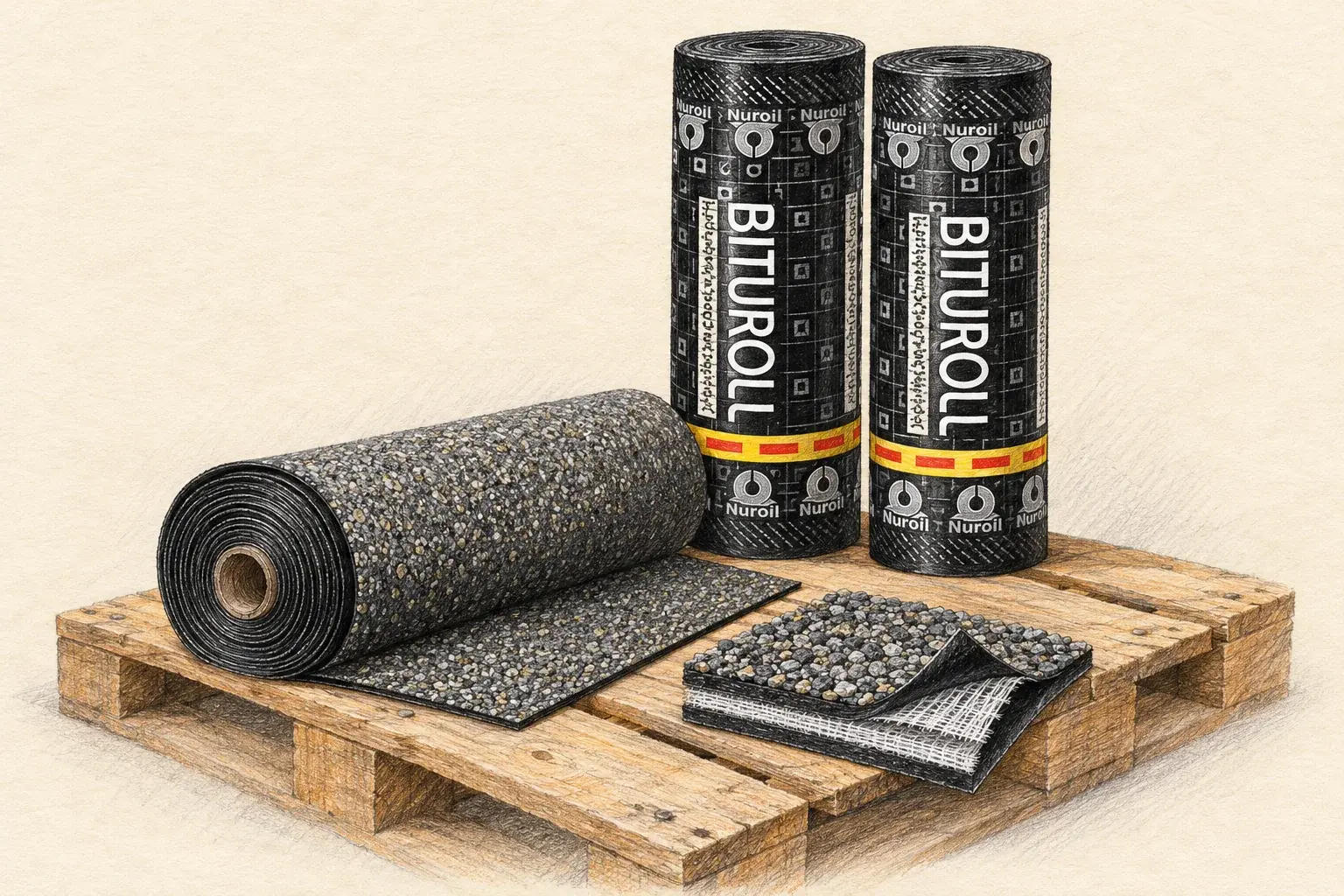
Rolls are usually supplied in standard lengths and widths, commonly about 1 metre wide, with length depending on thickness. Each roll is normally wrapped or banded and labelled with the product name, thickness, batch number and production date. Rolls are stood upright on wooden pallets, shrink-wrapped or hooded to keep them together and shaded, and the number of rolls per pallet depends on thickness. Interleaving film or sand on the faces stops the turns of the roll sticking to each other.
Loading and transport
- Keep rolls upright. Rolls laid flat flatten into an oval and can crack the glass mat; upright rolls carry weight through their edges.
- Do not double-stack heavy pallets unless the producer confirms the rolls can take the load, especially in hot weather.
- Use closed containers for export. Standard dry containers protect against rain and direct sun. In hot regions, ask for loading early in the day and avoid long dwell times in exposed port yards.
- Secure the load. Pallets should be braced or strapped so they cannot shift and topple during the voyage.
Storage on receipt
| Condition | Good practice | Risk if ignored |
|---|---|---|
| Orientation | Upright, on pallets | Flattened, cracked rolls |
| Sun and heat | Covered, shaded, ventilated store | Turns stick together, compound flows |
| Rain and ground damp | Off the ground, under cover | Wet surfaces, poor bond, blisters |
| Cold | Warm rolls before unrolling | Surface cracking on unrolling |
| Stock rotation | First in, first out by batch date | Ageing of older stock |
Handling on site
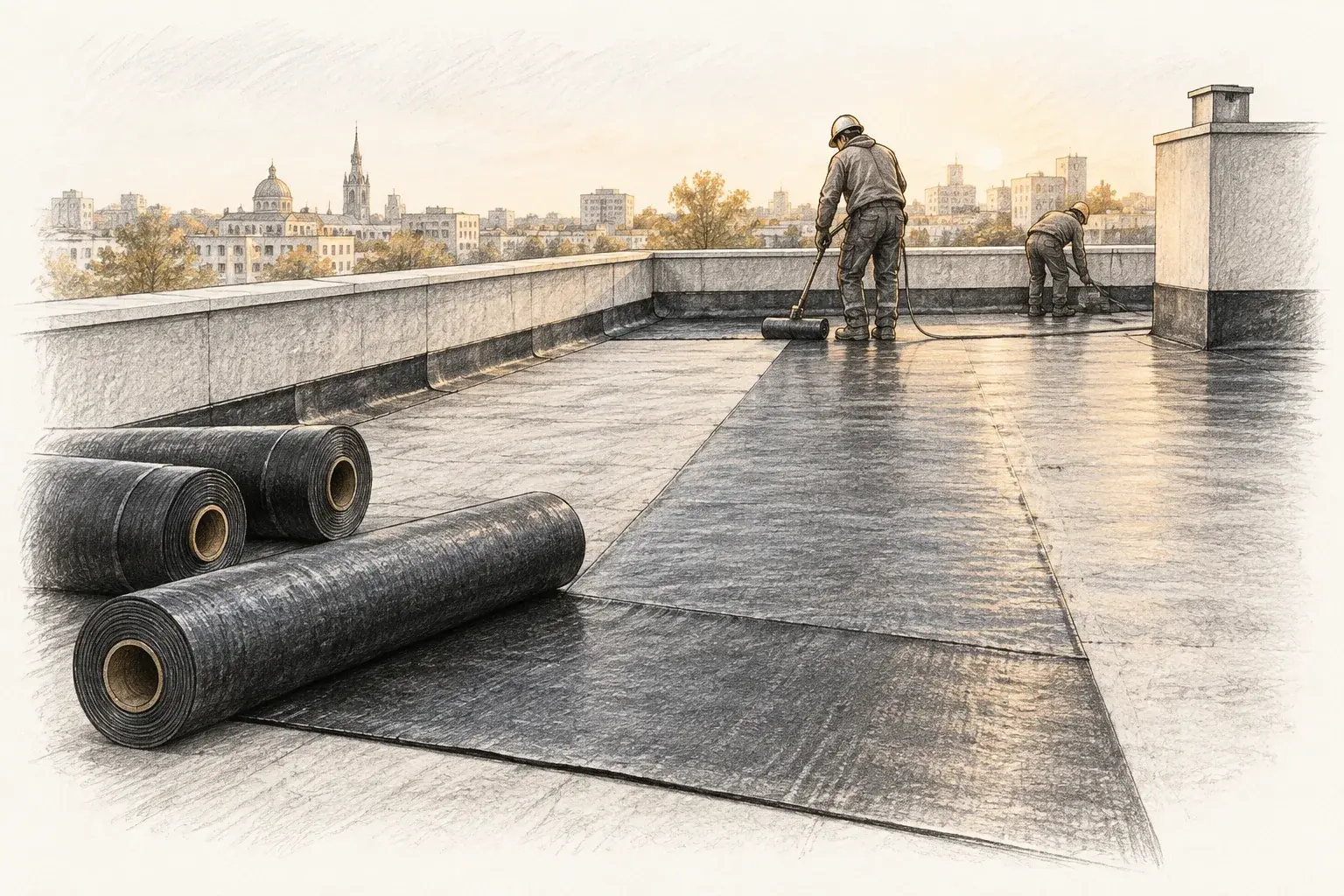
Lift rolls to the roof on their pallets or in upright bundles rather than throwing them. Do not stand rolls on sharp debris or reinforcing bars. Before laying, let the roll relax: unroll it, align it, and roll it back from both ends so it lies flat. In cool weather, rolls left in the sun or in a warm room for a while are much easier to handle. Check the label against the delivery note and keep a note of batch numbers used on each area, which helps if a question is raised later.
Accessories that travel with the rolls
A membrane order rarely ships alone. Bitumen primer, mastic or sealant for terminations, and any cap sheet or detail strips usually go in the same container. Primers in drums or pails must be stored with the same care for heat, and solvent-based primers need separate storage away from ignition sources. Plan quantities so the primer and membrane come from compatible product lines.
Shelf life
Bitumen membranes do not have the short shelf life of liquid products, but compound properties and surface protection can deteriorate over long storage in heat. Producers usually state a recommended storage period on the data sheet. Order quantities that match the programme rather than storing large stocks for many months in hot conditions.
What to specify in an order
State the roll size, thickness, finish, number of rolls and the pallet configuration you can receive. Ask the supplier to confirm upright palletised loading, the container type and any labelling or marking you require for customs and site. Nuroil ships fibre glass reinforced membrane FOB UAE ports, with CFR or CIF on request, and can provide a certificate of origin and arrange pre-shipment inspection. Send your details via request a quote.