Fibre glass reinforced bitumen membrane looks like a simple commodity: rolls of black sheet sold by the square metre. In practice, two sheets with the same nominal thickness can differ widely in compound, carrier weight and performance. A clear enquiry and a few receiving checks prevent most disputes. Use this checklist when buying for a contractor, distributor or project.
1. Define the product
- Compound: oxidised bitumen, SBS modified or APP modified. SBS stays flexible in the cold; APP and oxidised compounds are stiffer.
- Carrier: glass fleece, glass mat with longitudinal threads, or glass scrim. State a carrier weight if the designer has set one.
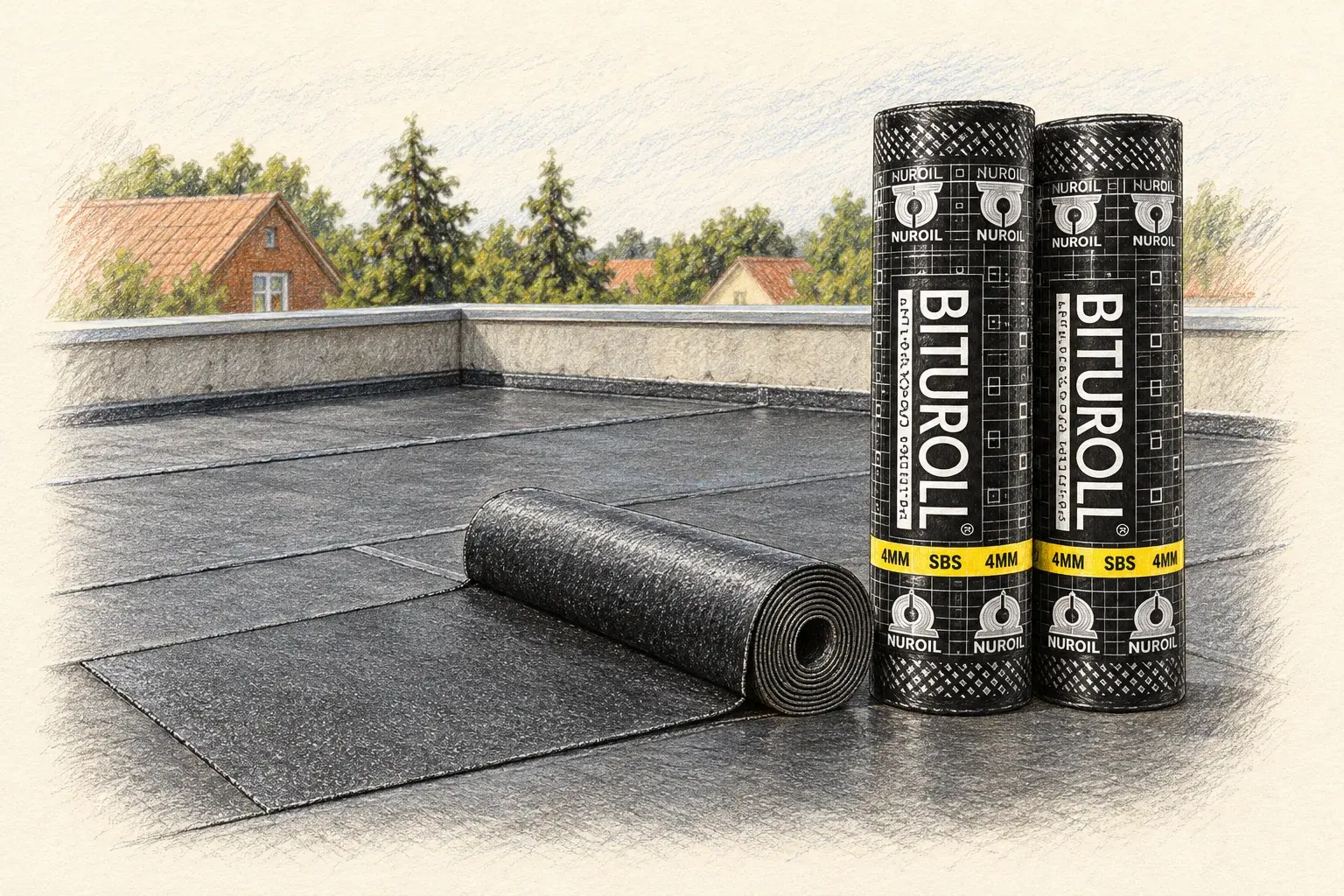
- Thickness or mass: for example 3 mm or 4 mm, or a mass per square metre for base sheets.
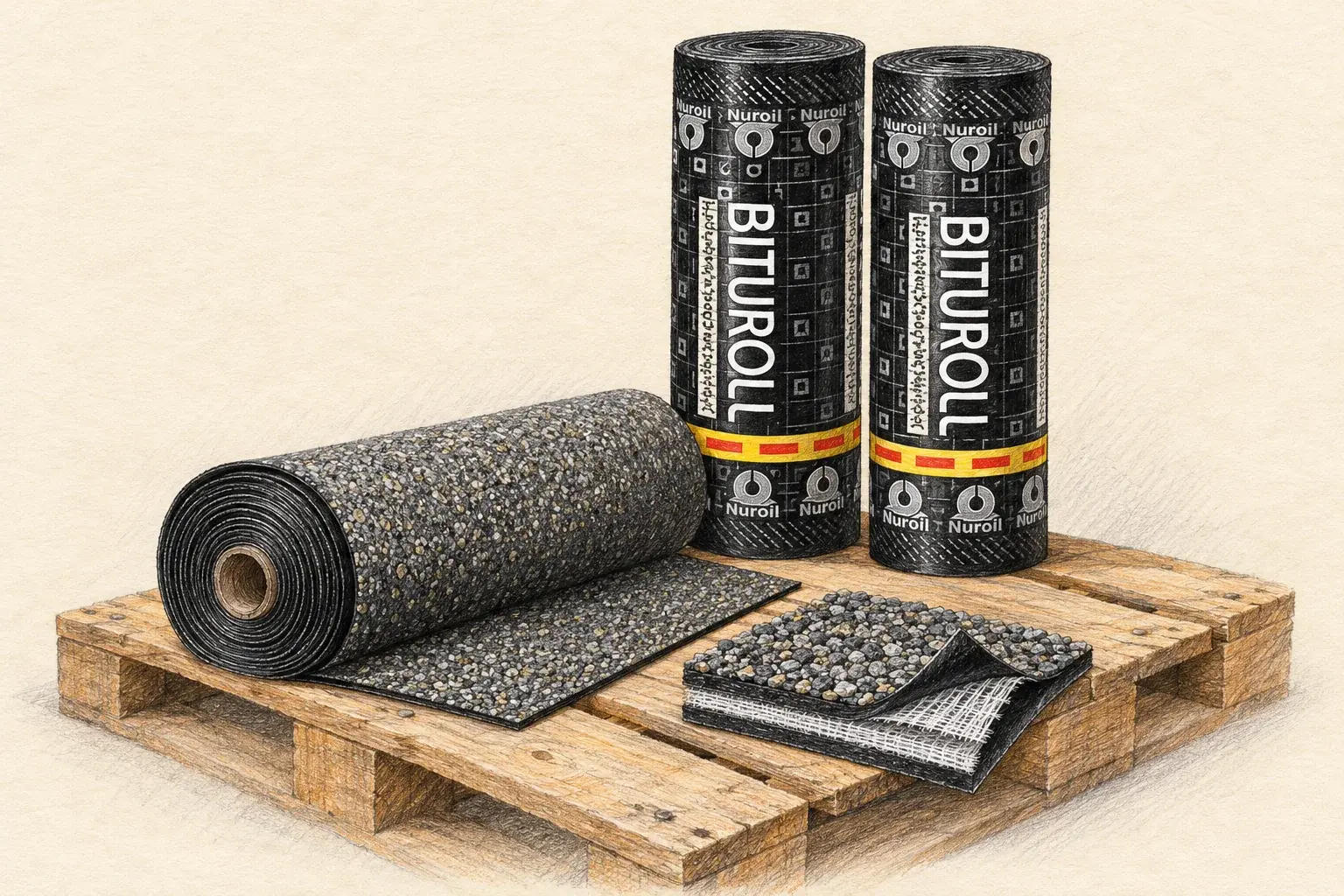
- Finish: top and bottom surfaces (sand, film, mineral granules, slate) and colour if mineral surfaced.
- Roll size: width and length.
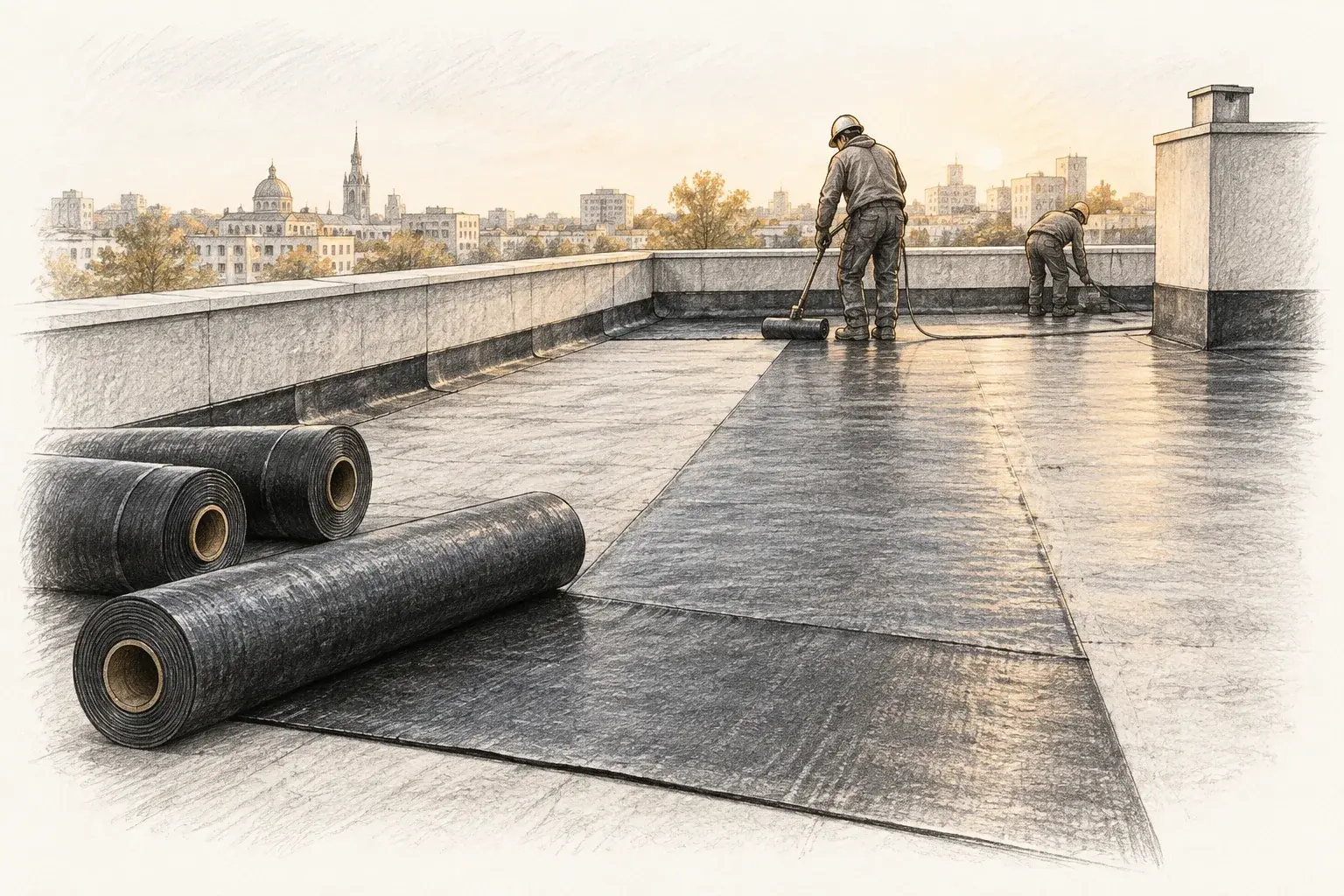
- Method of laying: torch-on, hot-bonded, cold-adhered or self-adhesive.
2. State the performance you need
Give the values from your specification, or ask the supplier for theirs, and compare on the same basis.
| Item | Ask for |
|---|---|
| Tensile strength | Length and cross direction, N/50 mm, with test method |
| Elongation | At maximum force, both directions |
| Low-temperature flexibility | Temperature in °C |
| Flow resistance | Temperature in °C; important in hot climates |
| Dimensional stability | Percentage change after heating |
| Watertightness | Pass at stated pressure |
| Standard | EN or ASTM reference the product is declared against |
3. Confirm the right sheet for the job
Tell the supplier where the sheet will go. A glass-reinforced sheet is well suited as a base layer, vapour control layer or underlay on a stable deck. If the brief is a single exposed layer on a hot roof, or a deck that moves, ask whether a polyester-reinforced SBS modified membrane should be used instead or as the cap layer. A good supplier will raise this rather than simply quote.
4. Documents to request
- Technical data sheet for the exact product and thickness.
- Certificate of analysis or batch test report with the delivery.
- Safety data sheet covering handling and torching.
- Declaration of performance or product certificate where the project requires one.
- Certificate of origin, packing list and commercial invoice for customs.
- Third-party inspection report if your contract calls for it.
5. Packing, shipping and terms
- Rolls upright on pallets, wrapped and labelled with product, thickness and batch.
- Number of rolls per pallet and pallets per container.
- Container type and any loading time preferences for hot weather.
- Incoterm (FOB, CFR or CIF), port of loading and discharge, and the delivery window.
- Accessories to ship together: primer, mastic, cap sheet, detail strips.
6. Checks on arrival
- Match labels and batch numbers with the packing list and certificate.
- Inspect a sample of rolls for flattening, sticking, cracked edges and damaged wrapping.
- Measure thickness on a cut sample if there is any doubt.
- Unroll one roll to check it lies flat and the surface finish is even.
- Record any damage with photographs before signing the delivery note.
- Move stock into shaded, upright storage straight away.
7. Compare quotes on a like-for-like basis
When several offers arrive, line them up against the same table: compound, carrier, thickness, finish, roll size, declared values and standard. A lower price often reflects a thinner sheet, a lighter carrier or an oxidised compound in place of SBS. Ask suppliers to confirm any difference in writing before you decide.
Most membrane disputes come from vague enquiries. Name the compound, carrier, thickness, finish and standard, and the quotes you receive become directly comparable.
Sending your enquiry
Nuroil supplies fibre glass reinforced membrane sourced from established producers, with a certificate of analysis on every delivery and certificate of origin, safety data sheet and third-party inspection on request. Share your checklist answers through request a quote or contact us for help choosing between grades.