Solvent-based bitumen primers are chosen partly because they dry fast. In hot climates they can dry very fast indeed, which helps the programme but also creates traps. A primer that feels dry may still hold solvent beneath the surface, and morning dew on a roof slab can undo good preparation. This article looks at what drying times mean and how to judge them on site.
Tack-free is not the same as dry
Data sheets give different drying figures, and it helps to know which is which.
| Figure on data sheet | Example values | Meaning |
|---|---|---|
| Touch dry or tack free | About 30 to 60 minutes; one sheet gives 2 hours at 30 °C | The surface no longer feels sticky |
| Drying time | About 1 hour at 25 °C on one sheet | Ready for the membrane under stated conditions |
| Full drying | One sheet gives 24 hours at 30 °C | Solvent has left the film through its thickness |
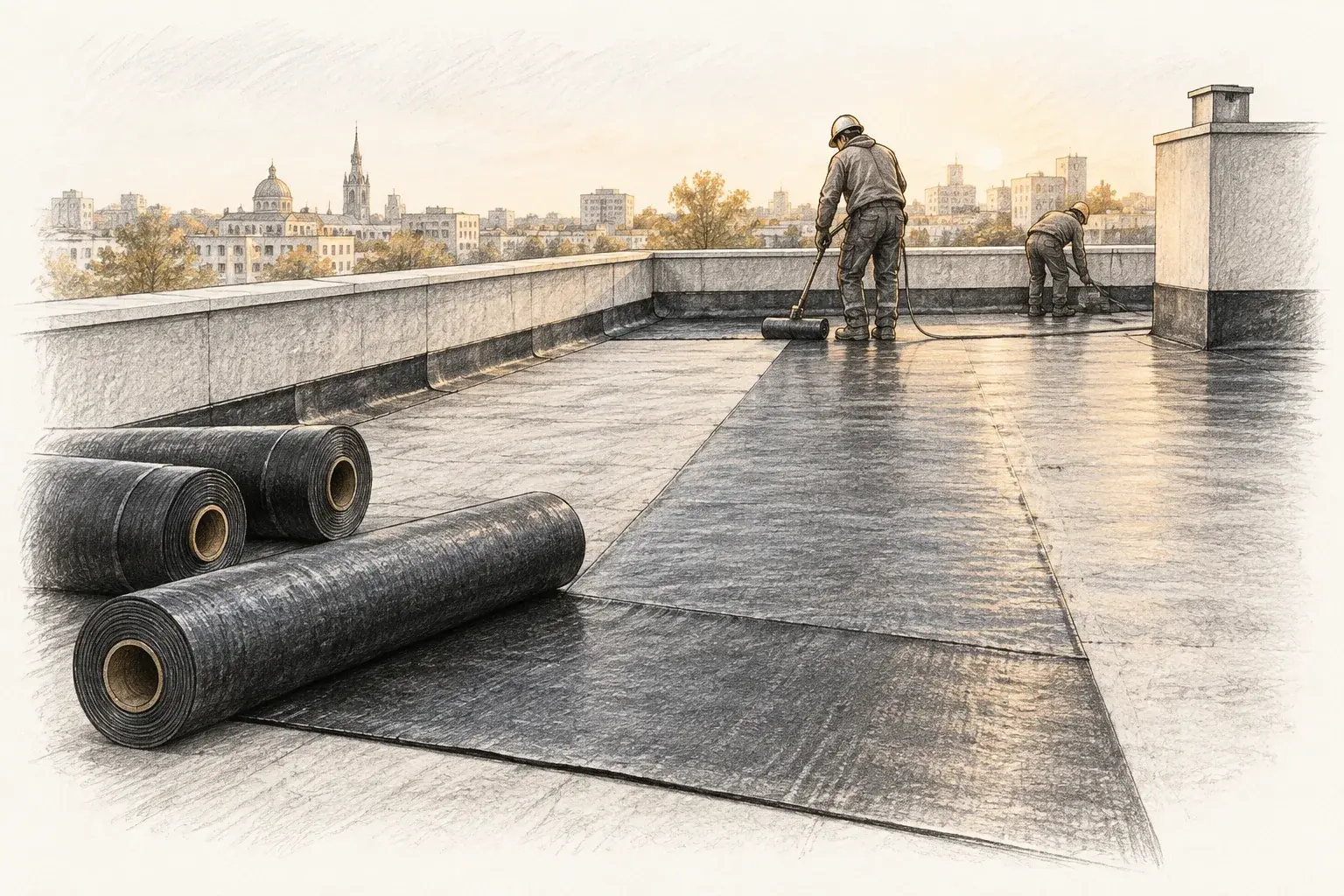
The right figure depends on what follows. Torch-applied membranes need the primer thoroughly dry, because solvent remaining in the film can ignite or form blisters under the heated sheet. Self-adhesive membranes and cold-applied coatings may tolerate a shorter wait, but only if their own data sheets say so.
How heat changes drying
Warm air and a hot substrate drive solvent off quickly, so the surface often becomes tack free well inside the published time. That is useful, but there are side effects.
- Surface skinning: on heavily applied areas or in puddles, the surface can skin over and slow the escape of solvent below.
- Absorption: dry, porous concrete in hot weather draws primer in rapidly. That is part of how primer works, but it can leave a starved, patchy surface that needs a second coat.
- Dust: on windy, dusty days a fast-tacking primer picks up dust. The bond is then to the dust, not the concrete.
Never speed up drying with a torch. Manufacturers warn against it because the vapour is flammable.
Dew and humidity
Coastal hot climates are often humid. A roof slab cools overnight, and by early morning its surface may sit below the dew point of the air, so a thin film of condensation forms. Solvent-based primers need a dry substrate, so priming over dew leads to poor adhesion. Wait until the slab surface is visibly and measurably dry, or check the surface temperature against the dew point. The same applies to slabs that were washed or rained on.
Prime only what you can cover
A primed surface left for a long time collects dust and loses its tackiness. One manufacturer advises that sealing should be completed on the same day as priming, and that a further primer coat be applied if this is not possible. On large roofs, plan priming in zones that the membrane crew can finish within the shift.
- Prime early in the day once dew has cleared.
- Check drying by touch and by pressing a clean cloth on the primer: no transfer means it is dry at the surface.
- For torch-on work, allow the full drying time on the data sheet, not just tack-free time.
- Re-prime areas left overnight or contaminated by dust.
In heat, primer becomes tack free quickly; the safe interval before torching is still the one the data sheet gives for full drying.
Application window
Regional data sheets typically allow application between about 5 °C and 45 °C. When air temperatures approach the top of that range, the substrate in direct sun can be hotter still. Working in the cooler hours gives more predictable drying and safer conditions for a flammable product.
Buying for hot-climate work
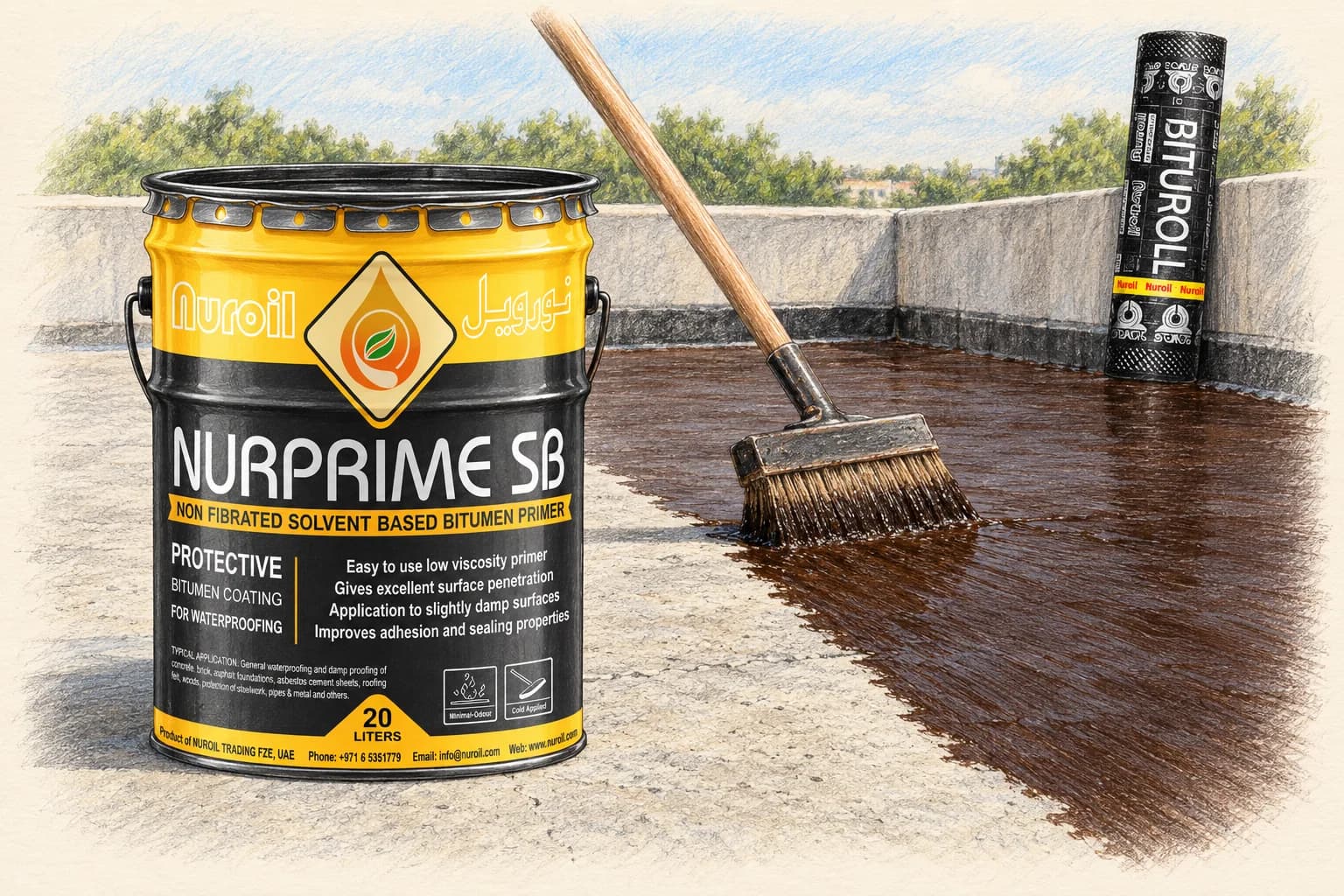
In your enquiry, mention the climate and the membrane system you will use, and ask the supplier to confirm tack-free and full drying times at around 30 to 35 °C, the maximum application temperature and the flash point. Request the safety data sheet and batch certificate of analysis. Nuroil supplies solvent-based bitumen primers in pails and drums; send your details through request a quote.