A primer is only useful if it bonds to both the substrate and whatever goes on top. Solvent-based bitumen primers are designed for bituminous systems, and they work well under most of them. Problems arise when they are used under materials they were not designed for, or come into contact with materials that solvents attack. This article sets out the usual compatibility rules.
What the primer is designed to do
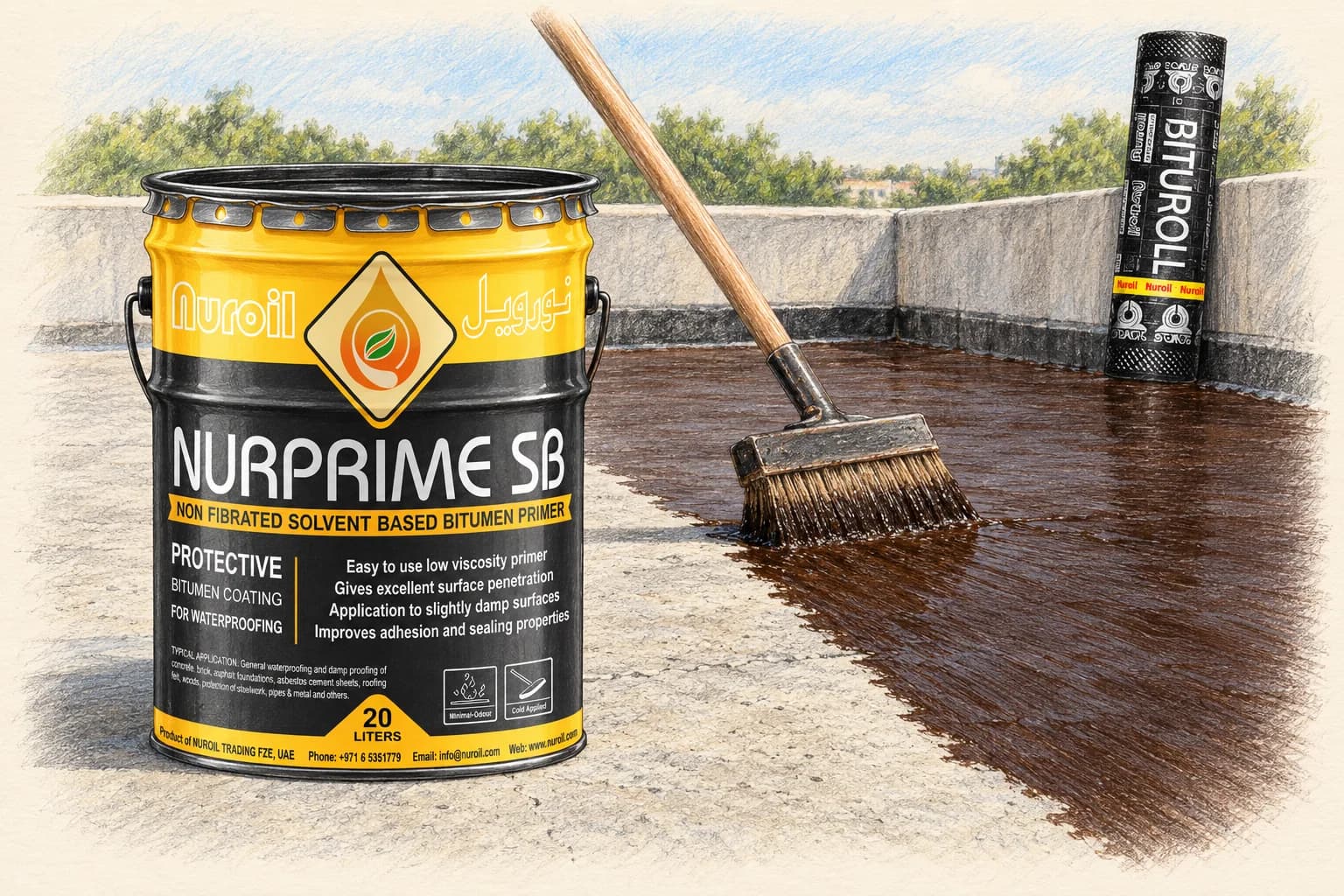
ASTM D41 describes asphalt primers as products used to bond asphalt-based materials in roofing, dampproofing and waterproofing, on concrete, masonry, metal and asphalt surfaces. The primer soaks into the pores, binds surface dust and leaves a thin bituminous layer that the next bituminous product can fuse or stick to. That logic only holds when the next layer is also bitumen based.
Compatibility at a glance
| Material applied over primer | Generally compatible? | Points to check |
|---|---|---|
| Torch-applied SBS or APP membranes | Yes, the main use | Primer must be fully dry before torching |
| Self-adhesive bitumen membranes | Often, but product specific | Many membrane makers name a specific primer |
| Hot-applied bitumen and bitumen sealants | Yes | Dry primer; follow sealant data sheet |
| Bitumen coatings, including rubberized | Usually | Some emulsion coatings use their own diluted primer instead |
| PVC, TPO or EPDM single-ply sheets | No | Bitumen can damage or stain some sheets; use the system's own adhesive |
| Polyurethane, acrylic or cementitious coatings | Not normally | Use the primer specified by that system |
| Expanded or extruded polystyrene | Often not | Solvents can dissolve polystyrene |
Torch-applied membranes
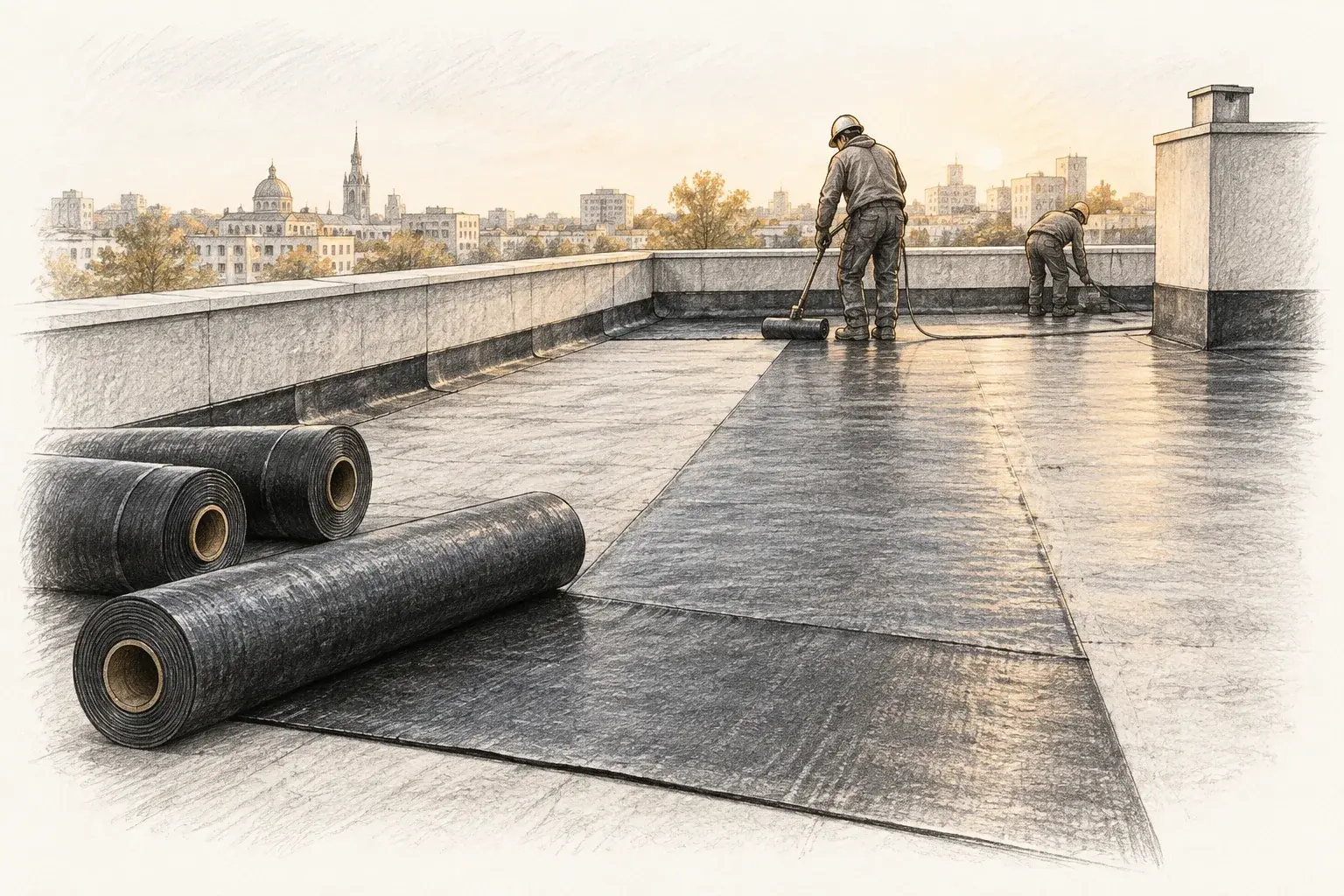
This is the classic pairing. Solvent-based primers are widely specified under heat-welded SBS and APP membranes because they penetrate dense concrete and dry quickly. Some primers state that they meet ASTM D41 and are intended specifically for heat-welded membranes. The one firm rule is that the primer must be completely dry before the torch is used, because solvent vapour trapped under the sheet can ignite.
Self-adhesive membranes
Self-adhesive membranes bond by pressure rather than heat, so they are more sensitive to primer type. Many manufacturers specify a particular primer, or a range of approved primers, and base their warranty on it. Some solvent-based primers suit them well; others leave a surface that is too smooth or too soft. Check the membrane data sheet first, and if in doubt carry out a peel test on a trial area.
Polystyrene insulation and plastics
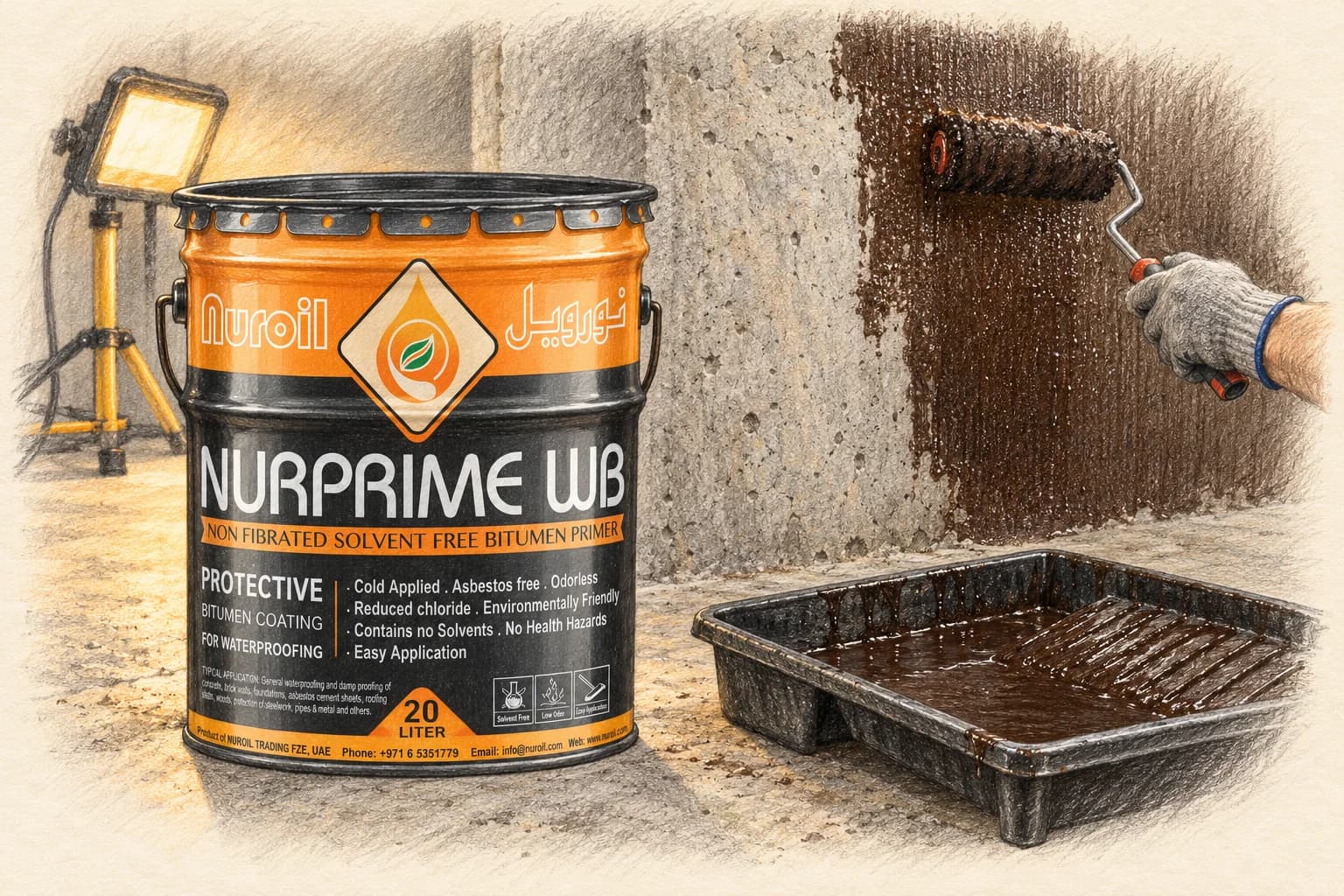
Hydrocarbon solvents dissolve expanded and extruded polystyrene. Some solvent-based bitumen primers are explicitly labelled as unsuitable for EPS and XPS boards, and for some plastics. Where a primer or the vapour from it may reach polystyrene, for example on inverted roofs or insulated basement walls, use a product the manufacturer confirms as compatible, a solvent-free primer, or a separation layer. A water-based primer is often chosen for this reason.
Substrates
Solvent-based primers suit concrete, masonry, blockwork, metal and old bituminous surfaces, and some data sheets list gypsum boards too. They need a dry surface, unlike some water-based primers that tolerate dampness. On metal they also give a degree of corrosion protection, which some data sheets mention.
Choose the primer from the membrane maker's approved list wherever one exists; compatibility then becomes part of the system warranty.
Practical checks before you order
- Read the data sheet of the membrane or coating that goes on top, and note any named primer.
- Check whether insulation, plastic pipes or sealants nearby could be affected by solvent.
- Do a small trial and peel test when combining products from different makers.
Specifying the primer
In your enquiry, name the membrane or coating system, the substrate and any approval the primer must carry, such as ASTM D41. Ask for the technical and safety data sheets and the batch certificate of analysis. Nuroil supplies solvent-based bitumen primers and water-based alternatives; send your system details via request a quote.