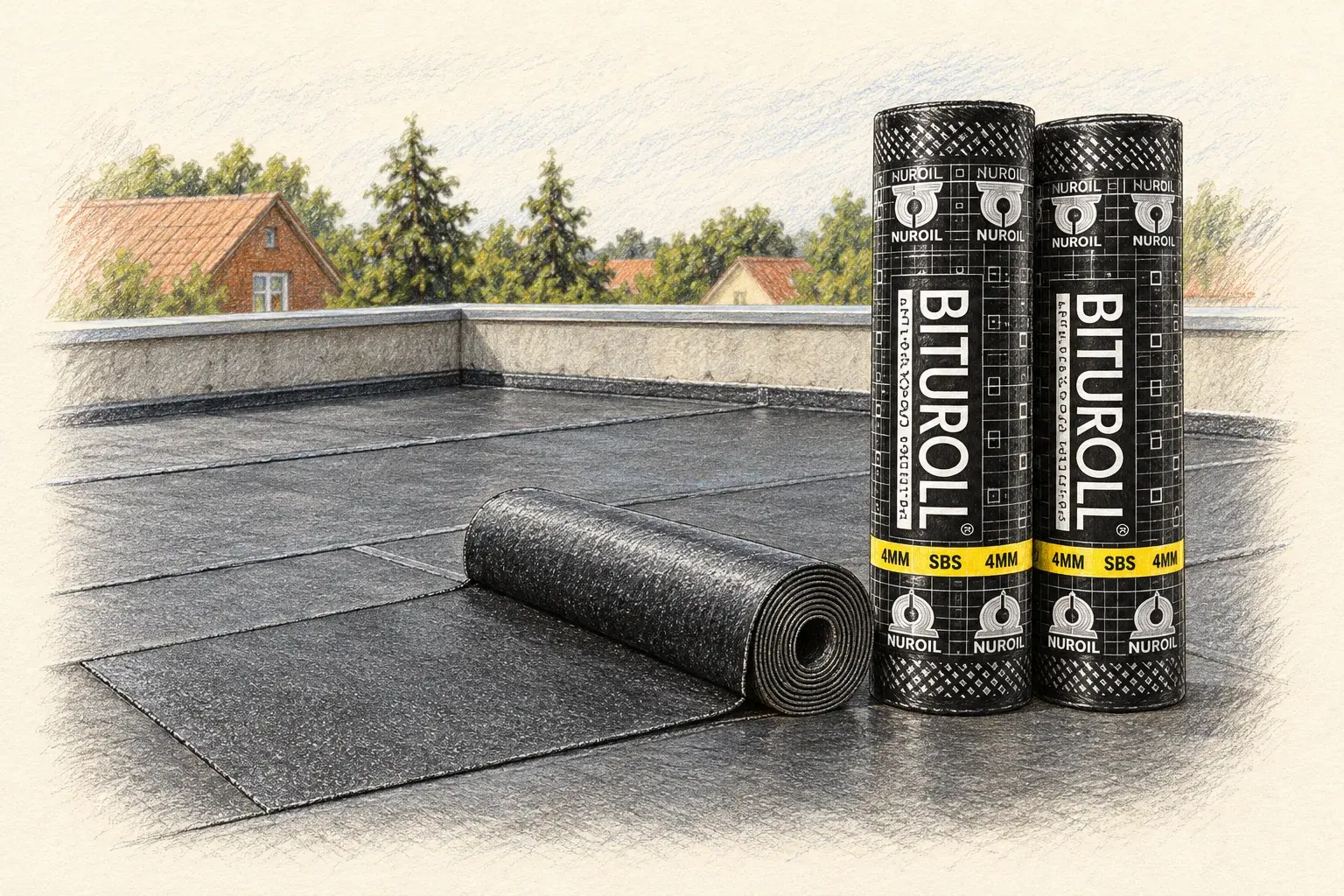
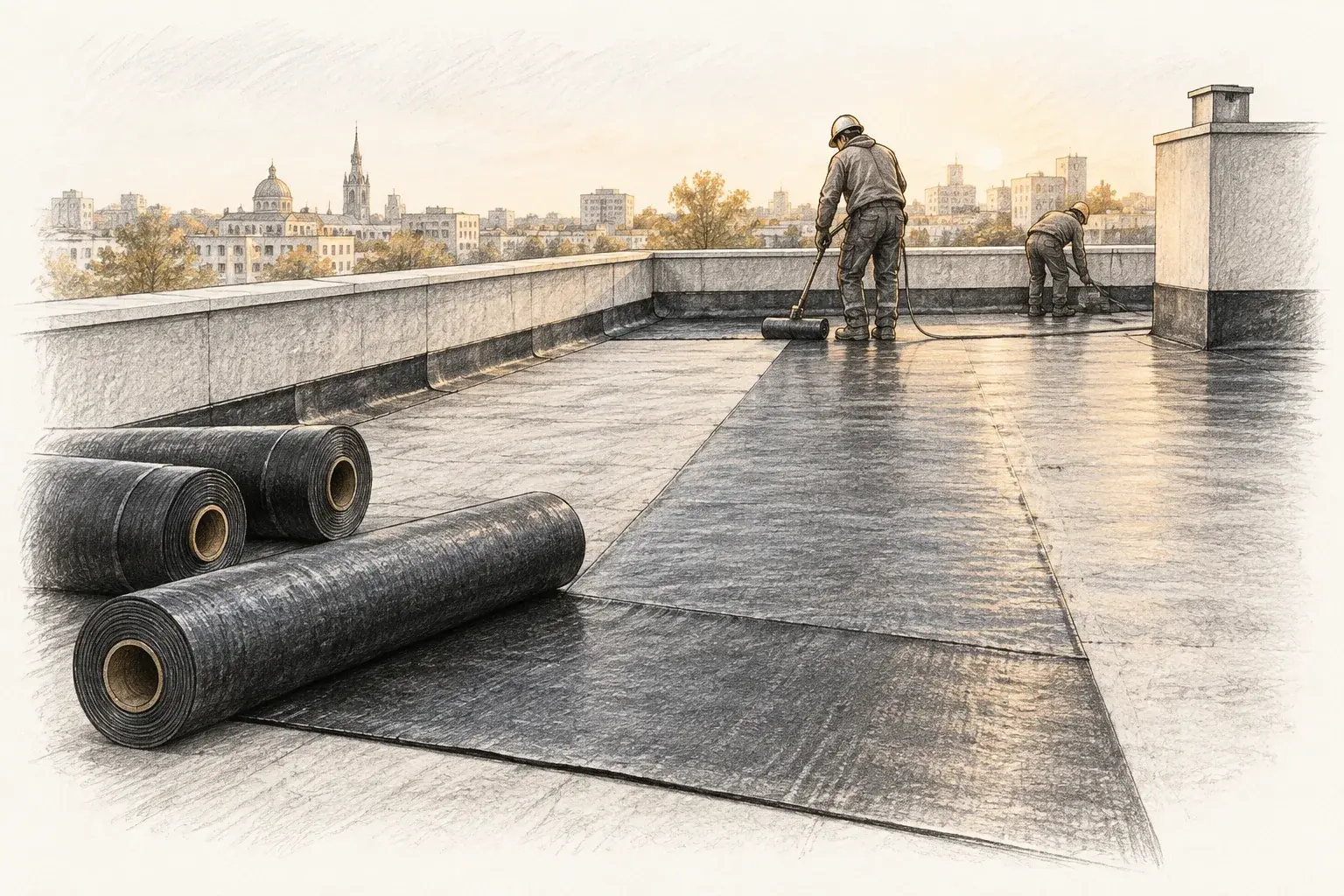
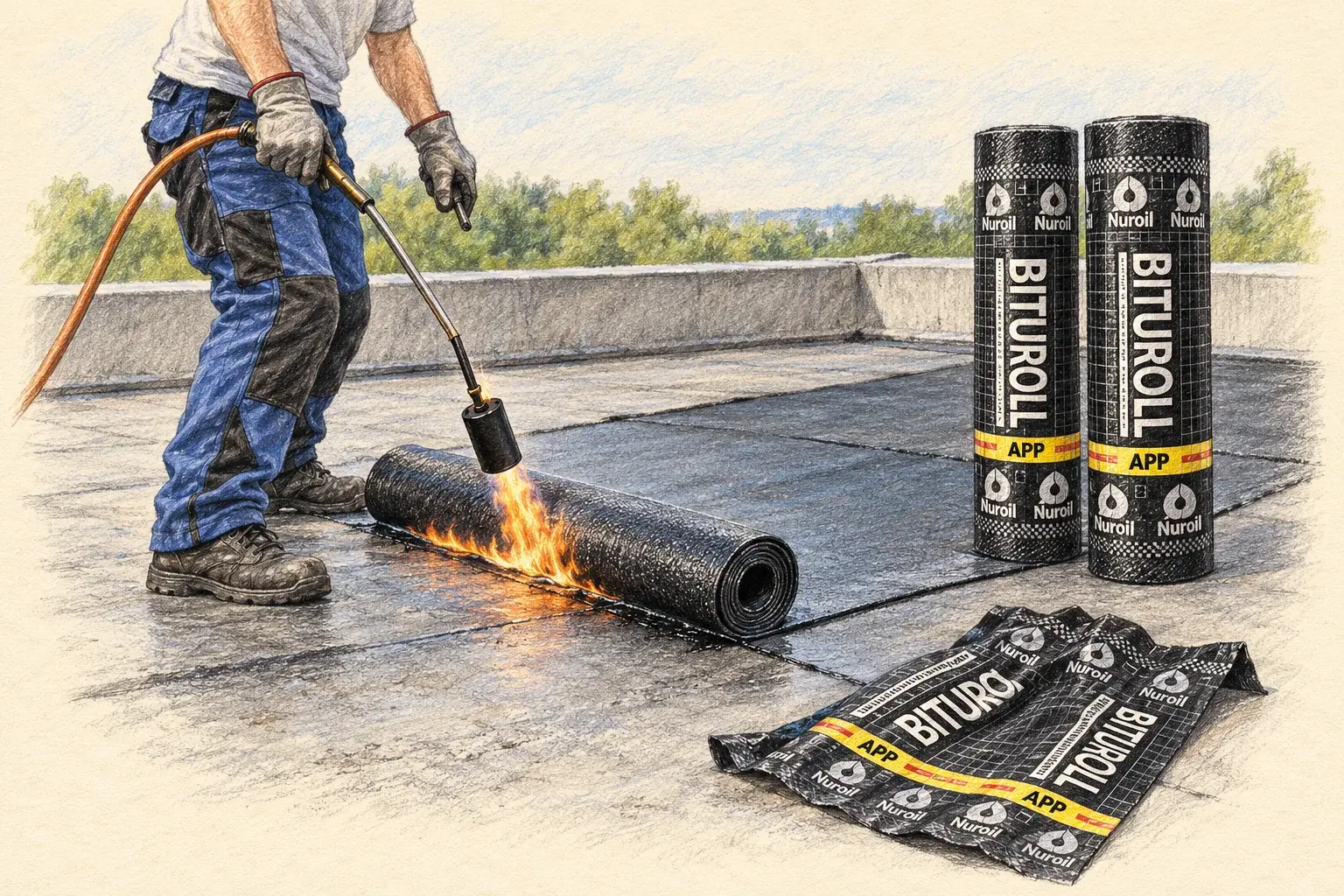
SBS modified bitumen membranes have excellent flexibility, but the polymer that gives them that flexibility is sensitive to ultraviolet light. Left bare in strong sun, the top of the compound oxidises, hardens and crazes. For any exposed roof, the surface finish on the cap sheet is therefore as important as the compound beneath it.
Why SBS needs protection
The butadiene blocks in SBS contain double bonds that react with oxygen when activated by UV and heat. Patent literature on membrane surfacing notes that because SBS polymers are UV-sensitive, the exposed top layer needs specific additional protection. By contrast, APP (atactic polypropylene) compounds have no such double bonds in the polymer backbone and are generally regarded as more UV tolerant, which is one reason APP sheets are often used with a lighter finish in sunny regions.
This does not make SBS a poor choice for hot climates. It means the finish must be specified deliberately rather than left to chance.
The main finish options
| Finish | How it is applied | Main strengths | Points to watch |
|---|---|---|---|
| Mineral granules | Ceramic-coated or natural granules pressed into the hot top surface at the factory | Good UV shielding, walkable, available in light colours | Granule embedment and adhesion must be adequate; loss exposes compound |
| Slate flakes | Flat slate chips embedded at the factory | Durable, traditional appearance | Adds weight; same adhesion concerns as granules |
| Metal foil (aluminium or copper) | Embossed foil laminated to the top | Very high reflectance or long-life appearance; complete UV barrier | Can be damaged by traffic; thermal movement of foil |
| Fine sand or film (no cap protection) | Sand dusting or thin polymer film | Intended for underlayers or where later covered | Not for permanent exposure without a coating or ballast |
| Site-applied coating | Reflective or aluminium bitumen paint applied after laying | Can be renewed during maintenance | Needs periodic recoating; compatibility with SBS must be confirmed |
Surface protection adds weight. One patent on roofing surfacing notes that granule or metal protection can add up to about 1.5 kg/m², a large share of total sheet mass. This is why cap sheets are often specified by mass per unit area rather than thickness alone.
Granule adhesion is the weak point
A granule-surfaced cap is only as good as the bond between granules and compound. Research on the durability of that bond found water more damaging than elevated temperature. Granule loss is visible as bare patches, often in drainage paths or where water ponds. In Europe, EN 12039 is used to measure granule adhesion, and the ASTM specifications for SBS sheets include a granule embedment test. Ask for the result on the data sheet.
Protected roof designs
Where the membrane will be covered, for example under paving, gravel ballast, a green roof or an inverted roof with insulation on top, UV exposure is greatly reduced. In these cases a sanded or film-faced sheet may be acceptable as the top layer, but root resistance (for green roofs) and puncture resistance become the priorities instead. The cover itself must be in place promptly; leaving an unprotected SBS sheet exposed for months during construction is a common cause of early ageing.
For an exposed SBS roof, specify the cap finish explicitly and ask for granule adhesion results, not just colour.
Specifying the finish in an enquiry
State whether the membrane is the exposed cap or an underlayer, the finish required (granules, slate, foil or sanded), the colour, and whether a coating will follow. Ask for the data sheet showing granule adhesion and UV ageing results where available. If you are weighing SBS against APP for a sun-exposed roof, our APP modified membrane page is a useful comparison. Nuroil can supply both, with documents on request.