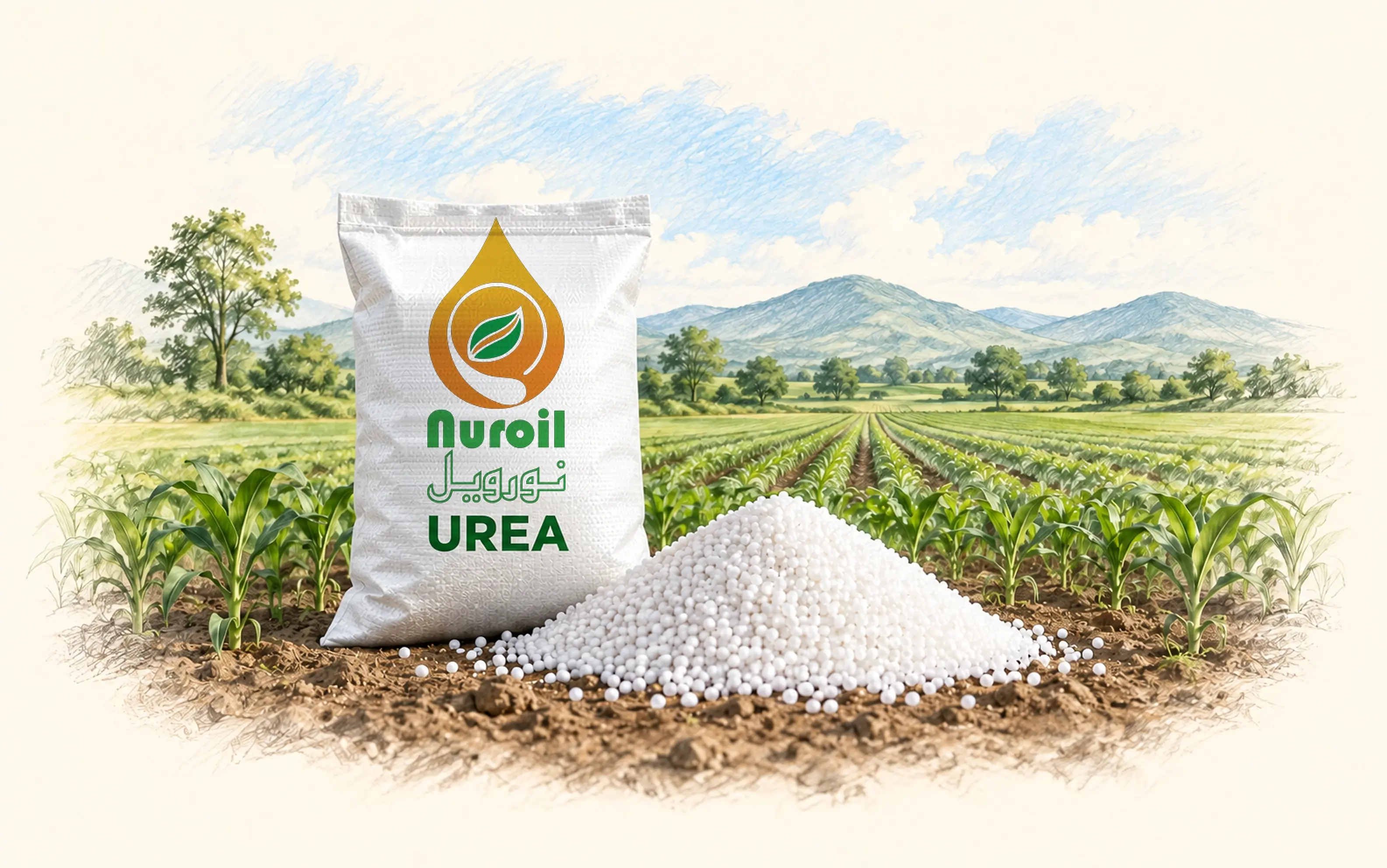
Urea is the most concentrated solid nitrogen fertilizer, but part of that nitrogen can escape to the air if the product is left on the soil surface. Extension services report that, in unfavourable conditions, a substantial share of the applied nitrogen can be lost this way, though smaller losses are more typical. Understanding why it happens lets growers and agronomists keep more of the nitrogen they pay for.
Why urea loses ammonia
After application, urea dissolves and is broken down by urease, an enzyme found in soil and crop residue. This reaction produces ammonium and raises the pH in a small zone around each granule. At high pH, more of the ammonium turns into ammonia gas, which can escape from the surface. This process is called ammonia volatilisation. It can start within hours, and most of the loss usually occurs in the first few days if urea stays on the surface.
Once urea has moved a few centimetres into the soil, the ammonium is held on soil particles and volatilisation largely stops.
Conditions that raise the risk
- Moist surface that then dries slowly: enough moisture to dissolve urea and start hydrolysis, but not enough to wash it in.
- Warm temperatures: urease works faster, shortening the safe window before rain.
- Crop residue and no-till: residue has high urease activity and keeps urea away from the soil.
- Sandy, low-CEC soils: they buffer pH poorly, so pH rises faster around the granule.
- High soil pH: alkaline and calcareous soils favour ammonia formation.
- Wind: moves ammonia away from the surface and speeds drying.
Practical ways to reduce losses
Incorporate the urea
Time application to rain or irrigation
Apply when soils are cool and winds are light
Use a urease inhibitor
Band rather than broadcast
Split applications
| Situation | Loss risk | Suggested action |
|---|---|---|
| Dry, cool soil, rain forecast within a day | Low | Surface application usually acceptable |
| Warm, damp soil, no rain forecast | High | Incorporate, irrigate or use an inhibitor |
| Heavy residue, no-till | High | Band below residue or use an inhibitor |
| Flooded rice fields | Variable | Follow local placement and water-management advice |
Urea left on a warm, damp surface with no rain in sight is the classic recipe for nitrogen loss.
Leaching and other pathways
Ammonia is not the only route. After conversion to nitrate, nitrogen can leach below the root zone on sandy soils after heavy rain, or be lost as gas from waterlogged soils. Matching rate and timing to crop demand addresses all of these at once, which is the core idea of the 4R stewardship approach.
What this means for buyers
Good field practice starts with consistent product. Specify agricultural-grade urea with nitrogen of at least 46%, biuret and moisture limits suited to your crops and climate, and the particle size your spreaders are set for. Granular urea is often chosen for mechanical spreading and blending, prilled for hand application. If you plan to treat urea with an inhibitor locally, mention this so the conditioner and size can be considered. Nuroil provides a certificate of analysis with every delivery, with SDS and third-party inspection available on request.