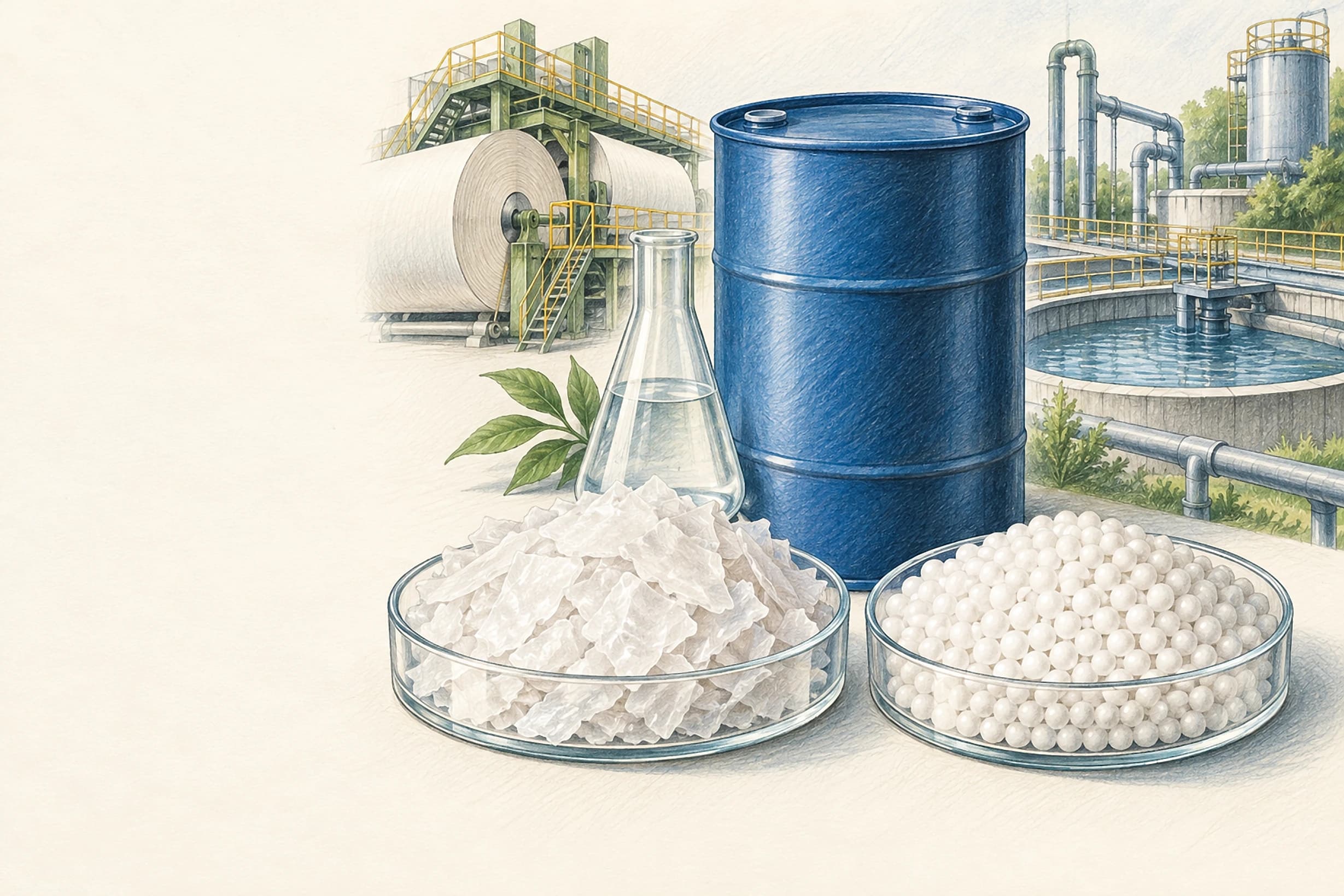
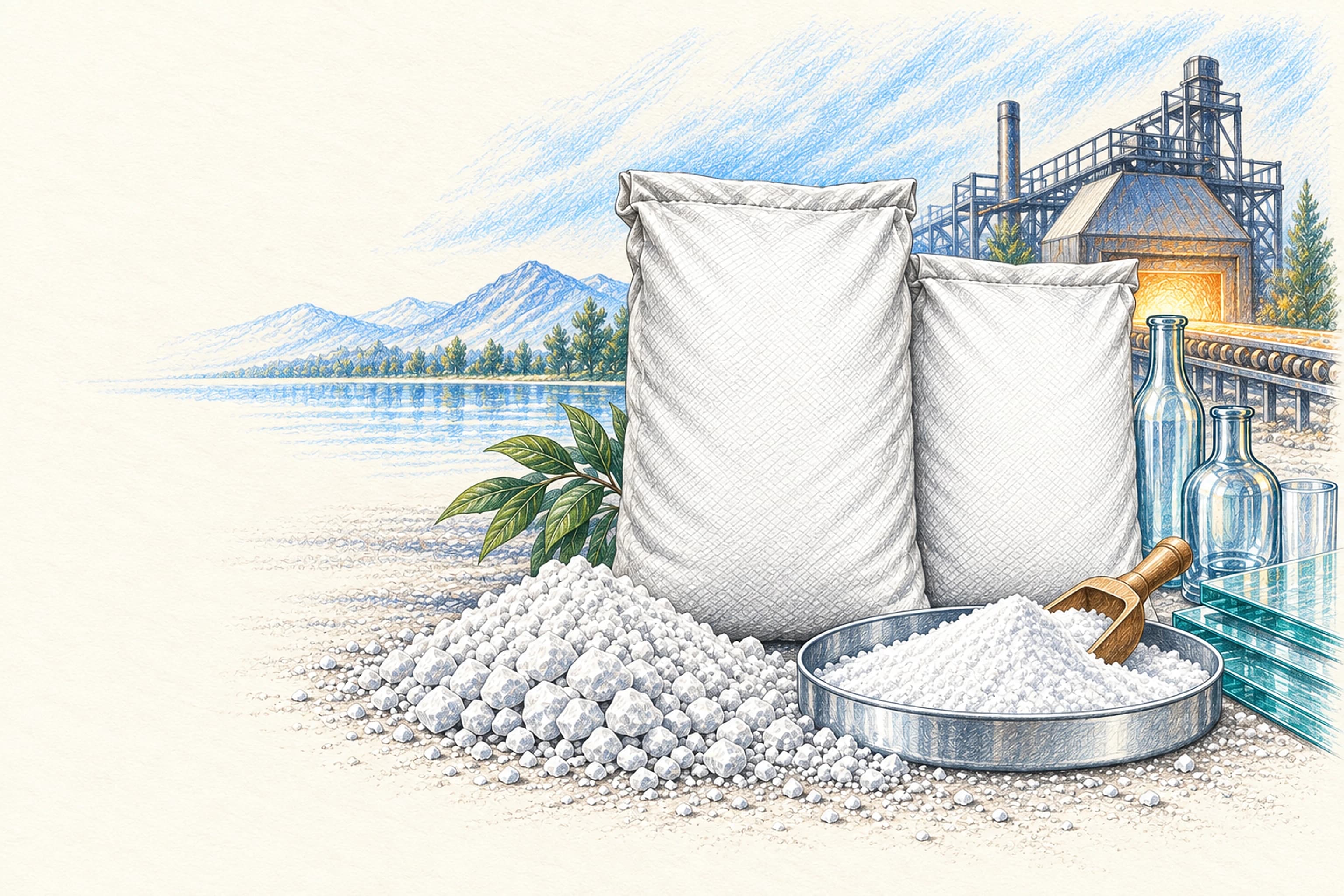
pH is one of the few numbers that touches almost every step of a water treatment plant. It decides how well coagulants work, how strongly chlorine disinfects, whether treated water attacks pipes or scales them, and whether an industrial effluent is allowed to leave the site. Most plants therefore keep at least one alkali and often one acid on the chemical feed list.
Why pH and alkalinity are adjusted
Raw water arrives with whatever pH and alkalinity its source gives it. Soft surface waters and desalinated water are often low in alkalinity and slightly acidic, which makes them corrosive to metal pipes and fittings. Raising pH and alkalinity reduces the solubility of lead and copper and can help a thin protective calcium carbonate layer form on pipe walls.
pH also matters for disinfection. Free chlorine exists as hypochlorous acid and hypochlorite ion, and hypochlorous acid is the stronger disinfectant. As pH rises, more of the chlorine shifts to the weaker hypochlorite form, so drinking water guidance generally prefers chlorination below about pH 8.
Coagulation is the third driver. Aluminium and iron coagulants consume alkalinity as they react, and each has a pH window where flocs form well. Plants treating soft water may have to add alkali before the coagulant so that the reaction has enough buffering to work with.
Alkalis used to raise pH
The common choices are caustic soda (sodium hydroxide), hydrated lime (calcium hydroxide), soda ash (sodium carbonate) and sodium bicarbonate. They differ in strength, in what they add to the water and in how easy they are to handle.
| Chemical | Alkalinity added per mg/L dosed (as CaCO₃, approx.) | Main points |
|---|---|---|
| Caustic soda | 1.55 | Strong, fast and easy to meter as a liquid; adds sodium; corrosive and needs careful handling. |
| Hydrated lime | 1.21 | Low cost per unit of alkalinity; adds calcium and hardness; fed as slurry, so feeders and lines need maintenance; can raise turbidity. |
| Soda ash | 0.90 | Adds carbonate alkalinity and buffers well; milder than caustic; dissolves to make a feed solution; adds sodium. |
| Sodium bicarbonate | 0.60 | Raises alkalinity with little change in pH; useful for buffering rather than pH correction. |
Caustic soda gives the most alkalinity per kilogram, which is why it is popular for pH trimming at the end of treatment. Lime is widely used where hardness and alkalinity both need to rise, but careless dosing can deposit calcium carbonate in storage tanks and distribution mains. Soda ash sits in between: it is gentler to handle than caustic, adds useful carbonate buffering and is a common choice for small systems. You can read more on the caustic soda and soda ash product pages.
Acids used to lower pH
Some waters, and many industrial process streams, need pH brought down rather than up. Sulphuric acid and hydrochloric acid are the usual mineral acids. Sulphuric acid adds sulphate; hydrochloric acid adds chloride, which matters where chloride limits or corrosion of stainless steel are a concern. Carbon dioxide is also used, particularly after lime softening, because it lowers pH while converting excess hydroxide back to bicarbonate alkalinity and is self-limiting in how far it can push pH down.
Choosing and dosing in practice
The right chemical depends on the starting water, the target pH and alkalinity, what the chemical adds (sodium, calcium, sulphate, chloride), and the feed equipment already on site. Poorly buffered water may need two chemicals, for example soda ash for alkalinity and a small caustic dose for final pH.
- Base dose on jar tests and on calculations of corrosivity indices, not on rules of thumb.
- Pace chemical feed to flow, and confirm the result with calibrated online pH meters.
- Check that liquid caustic storage is protected from cold, because concentrated solutions crystallise at relatively mild temperatures.
- Use chemicals certified for drinking water contact where the water is for public supply.
Caustic soda gives the most alkalinity per kilogram. Soda ash adds buffering and is easier to handle. Lime is cheap but adds hardness and creates solids to manage.
What to specify when buying
For water treatment alkalis, state the form (caustic soda flakes, pearls or liquid; soda ash dense or light), the minimum assay, the limits on impurities that matter to you such as iron, chloride and heavy metals, and the packing that suits your feed system. Ask for a certificate of analysis with each lot and the safety data sheet. Nuroil supplies caustic soda and soda ash for water treatment from established producers, with a CoA on every delivery and third-party inspection on request. Our water treatment page lists the related products, or send your specification through the quote request form.