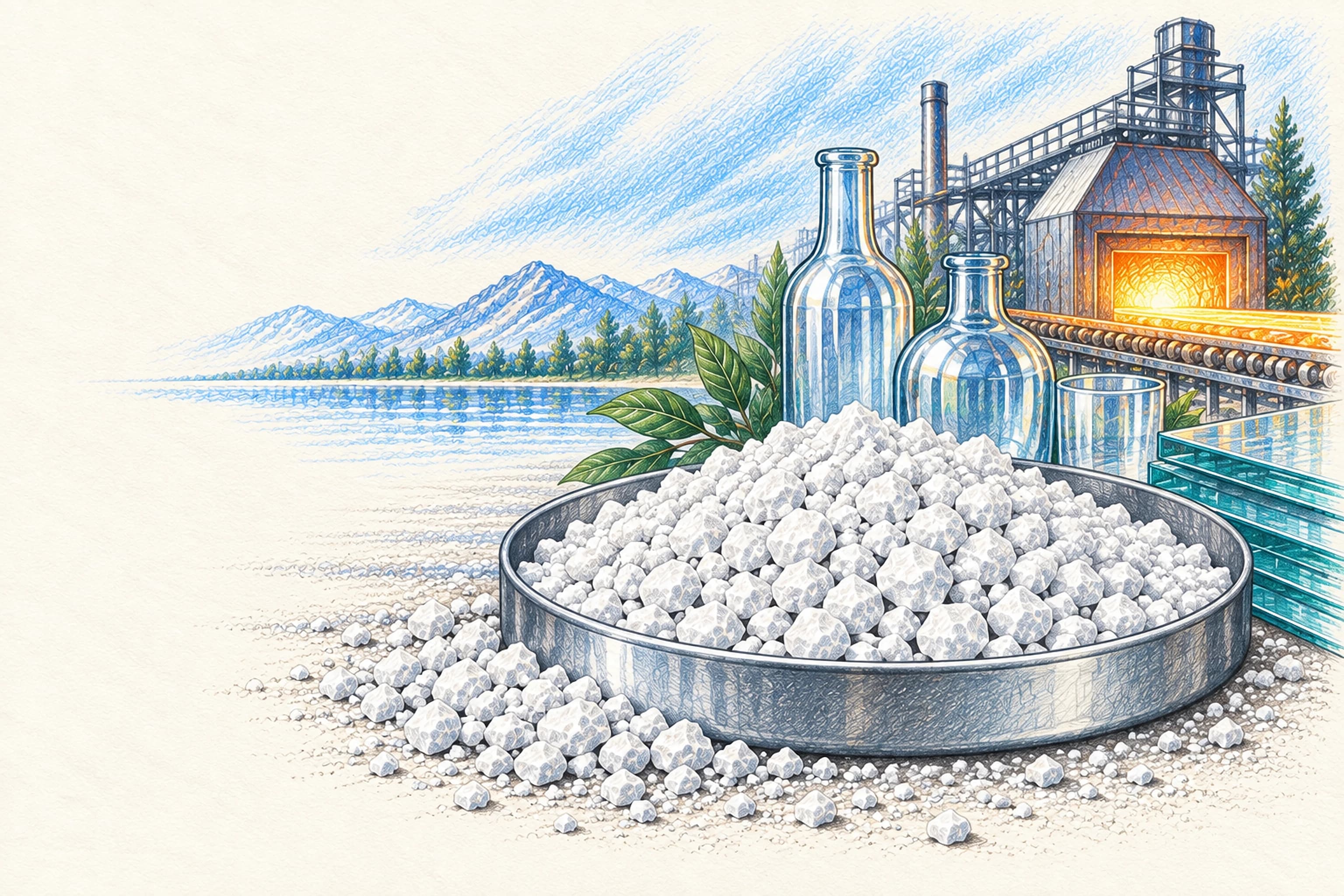
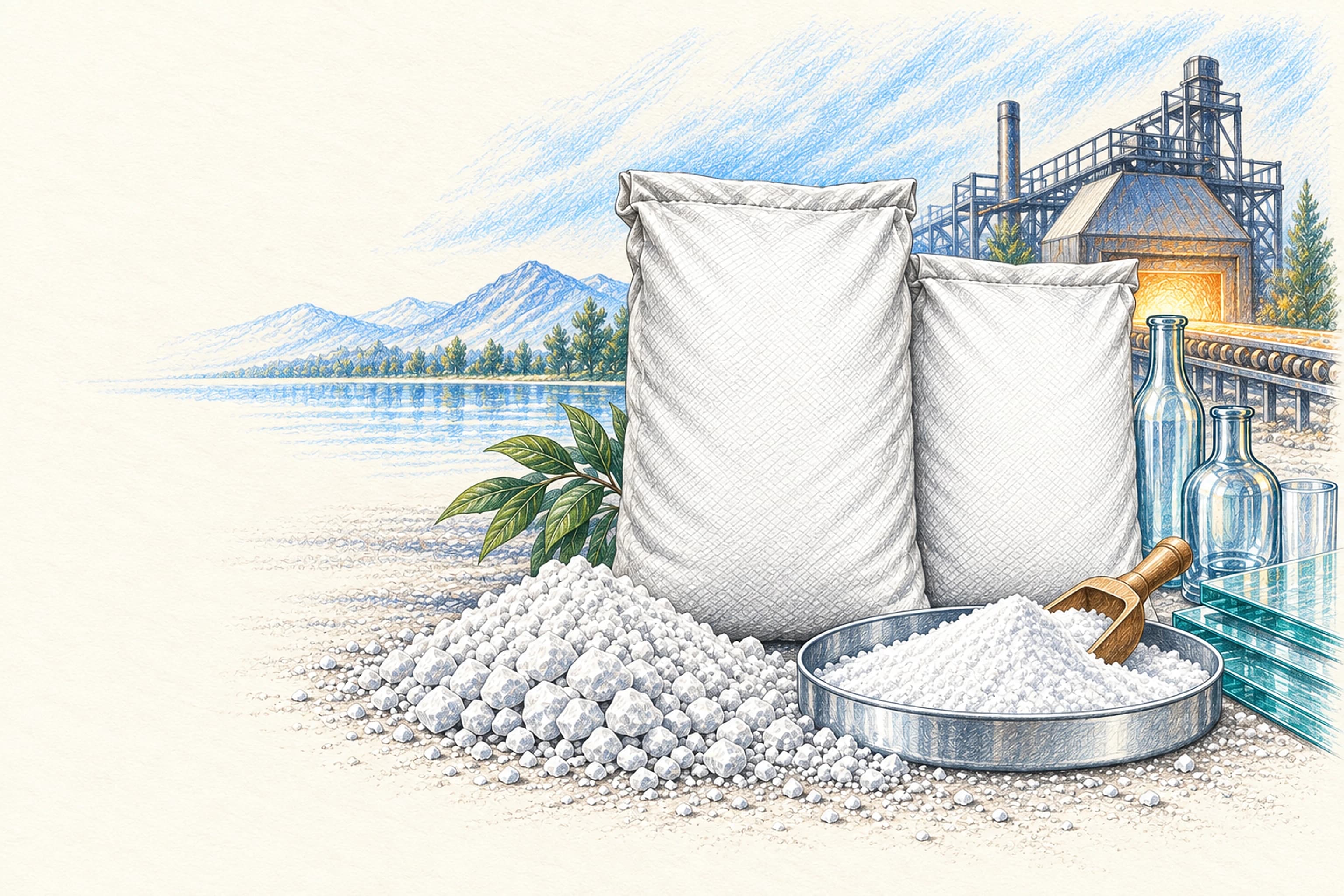
Dense soda ash travels well: it is granular, free flowing and, unlike caustic soda, not regulated as a dangerous good for transport according to producer data sheets. Its main enemy in transit is moisture, which causes caking and lumps. This guide sets out the usual packing options and what to check for each.
Packing options at a glance
| Packing | Typical unit | Suits | Watch points |
|---|---|---|---|
| Small bags | 25 or 50 kg (producers also use 50 lb) | Detergent makers, water treatment, smaller users, manual feeding | Inner liner or laminated bag; pallet wrapping; manual handling limits |
| Big bags (FIBCs) | About 1 t | Glass, silicate and chemical plants with discharge frames | Lifting loops rating, discharge spout, liner, safe stacking |
| Bulk | Hopper trucks, rail hopper cars, ship holds | Large plants with silos and pneumatic conveying | Clean, dry holds; covered transfer; dust control at discharge |
Small bags
Woven polypropylene bags with a polyethylene liner, or laminated bags, are common. The liner keeps out humid air during sea transit and storage. Bags are normally palletised and stretch-wrapped or loaded loose by hand. Palletised loads speed discharge and reduce bag damage; loose loading can fit more tonnes into a container but takes longer to unload.
Big bags
One-tonne bulk bags suit plants with an overhead discharge station. Specify:
- Safe working load and safety factor for the lifting loops.
- Top filling spout and bottom discharge spout, or a flat bottom if you cut bags open.
- An inner liner for long sea voyages or humid destinations.
- Labelling with product, lot number, net weight and handling marks.
Because dense ash has a bulk density around 1,000–1,100 kg/m³, a one-tonne bag is compact and stable, which helps stacking and container loading.
Bulk shipments
Bulk cargo suits users with silo storage. Holds or hopper wagons must be clean, dry and free of residues from fertilizers, sulphur or other cargoes that could contaminate the ash. Covered conveyors and dust collection at discharge keep losses and nuisance dust down. Dry conveying air protects the product from hydration in pneumatic lines.
Container loading and moisture control
- Inspect containers for holes, damp floors and odours before loading.
- Line the container with kraft paper or a liner where condensation is likely.
- Use desiccant bags or strips on long voyages through humid climates.
- Do not load bags that are wet, torn or caked; reject them at the warehouse.
- Keep the payload within the container's rated weight and the road limits at destination.
- Secure the load so bags cannot shift and tear during the voyage.
Condensation is the usual cause of wet product. Containers warm by day and cool at night, and moist air inside condenses on the roof and drips onto the cargo. Liners, desiccants and dry, well-packed bags reduce this risk, especially on routes that cross several climate zones.
Most quality claims on soda ash are not about purity but about lumps, torn bags and wet product. Good packing prevents them.
Receiving and storing
On arrival, check bag counts, seals and condition, and set aside any wet or damaged units for inspection. Store on pallets in a dry, covered area, away from acids. Soda ash is alkaline and its dust irritates eyes and the respiratory tract, so use goggles and dust masks when cutting or emptying bags. Refer to the product SDS.
What to agree with the supplier
Agree the bag type and liner, net weight per bag, pallet or loose loading, marking, and the number of bags or tonnes per container. For bulk, agree hold cleanliness and sampling at loading. Nuroil ships dense soda ash on FOB, CFR or CIF terms with a certificate of analysis for each lot, and can arrange inspection on request; give your packing preference when you request a quote.