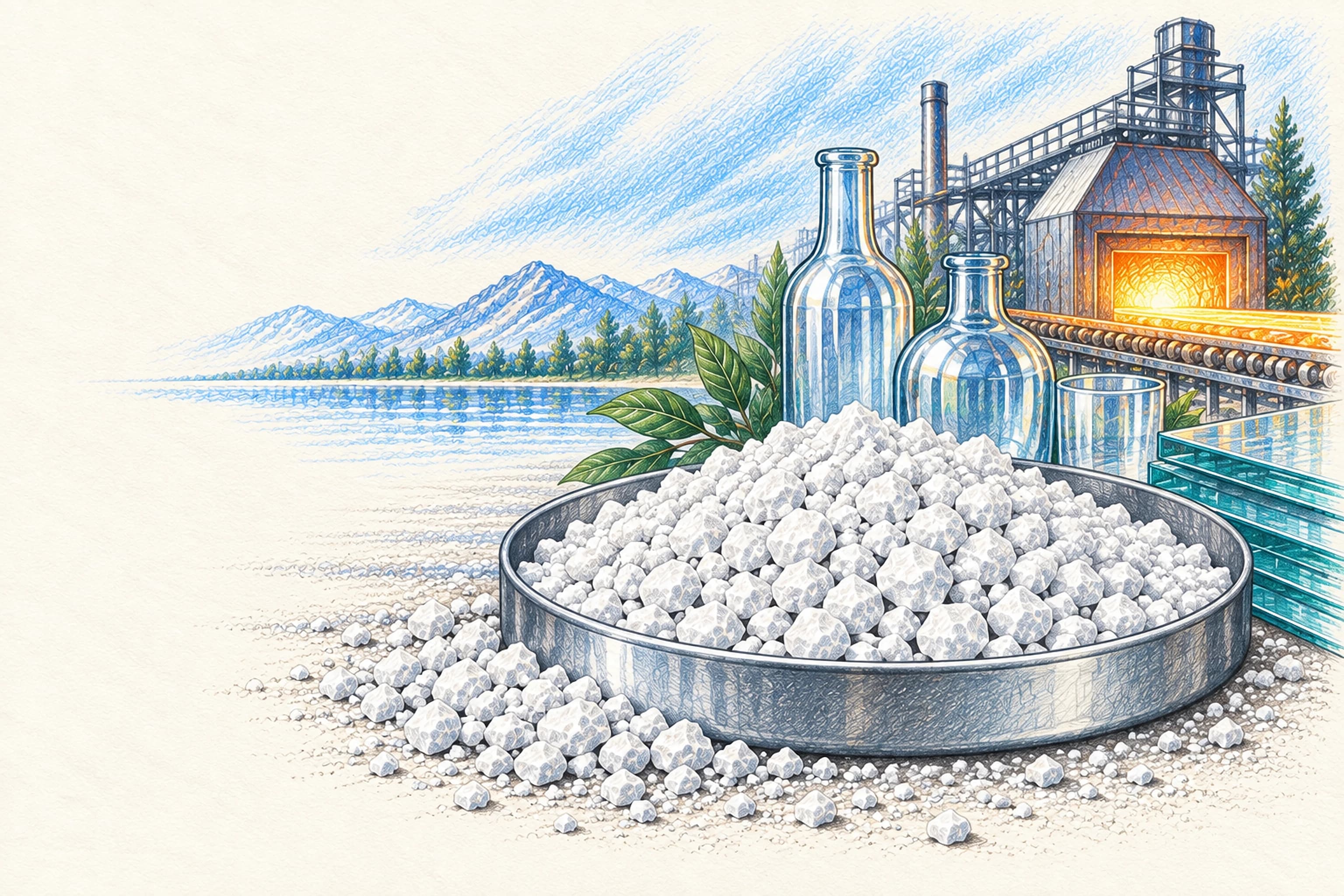
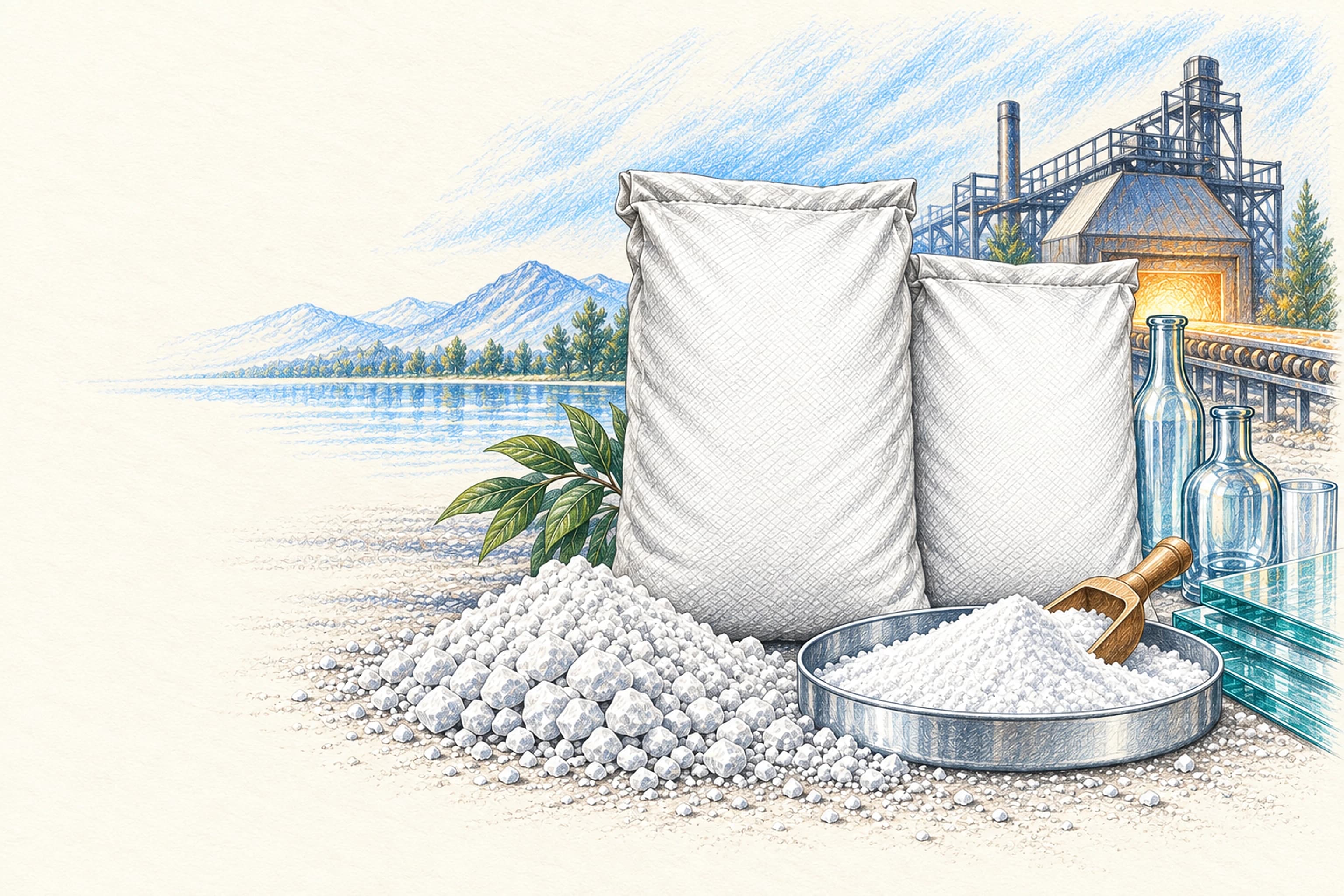
Dense soda ash is a consistent product when it leaves a well-run plant, but it passes through warehouses, ports and containers before it reaches the user. A short, routine inspection on arrival catches most problems early and gives you a clear record if a claim is needed. This guide sets out a checklist that plant stores and quality teams can adapt.
1. Documents
- Commercial invoice and packing list: product name, grade (dense), quantity, number of bags or big bags, lot numbers.
- Certificate of analysis for each lot, showing Na₂CO₃, chloride, sulphate, iron, insolubles, bulk density and screen analysis as specified.
- Bill of lading and container and seal numbers.
- SDS for the product.
- Certificate of origin and third-party inspection report if ordered.
2. Visual checks at unloading
- Seals intact and matching documents.
- Container dry, with no water stains, rust holes or foreign odours.
- Bags clean, intact and correctly marked; count against the packing list.
- Product free-flowing; note any hard lumps or caked bags separately.
- For bulk, check the hold or hopper for wet patches and foreign material.
3. Sampling
Take samples from several bags spread through the lot, or at intervals during bulk discharge, and combine them into a composite. Granules of different sizes can separate during handling, so a single scoop from the top of one bag is not representative. Seal samples in airtight containers to stop moisture pickup, label them, and keep a retained sample until the lot is used.
4. Tests and what they reveal
| Test | Typical dense ash expectation | What a failure suggests |
|---|---|---|
| Total alkalinity as Na₂CO₃ | 99.2–99.5% min | Moisture pickup or a different product |
| Sodium chloride | 0.04–0.2% max, per contract | Different production route or grade |
| Sodium sulphate | Around 0.2% max where specified | Grade mismatch |
| Iron as Fe₂O₃ | About 20 ppm max where specified | Contamination from handling or rusty equipment |
| Water insolubles | About 0.05% max | Dirt or foreign material |
| Loose bulk density | About 1,000–1,100 kg/m³ | Light or fine ash delivered instead of dense |
| Screen analysis | Low oversize, low fines per spec | Different grade, breakdown or poor classification |
| pH of 1% solution | About 11.4 | Quick identity check |
Alkalinity is measured by titrating a dissolved, weighed sample with standard acid. Some buyers run a quick pH and bulk density on every delivery and the full set on a sample basis.
Check bulk density early. It is the fastest way to tell dense ash from light ash, and the mix-up is costly in glass and silicate plants.
5. Handling a nonconformity
- Quarantine the affected lot and label it clearly.
- Photograph container condition, seals, damaged bags and lumps.
- Keep sealed samples, including one for the supplier or an independent laboratory.
- Notify the supplier promptly with the lot number, test results and photographs.
- Agree whether the material can be screened, used in a less sensitive application, or must be replaced.
6. Preventing repeat problems
- Write physical limits (bulk density, screen analysis) into the contract, not just purity.
- Agree packing with liners and desiccants for humid routes.
- Ask for pre-shipment inspection on large or first orders.
- Keep a simple log of each lot's test results so you can see trends and compare suppliers fairly.
- Store received product dry, on pallets and away from acids, so that quality does not change after acceptance.
Soda ash dust irritates the eyes and airways, so samplers should wear goggles, gloves and a dust mask, and should follow the product SDS when opening bags.
Working with your supplier
A clear specification and an agreed inspection routine make most disputes unnecessary. Nuroil provides a certificate of analysis with every dense soda ash delivery and arranges certificates of origin and third-party inspection on request; share your checklist when you request a quote.