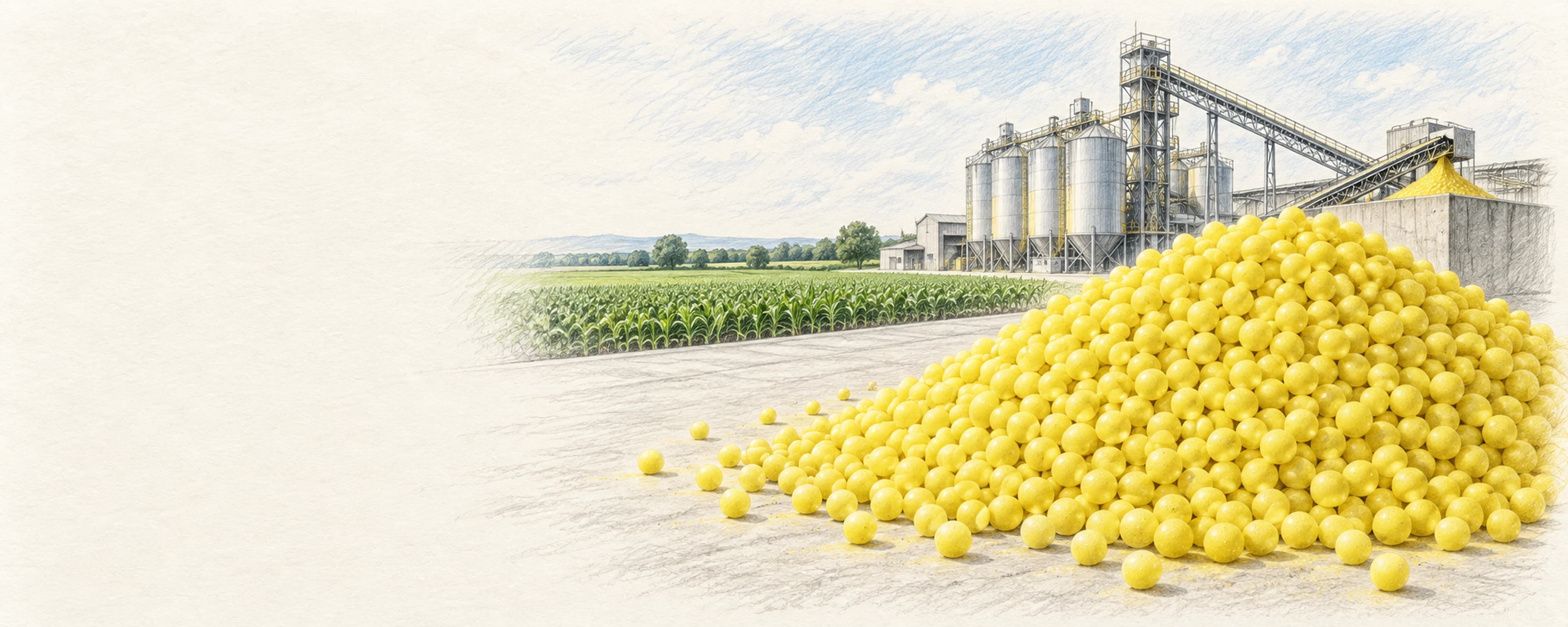
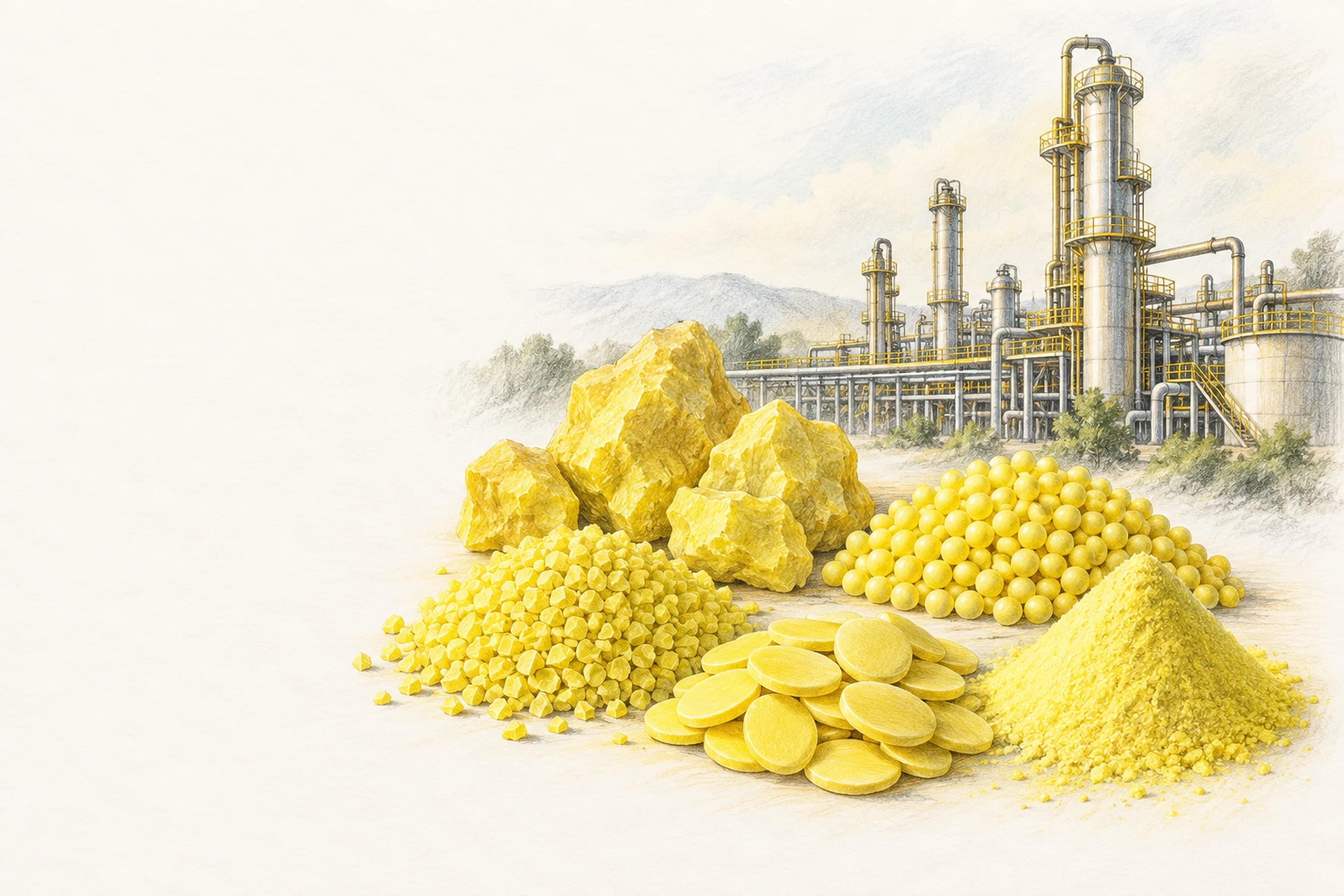
Moisture is the single biggest quality issue with water-prilled sulphur. Sulphur itself does not dissolve in or absorb water, but prills formed in a water bath leave it with water on their surfaces, in pores and between particles. That water has costs that are easy to overlook in a purchase decision.
Where the water comes from
- Forming. Droplets quenched in water can trap moisture in surface pores and small internal voids. Draining removes free water but not all of it.
- Stockpiling. Prills are often stored in open or semi-open piles, where rain adds more water. Fines in the pile hold water in the gaps between particles.
- Dust suppression. Water sprays used to control dust during handling add moisture.
Under the SUDIC formed-sulphur criteria, moisture is one of four quality factors along with shape, size distribution and friability. Wet prills generally do not meet the premium moisture criterion and are treated as standard quality, while granules and pastilles from modern plants can reach well under 0.5% moisture.
Cost one: you pay for water
Bulk sulphur is usually sold by wet weight determined by draft survey or weighbridge. Every percentage point of moisture is a percentage point of the cargo that is not sulphur. If moisture is not limited in the contract, or not measured at discharge, it is easy to pay sulphur prices for water. Some contracts specify a maximum moisture or a dry-basis settlement for this reason.
Cost two: acid and corrosion
Water on sulphur, helped by naturally occurring bacteria, slowly produces sulphuric acid. Wet sulphur is therefore corrosive to steel. It attacks conveyors, rail wagons, truck bodies and ship holds, and corrosion of steel by wet sulphur can produce iron sulphide. Iron sulphide may heat and ignite when it dries and is exposed to air, which is a known fire risk in sulphur stockpiles and holds. This is why holds carrying sulphur are often lime-washed or coated and why cleaning after discharge is thorough.
Cost three: melting and cold-weather handling
Most prilled sulphur is melted by its user. Water entering a hot melter flashes to steam, which can cause foaming and spattering and reduces melting capacity. The acid formed in storage must be neutralised with lime, and extra lime increases solids in the melt and the load on filters. Drier sulphur melts more smoothly.
Where temperatures drop below freezing, wet prills can freeze together in piles, wagons and hoppers, making unloading slow and sometimes requiring mechanical breaking, which in turn creates dust.
| Effect of moisture | Who bears it | How to limit it |
|---|---|---|
| Paying for water | Buyer | Maximum moisture in contract, testing at discharge |
| Corrosion and iron sulphide | Ship owner, buyer's plant | Dry product, hold preparation, drained storage |
| Melter foaming and lime demand | Buyer's plant | Dry feed, covered storage |
| Freezing in cold weather | Logistics and receiving site | Lower moisture, covered transport |
A moisture limit is the most valuable single line in a prilled sulphur contract.
Practical steps for buyers
- Ask for typical and maximum moisture and how it is measured.
- Request moisture testing at loading and again at discharge, using sealed, airtight samples.
- Store prills on a drained, hard pad or under cover, and avoid sprays beyond what dust control needs.
- Compare offers on a dry-sulphur basis, not just on wet tonnage.
Remember that a sample left open in warm air dries quickly, so a low result from a poorly sealed sample can be misleading.
Specifying moisture in your enquiry
State your maximum acceptable moisture, the test method and the point of measurement. Nuroil provides a CoA with each delivery and can arrange third-party inspection at loading on request. You can request a quote with your moisture and quality limits.