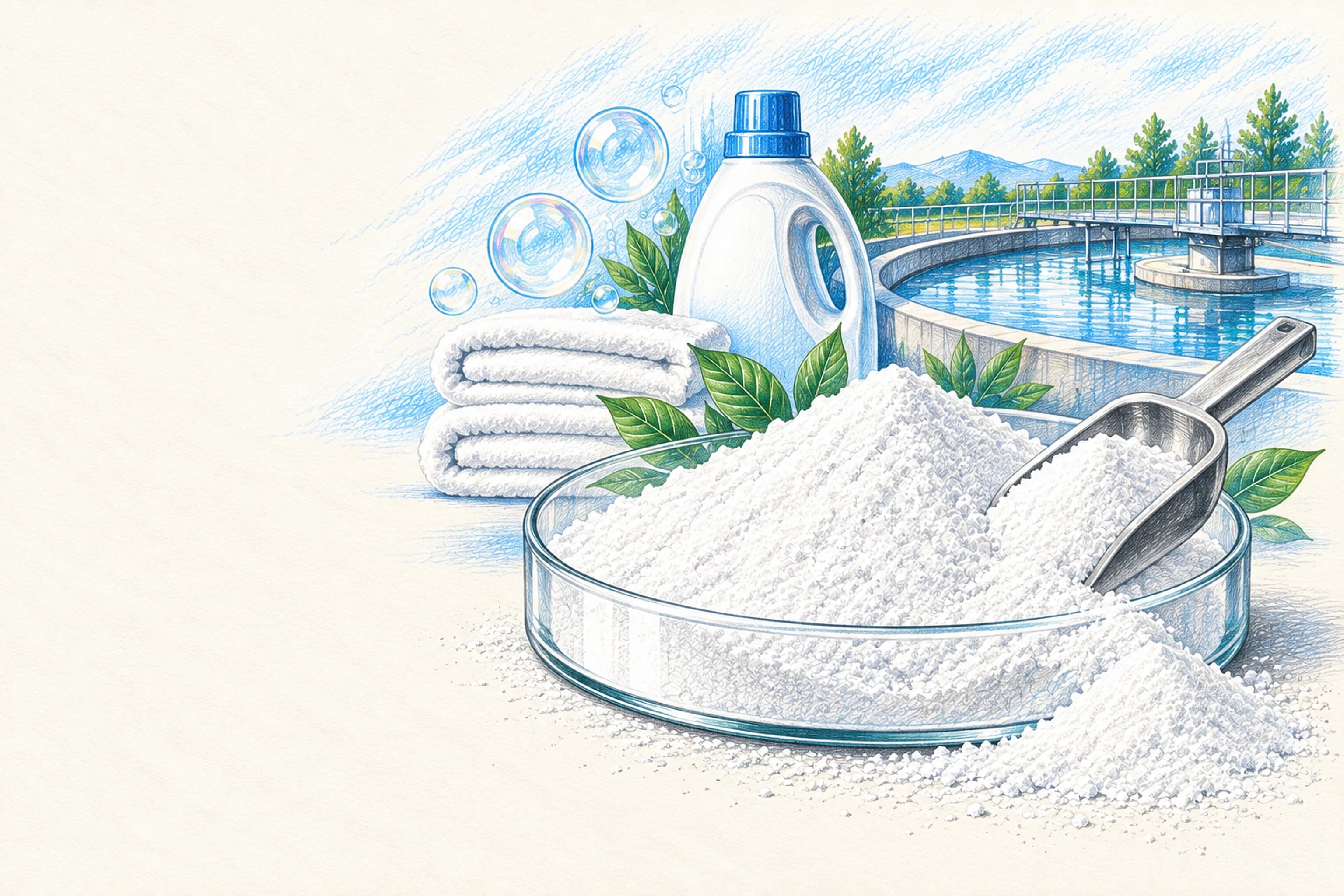
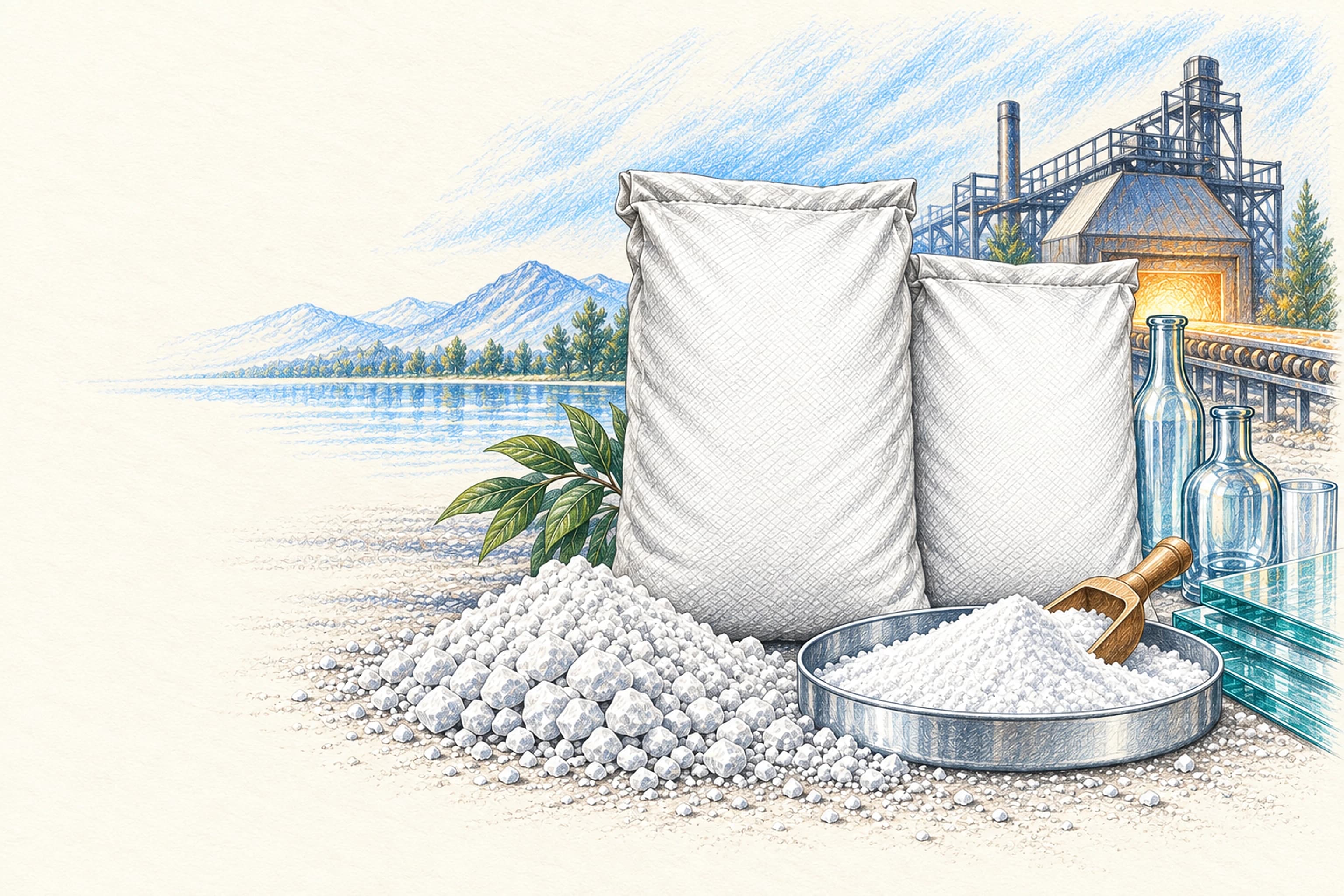
Light soda ash is a straightforward chemical to buy, but its low bulk density and sensitivity to moisture change the logistics compared with dense ash. A buyer who orders it the same way as dense ash may find fewer tonnes per container than expected, or bags that have caked during a long, humid voyage. This checklist covers the points to settle before you place an order.
1. Confirm the grade and specification
- State clearly that you need the light grade, and give a bulk density range if it matters to your process.
- List chemical limits: sodium carbonate minimum, chloride, sulphate, iron and insoluble matter.
- Add particle size or absorptivity if you dry-blend detergents.
- Name any standard the product must meet, for example a water-treatment or food-additive standard.
2. Choose the packing
| Packing | Suits | Points to check |
|---|---|---|
| 25 kg bags | Small users, manual tipping, distributors | Polyethylene liner or laminated woven bag; palletised and wrapped |
| 50 kg bags | Users with manual handling arrangements for heavier bags | Local manual-handling rules; stronger pallets |
| Bulk bags (around 1 tonne) | Plants with bulk-bag dischargers or hoists | Liner, discharge spout, lifting loops, safe working load |
Light ash bags are bulkier than dense ash bags of the same weight. Check that your warehouse and handling equipment can deal with the extra volume.
3. Plan container loads around volume
Because light ash weighs roughly half as much per cubic metre as dense ash, a container usually fills by volume before it reaches its weight limit. Expect a lower tonnage per container than you would get with dense soda ash, and plan freight costs per tonne accordingly. Ask the supplier to confirm the loadable quantity per container for the specific packing, since bag size, pallet use and stacking pattern all change the figure.
4. Protect against moisture
Light ash has a large surface area and absorbs moisture quickly, forming hydrates that cake. On a long voyage through humid regions, condensation inside the container can wet the top layers.
- Ask for bags with an inner liner or a moisture-resistant laminate.
- Request clean, dry, odour-free containers, inspected before stuffing.
- Consider desiccant bags or container liners for long or humid routes.
- Pallets should be shrink-hooded or stretch-wrapped.
5. Request the right documents
- Certificate of Analysis for each lot, showing results against your agreed limits.
- Safety Data Sheet in the language your site needs.
- Certificate of Origin if your customs authority requires it for duty purposes.
- Packing list showing bag count, net and gross weights and lot numbers.
- Third-party inspection report covering quantity, packing condition and sampling, if you want independent confirmation at loading.
With light soda ash, agree the loadable tonnage per container and the moisture protection up front; both are easy to fix before loading and hard to fix after arrival.
6. Agree marking and labelling
Ask for each bag or bulk bag to carry the product name, grade, net weight, lot number and the hazard information required at destination. Clear lot numbers let you match each pallet to its certificate, which matters if a quality question comes up months later.
7. Check on arrival
Inspect the container doors and roof for damage, photograph the load before unloading and note any wet or torn bags on the delivery receipt. Soft lumps that crumble in the hand are common and harmless. Hard cake usually points to water ingress and should be reported promptly with photographs and lot numbers.
Working with Nuroil
Nuroil supplies light soda ash from established producers, shipped FOB from UAE ports or CFR/CIF to your port. Each delivery comes with a CoA, and MSDS, certificate of origin and third-party inspection are available on request. Send your specification, packing preference and destination through the quote request form, or use the contact page for questions.