Joints and cracks in concrete and asphalt pavements let water and grit into the structure. Sealing them is one of the cheapest maintenance jobs a road owner can do, but the choice of sealant decides whether the seal lasts one season or several. Bitumen-based sealants come in two broad families: hot-poured products that are melted on site, and cold-applied products that are used straight from the container. This article explains how they differ and how to decide between them.
How each type works
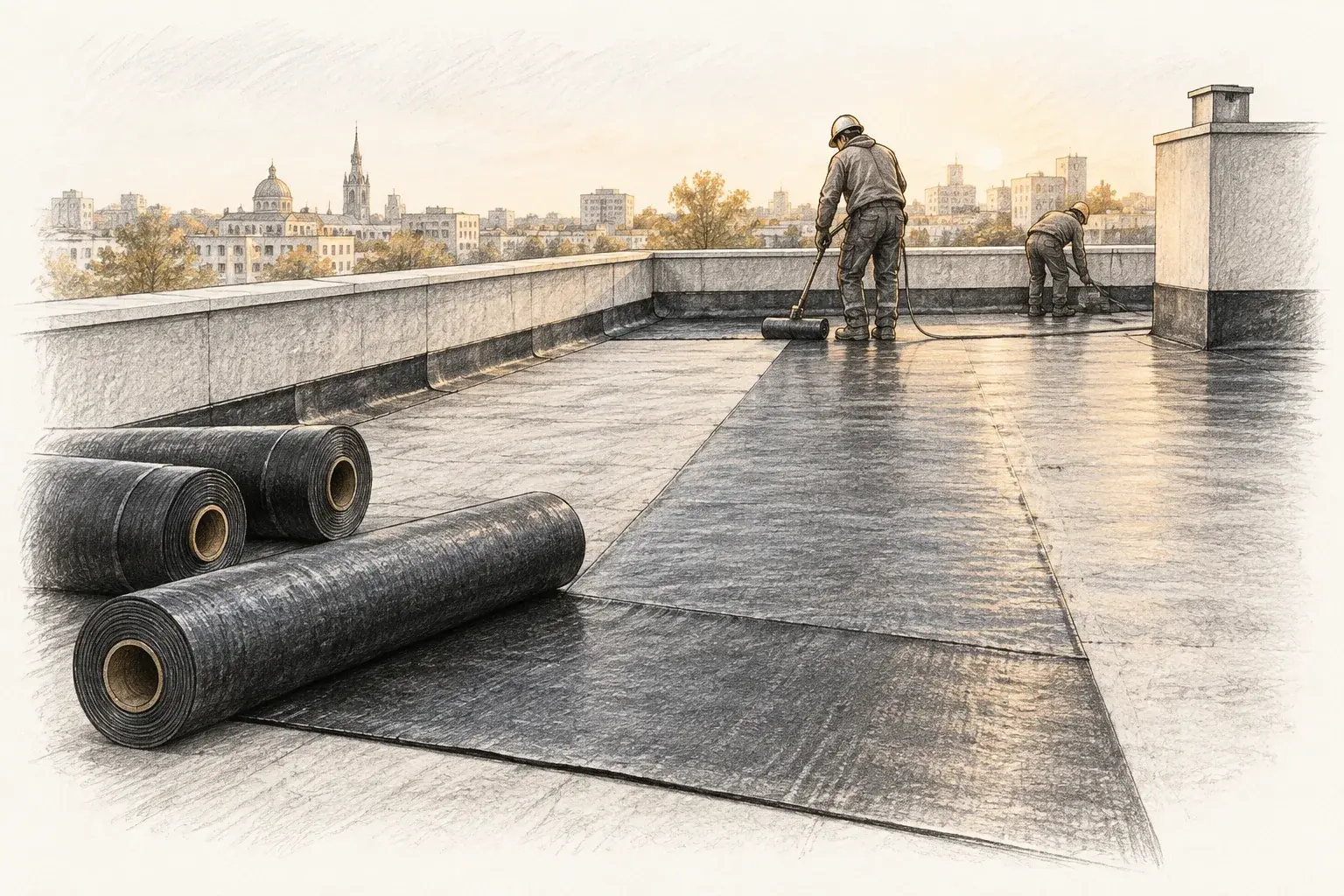
A hot-poured sealant is a thermoplastic compound. It is solid at ambient temperature and is heated in a melter until it flows, then pumped or poured into the joint. As it cools it regains its rubbery consistency within minutes. Typical compounds combine a bitumen binder with mineral filler and an elastomer such as crumb rubber or an SBS-type polymer; a laboratory study of commercial European products found binder contents of roughly half to three quarters of the mass, with the balance made up of filler and rubber.
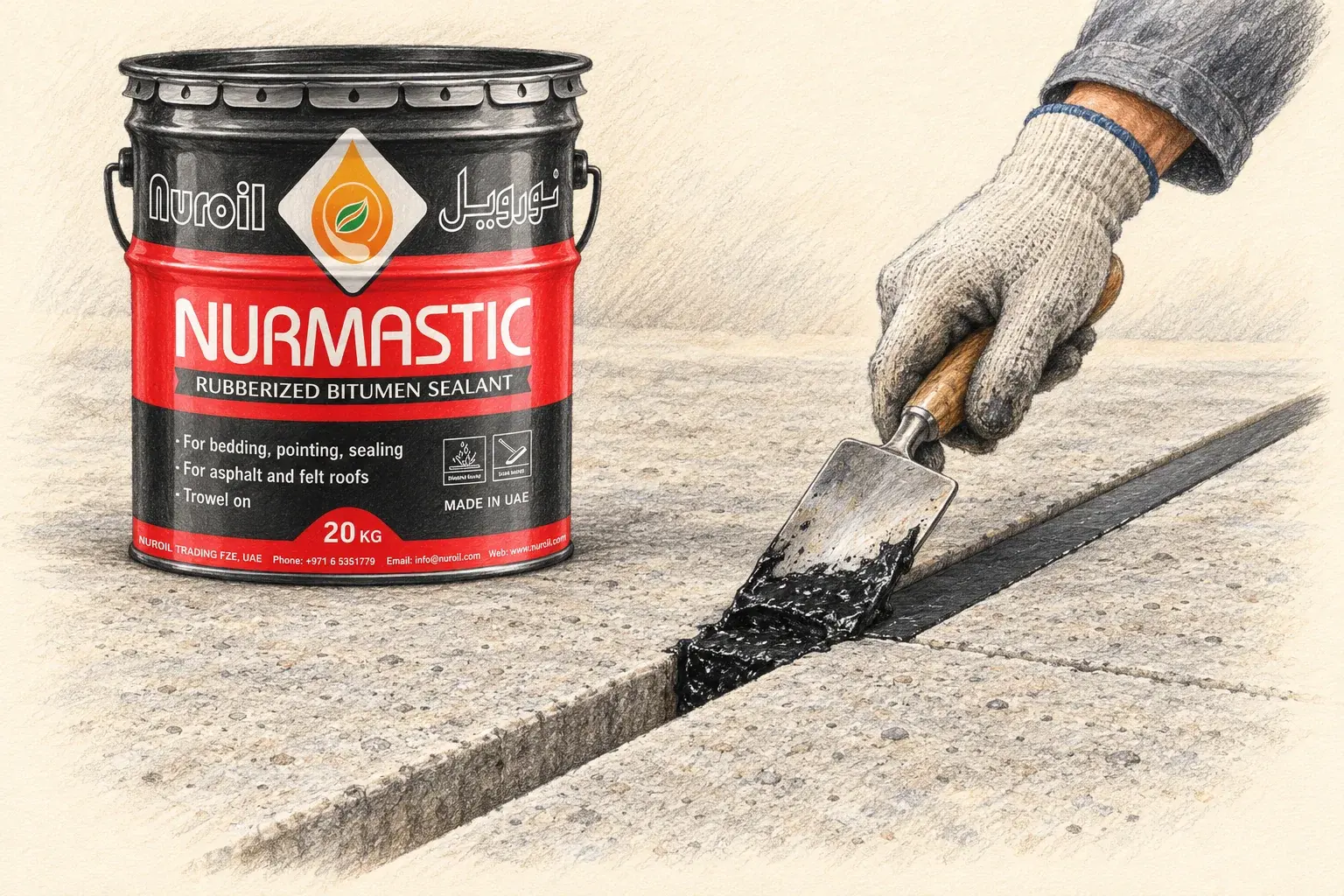
A cold-applied bitumen sealant is supplied ready to use, usually as a bitumen emulsion or a solvent-thinned, polymer-modified liquid or mastic. It hardens as the water or solvent leaves the material. No melting equipment is needed, but the product is not serviceable until that loss of water or solvent is complete.
Performance in service
Field evidence generally favours hot-poured products for working joints and cracks that open and close with temperature. A multi-year state highway research project in Texas compared several sealants on live roads and found that hot-poured materials performed better than cold-poured ones and had a lower average annual cost once service life was taken into account. The same work noted that the cold-poured products needed longer to set and cure, particularly in humid weather, and that their performance declined more sharply over time.
Cold-applied sealants still have a place. They suit small patching jobs, driveways and car parks, footpaths, remote sites where hauling a melter is impractical, and narrow non-working cracks where movement is small.
| Factor | Hot-poured | Cold-applied |
|---|---|---|
| Equipment | Indirect-heated melter with agitator, wand or pour pot | Pour can, squeegee or caulking gun |
| Time to traffic | Short; ready once cooled and tack-free | Longer; depends on drying or curing, slower in humid or cool weather |
| Movement capacity | Good on working joints when specified to the right type | Generally lower; best on non-working cracks |
| Typical standards | ASTM D6690, EN 14188-1 | EN 14188-2 (concrete pavements); product-specific data sheets |
| Typical uses | Highways, airfield pavements, concrete road joints, large crack-sealing programmes | Small repairs, low-traffic areas, sites without heating equipment |
Site and climate considerations
In hot climates the sealant must resist softening and tracking under tyres in summer, so the softening point and flow resistance matter. Where pavements see cold nights or winters, the sealant must stay flexible at low temperature without cracking or pulling away from the joint walls. Hot-poured products are graded for these conditions; for example ASTM D6690 sets different types for moderate, general and very cold climates.
Both families need a clean, dry joint. Hot-poured sealant is more tolerant of cool weather because it is placed hot, but it will not bond to damp concrete. Cold-applied emulsion products can be harmed by rain before they have cured and cure slowly in high humidity.
Safety and handling
Hot-poured sealants are applied at high temperatures, so burns and fumes are the main risks. Melters should be indirectly heated (usually an oil jacket) with continuous agitation, and the material should never be heated above the producer's maximum safe heating temperature or held hot for longer than the data sheet allows, because overheating degrades the polymer and can cause the sealant to fail early. Solvent-based cold sealants are flammable. Always follow the product SDS.
Use hot-poured sealant for working joints and large programmes; reserve cold-applied products for small, low-movement or remote jobs.
What to include in an enquiry
When asking for bitumen sealant, state whether you need hot-poured or cold-applied material, the pavement type (concrete or asphalt), the standard and type or class required, the climate range at site, approximate joint dimensions and total quantity, and the preferred packing. Ask for the technical data sheet with recommended pouring and maximum heating temperatures, the SDS and a certificate of analysis for the batch. Nuroil can supply bitumen sealants for pavement and joint sealing on FOB, CFR or CIF terms; send your requirements through the quote form.