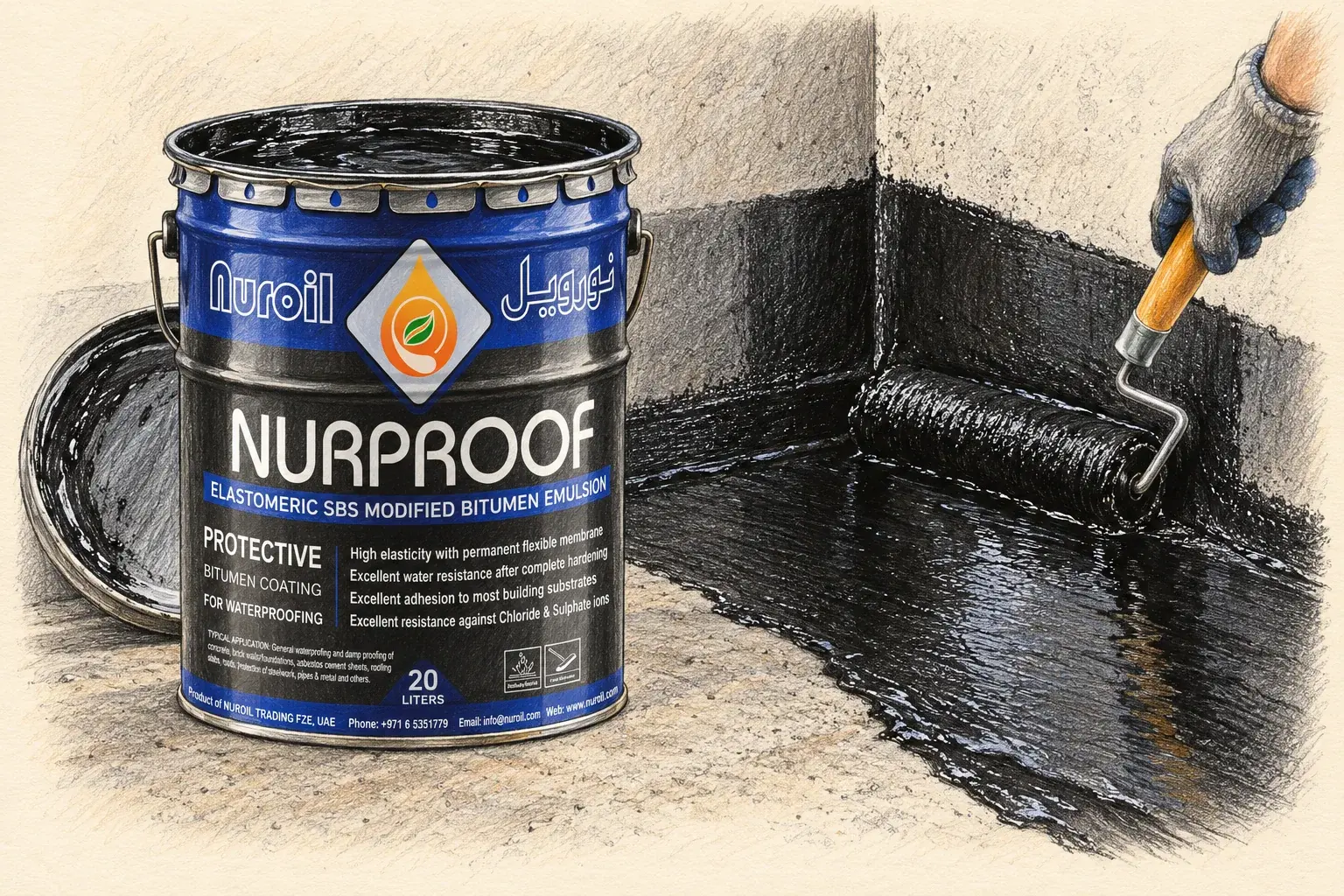
On a building site, two drums of black liquid can look the same. One may be a plain bitumen emulsion used for damp-proofing and priming; the other an elastomeric coating rich in SBS rubber meant to bridge cracks. Choosing the cheaper one for the wrong job is a common source of leaks. This article sets out how they differ and when each is the right buy.
What each product is
Plain bitumen emulsion
Elastomeric SBS bitumen coating
How the films compare
| Feature | Plain bitumen emulsion | Elastomeric SBS coating |
|---|---|---|
| Film character | Flexible but weak when stretched | Rubbery, stretches and recovers |
| Crack bridging | Hairline at most | Small shrinkage and hairline cracks |
| Typical build | Thin coats | Thicker build in multiple coats |
| Main roles | Damp-proofing, priming, curing compound, protective coat | Waterproofing of foundations, wet areas, roofs under cover |
| Cost per litre | Lower | Higher |
Where plain emulsion is enough
- Damp-proofing on the outside of walls that face damp soil but not water under pressure.
- Priming concrete before a membrane or a heavier coating; diluted emulsion penetrates and seals the surface.
- Curing compound on fresh concrete, where a thin film slows water loss.
- Protective coats on buried concrete or steel where the aim is to reduce moisture contact, not stop water.
Where the SBS coating is worth paying for
- Foundations and basements where the coating is the waterproofing layer and the concrete may crack as it shrinks.
- Wet areas such as bathrooms and balconies under tiles, where small movements occur at junctions.
- Planters and podiums under soil or screed.
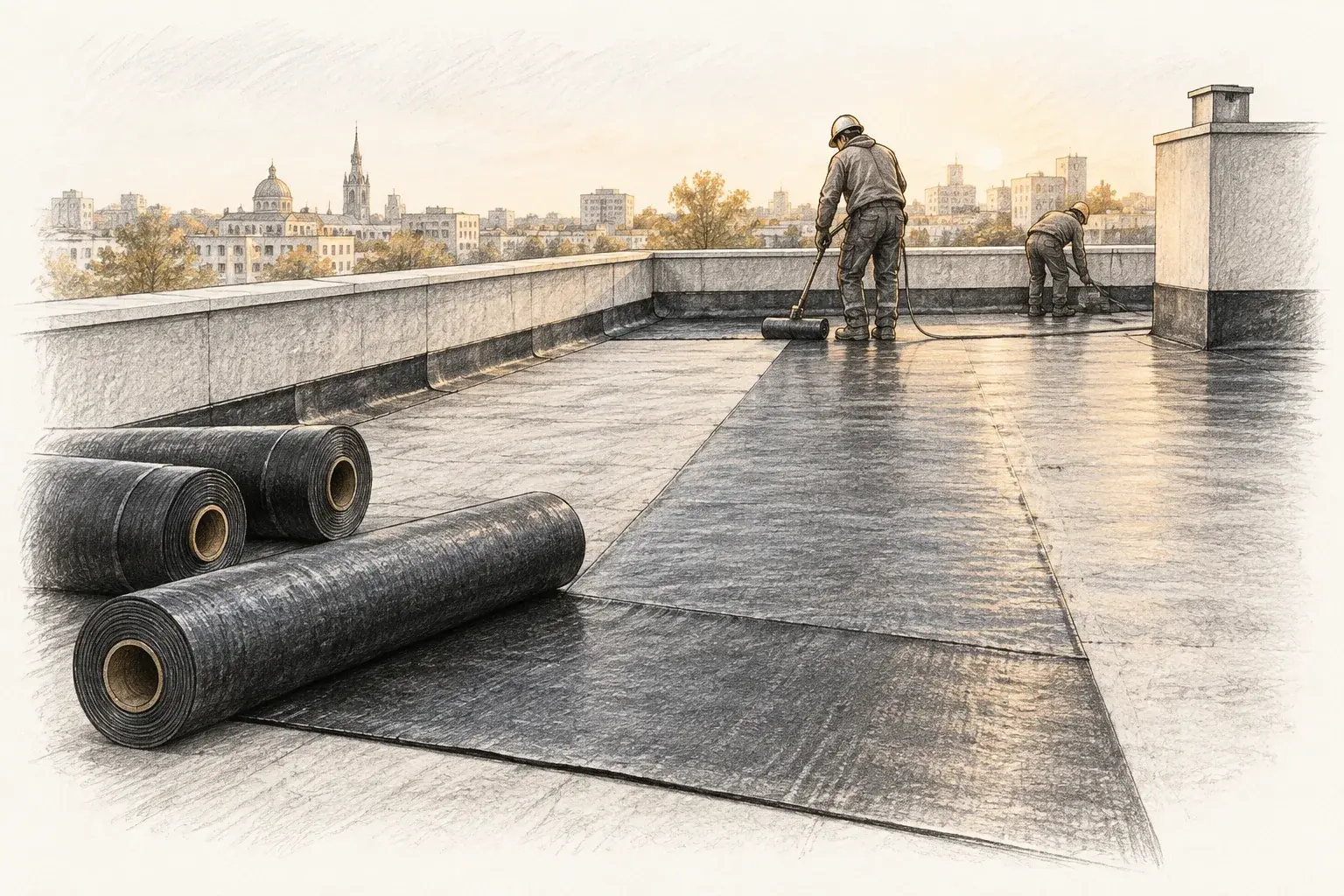
- Detailing around penetrations on membrane roofs, where sheets are hard to shape.
- Repairs of old bitumen roofs or membranes, when covered or topcoated.
Cost per protected area, not per litre
An elastomeric coating costs more per litre, but the meaningful comparison is cost per square metre of reliable waterproofing. A plain emulsion asked to act as a waterproof layer may need more coats and still crack. An SBS coating applied at the correct dry film thickness can be the cheaper outcome once rework is counted. Equally, using an SBS coating as a primer or curing compound wastes money.
Using both on one job
The two products often work together. A diluted plain emulsion, or the producer's recommended primer, seals and dusts down porous concrete; the elastomeric coating is then built up over it in two or more coats to the required thickness. Check that the primer and coating are compatible, ideally from the same product line, and allow the primer to dry before the first full coat.
Checking what you are buying
Because the two look alike, ask for numbers: solids content, elongation, crack bridging result and the standard the product is tested against (for below-ground use, EN 15814 is the European reference for polymer modified bituminous thick coatings). Also ask whether the product is water-based or solvent-based, since that changes handling and drying.
Putting it in an enquiry
Describe the use and the substrate, and say whether you need an elastomeric waterproofing coat, a primer or both. Nuroil supplies elastomeric SBS bitumen coating and other construction products with a certificate of analysis on every delivery; send quantities via request a quote.