Most discharge consents set a pH window, often somewhere around neutral, before industrial effluent can go to a sewer or watercourse. Metal finishing, chemical, battery, food, textile and many other plants produce streams that are too acidic or too alkaline to meet it. Neutralisation is usually the first treatment step, and the chemical chosen shapes the cost, the sludge and the control strategy.
How much alkali an acid needs
Neutralisation follows simple chemistry, so the dose can be estimated from the acid load. As an example, take 1 tonne of sulphuric acid (100% basis). From the molecular weights, it needs roughly:
- about 815 kg of caustic soda (dry basis), or about 1.6 tonnes of 50% liquid caustic;
- about 755 kg of hydrated lime;
- about 1.08 tonnes of soda ash, which also releases carbon dioxide as it reacts;
- about 595 kg of magnesium hydroxide.
These are theoretical figures for pure reagents. Real doses are higher because of reagent purity, incomplete reaction and the buffering of other substances in the stream, which is why jar testing on the actual effluent is essential.
The main alkalis compared
| Alkali | Reaction speed | pH if overdosed | Sludge | Notes |
|---|---|---|---|---|
| Caustic soda | Very fast | Can reach about 14 | Little from the reagent; metal hydroxide sludge can be gelatinous | Clean liquid feed and simple control; adds sodium and dissolved solids; corrosive; 50% liquid needs protection from cold. |
| Hydrated lime | Fast | Up to about 12.5 | Heavier, compact sludge that settles and dewaters well; gypsum forms with sulphuric acid | Usually the lowest reagent cost; slurry feed needs mixing and line maintenance; scaling risk. |
| Soda ash | Moderate; foams as CO₂ is released | Buffered, lower than caustic | Light | Easy to handle as a dry powder; dissolves for feeding; useful where calcium would precipitate. |
| Magnesium hydroxide | Slower, two-step | Around 9, even when overdosed | Less sludge volume than lime | Built-in pH ceiling reduces overshoot; needs longer reaction time; raises dissolved solids. |
Caustic soda is the most common choice where flows are modest or variable, because a liquid is easy to pump and responds quickly to a pH controller. Lime is attractive for large acid loads and for streams carrying metals or sulphate, where its dense sludge is a benefit. Soda ash is a useful middle option where handling safety matters or where adding calcium would cause scaling. Magnesium hydroxide is chosen where avoiding overshoot is the priority.
Neutralising alkaline effluent
Alkaline streams, such as those from cleaning-in-place, bottle washing, textile scouring or alkaline process rinses, are brought down with sulphuric acid, hydrochloric acid or carbon dioxide. Sulphuric acid is economical but adds sulphate, which some sewer authorities limit because of concrete corrosion. Hydrochloric acid adds chloride. Carbon dioxide is slower but cannot push pH far below neutral, which makes it forgiving to control.
Control and safety points
- pH response near neutral is steep: a small excess of strong reagent swings pH sharply. Two-stage neutralisation, with coarse and fine dosing tanks, gives steadier results.
- Equalise flow and load where possible, so the dosing system sees fewer extremes.
- Keep acid and alkali storage segregated with separate bunds, and never mix concentrated reagents directly.
- Follow the product safety data sheet for protective equipment; concentrated caustic and acids cause severe burns.
Caustic is the easiest to control, lime gives the best sludge, and magnesium hydroxide is the hardest to overdose. Base the final choice on a jar test of your own effluent.
Buying neutralisation chemicals
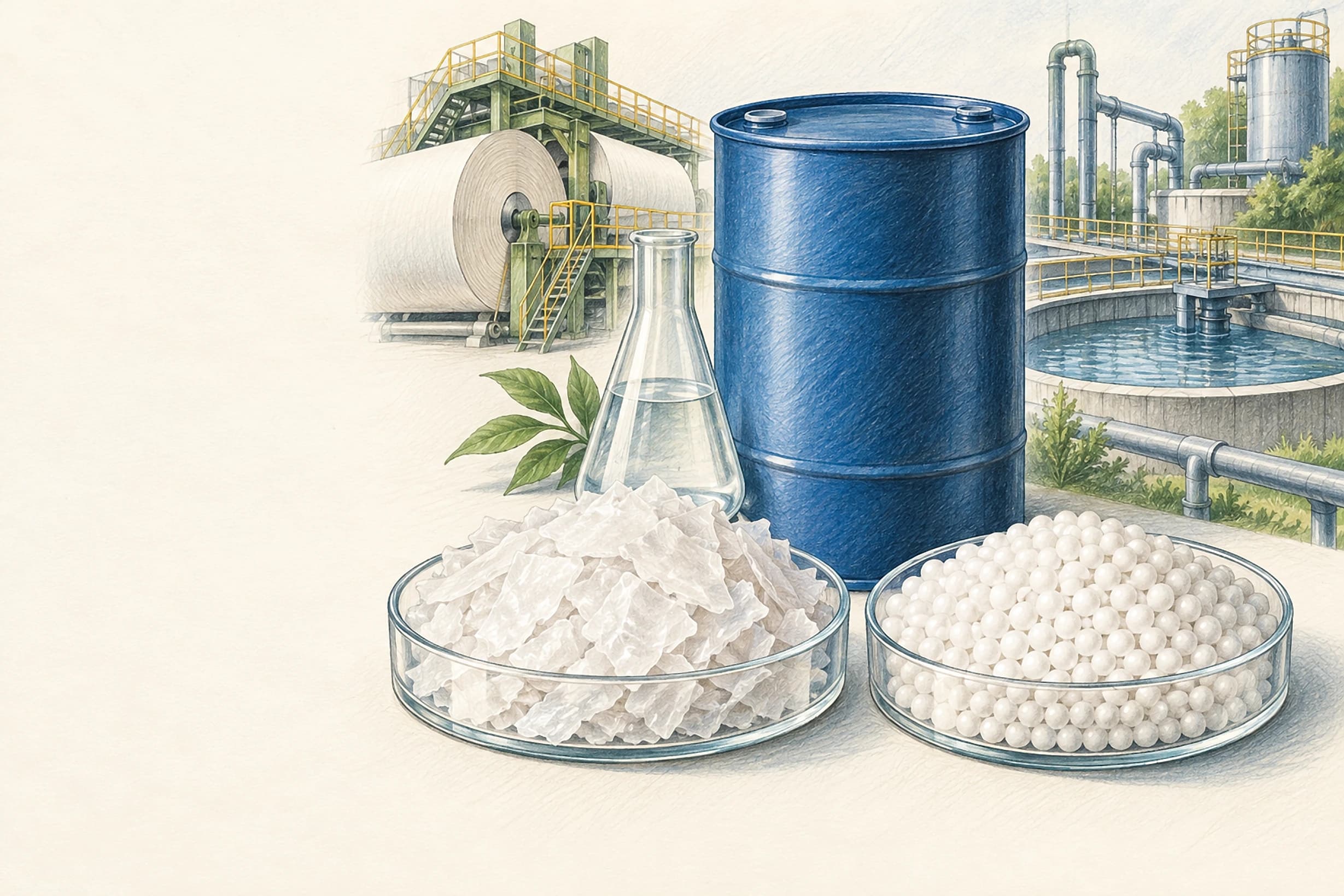
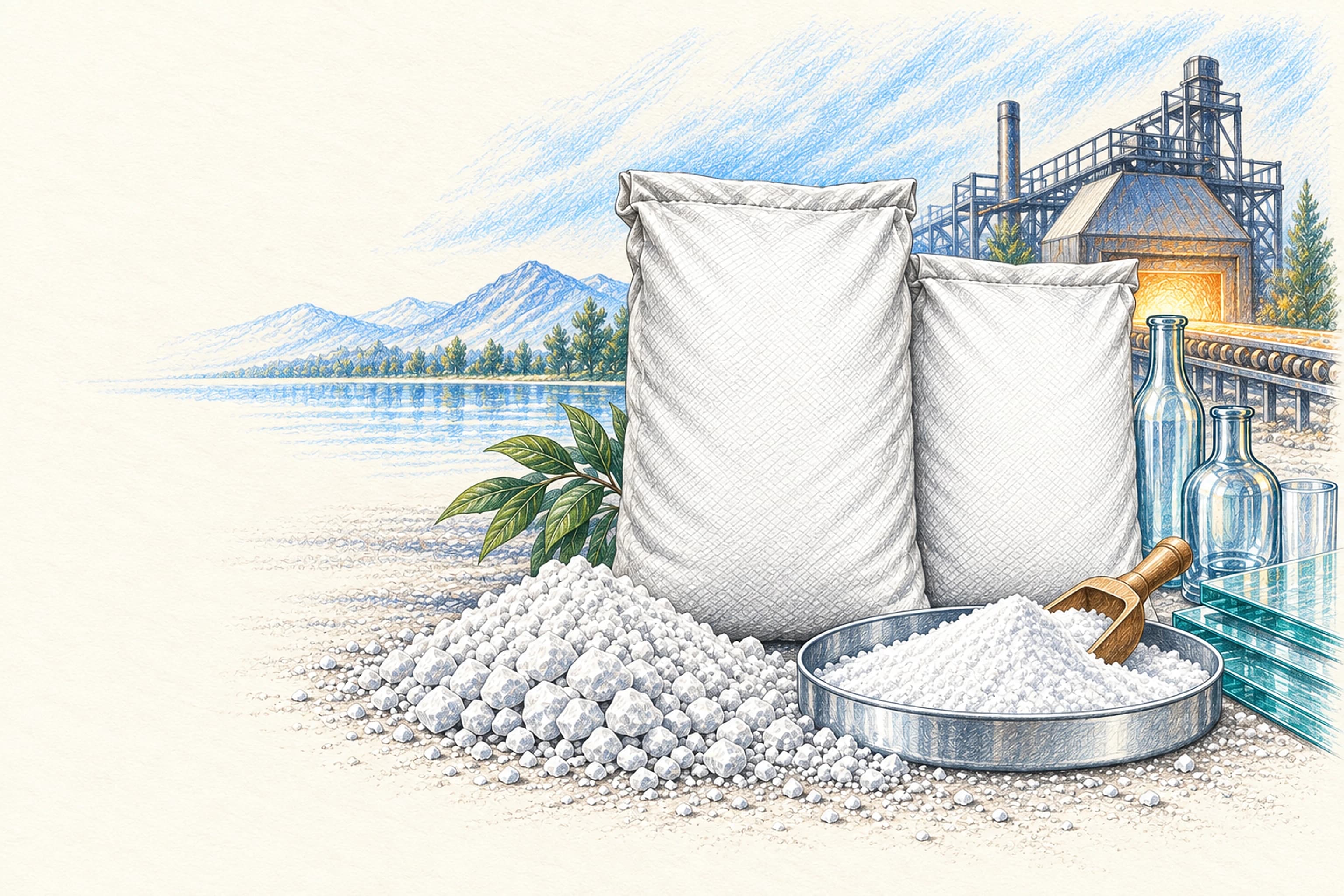
For caustic soda, state the form (flakes, pearls or liquid) and minimum NaOH content; for soda ash, dense or light grade and Na₂CO₃ assay. Note any impurity limits your discharge consent depends on, and the packing your site can handle. Nuroil supplies caustic soda and soda ash with a certificate of analysis on every delivery; the water treatment page lists related products.