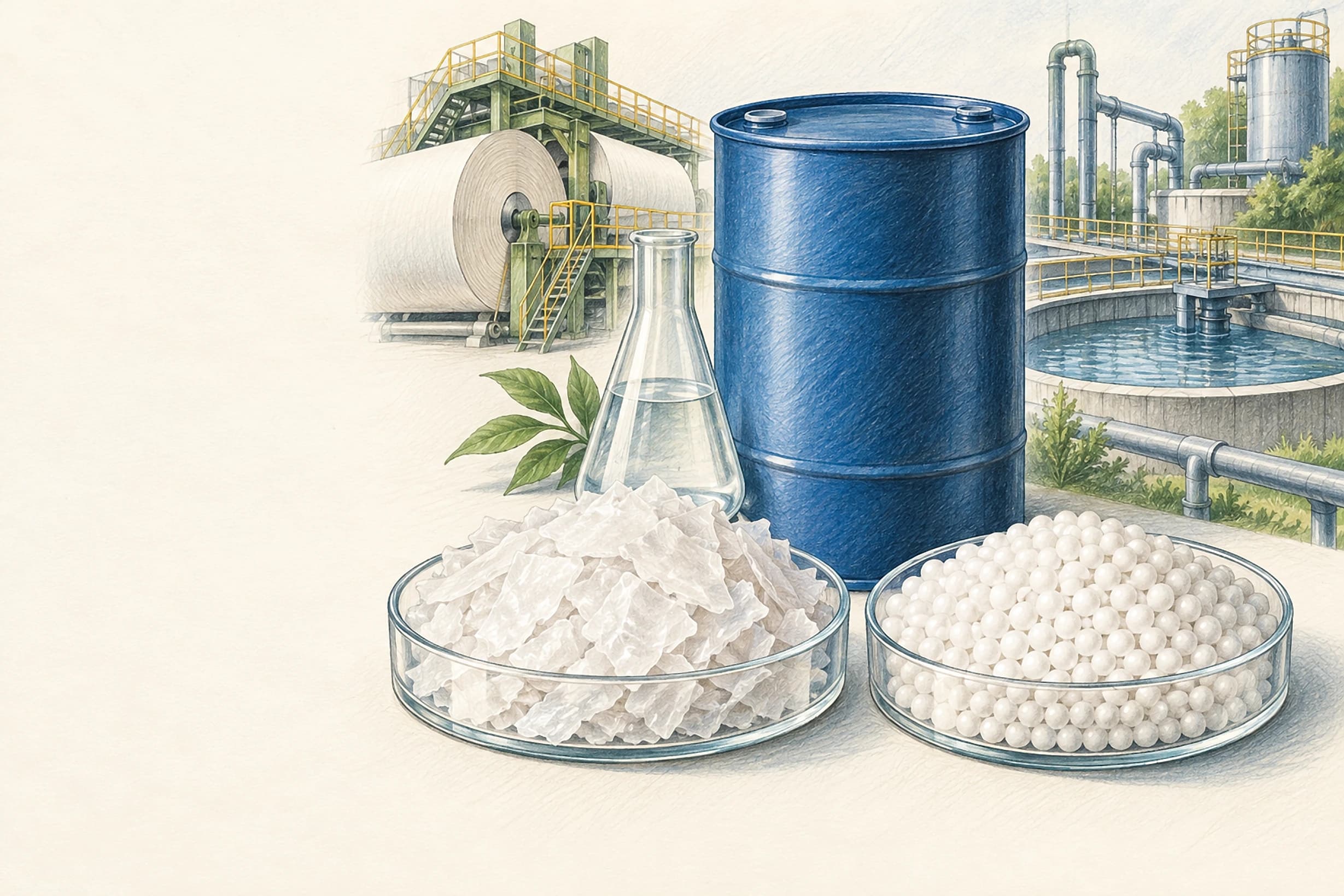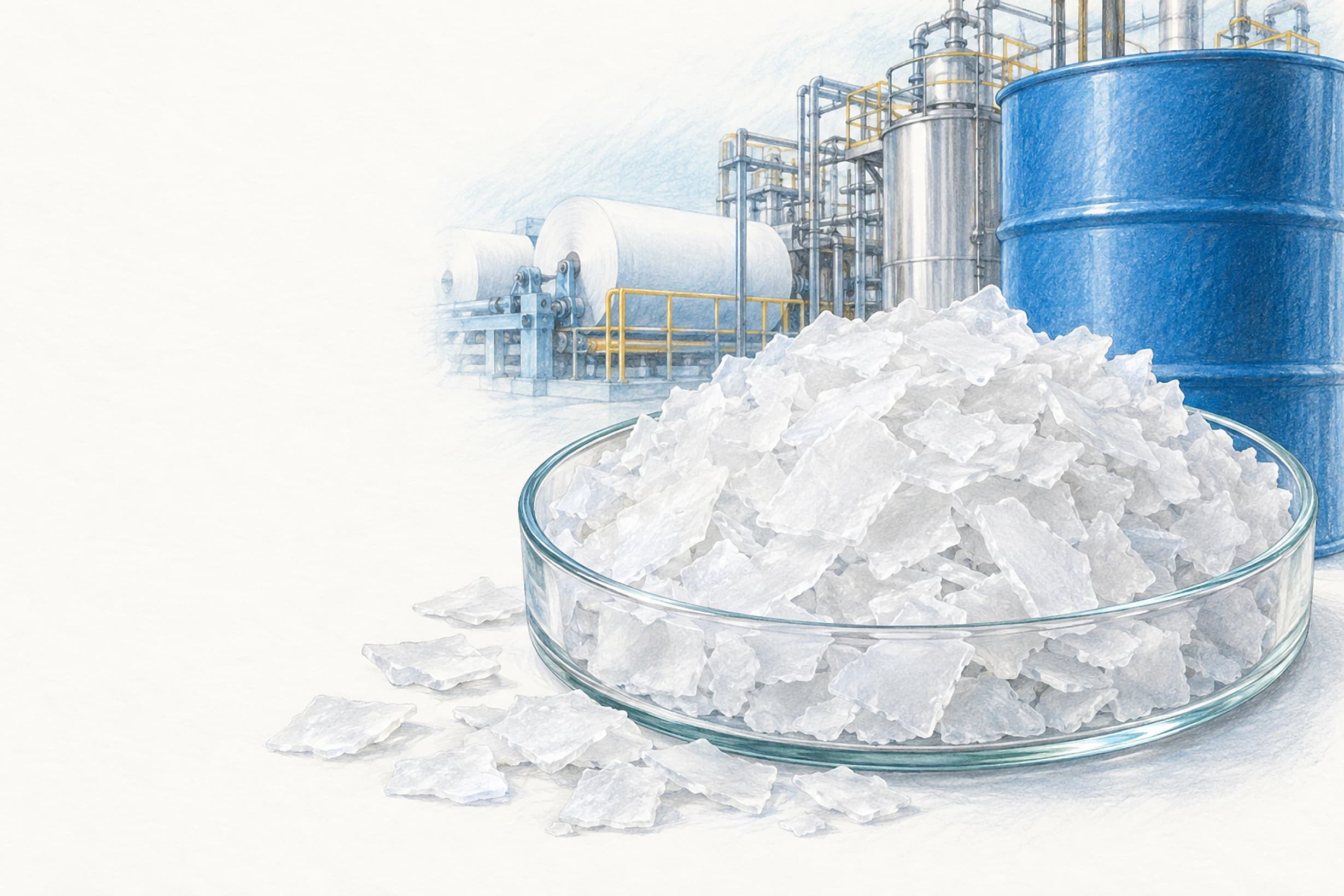
A container of caustic soda flakes may have spent weeks at sea and on the road before it reaches your store. Most arrive in good condition, but checking on receipt is the only way to catch damaged packing, mislabelled lots or product that has aged badly before it reaches your process. This guide sets out a straightforward receiving routine that a small quality team can follow.
1. Check the documents first
Before unloading, compare the paperwork with the order:
- Commercial invoice and packing list: product, grade, number of packages and net weight.
- Certificate of analysis for each lot: NaOH, sodium carbonate, chloride and iron, with the test methods used.
- Lot numbers on the certificate match those printed on the bags or drums.
- Transport documents show UN 1823, SODIUM HYDROXIDE, SOLID, class 8, packing group II.
- Any third-party inspection report or certificate of origin you requested.
2. Inspect the packing
When the container is opened, look before you touch. Caustic dust or wet residue may be present if bags have split.
- Bags intact, liners not punctured, no wet patches or crystalline crusts on the outside.
- Markings legible: product name, UN number, hazard label, lot and weight.
- Pallets sound, stretch wrap in place, no crushed bottom layers.
- Inside the container: no water ingress, no condensation damage on the roof or walls.
Photograph any damage before unloading and note it on the delivery receipt. Set damaged packages aside on a bunded area.
3. Take representative samples
Solid caustic absorbs moisture and carbon dioxide within minutes of exposure, so sampling technique affects the result.
- Select bags at random from different pallets and positions. A common practice is to sample a number of packages related to the square root of the total, but follow your own quality plan.
- Wear full protective equipment, open each bag briefly and take product from below the surface with a clean, dry scoop.
- Transfer immediately into dry, airtight glass or polyethylene bottles and close them at once.
- Take the carbonate test portion first, before the container is opened repeatedly.
- Keep a sealed retention sample for each lot until the stock is used and any claim period has passed.
4. Laboratory tests
The core tests are titrations that any plant laboratory can run. ASTM E291 is the widely referenced set of methods for caustic soda.
| Test | Principle | What it tells you |
|---|---|---|
| Total alkalinity | Titration with standard hydrochloric acid to a methyl orange end point | Hydroxide plus carbonate, expressed as NaOH or Na2O |
| Sodium hydroxide | Carbonate precipitated with barium chloride, then titration to a phenolphthalein end point | True NaOH content |
| Sodium carbonate | Difference between the two titrations, or gas-volumetric and gravimetric CO2 methods for low levels | Extent of carbon dioxide pickup |
| Chloride | Titration after acidification | Production route and suitability for chloride-sensitive uses |
| Iron | Colorimetric method after acidification | Risk of discolouration |
Weigh samples quickly; caustic gains mass from moisture on the balance pan and gives low results if left exposed. Standardise the acid regularly.
5. Compare and decide
Compare your results with the certificate of analysis and the purchase specification. Small differences in NaOH within the combined uncertainty of the two laboratories are normal. A carbonate figure well above the certificate, together with caking, points to moisture and air exposure in transit or storage. Chloride or iron differences are more likely a sign of a mixed or wrong lot and deserve a prompt query.
Check the paperwork, photograph the packing, sample fast into sealed bottles and test NaOH and carbonate separately.
Raising a quality query
If results are out of specification, notify the supplier promptly with lot numbers, photographs, your test results and the method used, and keep the retention samples untouched for any referee analysis. Agreeing in advance on the test methods and an independent laboratory for disputes avoids argument later. Nuroil provides a certificate of analysis with every delivery of caustic soda flakes and can arrange third-party inspection at loading; mention it when you request a quote.