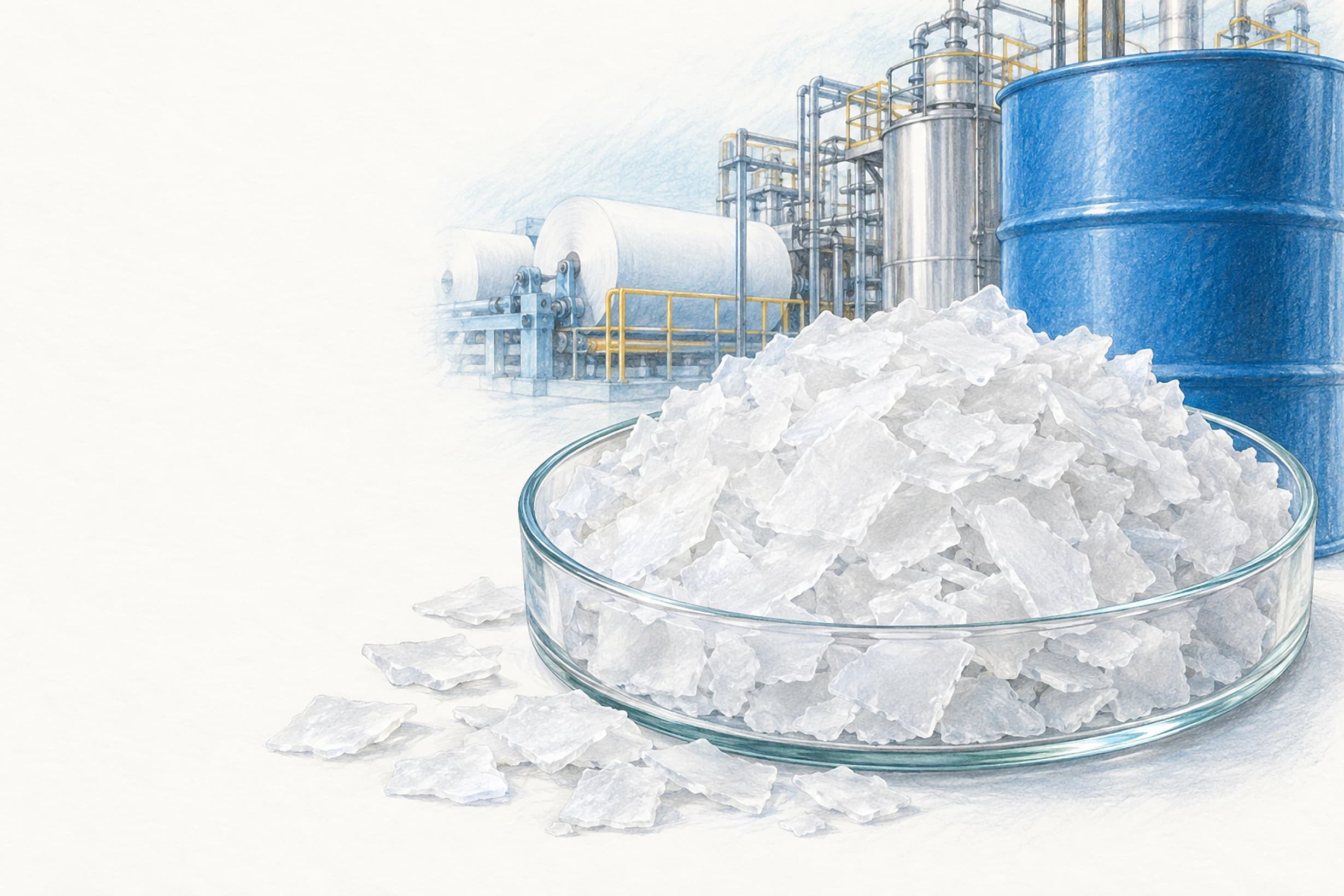
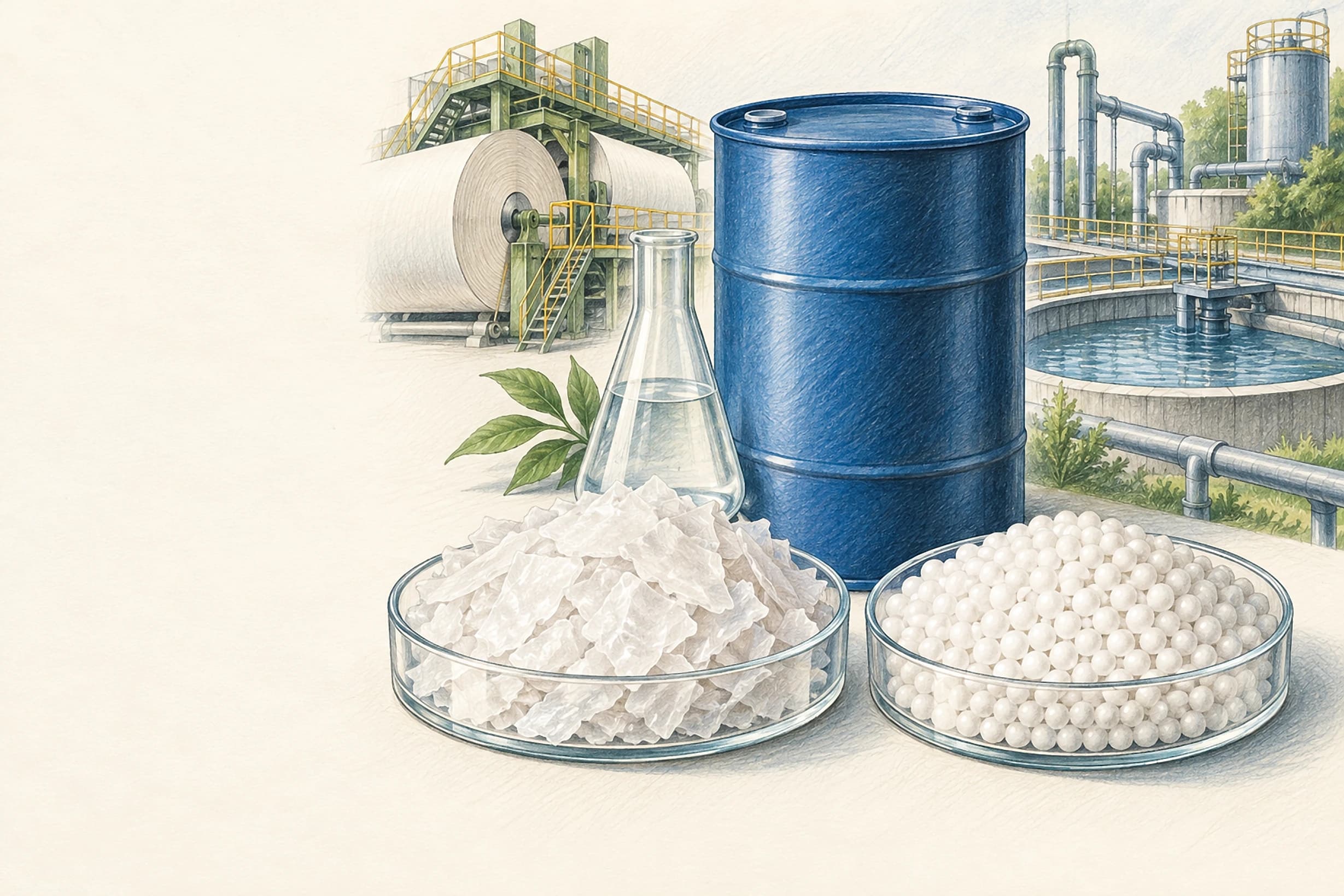
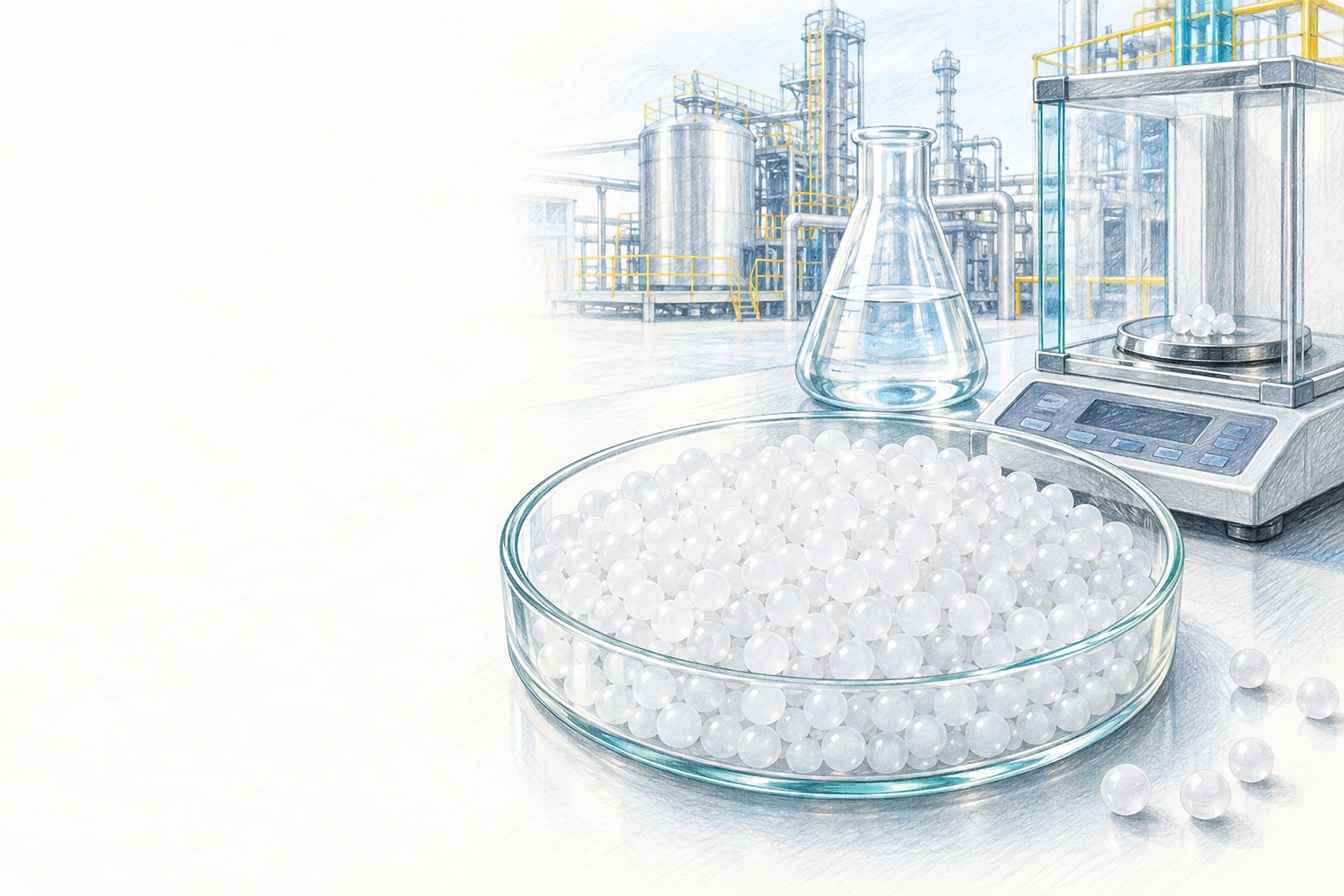
Caustic soda flakes are anhydrous sodium hydroxide, normally 98% NaOH or more, solidified on cooled rolls into thin, irregular pieces. Large integrated plants with rail or pipeline access usually take caustic as 50% lye. Flakes serve a different customer: the plant that is far from a chlor-alkali producer, uses tonnes rather than thousands of tonnes, or has no tank farm. This article looks at the industries that most often buy the flake form and what drives that choice.
Why the form matters at all
Chemically, flakes, pearls and lye are the same substance. The differences are practical. A tonne of flakes carries roughly twice the NaOH of a tonne of 50% lye, so freight and storage per unit of active alkali are lower. Flakes travel in bags, drums or bulk bags that fit any warehouse and need no heated tanks or pumps. Against that, they must be dissolved before most uses, which releases a lot of heat and needs a stirred tank and trained operators.
For many buyers in hot climates or remote locations, those trade-offs favour flakes. Below are the sectors where the flake form shows up most often.
Textile processing
Cotton processing uses caustic soda in scouring, to remove natural waxes and impurities, and in mercerisation. Mercerising treats cotton yarn or fabric with a strong caustic solution, typically in the range of about 20 to 26% NaOH, usually under tension. The alkali swells the cellulose fibres, which improves lustre, strength and dye uptake. Textile mills commonly make up these baths in batches from solid caustic, so flakes delivered in bags suit their routine well. Mills also use caustic for reducing and stripping in dyeing.
Soap, detergent and cleaning products
Small and medium soap makers saponify oils and fats with caustic soda dissolved to a known strength. Flakes are widely used here because they ship and store well and are easy to weigh out by the bag. Larger detergent plants making powder products may prefer pearls, whose size matches other granular ingredients, but batch soap boilers and liquid cleaner manufacturers often stay with flakes.
Pulp, paper and recycled fibre
The pulp and paper sector is one of the largest consumers of caustic soda worldwide, mainly for pulping and bleaching and for de-inking recovered paper. Big integrated mills take lye, but smaller tissue and board mills that run on recycled fibre, particularly where liquid supply is impractical, often make up their de-inking and cleaning solutions from flakes.
Other common users
- Aluminium extrusion and finishing: caustic etching baths clean and matt aluminium profiles before anodising.
- Food processing: caustic solutions are used for peeling some fruits and vegetables and in cleaning-in-place. These uses require a food-grade product.
- Petroleum and lubricant refining: caustic washing removes acidic compounds and some sulphur species from fuels and oils.
- Biodiesel: small and medium producers dissolve NaOH in methanol to make the catalyst for transesterification, usually at around 0.5 to 1% of the oil weight. Solid caustic is used because the reaction is sensitive to water, so a lye would bring in too much.
- Water and effluent treatment: sites without bulk liquid supply prepare their own dosing solution for pH correction and neutralisation.
- Chemical manufacture: as a raw material for sodium salts, dyes and intermediates, and for regenerating ion-exchange resins.
When flakes are not the best choice
Flakes are less suited to fully automated dry dosing, because the irregular shape and tendency to cake can cause bridging in hoppers; pearls flow more reliably. Where consumption is high and steady and storage tanks exist, lye avoids the dissolving step altogether. Regulated end uses such as drinking water or food also narrow the choice to whichever form is available with the right certification.
Flakes suit plants that dissolve caustic in batches, receive it by sea in containers, and have little or no bulk liquid storage.
Buying flakes for your application
When you enquire, name the end use, because it decides the grade: textile and soap users usually focus on NaOH content and iron, food and water users need a certified grade, and biodiesel producers care about low moisture and carbonate. State the packing your site can handle, typically 25 kg bags or 1,000 kg bulk bags, and your monthly volume. Ask for a certificate of analysis for each lot and the safety data sheet. Nuroil supplies caustic soda flakes FOB UAE or delivered on CFR and CIF terms; send your details through request a quote.