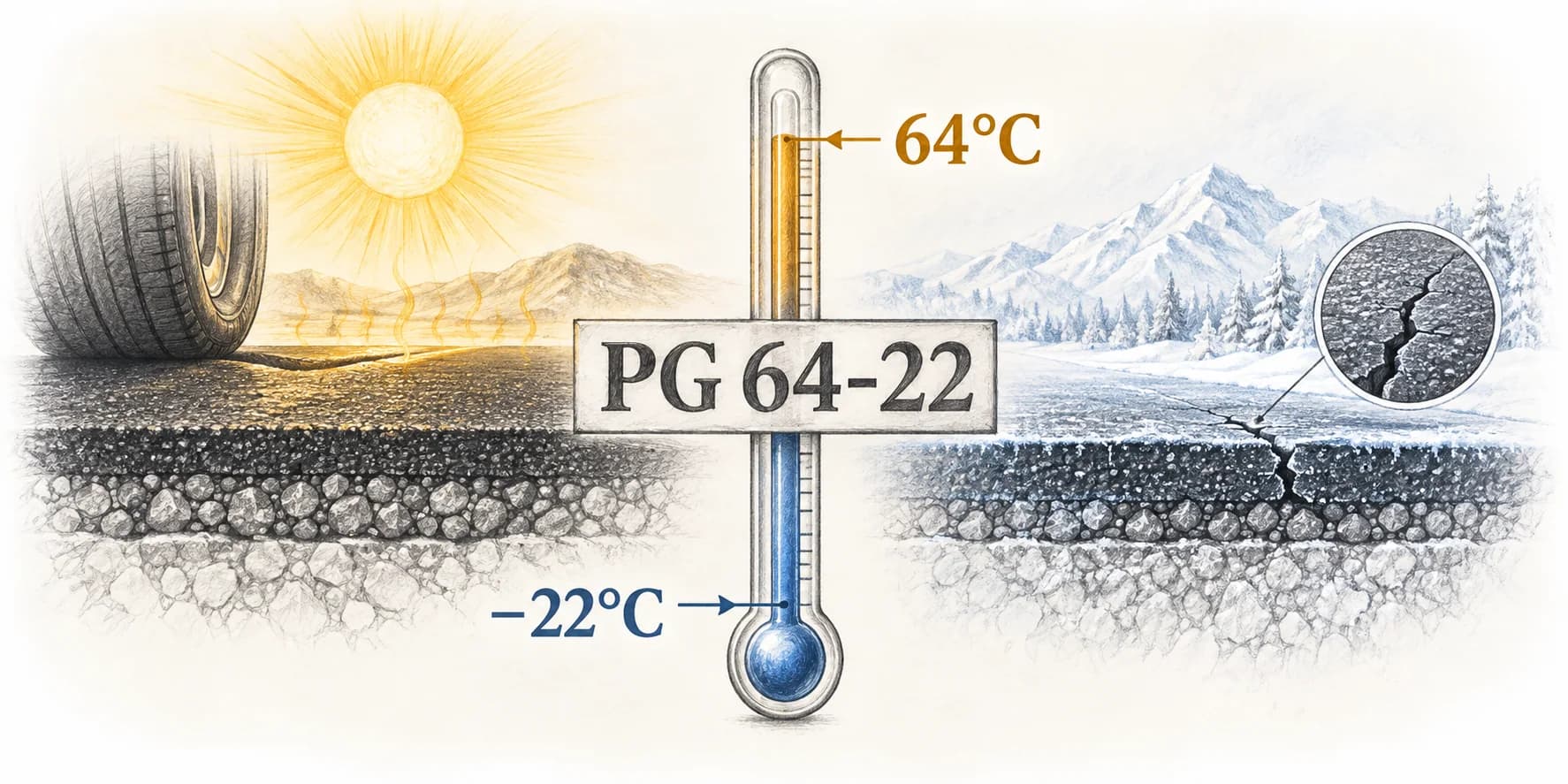
Performance grade (PG) bitumen is bought against a technical specification that leaves less room for interpretation than older grading systems, but enquiries still go wrong when key details are missing. This checklist covers what to state in an enquiry, what to look for on the certificate of analysis, and what to agree for delivery and acceptance testing.
1. State the grade and standard exactly
- The full designation, for example PG 70-10, PG 76-22 or PG 64H-22.
- The governing standard: AASHTO M 320 (conventional PG) or AASHTO M 332 (MSCR traffic grades), and the edition if your specification fixes one.
- Any national or project-specific additions, such as elastic recovery, MSCR percent recovery, solubility or ash limits.
- Whether polymer modification is required, permitted or excluded. Some specifications, for example, exclude certain additives or require a specific modifier.
2. Check the certificate of analysis
| Item on the CoA | What to check |
|---|---|
| Flash point | At least 230 °C |
| Rotational viscosity at 135 °C | No more than 3 Pa·s |
| DSR on original binder | G*/sin δ at least 1.00 kPa at the claimed high grade |
| RTFO mass change | No more than 1.00 % |
| DSR on RTFO residue | G*/sin δ at least 2.20 kPa at the high grade |
| MSCR (if M 332) | Jnr at 3.2 kPa within the traffic-letter limit; percent recovery if specified |
| DSR on PAV residue | G*·sin δ no more than 5000 kPa at the intermediate temperature |
| BBR on PAV residue | Stiffness no more than 300 MPa and m-value at least 0.300 at low grade + 10 °C |
| Batch and tank identification | Matches the shipment documents |
Look at the test temperatures as well as the values. A DSR result reported at 64 °C does not support a PG 70 claim.
3. Understand what the binder is
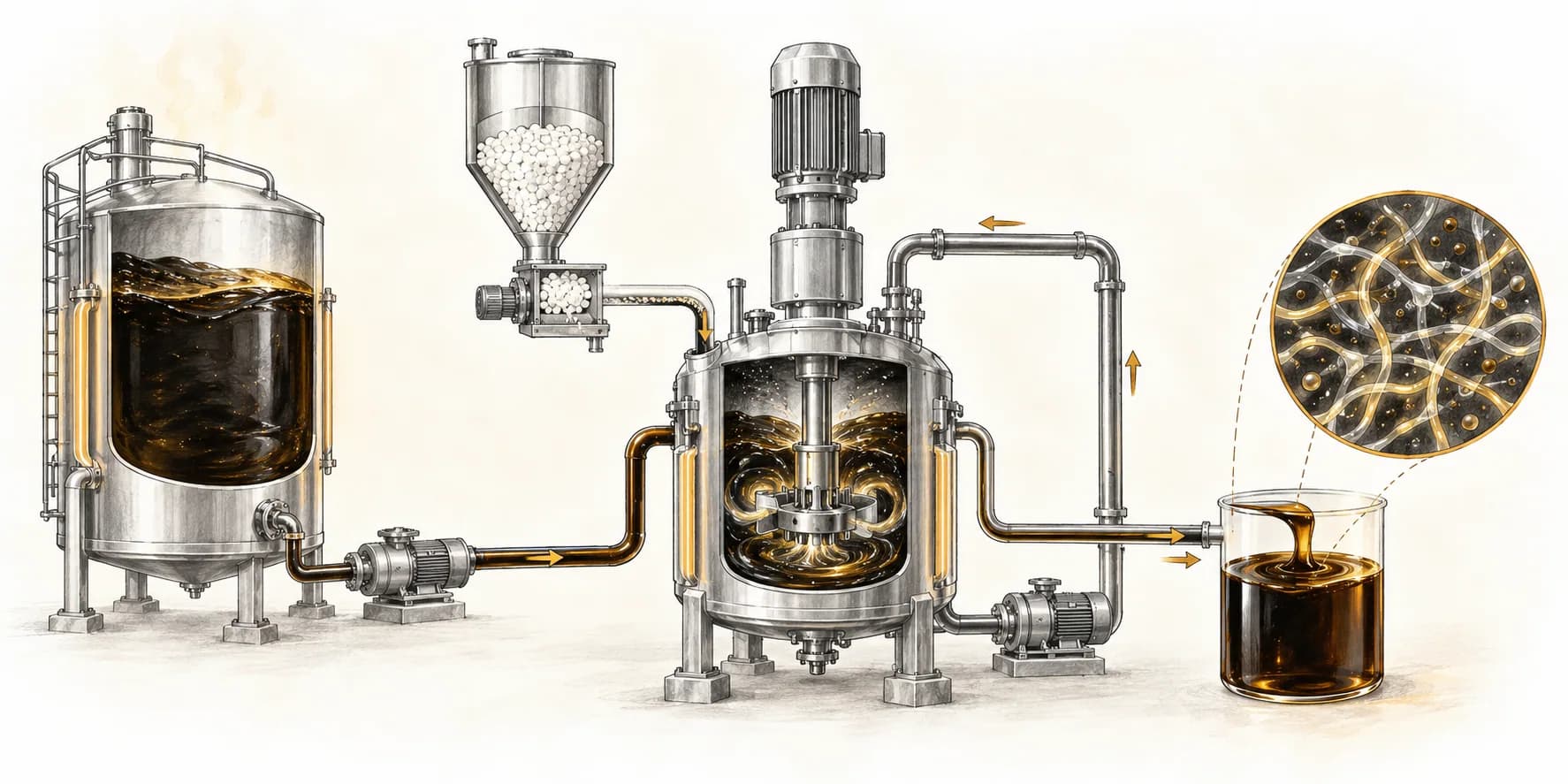
Grades with a wide temperature span, such as PG 76-22, normally need polymer modification. Others, such as PG 70-10 or PG 76-10, may be supplied either unmodified or modified depending on the source. Ask which applies, because it affects handling. A polymer-modified PG binder needs the same storage care as other PMB: controlled temperatures, agitation and limited holding time. Ask the producer for storage stability results and recommended storage, pumping and mixing temperatures.
4. Plan delivery form and handling
- Bulk tankers and ISO tank containers suit regular volumes and keep heating simple at the receiving end.
- Steel drums suit sites without heated bulk storage; allow for reheating time and check that the grade tolerates reheating, particularly if it is modified.
- Confirm the maximum temperature at which the product may be loaded and held, and the SDS precautions for hot bitumen.
5. Agree sampling and acceptance testing
Full PG verification, including PAV ageing and BBR, takes several days. Many buyers therefore accept on a reduced set of quick tests, such as DSR on original binder, and run full grading periodically or on disputed lots. Agree in advance:
- where samples are taken (loading line, tank, drum) and how many retained samples are kept;
- which laboratory tests the samples and to which standard practice, for example AASHTO R 29 for grade verification;
- whether independent third-party inspection is needed at loading.
6. Documents for the shipment
- Certificate of analysis for the batch shipped.
- Safety data sheet.
- Certificate of origin where required for customs.
- Inspection report where third-party inspection is agreed.
- Commercial invoice, packing list and bill of lading according to the agreed Incoterm.
A good PG enquiry names the grade, the standard, any extra requirements and how acceptance will be tested.
Working with Nuroil
Nuroil, based in Sharjah, sources performance grade and polymer modified bitumen from established producers and supplies worldwide on FOB, CFR or CIF terms. Every delivery comes with a CoA, and MSDS, certificate of origin and third-party inspection are available on request. Send your specification through the quote request form or contact us.