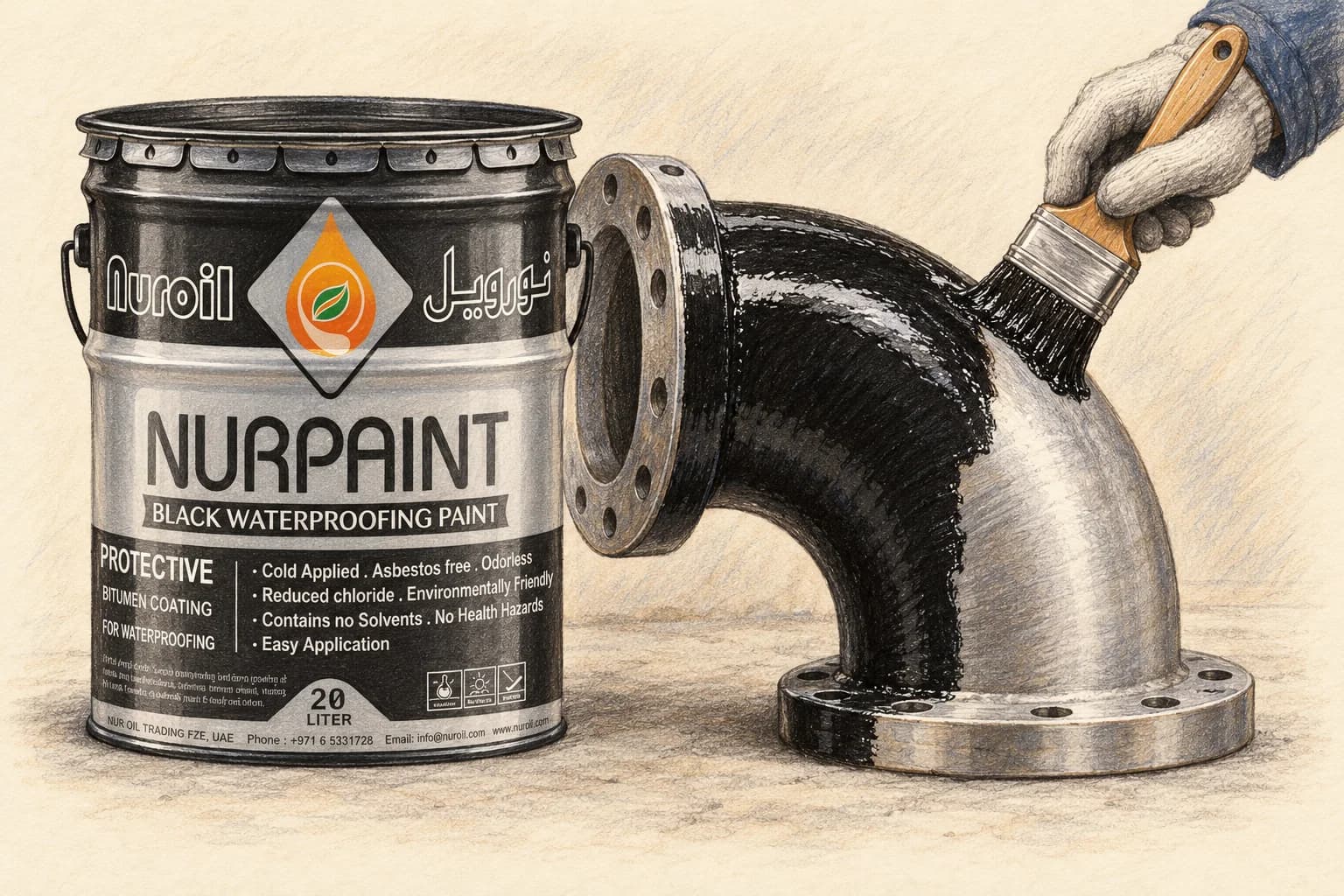
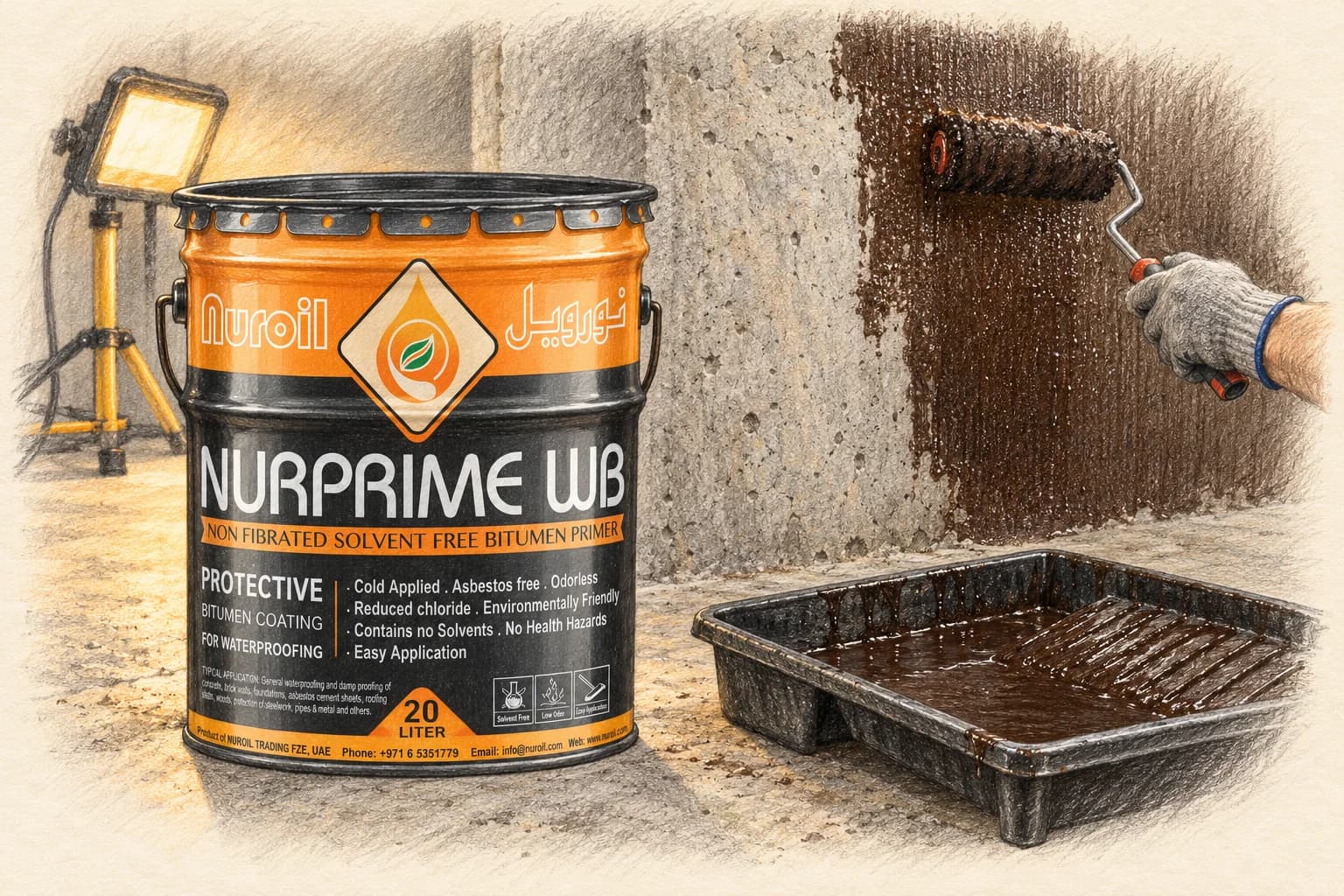
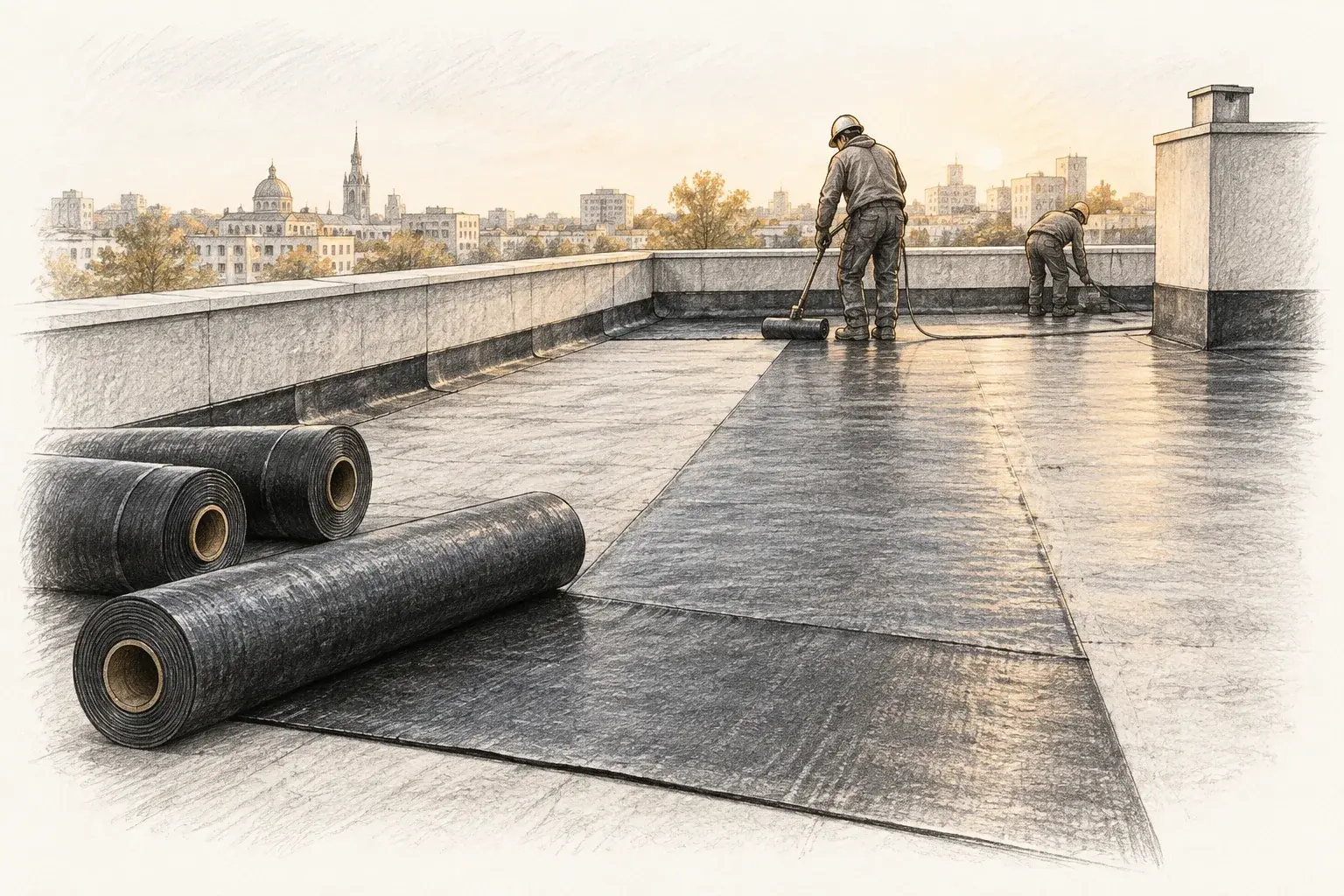
Brushing two coats of black bitumen paint onto foundation walls, footings, pile caps and buried concrete is one of the oldest and cheapest ways to keep ground moisture out of concrete. It is still widely specified. It is also widely misused, because a thin painted film is sometimes expected to do the job of a full waterproofing system. The key distinction is between dampproofing and waterproofing.
Dampproofing and waterproofing are different
Dampproofing resists the passage of moisture from soil where there is no hydrostatic pressure, meaning the ground around the structure is damp but water is not standing against it. Waterproofing (often called tanking) is designed to resist water under pressure, for example where a basement sits below the water table. Construction guide specifications state clearly that bituminous dampproofing is not intended to act as a barrier against groundwater under hydrostatic head, and point to membrane or built-up bituminous systems where that condition exists.
Black bitumen paint belongs firmly in the dampproofing category.
Where it works well
- Outer faces of footings, ground beams and pile caps in free-draining soil.
- Foundation walls above the water table with good drainage.
- Buried faces of manholes, chambers and precast units as protection against soil moisture.
- Concrete or blockwork that will be backfilled, where appearance does not matter.
Where it is not enough
- Basements and lift pits below the water table or in clay where water collects.
- Habitable or storage spaces where any damp would be unacceptable.
- Structures in aggressive soils where a specific protection system is required.
- Surfaces that will see mineral oil, fuel or solvent contact, which softens bitumen films.
Application on concrete
Concrete and masonry are porous, so they absorb more paint than steel. Published coverage for black bitumen paint on concrete is typically around 4–6 m² per litre per coat, compared with roughly 8–11 m² per litre on smooth metal. Many manufacturers recommend a bitumen primer on porous concrete or stone before the paint, to seal the surface and improve adhesion, followed by at least two coats.
- Allow the concrete to cure and dry; solvent-borne paint needs a dry surface.
- Remove laitance, form oil, dust and loose material.
- Prime porous surfaces with a compatible bitumen primer.
- Apply the first coat by brush, working it into the surface.
- Allow it to dry as the data sheet requires, then apply the second coat.
- Protect the coating during backfilling with a protection board or careful placement of fill.
Backfill damage
A thin coating is easily scratched by stones and compaction equipment. Protection boards, or at least care when placing the first layers of backfill against the wall, help preserve the film. Where a heavier coating is needed, specifications often move from bitumen paint to thicker emulsion or solvent-based dampproofing coatings, or to sheet membranes.
Drainage does half the work
A painted coating performs far better when water is not allowed to build up against the wall. Free-draining backfill, a perimeter drain at footing level and ground sloped away from the building all reduce the moisture the coating has to resist. Where drainage cannot be provided or relied on, treat the structure as a waterproofing case rather than a dampproofing case.
| Ground condition | Typical approach |
|---|---|
| Damp, free-draining soil | Primer plus two coats of bitumen paint or dampproofing coating |
| Intermittent water, poor drainage | Thicker coating or membrane plus drainage |
| Water table above the slab | Designed waterproofing (tanking) system |
Bitumen paint keeps damp out of buried concrete. It is not designed to hold back water under pressure.
Buying for foundations
State the area, substrate, ground conditions and whether a primer is also needed. For damp substrates, a water-based primer may suit better than a solvent primer. Ask for the TDS, SDS and batch CoA. Nuroil supplies bitumen paint in drums and pails; send your quantities through the quote form.