An APP modified membrane is defined by three choices beyond its compound: the reinforcement at its core, its thickness and the finishes on its top and bottom faces. Together they decide how the sheet handles, how it is installed and how long it lasts. This guide sets out the options and how they fit common applications.
Reinforcement
ASTM groups APP sheets by reinforcement, with D6222 covering polyester-reinforced sheets and separate specifications for glass fibre and combination reinforcements. The main options are:
- Non-woven polyester: high elongation, good tear and puncture resistance and tolerance of substrate movement. It is the usual choice for exposed caps, single-layer systems and roofs with traffic. Because APP compound is stiffer than SBS, the stretch of polyester is particularly useful in APP sheets.
- Glass fleece: very dimensionally stable and economical, but with low elongation and lower tear strength. Better suited to underlayers and stable decks. See our fibre glass reinforced membrane for this type.
- Composite or glass-stabilised polyester: polyester with glass yarns or scrim for stability during torching and in service. Many polyester mats include a small share of glass yarns for manufacturing reasons.
Thickness
APP membranes are commonly produced in nominal thicknesses of about 2 mm to 5 mm, with 3 mm and 4 mm the most common. Granule-surfaced sheets are often described by mass per square metre instead.
- 3 mm: common as the base layer of a two-layer system or for lighter-duty work.
- 4 mm: the usual choice for a single-layer exposed roof or the cap of a two-layer system; enough compound beneath the reinforcement for a sound torch bond.
- 5 mm and heavier: for demanding locations, long design lives, or where extra protection against traffic and ageing is wanted.
Because APP sheets are torched, the compound under the reinforcement is consumed in bonding. A thicker sheet gives more margin against over- or under-torching, which is one reason thinner APP sheets are less forgiving in inexperienced hands.
Top surface finishes
| Finish | Use | Notes |
|---|---|---|
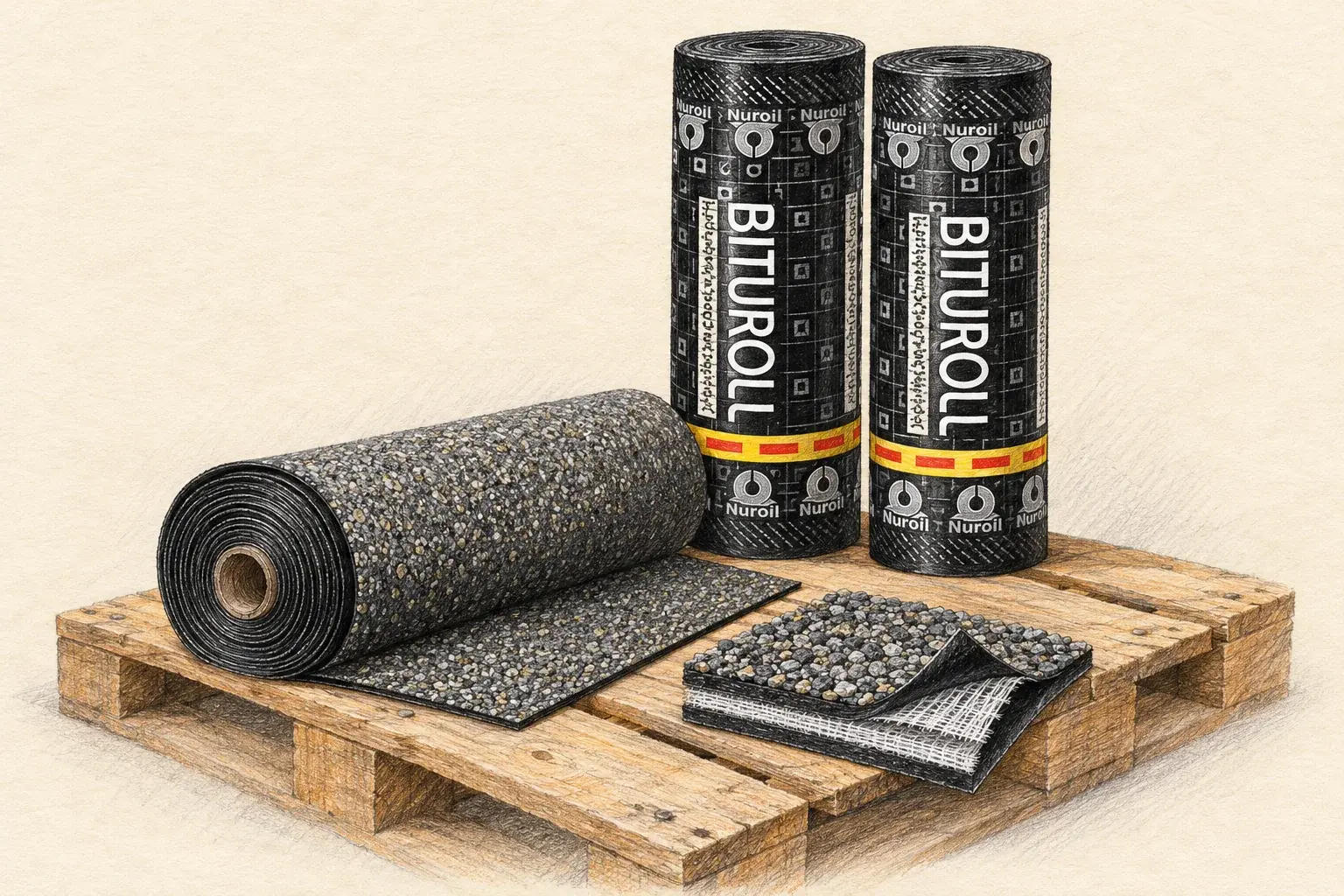
| Mineral granules | Exposed cap sheets | UV and traffic protection; light colours reduce surface temperature; check granule adhesion |
| Sand | Underlayers or sheets to be coated or covered | Prevents sticking in the roll; not a permanent exposed finish |
| Polyethylene film | Underlayers and sheets for torching on both faces | Burns off during torching; not a weathering surface |
| Metal foil | Exposed caps needing high reflectance | Complete UV barrier; vulnerable to traffic damage |
| Smooth for coating | Roofs to receive a reflective or aluminium coating | Coating must be renewed periodically |
Bottom surface
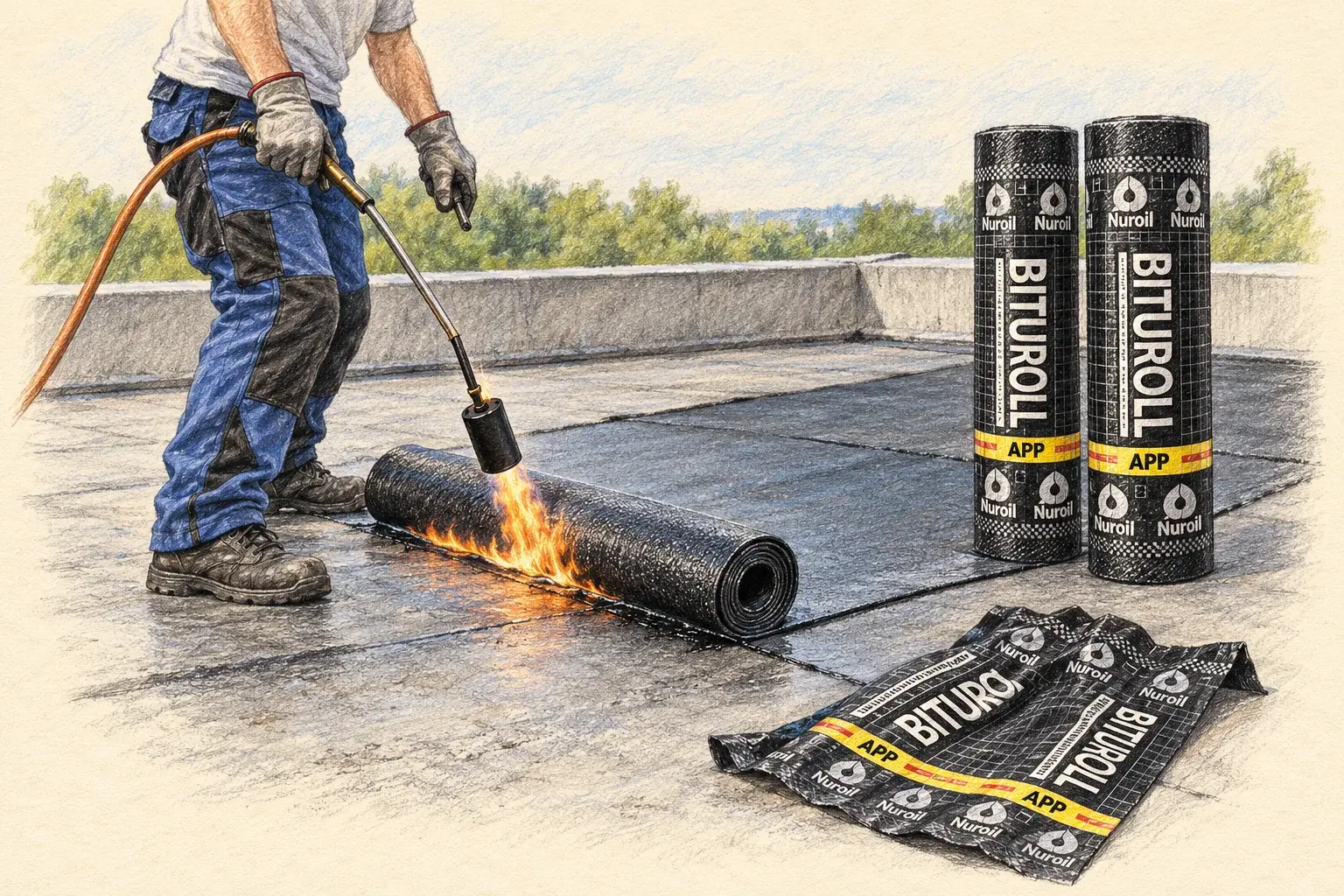
The underside of a torch-applied APP sheet usually carries a thin film that burns away as the torch melts the compound. The film keeps the roll from sticking and shows the installer, by its shrinking and burning, when the compound has reached the right state. Sheets intended for other bonding methods may have a sanded or different underside, so match the underside to the installation method.
Matching choices to applications
- Exposed flat roof, hot climate: polyester-reinforced 4 mm or two-layer system with a light mineral cap.
- Under tiles or paving: polyester or composite sheet with sanded or film finish; consider colour if exposed before covering.
- Wet areas and podiums under screed: polyester sheet of adequate thickness with protection board before screeding.
- Stable concrete deck, budget-led: glass-reinforced underlayer with polyester cap.
Choose polyester where there is movement or traffic, enough thickness for a safe torch bond, and a finish that matches exposure.
What to put in the enquiry
Specify reinforcement type, nominal thickness or mass, top and bottom finishes, colour, roll size and the applicable standard. Ask for the data sheet showing tensile, elongation, flow resistance and cold flexibility. Nuroil can price alternative combinations for comparison; send them through the quote request form.