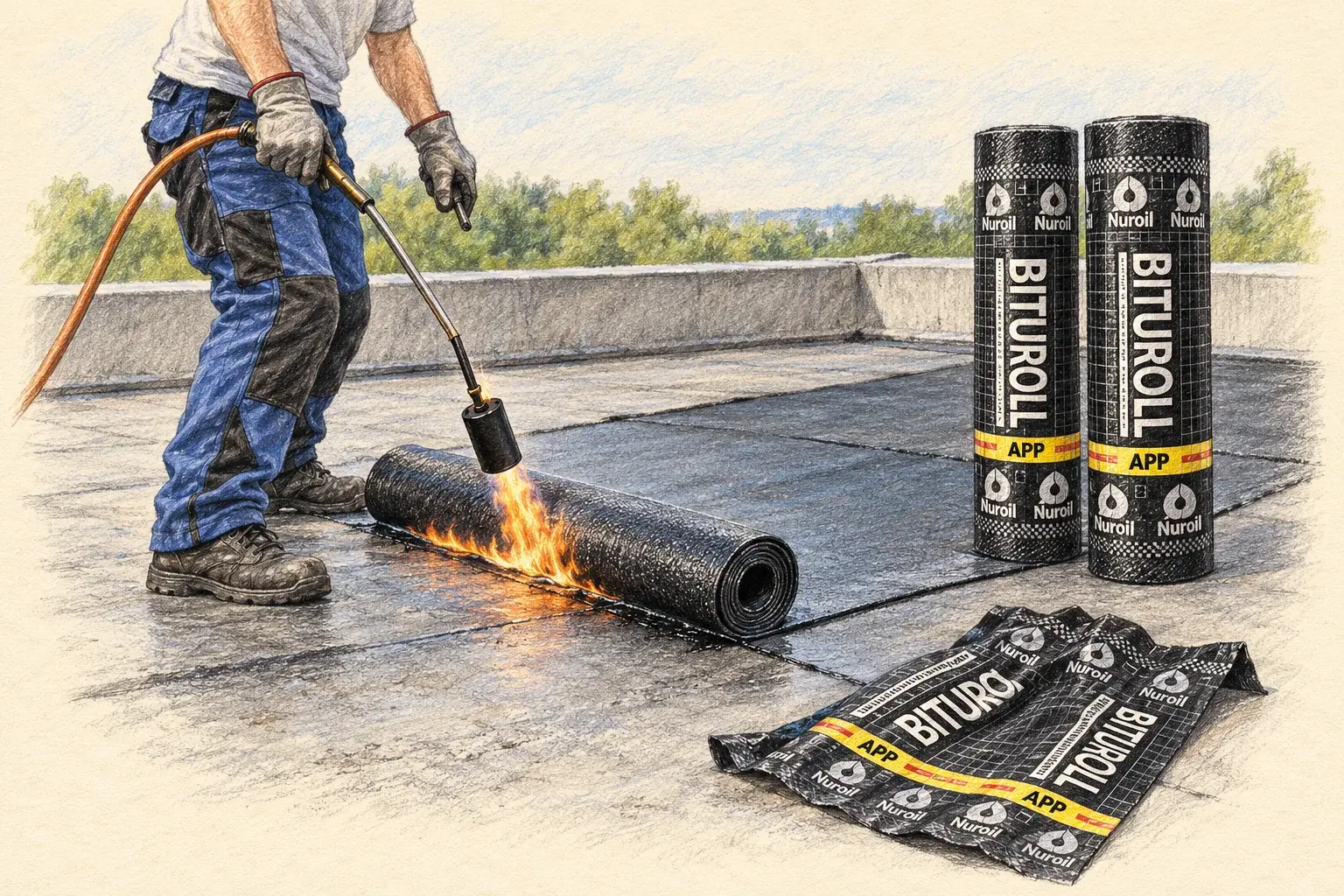
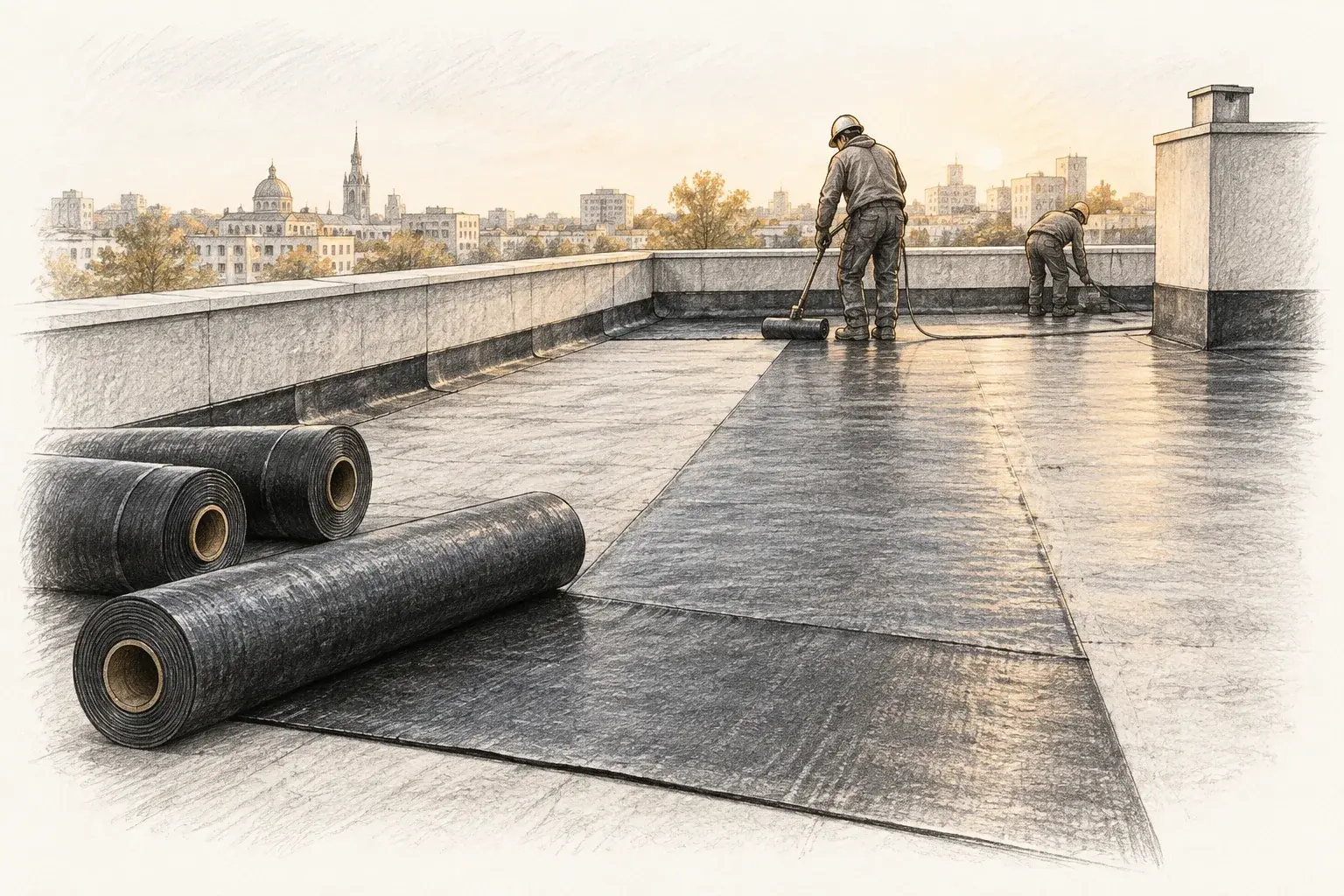
APP modified bitumen membranes are robust once installed, but rolls can be spoiled before they ever reach the roof. Crushed ends, flattened cores, stuck layers and cold-stiffened sheets all make torching harder and leave defects in the finished roof. Good storage is simple and costs little, so it is worth getting right in the warehouse, in transit and on site.
Store rolls on end
Industry guidance on modified bitumen is consistent: stand rolls upright on their ends, on pallets, rather than lying them flat. Rolls stored on their side can flatten into an oval, and the weight of the roll presses the layers together, which can cause sticking and creases that will not lie flat when unrolled. Guidance from roofing associations also advises:
- keep pallets raised above the ground or roof deck so rolls do not sit in water;
- do not double-stack rolls or pallets, because the lower layer crushes;
- where rolls have a selvage edge, store them with the selvage edge up so the lap area stays clean and undamaged.
Keep them dry and shaded
Water on the roll surfaces or in the core is a leading cause of poor adhesion and later blistering. Cover pallets with breathable waterproof sheeting, secured against wind; plain plastic sheeting can trap condensation underneath. In hot regions, shade matters as well: rolls left in direct summer sun can soften, and the turns of the roll may bond to each other or the release film may stick, making the sheet hard to unroll cleanly.
Cold conditions
APP compounds become noticeably stiffer as temperatures fall. A cold roll is harder to unroll, more prone to surface cracking when bent, and slower to torch because more heat is needed to melt the compound. Cold-weather guidance for modified bitumen recommends keeping rolls in a heated area for at least 24 hours before use, at about 10 °C or above, and bringing out only what will be used that day. Some manufacturers advise rotating stock so that cold rolls are never installed. Air-conditioned warehouses in hot regions can produce the same problem on a smaller scale, so allow rolls to adjust before laying.
Handling and transport
- Load pallets so rolls stay upright and are restrained against tipping; use corner protection where straps bear on the rolls.
- Avoid dropping rolls on their ends, which crushes the edges and damages the lap selvage.
- On the roof, spread pallets to avoid overloading the deck, and keep them away from roof edges.
- Keep gas cylinders for torching away from stored rolls and follow site hot-works rules.
Stock rotation and shelf life
Use first-in, first-out. Rolls stored for long periods, especially in heat, are more likely to show sticking between turns. Check the manufacturer's recommended storage period and date-code each delivery. Before laying, unroll and allow the sheet to relax so it settles flat; this reduces wrinkles, fishmouths at laps and shrinkage after installation.
Signs a roll has been badly stored
Before a roll goes up to the roof, check it. Warning signs include ends that are crushed or flared, a roll that is visibly oval, wrapping that is wet inside, turns that tear or pull compound when unrolled, and granules that have shed onto the selvage strip. Set suspect rolls aside and record their batch numbers; using them risks poor laps and wrinkles that are expensive to correct once torched down.
Upright, dry, shaded and not too cold: four storage habits that prevent most roll problems.
Packing and documents to request
When ordering APP membranes for export, ask how rolls are packed (wrapped, palletised upright, number of rolls per pallet), roll length and width, and the weight per roll so you can plan container loading and site lifting. Ask for the product data sheet with storage instructions and the batch certificate of analysis. Nuroil ships on FOB, CFR or CIF terms and can arrange third-party inspection of packing on request; send your requirements through our quote request form.