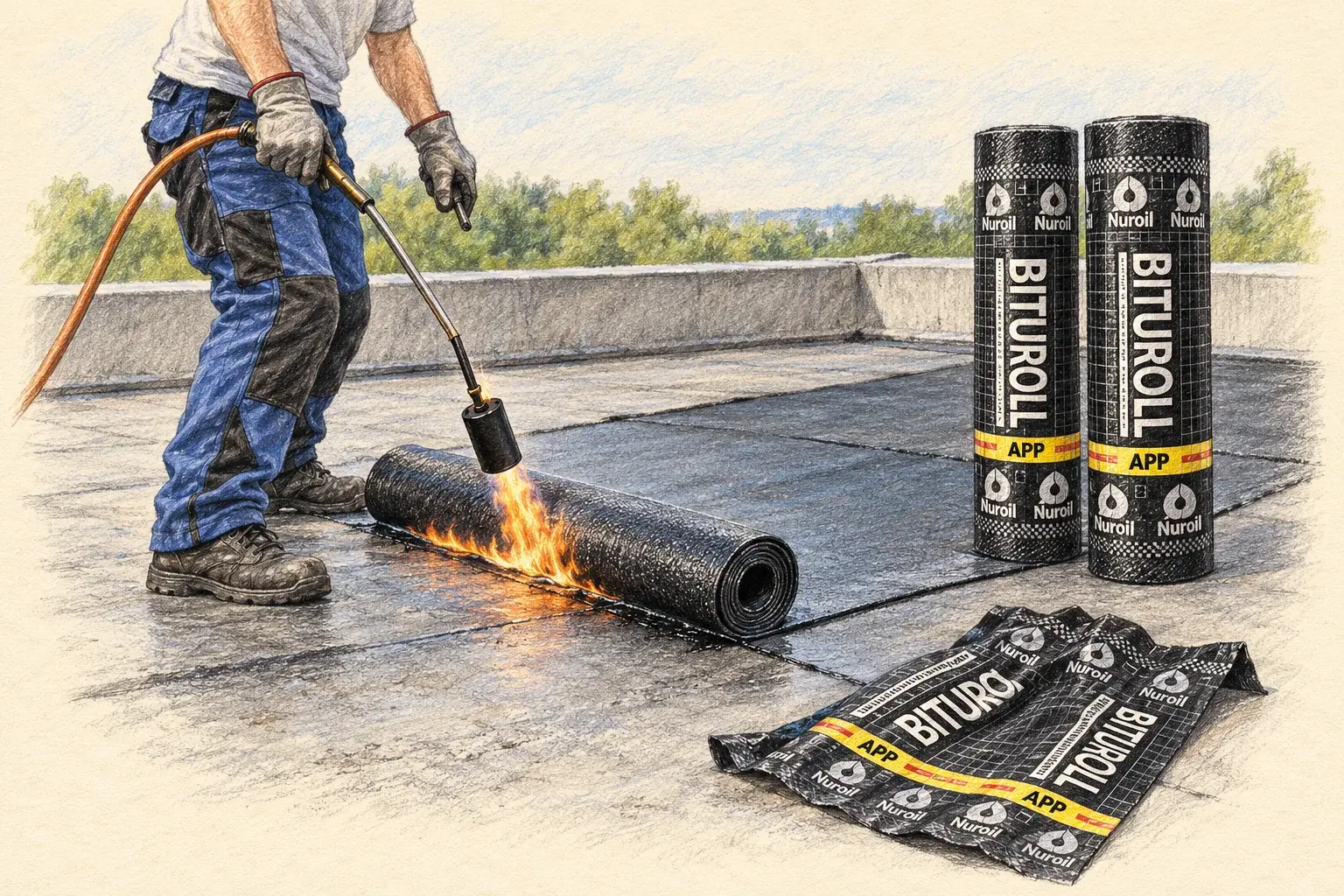
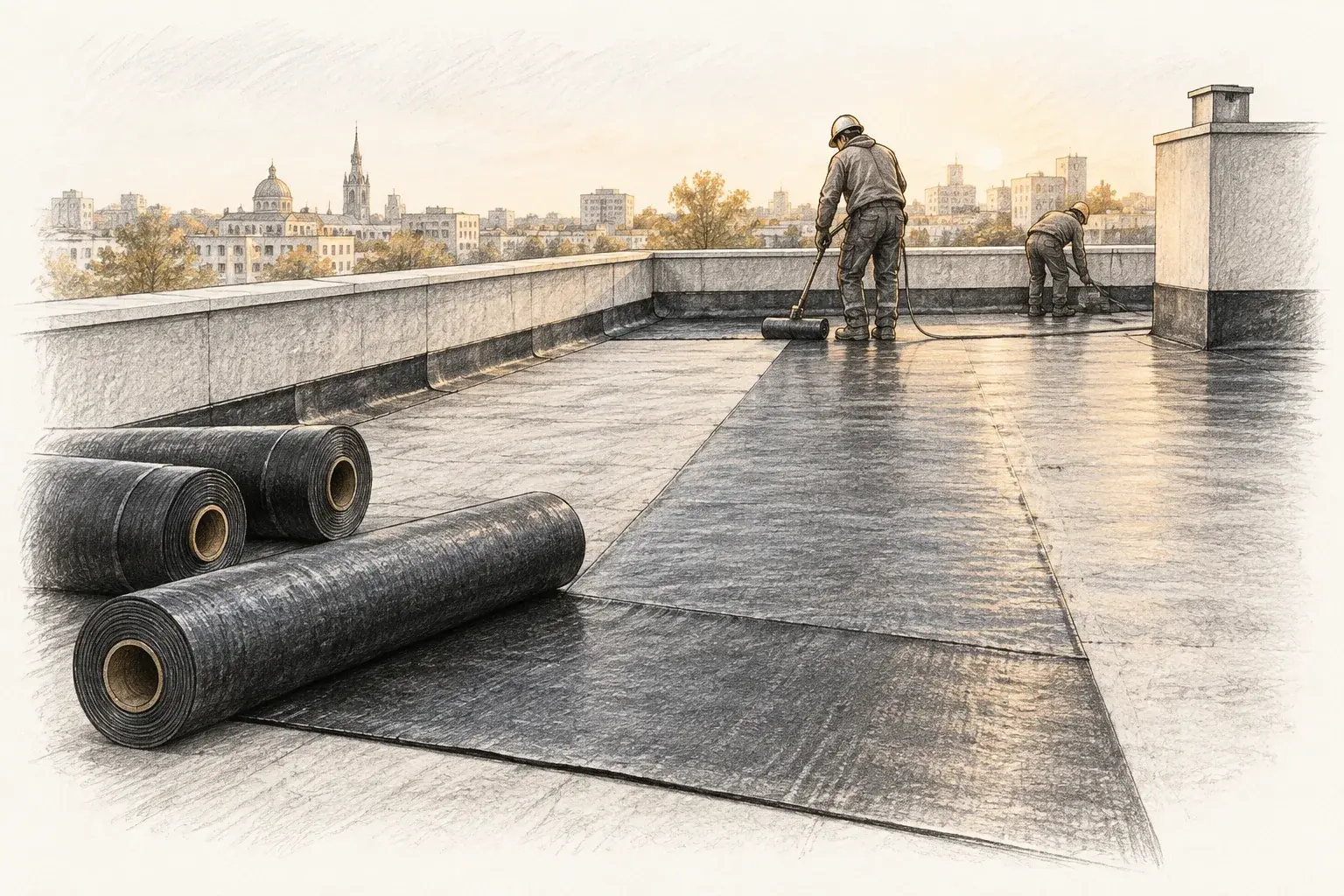
APP modified bitumen roofs are durable when well installed, but they develop recognisable defects over time. Knowing what each one looks like and what usually causes it helps facilities teams decide between a local repair and a wider fix. Repairs should always follow the membrane manufacturer's instructions and be carried out by trained, hot-works-competent roofers.
Open or poorly sealed laps
What you see
Typical causes
Repair
Granule loss
What you see
Typical causes
Repair
Surface crazing and cracking
What you see
Typical causes
Repair
Blisters
Blisters are reported less often on APP than on SBS membranes, but they still occur where moisture is trapped or bonding is incomplete. Intact blisters that are not in traffic areas are often left and monitored; open or cracked ones are cut out, dried and patched.
Damage at details and from traffic
- Upstand slippage: compound sagging down vertical faces, usually from overheating during installation or poor fixing at the top edge.
- Punctures: from dropped tools, equipment feet or debris. Walkway pads near plant reduce these.
- Splits at penetrations: pipes moving relative to the roof; use collars and clamps rather than relying on the membrane alone.
Quick reference
| Defect | Most likely cause | Usual repair |
|---|---|---|
| Open lap | Under-torching, contamination | Re-seal or strip over |
| Granule loss | Ponding, abrasion | Coating or new cap; improve drainage |
| Surface crazing | UV and heat ageing | Compatible coating |
| Through-crack | Cold bending, deck movement | Patch; movement detail if recurring |
| Blister | Trapped moisture, poor bond | Monitor or cut, dry and patch |
| Puncture | Traffic, dropped objects | Patch; add walkway protection |
Inspection routine
Most of these defects are cheap to fix when found early. Inspect APP roofs at least twice a year and after storms: clear outlets and gutters, note any ponding, check laps and upstand tops, and photograph bare or cracked areas so changes can be tracked. Keep a simple roof plan marked with each defect and repair date. Hot works on an occupied building need a permit and fire watch, so plan repair visits rather than leaving small faults until they become urgent.
Find the cause before patching. A repair that ignores ponding, movement or trapped moisture rarely lasts.
Sourcing repair materials
For repairs, match the existing membrane's modifier, reinforcement and surface finish so the patch bonds and ages in the same way. Order primer and any coating from a compatible system. Nuroil can supply APP membrane rolls for repair and refurbishment work with a certificate of analysis; reach us through the contact page.