APP modified bitumen membranes are widely used on flat roofs in hot, sunny regions. The atactic polypropylene modifier gives the compound a plastic, rather than rubbery, character that stands up well to heat and ultraviolet light. This article looks at why that is, where the limits lie, and what to check before choosing an APP sheet for a hot-climate roof.
What APP does to bitumen
Atactic polypropylene is a non-crystalline form of polypropylene that blends into bitumen to form a stiffer, plastomeric compound. Compared with SBS, the result is typically:
- Higher resistance to flow at elevated temperature, so the compound is less likely to soften and slide on sloping or vertical surfaces in the sun.
- Better inherent UV resistance, because the polypropylene chain has no double bonds for oxygen and UV to attack.
- A harder, tougher surface that resists scuffing.
- Less flexibility at low temperatures, which is the main trade-off.
Flow resistance is the key hot-climate figure
On a dark roof in strong sun, the membrane surface can become much hotter than the air. The property that tells you whether the compound will hold its place is flow resistance at elevated temperature. In Europe this is measured to EN 1110: vertical specimens are held at a set temperature and checked for slippage of the compound. APP sheets generally declare higher flow resistance than SBS sheets made to the same standard. Look for the value after ageing as well as new, because some compounds lose stability over time.
Ultraviolet and surface finishes
Although APP is more UV tolerant than SBS, an exposed APP cap sheet is still normally protected by mineral granules, slate or a reflective coating. The finish reduces surface temperature, slows oxidation and protects against foot traffic. Light-coloured finishes keep the compound cooler, which matters on roofs that also carry equipment or tiles. Patent literature on tile underlayments notes that dark granules absorb more heat, softening the APP compound enough that tiles stacked on it can slide.
Granule retention needs attention. Research on the bond between bitumen and self-protection granules found higher granule loss on APP-modified membranes than on others tested, and identified water as more damaging than heat. In practice that means good drainage and avoiding ponding are as important as the sheet itself.
Where the limits are
- Cold installation conditions. APP sheets are stiffer at low temperature. In cool desert nights or winter months, rolls can be hard to unroll and form at details. Store and warm them before use.
- Movement. APP has lower elongation at low temperature than SBS. On decks with significant movement, polyester reinforcement and well-designed joints become more important.
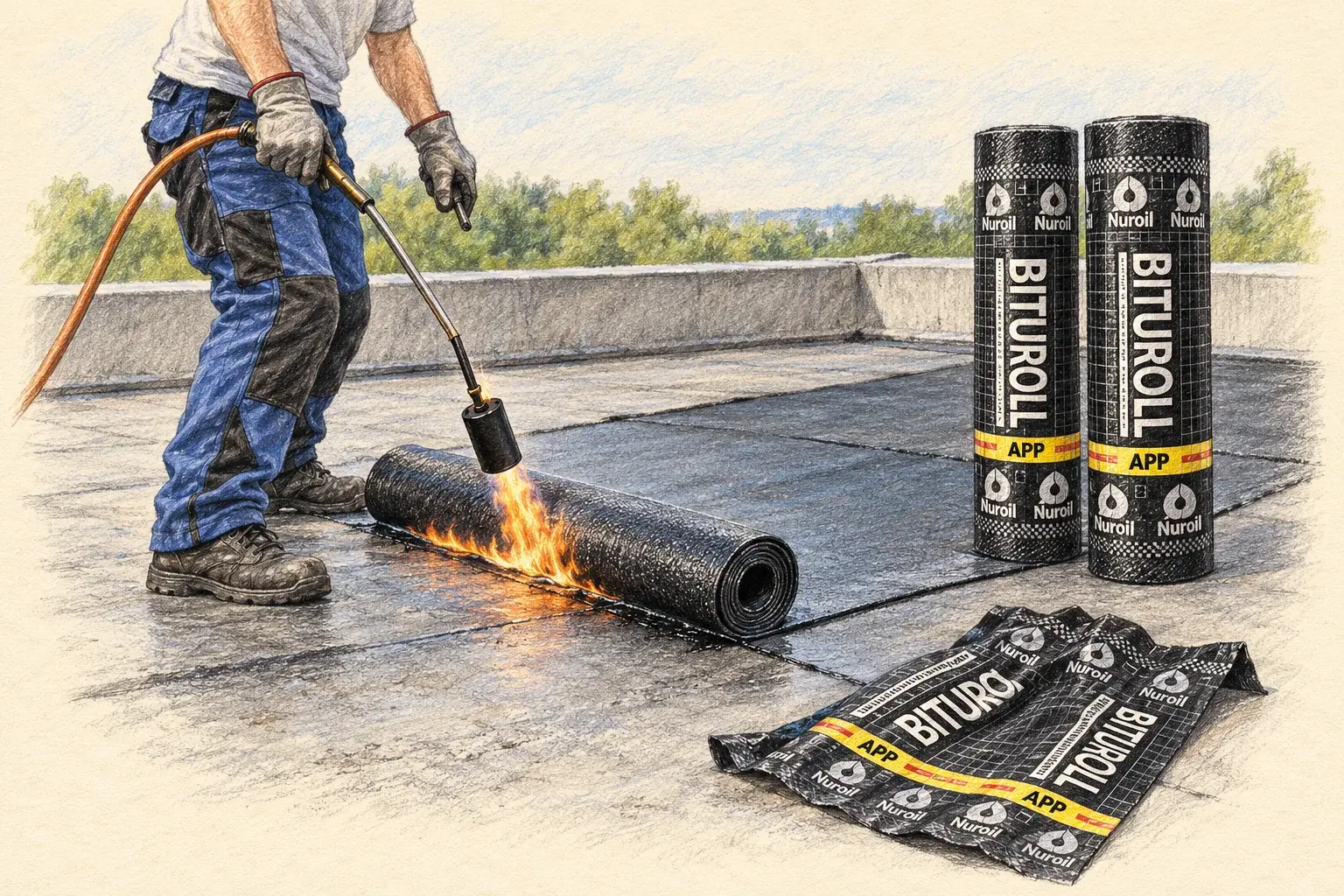
- Application method. APP sheets are almost always torch-applied. Hot bitumen mopping is generally not recommended for APP sheets, so check the manufacturer's instructions before choosing a method.
APP or SBS for a hot roof?
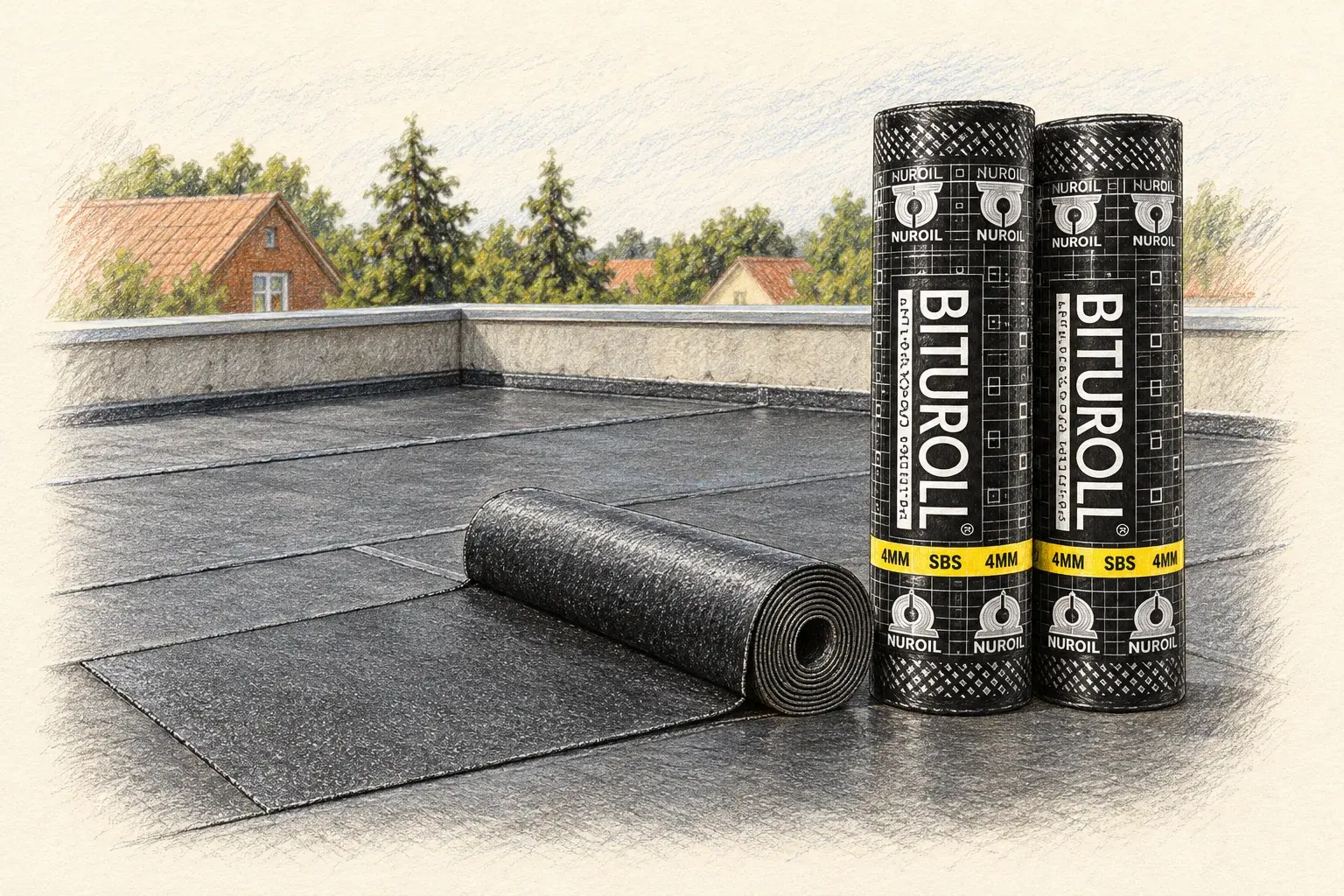
For exposed roofs with intense sun, little frost and limited structural movement, APP is a common and sensible choice. Where the roof sees real cold, heavy movement, or where cold-applied or self-adhered systems are wanted, SBS is often preferred. Our SBS modified membrane page covers that alternative.
On a hot roof, ask for flow resistance after ageing, and choose a light, well-bonded surface finish.
Specifying APP for hot climates
In your enquiry, state the expected exposure (fully exposed, under tiles, under paving), the finish and colour required, minimum flow resistance and cold flexibility values with their test methods, reinforcement type and thickness. Ask for the data sheet and the certificate of analysis for the batch. Nuroil supplies APP membranes from established producers with a CoA on every delivery; send your requirements through the quote request form.