Cyanuric acid, C₃H₃N₃O₃, is a white, odourless solid made from urea. In pool water it binds loosely to free chlorine and protects it from the sun’s ultraviolet light, which otherwise destroys most unprotected chlorine within a few hours of strong sun.
It is not a disinfectant itself and is not used up; it leaves the pool only by splash-out, backwashing and dilution. Typical targets are about 30–50 mg/L, and many codes cap it at 50–100 mg/L, because too much slows chlorine’s action. The same material is the feedstock for TCCA and SDIC.
Less chlorine lost to sunStabilised chlorine lasts many times longer in sunlight, so outdoor pools need less of it.
Dose once, top up rarelyIt is not consumed, so a pool is stabilised at the start and topped up only after dilution.
Works with any chlorineLets unstabilised calcium hypochlorite or liquid chlorine behave like stabilised chlorine outdoors.
Documented qualityEach offered batch comes with its Certificate of Analysis and safety data sheet.
What Nuroil does on every order
Why choose cyanuric acid from Nuroil?
Checked against the batch CoA
Purity, moisture and particle size are reviewed on the batch certificate before loading.
Form matched to your use
Granular for pool dosing with little dust; powder for compounding and dissolving.
Packed to stay dry
Lined bags, drums and pails, so the solid stays free-flowing.
One desk, firm offers
FOB, CFR or CIF from our Sharjah trade desk, usually within 24 hours.
02 TECHNICAL DATA
Technical specification.
Cyanuric acid (C₃H₃N₃O₃)
98.5% minTitration / HPLC
Moisture
0.5% maxGravimetric
pH (saturated solution)
About 4–5pH meter
Appearance
White granules or powder, odourlessVisual
Granule size
Typically 8–30 meshSieve analysis
Powder fineness
Typically 100 mesh and finerSieve analysis
01GRANULAR
Pool dosing
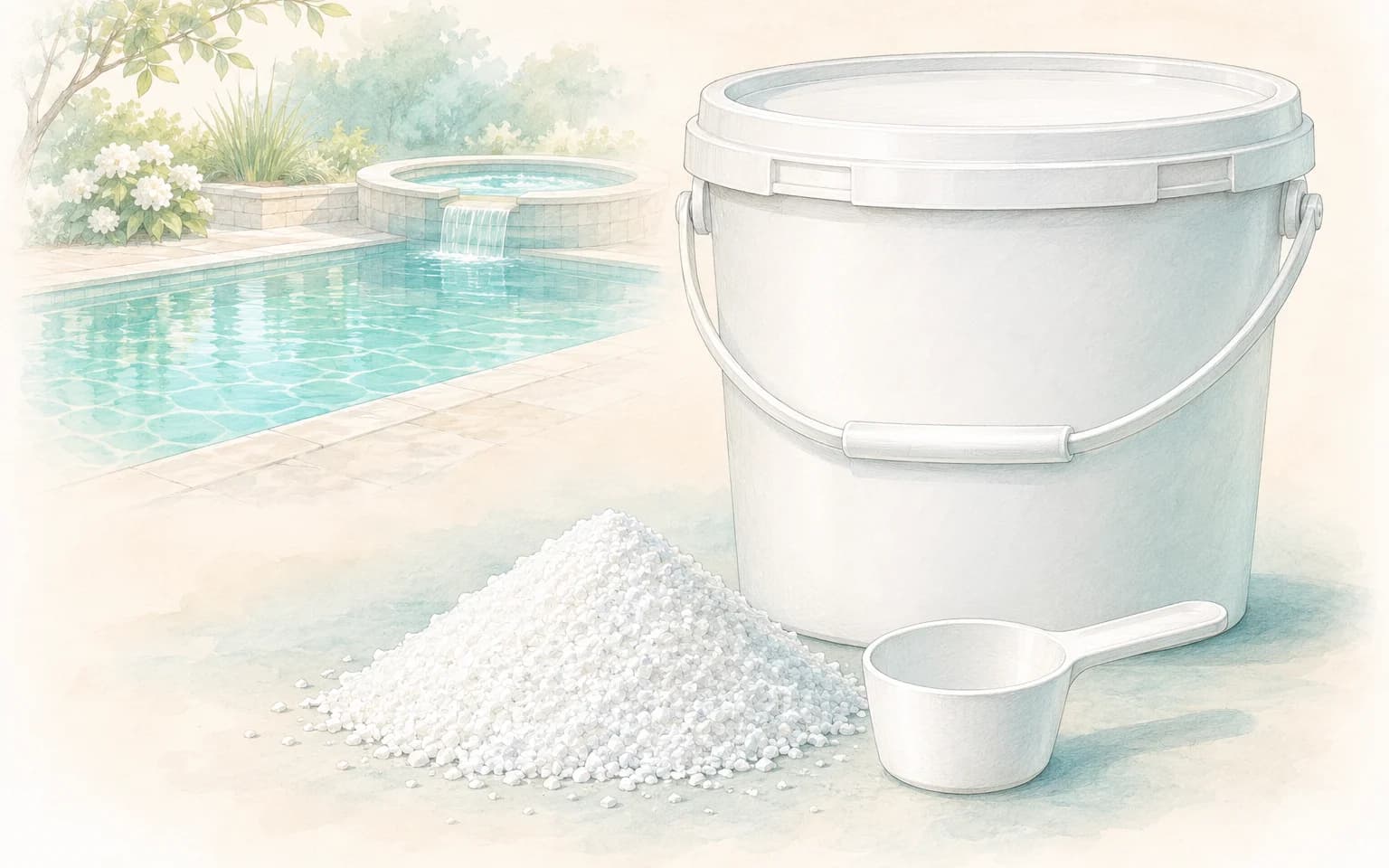
Low-dust granules dosed through the skimmer or a sock, or broadcast, for pool companies and resorts.
02POWDER
Compounding and dissolving
Fine powder for making TCCA, SDIC and pool products, and for pre-dissolving.
Selection guidance Tell us whether you dose pools directly or compound products, and the quantity, and we will confirm the form.
The same stabiliser in two forms. The right one depends on how you dose it.
Property
Granular
Powder
Purity
98.5% min
98.5% min
Dust in handling
Low
Higher
Dissolving speed
Slow
Faster
Best suited to
Direct pool dosing
Compounding, pre-dissolving
03 HOW IT IS MADE
From urea to stabiliser.
Urea is heated to about 250–300 °C, where it condenses to crude cyanuric acid and gives off ammonia. The crude solid is refined in hot acid to break down by-products, then washed, dried and sized to granules or powder.
01
Urea pyrolysis
Urea is heated in a kiln or reactor and condenses, releasing ammonia.
02
Acid refining
The crude product is digested in hot mineral acid to remove ammelide and ammeline.
03
Washing and drying
The solid is washed, dried and screened to granules or milled to powder.
04
Testing and packing
Each batch is tested for purity and moisture and sealed in lined bags.
04 APPLICATIONS
Where it stabilises.
01
Outdoor pools
Stabilising chlorine in sunlit hotel, villa, club and public pools.
02
Unstabilised chlorine
Paired with calcium hypochlorite or liquid chlorine to cut losses to sunlight.
03
Chlorine isocyanurates
Feedstock for making TCCA and SDIC.
04
Resins and flame retardants
Raw material for melamine cyanurate, triglycidyl isocyanurate and other chemicals.
05 SAFETY & HANDLING
Low hazard. Mind the dust.
This summary does not replace the Safety Data Sheet. Review the SDS and site procedure before first handling.
Warning
H319 Causes serious eye irritation (some SDSs; many list it as not classified).
UN
Not regulated
Transport
Not dangerous goods
01
Protect your eyes
Dust can irritate the eyes; some SDSs classify it as an eye irritant. Wear eye protection.
02
Avoid dust
Handle with ventilation or a dust mask, and keep dust clouds away from ignition sources.
03
Dose with care
Add it slowly through the skimmer or a sock; it dissolves slowly and can take days to show fully in a test.
04
Away from strong oxidisers
Store it separately from chlorine products and other strong oxidisers.
05
Exposure response
Rinse eyes with water for several minutes; seek medical advice if irritation persists.
Keep it dry, keep it sealed.
Keep itDry and sealed
Cyanuric acid is a stable solid; kept sealed in a dry store it does not lose strength. Confirm the producer’s shelf life with the offer.
Keep bags closedMoisture cakes the solid; reseal bags and drums at once.
Dry, covered storeOff the floor on pallets, out of rain and direct sun.
Apart from oxidisersAway from chlorine products and other strong oxidisers.
First in, first outUse the oldest stock first and keep the batch label with each lot.
Plan documentation early.
HS code2933.69
CAS number108-80-5
EC number203-618-6
TransportNot regulated
GHS
Not classified on many SDSs; some list serious eye irritation (H319)
Transport
Not regulated as dangerous goods
Pool water limits
Many codes cap cyanuric acid at 50–100 mg/L; confirm the local pool code
National regulations
Confirm the destination’s chemical-import requirements
06 PACKING OPTIONS
Choose your packing.
Pack sizes and container loads depend on the producer and form; the offer confirms them.
Smaller orders
25 kg bags
PP woven or paper bags with a PE liner, for pool companies and distributors.
It protects free chlorine from the sun’s ultraviolet light, so outdoor pools lose much less chlorine. It does not disinfect on its own.
02How much should a pool have?
Typically 30–50 mg/L for outdoor pools. As a guide, 1 kg of cyanuric acid raises 100 m³ of water by about 10 mg/L. Many codes set a ceiling of 50–100 mg/L; follow the local code.
03Can there be too much?
Yes. High levels slow chlorine’s action. Cyanuric acid is not used up, so the only practical way to lower it is to replace part of the water.
04Do I need it with TCCA or SDIC?
Usually not as a starting dose: both release cyanuric acid as they dissolve. Test the level, because it builds up over time with daily TCCA dosing.
05Indoor pools?
Indoor pools get little sunlight, so stabiliser is usually not needed and many codes discourage it there.
06What is the HS code?
Cyanuric acid is usually classified under HS 2933.69. Its CAS number is 108-80-5.
07What documents come with a shipment?
A Certificate of Analysis and Safety Data Sheet, with the Certificate of Origin as required.
Include the form (granular or powder), quantity, packing and destination for a tailored offer. We reply with a firm FOB, CFR or CIF offer, usually within 24 hours.