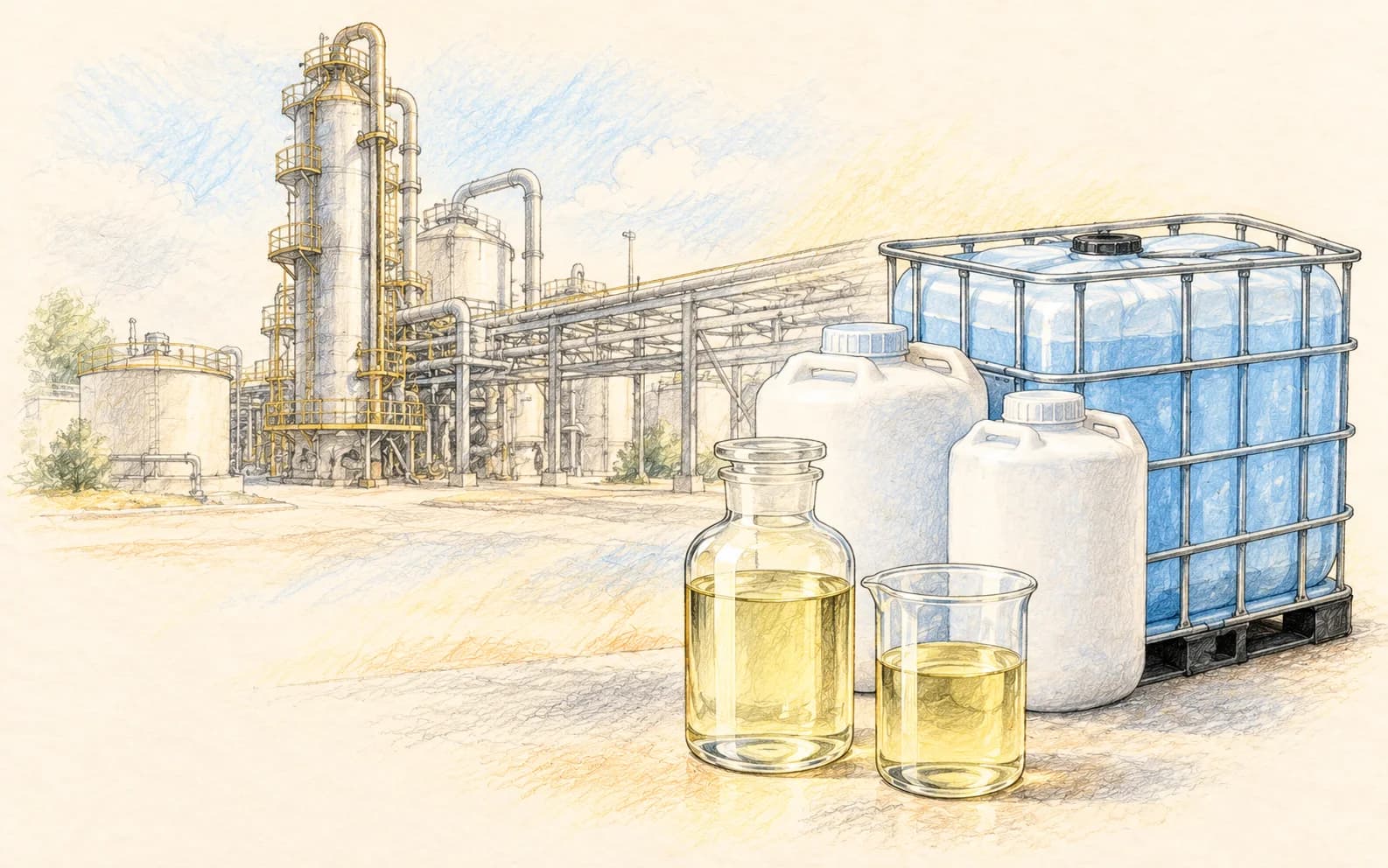
Phosphoric acid, H₃PO₄, also called orthophosphoric acid, is a medium-strength mineral acid. The common commercial form is an 85% solution in water: a clear, colourless, syrupy liquid with no odour.
Merchant-grade acid, MGA, is the darker wet-process acid concentrated to 52–54% P₂O₅ for fertilizer plants. Technical and food grades are purified acids, with limits on iron, heavy metals, arsenic and fluoride that the grade sets.
Identity
Formula
H₃PO₄
Molar mass
97.99 g/mol
CAS
7664-38-2
Orthophosphoric acid · H₃PO₄Why Phosphoric acid
Three grades, one deskTechnical 85%, food-grade 85% and merchant-grade acid, matched to the use.
Acid and phosphate in oneSupplies acidity and phosphorus for metal phosphating, fertilizers, detergents and feed.
Easier than strong acidsA medium-strength, non-oxidising, non-fuming acid that is simpler to store and dose.
Documented qualityEach offered batch comes with its Certificate of Analysis and safety data sheet.
What Nuroil does on every order
Why choose phosphoric acid from Nuroil?
Checked against the batch CoA
Acid content, iron, sulphate and heavy metals are reviewed on the batch certificate before loading.
Grade matched to your use
Food-grade supply comes with its food-additive certification, confirmed before ordering.
Packed in rated containers
Plastic drums, IBCs and lined or stainless steel ISO tanks.
One desk, firm offers
FOB, CFR or CIF from our Sharjah trade desk, usually within 24 hours.
02 TECHNICAL DATA
Technical specification.
H₃PO₄ content (85% grades)
85.0% minAcid-base titration
Density at 25 °C (85%)
About 1.685–1.69 g/cm³Hydrometer / densimeter
Iron (Fe), technical
0.002–0.005% maxICP / colorimetric
Sulphate (SO₄), technical
0.005–0.01% maxTurbidimetric
Arsenic (As), food grade
3 mg/kg max (1 mg/kg in the EU)AAS / ICP
Fluoride (F), food grade
10 mg/kg maxIon-selective electrode
MGA strength
52–54% P₂O₅Gravimetric / titration
Appearance
85%: clear, colourless, syrupy · MGA: dark green to brownVisual
Reference standards
GB/T 2091 (technical); FCC, JECFA E338 (food)
0185% TECHNICAL
Industry and metal treatment
Purified acid for phosphating, rust removal, cleaning products, water treatment and phosphate salts.
0285% FOOD GRADE / E338
Certification-controlled use
For soft drinks, food acidulants and food phosphates, with the food-additive certification and destination acceptance confirmed before ordering.
03MGA 52–54% P₂O₅
Fertilizer plants
Wet-process acid for DAP, MAP, TSP and NPK production, and for purification to higher grades.
Selection guidance Tell us the use, any purity limits and the destination; food-grade supply depends on certification and is confirmed with the offer.
Three commercial grades of the same acid. The right one depends on the purity your use needs.
Property
85% technical
85% food grade
MGA
Strength
85% H₃PO₄
85% H₃PO₄
52–54% P₂O₅ (about 72–75% H₃PO₄)
Appearance
Clear, colourless
Clear, colourless
Dark green to brown
Purity
Purified
Highest, food-additive limits
Wet-process impurities
Price per tonne P₂O₅
Higher
Highest
Lowest
Best suited to
Metal treatment, cleaners, phosphates
Drinks, food phosphates
Fertilizer plants
03 HOW IT IS MADE
From phosphate rock to purified acid.
Most phosphoric acid is made by the wet process: phosphate rock is digested with sulphuric acid and the gypsum filtered off, then the acid is concentrated to MGA. Technical and food grades are purified from it by solvent extraction, or made by the thermal process from elemental phosphorus.
01
Rock and sulphuric acid
Ground phosphate rock is digested with sulphuric acid.
02
Filtration
Phosphogypsum is filtered off, leaving weak phosphoric acid.
03
Concentration
The acid is evaporated to merchant grade, 52–54% P₂O₅.
04
Purification and testing
For technical and food grades the acid is purified to 85% H₃PO₄, and each batch is tested before packing.
04 APPLICATIONS
Where it is used.
01
Fertilizers
MGA for DAP, MAP, TSP, NPK and liquid fertilizers.
02
Metal treatment
Phosphating before painting, rust removal and metal brightening.
03
Detergents and cleaners
Descalers, dairy and food-plant cleaners and phosphate builders.
04
Food and drinks
Acidulant in cola and other soft drinks, and food phosphates, certified food grade only.
05
Water treatment
pH control and phosphate dosing for corrosion and scale control.
06
Chemical production
Sodium, potassium and calcium phosphates, catalysts and feed phosphates.
05 SAFETY & HANDLING
A corrosive acid. Protect skin and eyes.
This summary does not replace the Safety Data Sheet. Review the SDS and site procedure before first handling.
Danger
H290 May be corrosive to metals.
H314 Causes severe skin burns and eye damage.
UN
1805
Class
8, corrosive · PG III
01
Protect skin and eyes
It causes severe burns and eye damage; wear acid-resistant gloves, goggles and face shield.
02
Add acid to water
When diluting, add the acid slowly to water with stirring; the mixing releases heat.
03
Away from alkalis and metals
It reacts with alkalis and attacks carbon steel, releasing hydrogen; keep it in rated containers.
04
Mind the viscosity
The 85% acid is thick and thickens further in the cold; allow for this in pumps and lines.
05
Exposure response
Rinse skin or eyes immediately with plenty of water for at least 15 minutes and seek medical attention.
Sealed, bunded and apart.
StoreSealed and bunded
Phosphoric acid is stable and does not lose strength in sealed containers. 85% acid may crystallise below about 21 °C, so keep it from freezing conditions. Confirm the producer’s shelf life with the offer.
Rated containers onlyPolyethylene, rubber-lined or stainless steel; never plain carbon steel.
Bunded storeUnder cover, with acid-resistant bunding and ventilation.
SegregateApart from alkalis, reactive metals and chlorine products.
First in, first outUse the oldest stock first and keep the batch label with each lot.
Plan documentation early.
HS code2809.20
CAS number7664-38-2
EC number231-633-2
E numberE338
UN numberUN 1805
GHS
Skin corrosion, category 1B (H314); may be corrosive to metals (H290)
Transport
UN 1805, class 8, PG III
Food use (E338)
Only certified food-grade batches; confirm local food-authority requirements
National regulations
Confirm the destination’s import and dangerous-goods requirements
06 PACKING OPTIONS
Choose your packing.
Pack sizes and container loads depend on the producer and grade; the offer confirms them.
Small quantities
Plastic drums
UN-approved polyethylene drums, often about 35 kg or 330 kg, for plants and distributors.
01What is the difference between H₃PO₄ and P₂O₅ strength?
They are two ways of stating the same acid. 85% H₃PO₄ equals about 61.5% P₂O₅; merchant-grade acid at 52–54% P₂O₅ is about 72–75% H₃PO₄. Fertilizer trade quotes P₂O₅, industry and food quote H₃PO₄.
02What is MGA?
Merchant-grade acid: wet-process phosphoric acid concentrated to 52–54% P₂O₅. It is dark and carries some impurities from the rock, and is made mainly for fertilizer production.
03Technical or food grade?
Technical grade suits metal treatment, cleaners and industrial phosphates. Food grade meets food-additive limits for arsenic, heavy metals and fluoride, and comes with its certification.
04Is it dangerous goods for shipping?
Yes. Phosphoric acid solution ships as UN 1805, class 8, packing group III. We prepare the dangerous-goods documents with the shipment.
05What is the HS code?
Phosphoric acid is classified under HS 2809.20. Its CAS number is 7664-38-2.
06Why has my 85% acid gone solid?
Concentrated phosphoric acid can crystallise in the cold, below about 21 °C. Gentle warming melts it again without harm to the product.
07What documents come with a shipment?
A Certificate of Analysis and Safety Data Sheet, with the Certificate of Origin, dangerous-goods declaration and food-grade certification as required.
Include the grade (technical, food or MGA), packing, quantity and destination for a tailored offer. We reply with a firm FOB, CFR or CIF offer, usually within 24 hours.