Fresh bitumen is flexible and sticky. Years later, the binder in an old road is hard and brittle, and the surface cracks and loses stones. This change is called ageing, and it is one of the main reasons asphalt pavements eventually need resurfacing. Understanding how it happens explains several tests that appear on bitumen certificates.
What happens to bitumen as it ages
Two processes are responsible:
- Loss of volatiles. At high temperatures, the lightest fractions in bitumen evaporate, leaving a slightly harder material.
- Oxidation. Oxygen reacts with molecules in the bitumen, forming new compounds such as carbonyls. These make the binder stiffer and less able to relax under stress.
Oxidation tends to occur in two phases: a relatively fast period when the bitumen is first exposed, followed by a long period at a slower, steadier rate. Aggregate itself is barely affected; it is the binder that changes. As it stiffens, the pavement becomes more prone to fatigue cracking and to cracking in cold weather.
Short-term and long-term ageing
Ageing happens in two very different settings.
Short-term ageing
Long-term ageing
How laboratories simulate ageing
| Test | Simulates | How it works | Common standards |
|---|---|---|---|
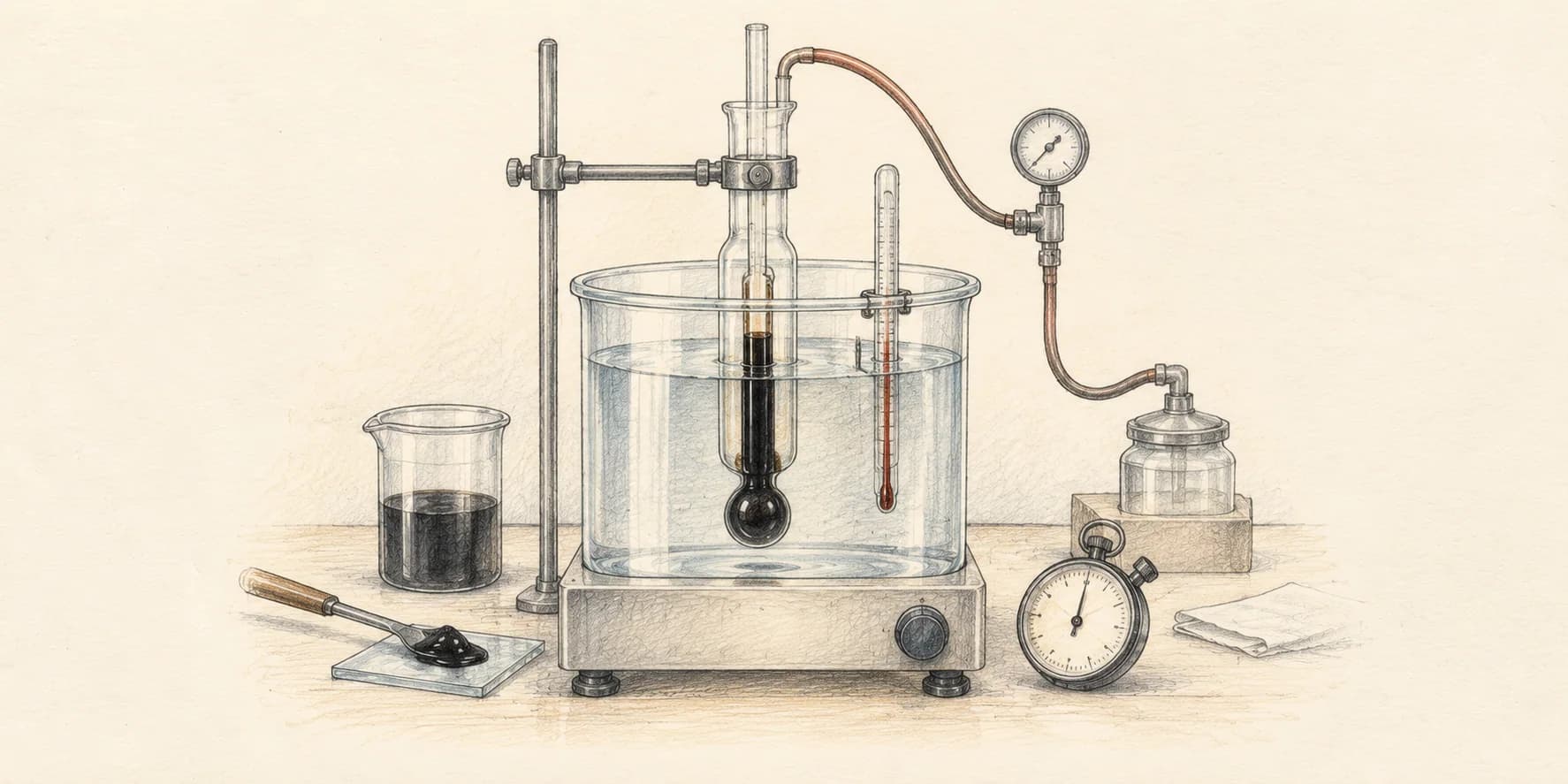
| Rolling thin film oven (RTFO) | Plant mixing, storage and haulage | Bitumen in rotating glass bottles forms a thin moving film exposed to hot air; mass change is also measured | AASHTO T 240, ASTM D2872, EN 12607-1 |
| Pressure ageing vessel (PAV) | Several years in service | RTFO residue is aged further for about 20 hours under heat and air pressure of about 2.1 MPa | AASHTO R 28, ASTM D6521 |
The PAV is generally described as representing roughly seven to ten years of field ageing, although it is an accelerated proxy rather than an exact replica, and results for some polymer and rubber modified binders are harder to interpret.
Where ageing shows up in specifications
Most bitumen specifications include results after RTFO or thin film ageing:
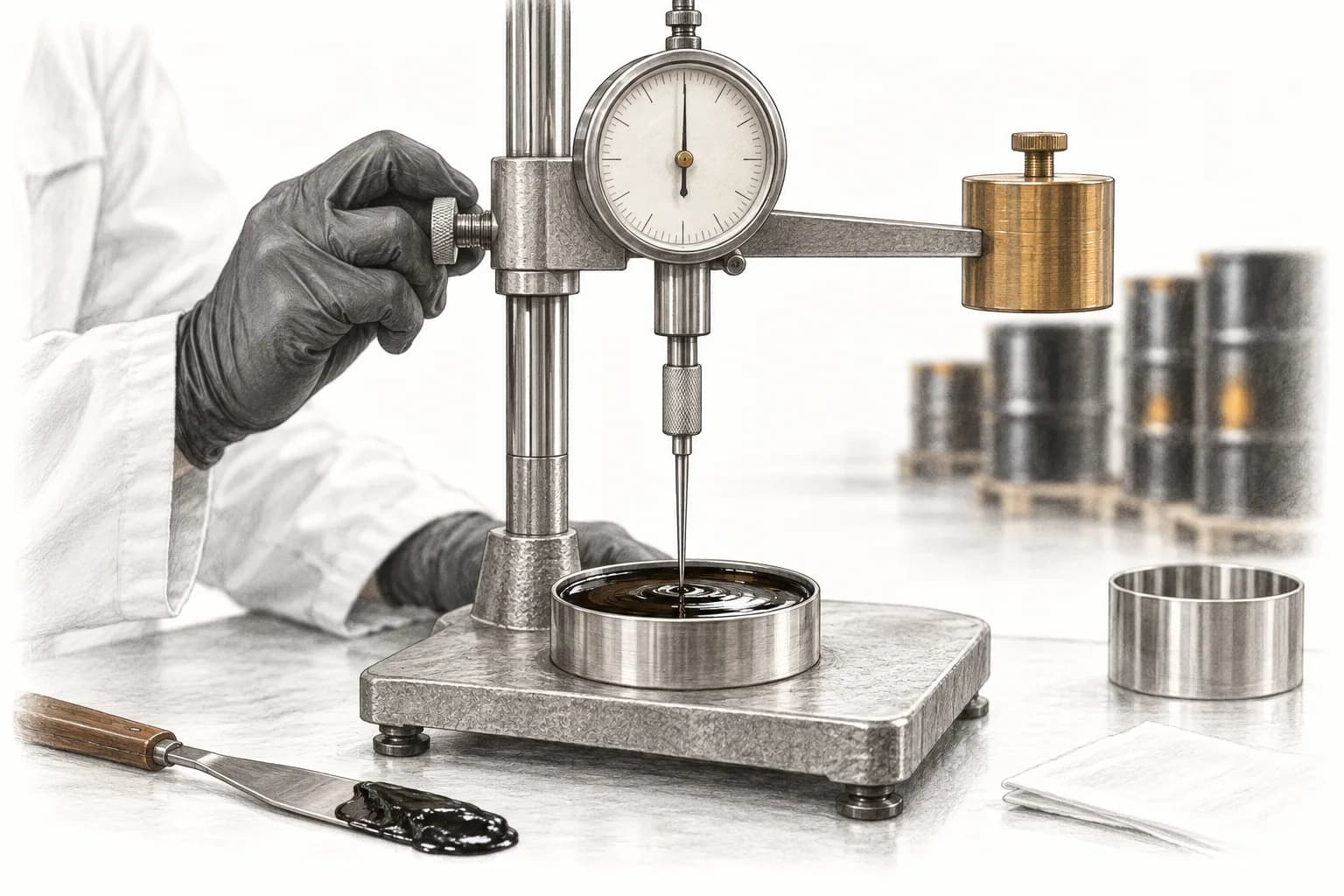
- Penetration and viscosity grades commonly limit mass change, require a minimum retained penetration or ductility, or cap the increase in viscosity after ageing.
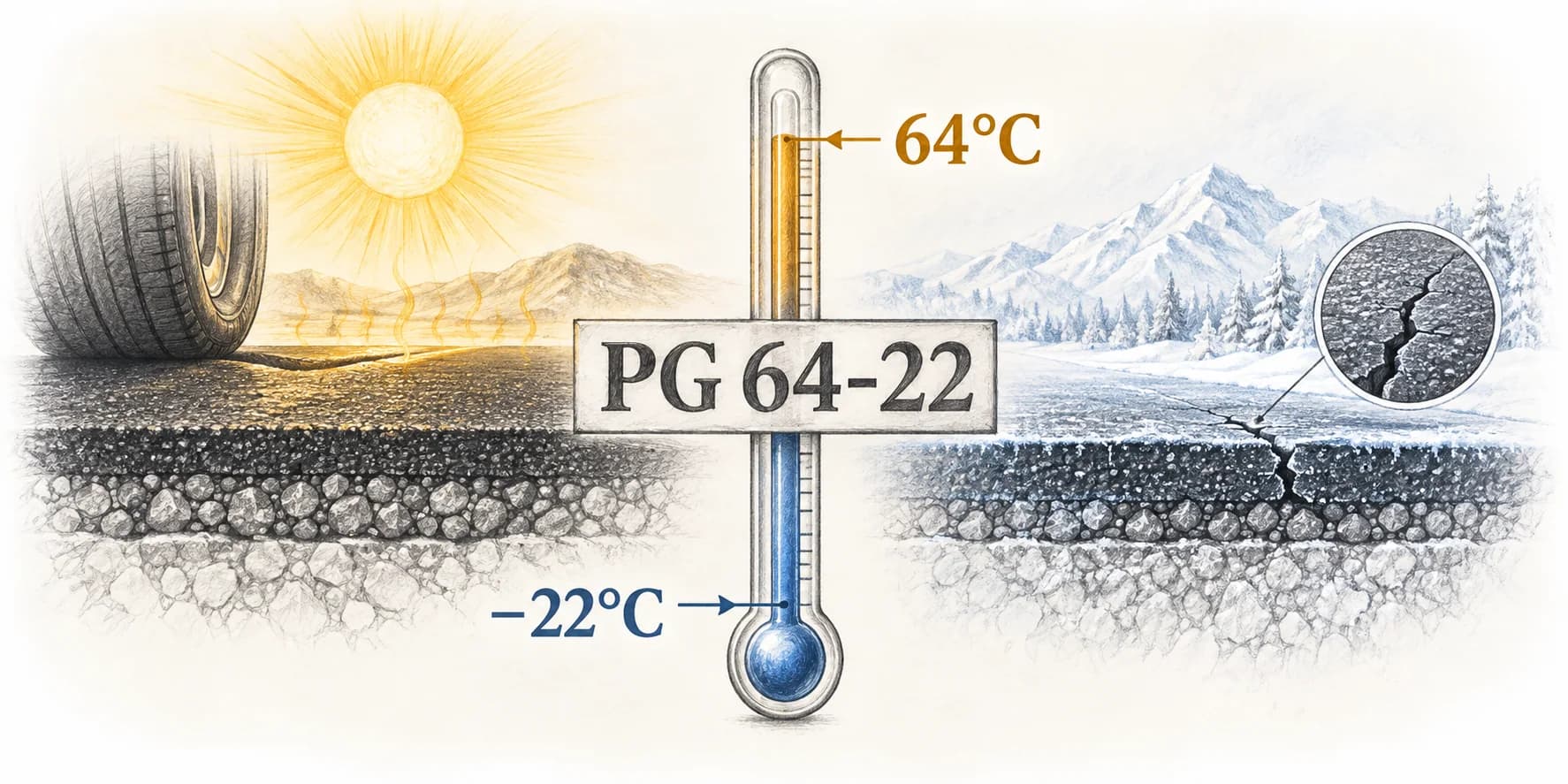
- Performance grades test the binder in three states: unaged, after RTFO for the high-temperature rutting check, and after RTFO plus PAV for fatigue and low-temperature cracking checks.
A binder that loses a lot of mass or stiffens sharply in these tests is likely to age quickly in the road.
Every degree of overheating in storage or at the plant spends part of the binder's life before the road is even laid.
Limiting early ageing in practice
- Store and heat bitumen at the lowest temperature that allows pumping and mixing, within the supplier's recommended range.
- Avoid holding bitumen hot for long periods; reduce the temperature for longer storage.
- Design mixes with enough binder for durable film thickness, and compact to the specified air voids.
- Seal surfaces with preservation treatments before cracks let air and water deep into the layer.
What to specify when buying
Ask for a certificate of analysis that includes the ageing results required by your specification, not just the properties of fresh bitumen. For performance graded binder, confirm that results cover the unaged, RTFO and PAV states. Nuroil provides a CoA with every delivery and can arrange third-party inspection on request for performance grade, viscosity grade and penetration grade bitumen.