Polymer modified bitumen (PMB) is conventional paving bitumen blended with a polymer to improve its performance across a wider temperature range. It costs more and demands closer handling, so it is worth understanding exactly what it adds and when ordinary grades are enough.
What the polymer does
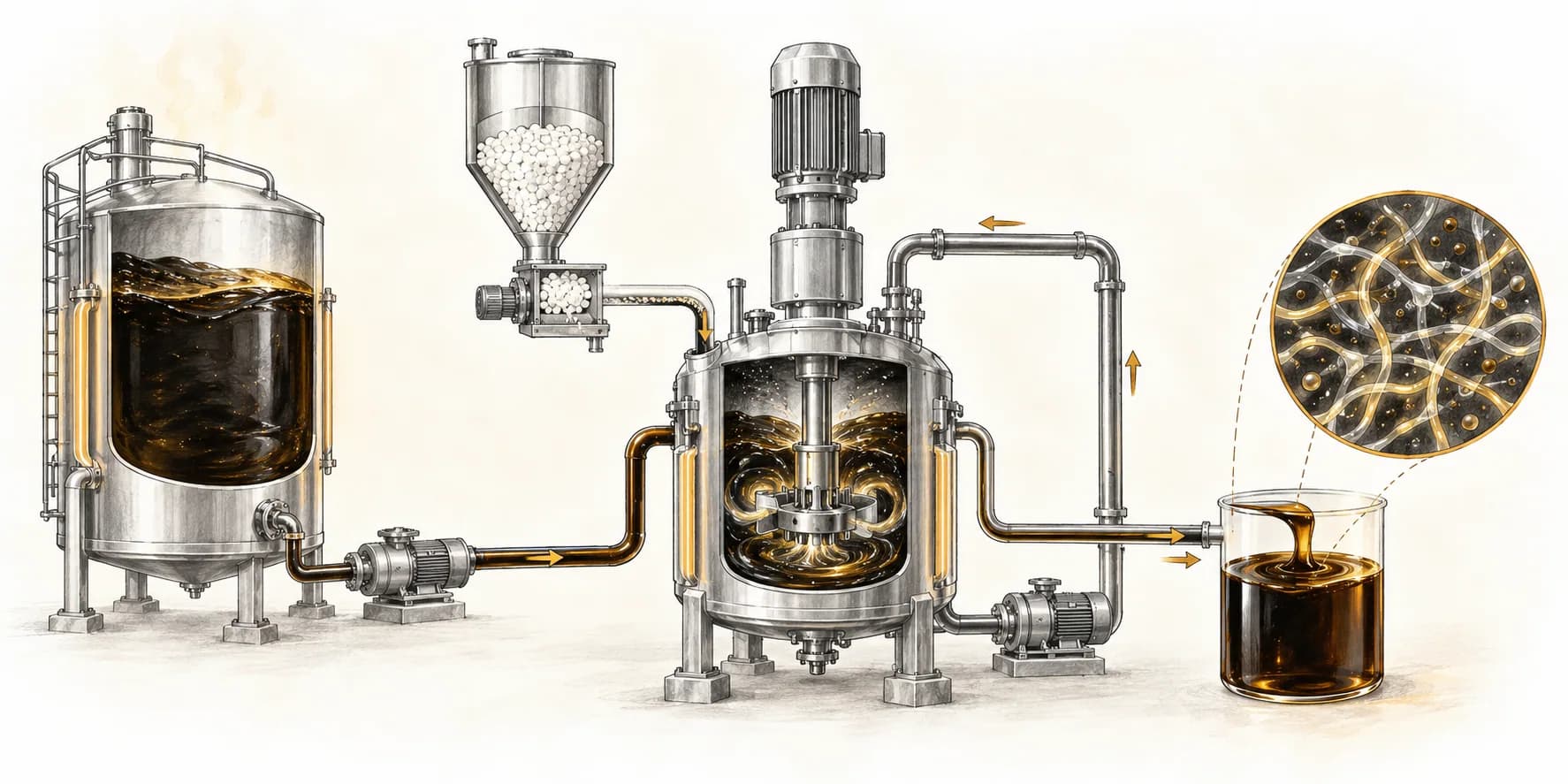
The most common modifier for paving is SBS (styrene-butadiene-styrene), an elastomer. When it is properly dispersed, the styrene end blocks gather into small domains linked by flexible butadiene chains, forming a network through the bitumen. That network makes the binder stiffer and more elastic at high temperatures while keeping it flexible when cold.
Other modifiers include plastomers such as EVA, which mainly increase stiffness, and crumb rubber. The choice depends on the property the specification is trying to improve.
Side-by-side comparison
| Aspect | Conventional bitumen | Polymer modified bitumen |
|---|---|---|
| Temperature sensitivity | Softens noticeably as temperature rises | Less sensitive; higher softening point for a similar penetration |
| Rutting resistance | Depends mainly on the hardness of the grade | Improved by the polymer network |
| Elastic recovery | Low | High; a key acceptance test |
| Fatigue and cracking | Harder grades can become brittle | Better resistance in most studies |
| Storage | Stable; heat and pump as normal | May separate if stored hot without agitation; follow supplier limits |
| Typical uses | Most paving, base and binder courses | Heavy-duty roads, wearing courses, thin surfacing, airfields, bridge decks |
Tests that apply to PMB
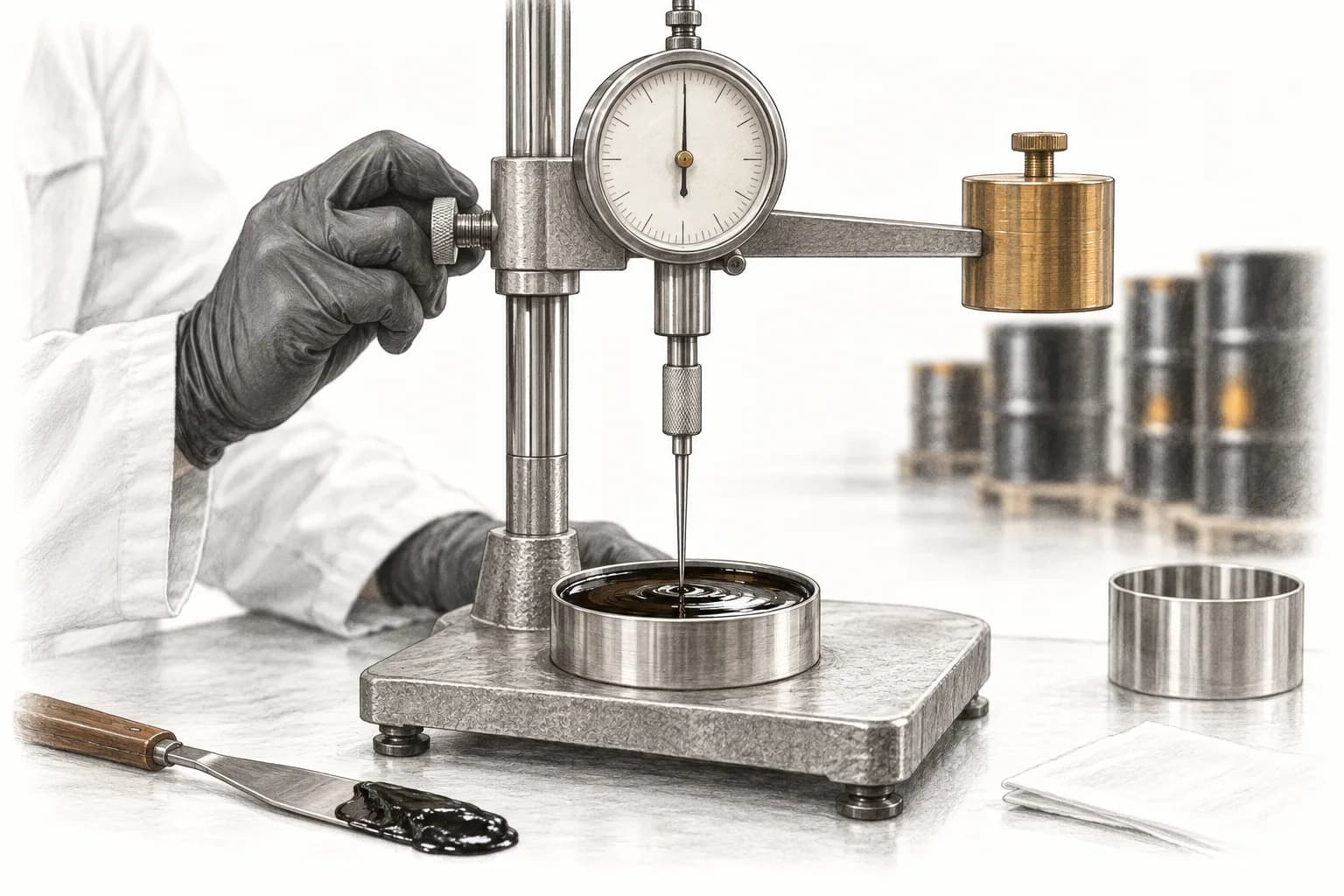
In addition to penetration, softening point and flash point, PMB specifications usually include:
- Elastic recovery, the percentage a stretched thread of binder recovers after cutting. European specifications use EN 13398; many grades require 50% or more, and some much higher.
- Storage stability, measured by storing binder in a sealed tube and comparing the top and bottom. Under EN 13399, a common limit is a softening point difference of no more than 5°C.
- Cohesion, brittleness and ageing tests, chosen from the framework standard EN 14023, where grades are named by penetration range and minimum softening point (for example PMB 45/80-65).
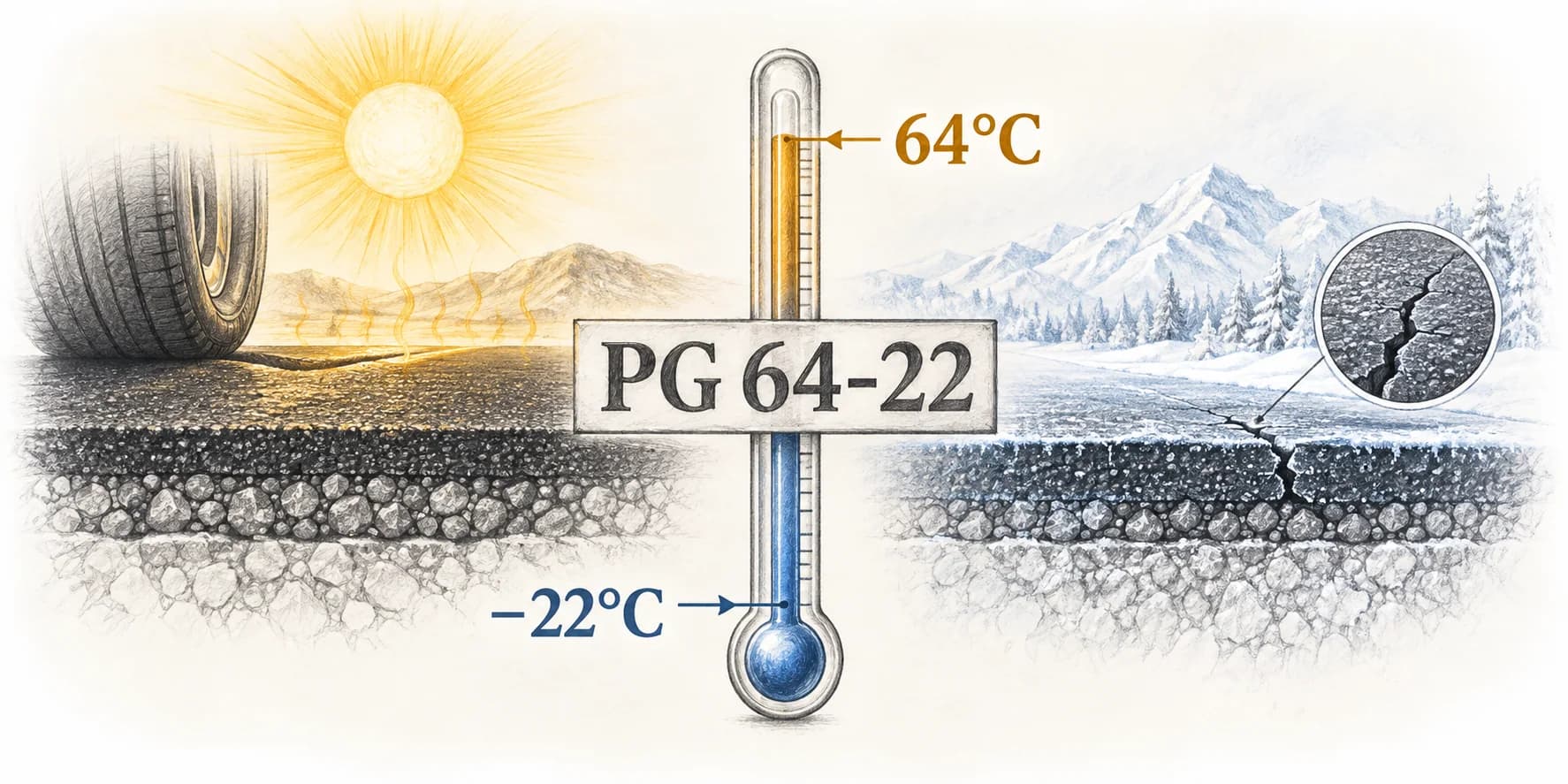
- Performance grade tests, where specifications use the PG system; modified binders often reach the higher temperature grades such as PG 76.
Handling and storage differences
PMB is usually handled at higher temperatures than conventional grades to keep it pumpable, but it must stay within the limits the supplier gives. Industry guidance caps paving bitumen, including PMB, at 200°C and advises keeping at least 30°C below the flash point. Overheating can degrade the polymer, raise emissions and cause deposits in the tank.
Because some PMBs can separate if left hot and still, tanks are often fitted with agitators or circulation, and long storage periods should be discussed with the supplier. Ultraviolet light and oxygen also degrade SBS over time, so the material should not sit exposed.
When conventional bitumen is the better choice
PMB is not automatically better value. For lightly trafficked roads, base layers, temperate climates or maintenance work, a correctly chosen conventional grade often performs well at lower cost and with simpler logistics. PMB earns its premium where traffic, temperature or layer thickness push conventional binder beyond its limits.
Choose PMB to solve a specific problem, such as rutting under heavy traffic or cracking in thin layers, not as a default upgrade.
What to specify when buying
State the PMB grade and the standard (for example an EN 14023 class or a PG grade), the modifier type if required, the packing (heated bulk or drums) and transit time, since this affects storage stability. Ask for a certificate of analysis showing elastic recovery and storage stability as well as the basic properties. Nuroil supplies polymer modified bitumen and conventional penetration grades; share your specification through a quote request.