Polymer modified bitumen (PMB) costs more than conventional paving grades and needs more care in storage and mixing. On many roads a correctly chosen straight-run grade performs perfectly well. The value of PMB shows up in specific locations and mix types where conventional binders reach their limits. Knowing those cases helps contractors and road owners use modified binder where it matters and save it elsewhere.
Heavy, slow and channelled traffic
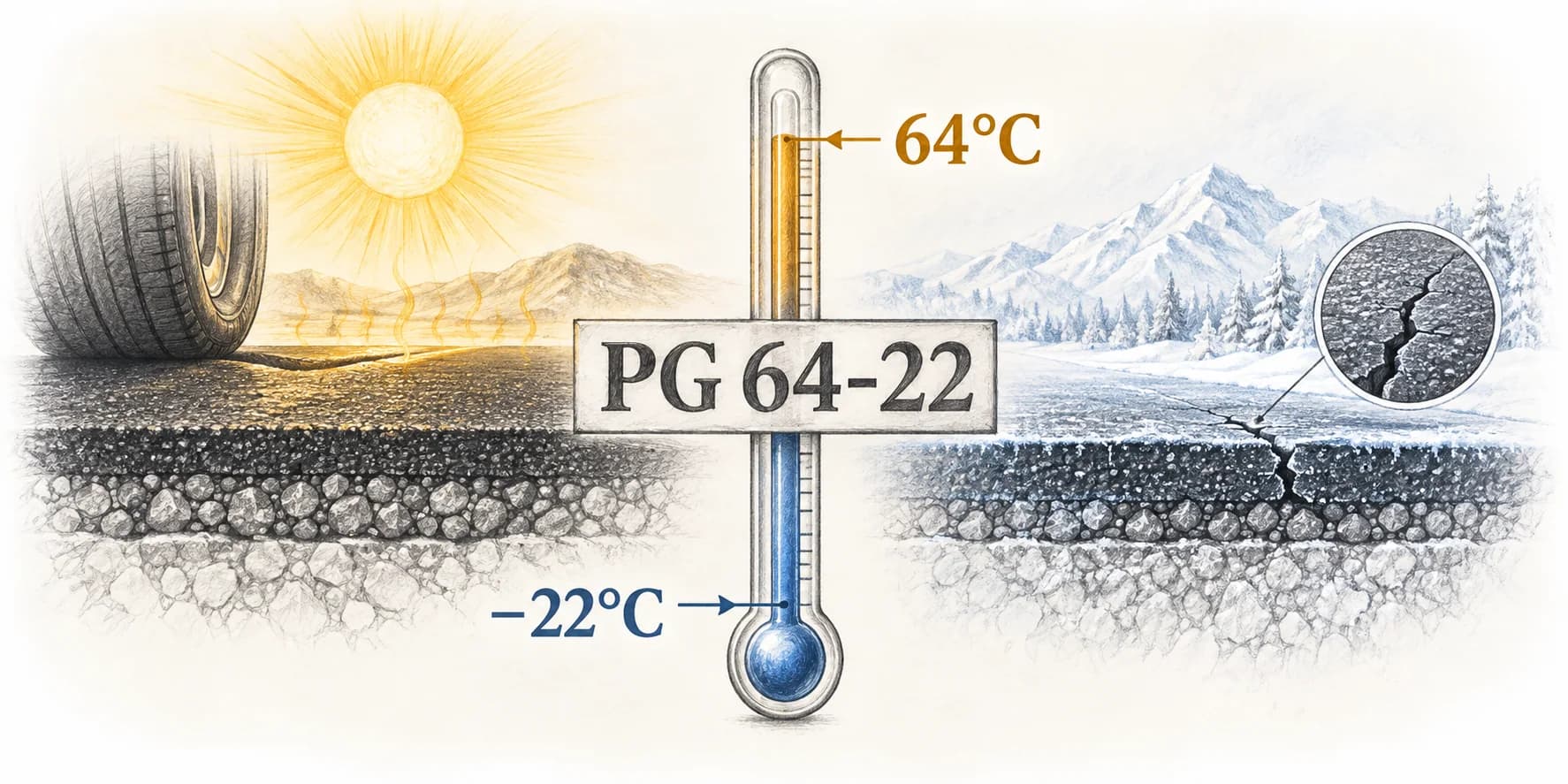
Rutting is driven by high pavement temperature combined with long loading times. Traffic that is heavy, slow or stopping, such as at signalised junctions, toll plazas, bus stops, climbing lanes and port or logistics yards, loads the asphalt for longer than free-flowing traffic. In performance-grade systems this is recognised by "grade bumping" or by the stricter MSCR traffic designations H, V and E, and the stiffer, more elastic binders those designations call for are usually polymer modified.
Hot climates
Where pavement temperatures regularly approach the mid-70s °C, conventional binders can struggle to stay stiff enough. Studies for hot, arid regions have concluded that much of the area needs binders graded to a high temperature of 76 °C, and that this generally requires modification. SBS PMB provides that stiffness while keeping enough flexibility to cope with the large daily temperature swings typical of desert climates.
Open-graded and thin surfacing mixes
Some mix types depend on modified binder almost by design:
- Porous asphalt and open-graded friction courses have thick binder films and many air voids; PMB reduces binder drain-down during transport and improves resistance to ravelling.
- Stone mastic asphalt uses a stone-on-stone skeleton held by a rich mastic; PMB adds rutting resistance and durability on heavily trafficked routes.
- Thin and ultra-thin surfacings must hold aggregate firmly with little binder thickness, which favours a cohesive, elastic binder.
- Surface dressings and chip seals on busy roads use PMB or modified emulsion to improve early chip retention.
Structures and special surfaces
Bridge deck surfacings and waterproofing layers flex with the deck and see thermal movement, so the elastic recovery of SBS binders is useful. Airfield pavements, which take very high wheel loads and tyre pressures, also commonly use modified binders, though airfield specifications follow their own rules. Stress-absorbing interlayers placed over cracked pavements before an overlay often use high-polymer or rubber-modified binders to slow reflective cracking.
When conventional bitumen is enough
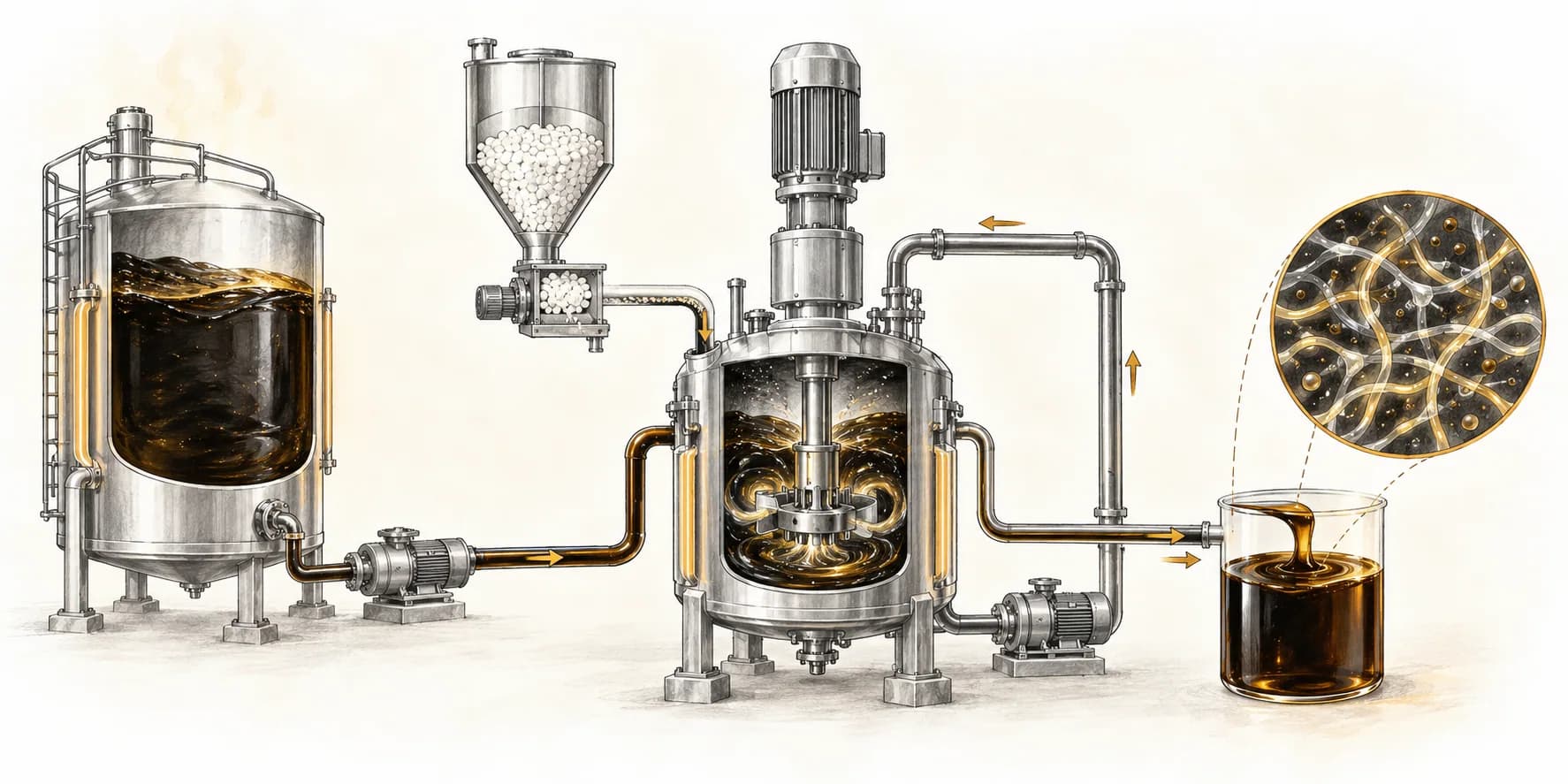
Lightly trafficked local roads, parking areas, base and binder courses below the critical depth, and climates without extreme temperatures often perform well with a conventional penetration, viscosity or performance grade chosen for the local climate. Adding polymer does not fix poor compaction, wrong binder content or weak foundations. It also brings practical demands: heated storage with agitation, tighter temperature control at the plant and, often, higher mixing and compaction temperatures. On small or remote jobs where those conditions are hard to guarantee, a well-chosen conventional grade may give a more reliable result. The table below summarises typical choices.
| Situation | Typical binder approach |
|---|---|
| Residential streets, light traffic | Conventional grade suited to climate |
| Main roads, free-flowing traffic, moderate climate | Conventional or lightly modified grade |
| Junctions, bus lanes, port yards, hot climate | SBS PMB or high-temperature performance grade |
| Porous asphalt, SMA, thin surfacings | PMB, often required by the mix specification |
| Bridge decks, stress-absorbing interlayers | Elastomer or rubber-modified binder |
Polymer modification earns its cost where traffic, temperature or mix type push a conventional binder beyond its limits.
Specifying PMB for a project
Start from the project specification: it will name either an EN 14023 class, a performance grade with MSCR or elastic recovery requirements, or a national PMB grade. Give the supplier that requirement, the expected quantity and delivery form, and the mixing plant's heating capacity. Ask for the producer's storage and mixing temperature ranges and a CoA for each lot. Nuroil can quote SBS-modified and high-temperature performance grades; see the polymer modified bitumen page or request a quote.