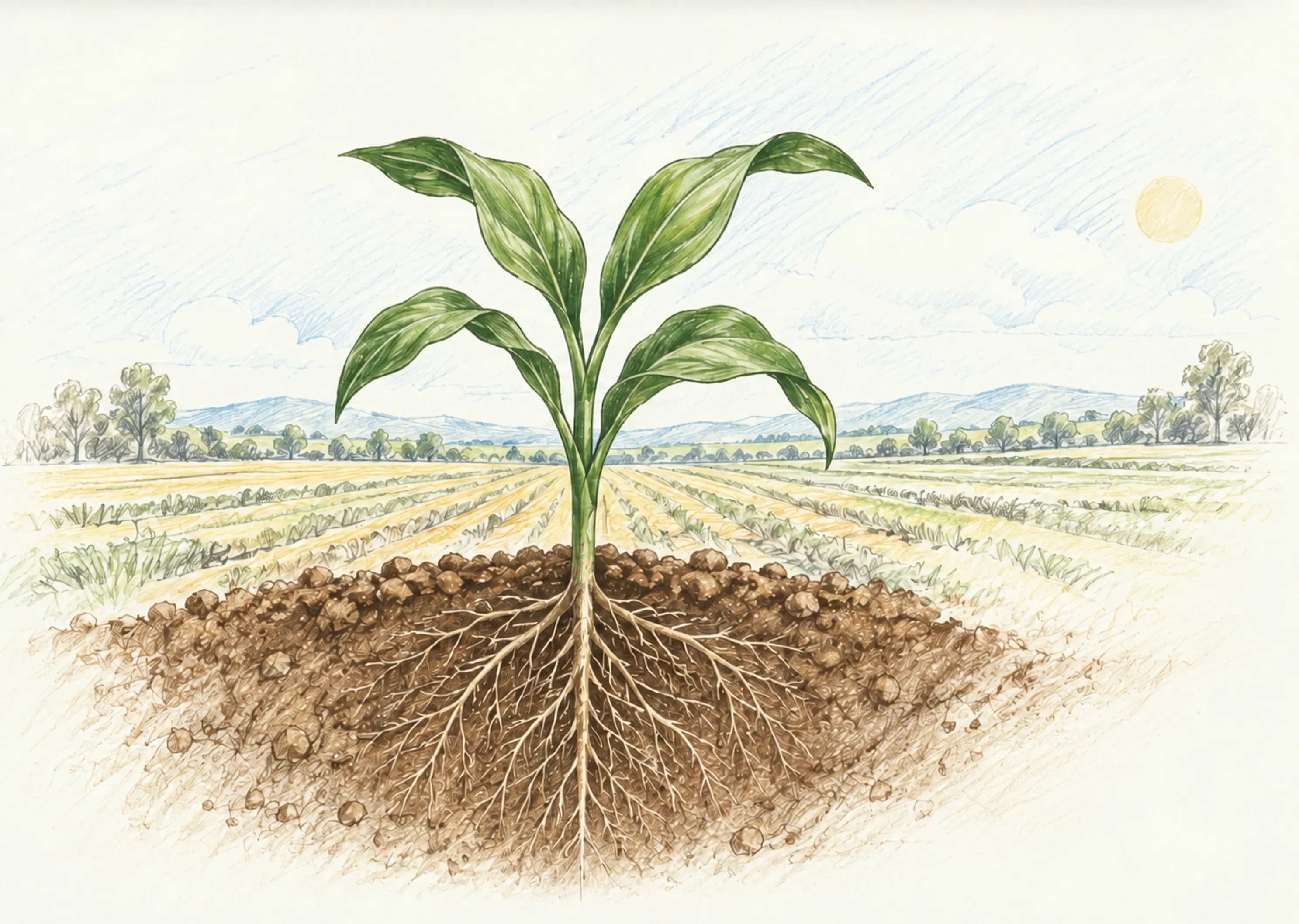
Wheat takes up most of its nitrogen between the end of tillering and flowering. Applying all of it at sowing therefore leaves a large amount sitting in the soil for weeks, exposed to leaching, denitrification and volatilisation before the crop can use it. That is why most wheat programmes put a modest amount of nitrogen down at sowing and apply the rest as urea top-dressings timed to crop growth.
What wheat needs and when
Nitrogen during tillering supports the number of tillers that go on to form heads. Nitrogen from the start of stem elongation through to the boot stage supports head size, grain number and grain protein. Shortfalls at tillering limit the number of productive heads, while shortfalls later limit what each head can achieve.
A typical split pattern
Extension guidance for winter wheat in the southern United States illustrates a common approach. A first, smaller top-dressing goes on when the crop is tillering and resuming active growth; the remainder, often at least two thirds of the spring nitrogen, is applied once stems begin to elongate, with an optional third application before the boot stage. The reasoning is to match supply to rapidly increasing demand while reducing losses in wet spring soils.
Field trials in other regions point the same way, with details varying by rainfall and variety. Where spring rainfall is reliable, a larger dose at the start of tillering followed by a smaller dose at stem elongation has also performed well. Where a variety shows little response to splitting, a single well-timed top-dressing can save an operation.
Time urea top-dressings to growth stages, not calendar dates. Warm spells and cold snaps move the crop faster or slower than the calendar suggests.
Keeping surface urea in the soil
Top-dressed urea lands on the soil surface or crop canopy. Soil enzymes convert it to ammonium within days, and in that process ammonia can be lost to the air, especially when:
- urea sits on moist soil that then dries, without rain to wash it in;
- soils are warm, alkaline or high in surface residue;
- wind speeds are high and humidity is low.
Practical steps to reduce these losses include applying shortly before a forecast rain of useful size, applying into irrigation water or just before irrigation where available, avoiding application onto wet soil in hot drying weather, and using urea treated with a urease inhibitor where the risk is high. Granular urea is often preferred over liquid nitrogen solutions for later splits because it falls through the canopy and is less likely to scorch upright leaves.
Urea at sowing
Some growers place part of the nitrogen with the seed. Urea in the seed row converts to ammonia in the seed zone, which damages germinating seed. Provincial guidance from Western Canada sets low safe rates for seed-placed urea in cereals that fall further on sandy soils, with narrow openers and in dry seedbeds. Wheat is less tolerant than oats or barley. Where more nitrogen is needed at sowing, it is better banded away from the seed.
Prilled or granular for top-dressing?
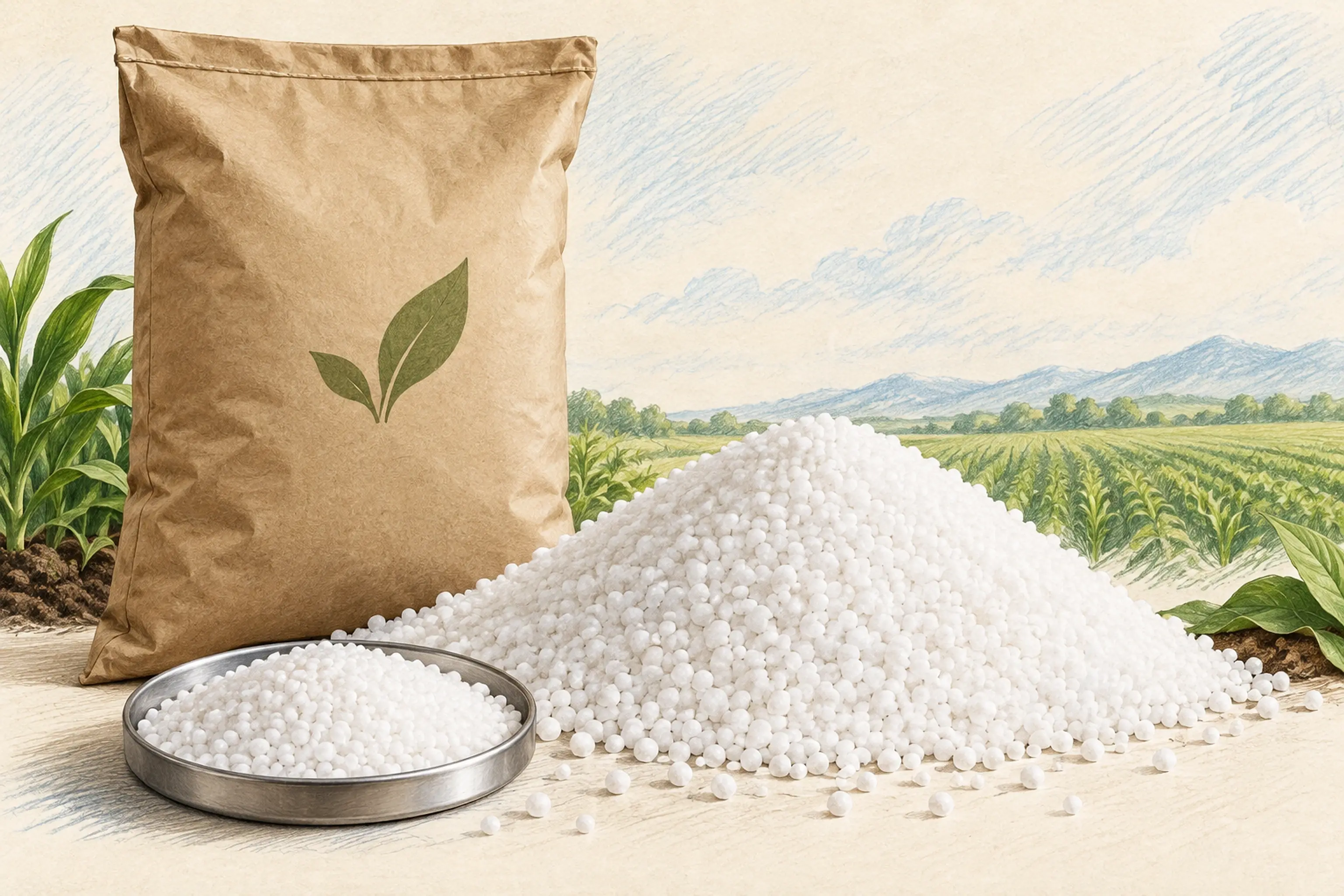
Both forms supply the same 46 percent nitrogen. Granular urea is heavier per particle and spreads to wider bout widths with spinner spreaders, which suits large wheat areas. Prilled urea is common in markets where it is hand-broadcast or spread with smaller equipment. The choice usually depends on local spreading equipment and availability rather than agronomy.
Buying for the top-dressing season
Top-dressing windows are short, so urea needs to be in the distributor's store before tillering begins. When enquiring for agriculture-grade urea, state prilled or granular, the size range your spreaders need, packing (50 kg bags, jumbo bags or bulk) and the latest acceptable arrival date. Nuroil supplies urea with a certificate of analysis per delivery; send your requirements via the quote form.