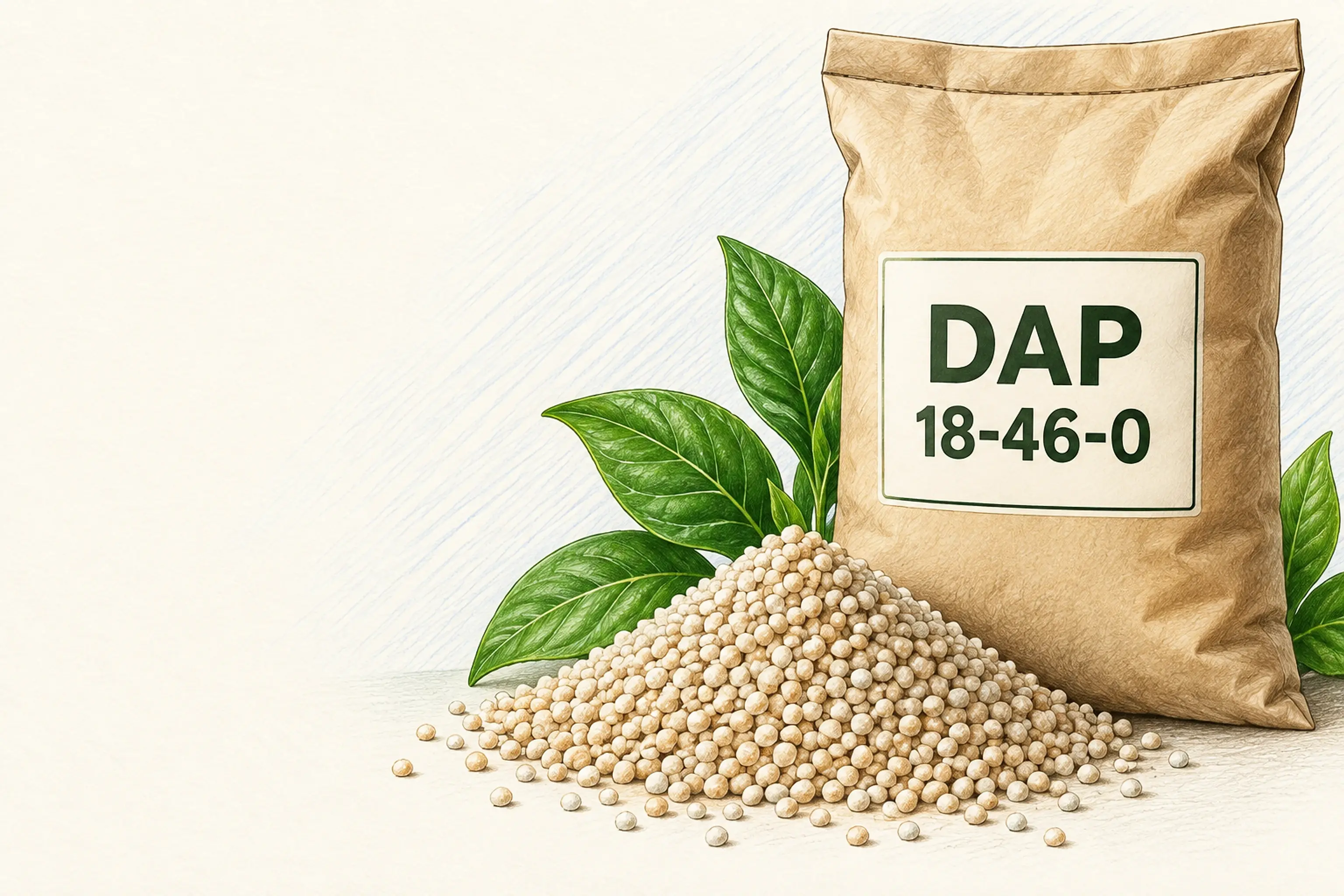
A certificate of analysis tells you what the producer's laboratory found. An inspection at loading or discharge tells you what is actually in the hold, the container or the bags you are paying for. For diammonium phosphate (DAP, 18-46-0), a well-planned inspection covers both the chemistry and the physical condition of the granules, because a cargo can meet its nutrient guarantee and still cause trouble in spreaders and blending plants.
Why sampling technique matters so much
Granular fertilizers segregate. Fines settle, larger granules roll to the edges of a pile, and a single scoop from the top of a heap is rarely representative. International standards for sampling solid fertilizers, including ISO 8634 for evaluating a large delivery and the ISO 14820 series on sampling and sample preparation, set out how many increments to take, where to take them and how to combine and reduce them. Sampling from a moving stream during loading or discharge, using a mechanical or manual cross-stream sampler, gives the most representative results for bulk cargoes.
For bagged DAP, samples are drawn from a set number of bags chosen across the lot, using a sampling spear that reaches the full depth of the bag. Contracts should name the sampling standard and state whether load-port or discharge-port results are final.
What an inspector checks
| Check | What it shows |
|---|---|
| Total N and total P2O5 | Whether the cargo meets the 18-46-0 guarantee |
| Water-soluble P2O5 | The readily available share of phosphate |
| Moisture | Risk of caking and granule weakening |
| Size distribution (sieve analysis) | Share within the agreed range, oversize and fines |
| Weight (draft survey or bag weights) | Quantity delivered against the bill of lading |
| Visual condition | Lumps, caking, foreign matter, wet or stained areas |
| Packing | Bag integrity, marking, liner condition, pallet stability |
Reading physical defects
Colour variation
Ammonia odour
Caking and lumps
Excess fines
Wet damage
Before and during discharge
- Agree the inspection company, scope and sampling standard in the contract.
- Have the hold or container condition checked before loading; clean, dry holds avoid contamination claims.
- Keep hatches closed in rain and cover open trucks and stockpiles.
- Retain sealed reference samples from each lot until the contract is closed.
- Record any damage on delivery documents at the time it is found.
Documents to align
A clean DAP purchase ties together the contract specification, the producer's certificate of analysis, the inspection certificate of quality and weight, the bill of lading and, where needed, a certificate of origin. When enquiring for DAP 18-46-0, tell us which inspection you require and at which port. Nuroil provides a CoA with every delivery and arranges third-party inspection on request; use the quote form or contact us to discuss your requirements.