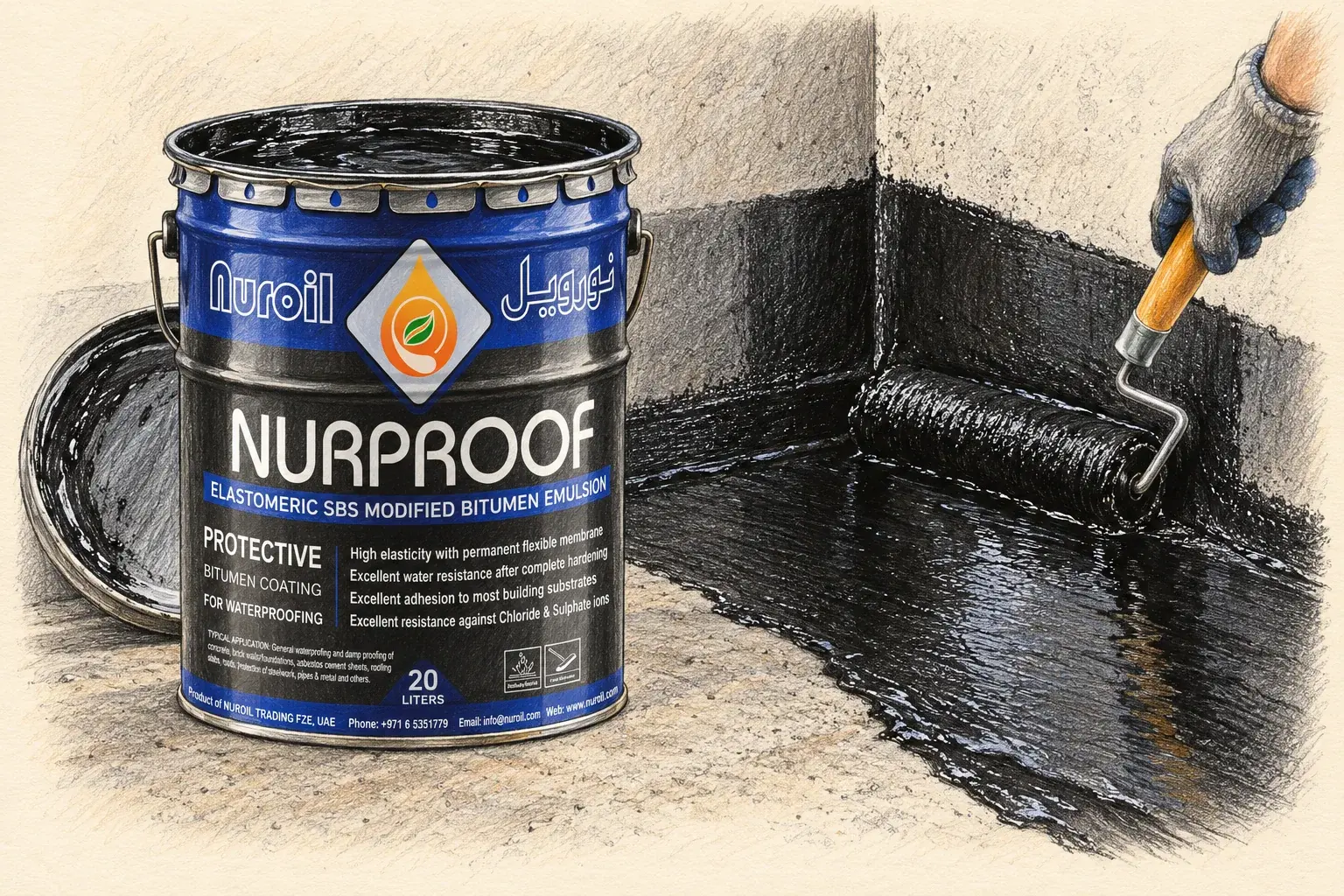
Liquid-applied elastomeric SBS bitumen coatings are more sensitive in storage than sheet membranes. Water-based products are emulsions: stable droplets of rubberised bitumen held apart in water. Heat, frost, long storage and rough handling can upset that balance, and a broken emulsion cannot be restored. Solvent-based products bring a different set of concerns around flammability. This guide covers packing, storage and receiving checks.
Packing options
| Pack | Typical use | Points to note |
|---|---|---|
| Small pails | Repairs, detailing, retail | Easy to carry on site; higher packing cost per litre |
| Large pails | Contractors, wet areas, foundations | Common site size; stack on pallets |
| Steel or plastic drums | Large projects, spray application | Lower cost per litre; need handling equipment |
| IBCs | Very large projects or repackers | Need mixing before use; check producer approves the pack |
Containers should be tightly sealed, clearly labelled with product name, batch number, production date and hazard information where applicable, and palletised and wrapped for export.
Storage conditions
- Temperature. Producers typically give a storage band on the data sheet, with a lower limit safely above freezing and an upper limit well below summer roof or yard temperatures. Keep containers in a shaded, ventilated store.
- Frost. Water-based products must not freeze. Freezing can break the emulsion so it no longer forms a film.
- Heat and sun. High temperatures can cause skinning, thickening and pressure in sealed containers. Avoid storing pallets in direct sun in port yards or on site.
- Sealing. Keep lids closed. Partly used containers form a skin; remove it rather than stirring it in.
- Solvent-based products. Store away from heat and ignition sources, follow the flammable liquids rules on the safety data sheet, and ensure ventilation.
Shelf life and settlement
Many water-based bitumen coatings carry a shelf life of around twelve months in unopened containers stored as recommended; check the figure on the data sheet for the product supplied. Over time, solids can settle. Some producers advise rolling drums periodically during long storage, and stirring thoroughly but gently before use. Use stock in batch date order.
Storage on site
Site storage is often the weakest link. Keep pallets off the ground in a covered, shaded area rather than on an open roof or beside a hot wall. Bring out only what the crew will use that day, close part-used containers firmly, and do not leave pails standing in sun between coats. In cold seasons, store indoors overnight so the product stays above its minimum temperature.
Shipping considerations
- Ship in closed containers, palletised and secured.
- Plan routes and timing to avoid long exposure to extreme heat or freezing conditions at transit points.
- Water-based coatings are usually not classed as dangerous goods for transport, but solvent-based ones often are; check the transport section of the safety data sheet and declare accordingly.
- Order quantities that the project will use within the shelf life, allowing for transit and customs time.
Checks on arrival
- Compare batch numbers and production dates with the packing list and certificate of analysis.
- Look for damaged, leaking or bulging containers.
- Open a sample container: the product should be smooth and uniform after gentle stirring, with no hard sediment, lumps, separated water layer or rubbery skin through the body.
- If in doubt, check density against the data sheet.
- Move pallets into shaded storage straight away.
An emulsion that has frozen or overheated may look acceptable in the drum but fail to form a film on the wall. Protect it in storage as carefully as on site.
Specifying packing in your enquiry
State the pack size, quantity, pallet configuration and destination climate, and ask for the shelf life, storage band and transport classification. Ask for the data sheet, safety data sheet and certificate of analysis. Nuroil supplies elastomeric SBS bitumen coating FOB UAE ports with CFR or CIF on request; send your requirements via request a quote or contact us.