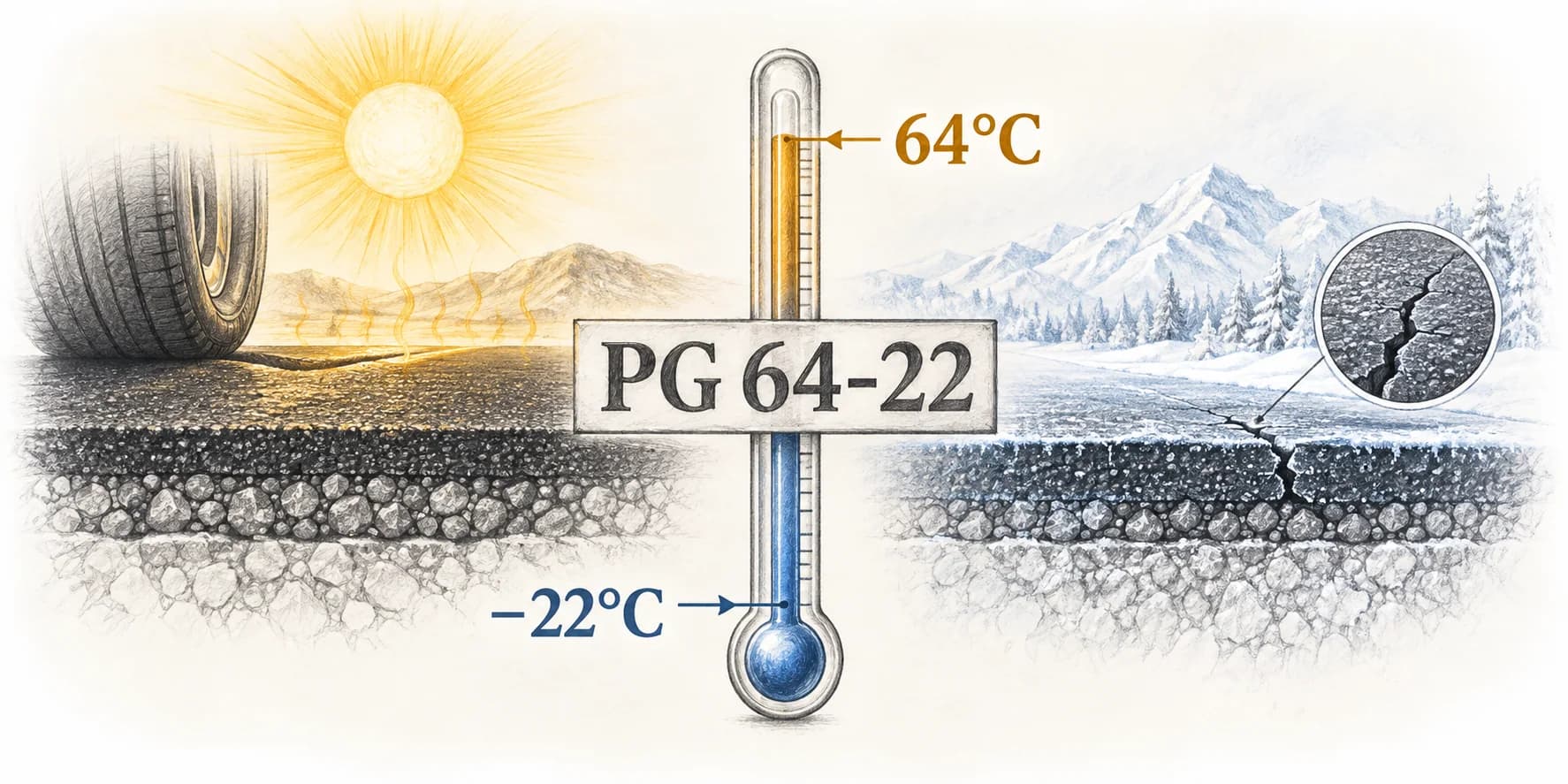
In hot, arid regions the choice of paving binder usually narrows to two performance grades: PG 70-10 and PG 76-10. Both are graded for mild winters, with a low-temperature grade of −10 °C. They differ in the high-temperature grade, and that single step of 6 °C has real consequences for rutting resistance, cost and how the binder is produced.
Why the high-temperature grade matters in desert climates
Pavement surfaces in strong sun run much hotter than the air. Where air temperatures reach the high 40s °C, pavement temperatures can exceed 70 °C. A binder that softens too much at those temperatures lets the asphalt deform under wheels, producing ruts and shoving. Studies of hot, arid regions have found that a large share of the area experiences maximum pavement temperatures of around 76 °C, and that binders graded only to 64 °C fall short. A published study mapping binder needs across the UAE concluded that a 76-10 grade suits most of the country, with 70-10 adequate in somewhat cooler areas.
For a comparable reference, the California transport agency adopted PG 70-10 for its desert regions, noting that it is stiffer than the binders previously used there.
How the two grades compare
| Aspect | PG 70-10 | PG 76-10 |
|---|---|---|
| High design pavement temperature | 70 °C | 76 °C |
| Low design pavement temperature | −10 °C | −10 °C |
| Rutting resistance | Good for warm to hot sites | Higher; suits the hottest sites and heavy traffic |
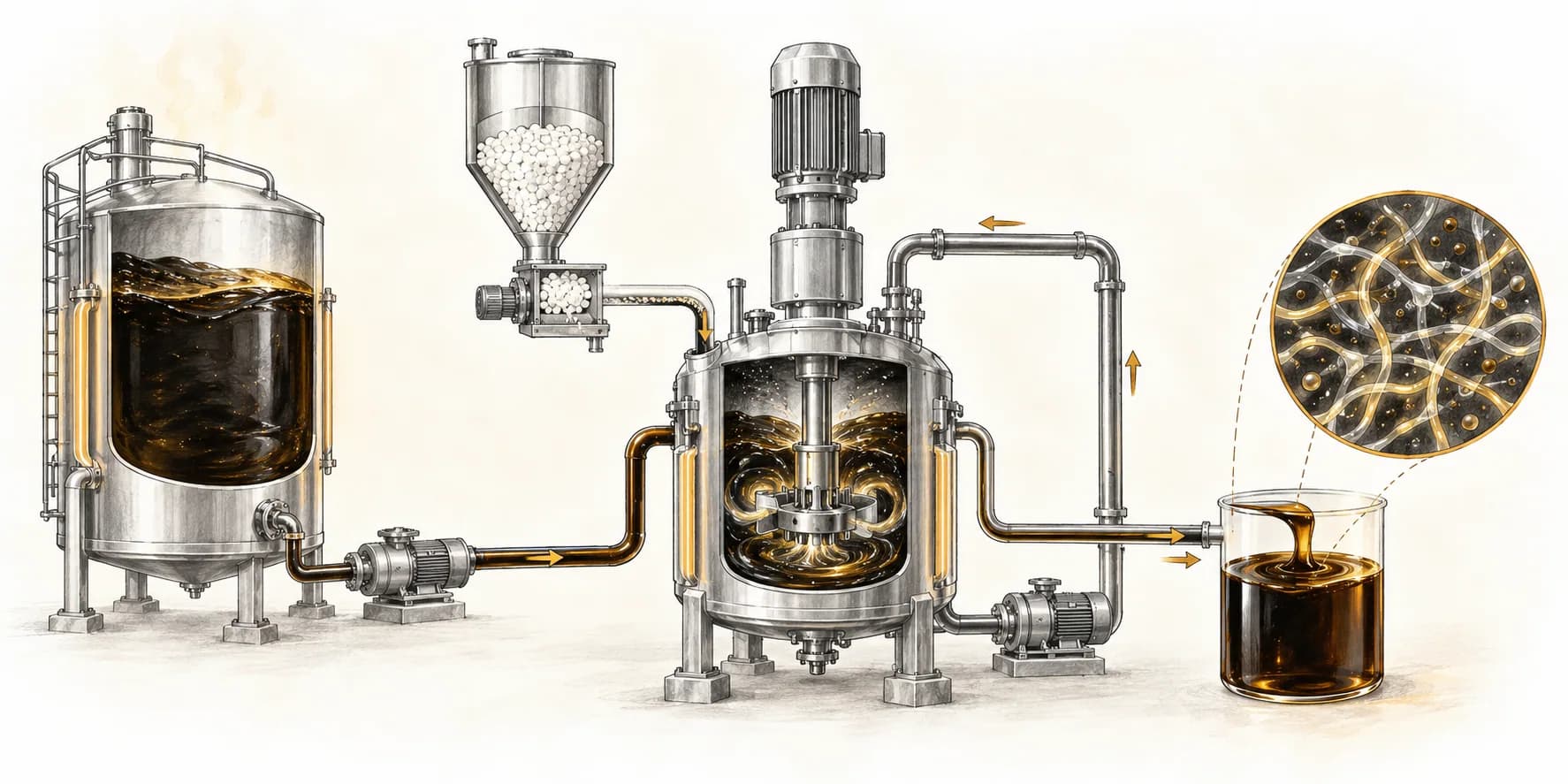
| Production | Often achievable from suitable crude by refining | Harder base bitumen or polymer modification, depending on source and specification |
| Handling | Similar to a hard paving grade | Higher viscosity; if polymer modified, needs PMB storage practice |
Traffic can tip the balance
Climate sets the starting grade; traffic can raise it. Slow, stopping or very heavy traffic loads the pavement for longer, which has the same effect as a hotter climate. Under the older approach, designers "bump" the high-temperature grade by one or two steps, so a PG 70 site with heavy, slow traffic may receive PG 76. Under the MSCR system the climate grade stays the same and a stricter traffic letter is added instead, for example PG 70H-10 or PG 70V-10. Either way, a project with port traffic, intersections or truck routes in a hot region is likely to end up with a binder at least as stiff as a PG 76-10.
Layer depth
Pavement temperature drops with depth. The surface course sees the highest temperatures and the most direct wheel stress, so many designs use the stiffest binder there and allow a lower grade in deeper layers. Your designer's temperature model and the road authority's rules decide how this is applied.
Is PG 76-10 always polymer modified?
Not necessarily. Whether PG 76-10 needs polymer depends on the crude and refining route, and on any extra requirements in the specification. Some hard refinery binders can reach the grade unmodified. However, if the specification adds elastic recovery or MSCR percent recovery limits, or a heavy-traffic letter, polymer modification is usually needed. Unmodified hard binders can be stiff at high temperature but more brittle, so the full test set, including fatigue and low-temperature results, should be checked.
PG 70-10 suits warm and moderate-traffic sites; PG 76-10 or a traffic-designated grade is the safer choice for the hottest, most heavily loaded pavements.
Specifying and buying
Take the grade from the project specification rather than choosing from habit. In an enquiry, state the grade, any traffic letter, any elastic recovery or MSCR recovery limit, and whether modified or unmodified binder is acceptable. Ask for the CoA to show DSR results at the grade temperature, and for the producer's storage and mixing temperatures. Nuroil supplies performance grade and polymer modified bitumen from established producers; request a quote or see the performance grade bitumen page.