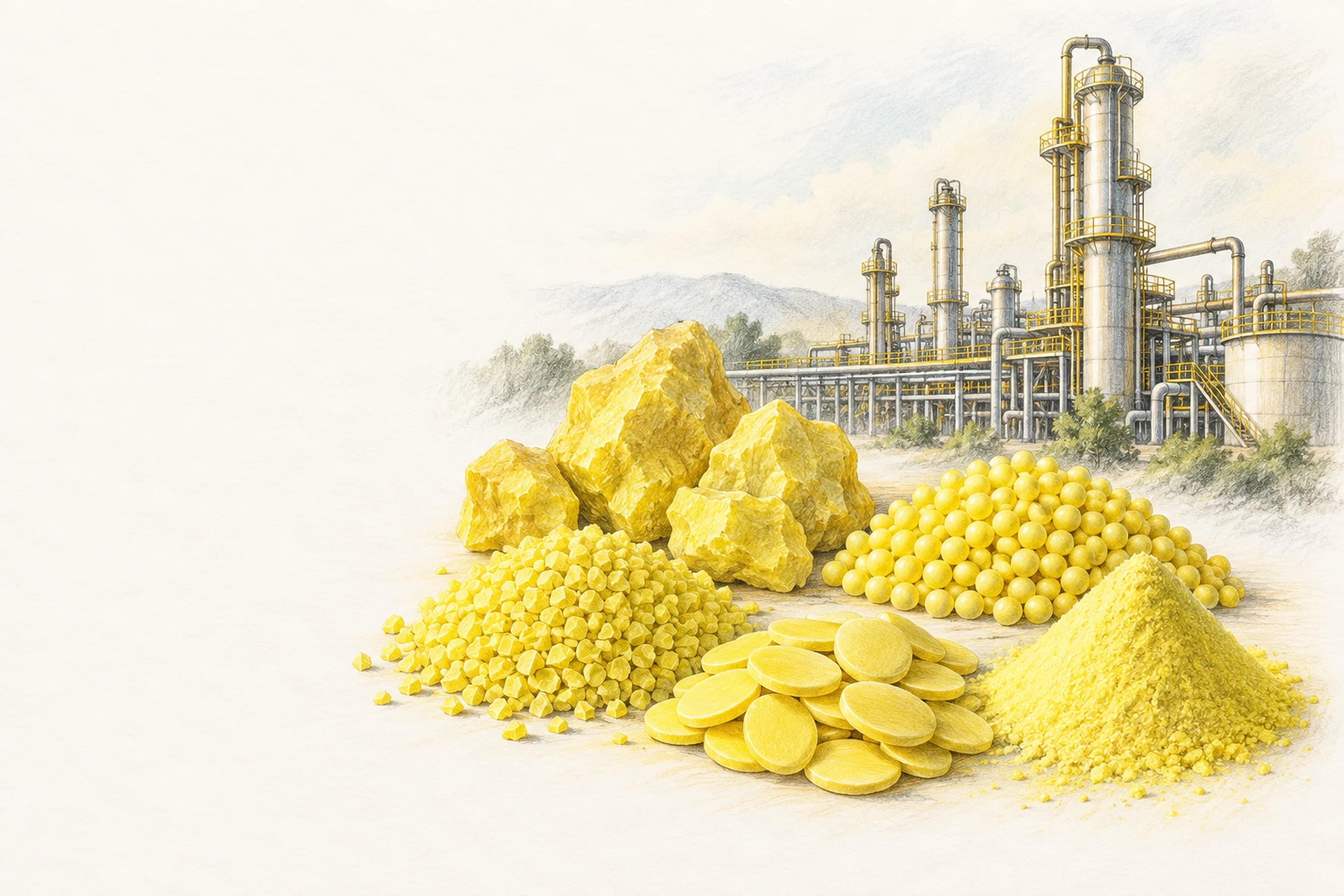
Sulphur powder is not shipped like formed sulphur. Pastilles and granules move in bulk with relatively little dust, while powder is almost always packed, labelled as dangerous goods and handled with dust and static in mind. This guide covers the practical points from bagging to the user's warehouse.
Packaging options
| Pack | Typical size | Notes |
|---|---|---|
| Multi-wall paper bags | About 22.7 to 25 kg | Common for rubber and specialty grades; clean and easy to tip |
| Woven polypropylene bags with liner | 25 or 50 kg | Robust for export; liner keeps moisture out and dust in |
| Bulk bags (FIBC) | 500 to 1,000 kg | For larger users with suitable discharge stations |
Packaging for dangerous goods must be of a type approved for the substance and marked accordingly. For bulk bags handling a combustible powder, ask for a bag type designed to control static, commonly Type C (groundable) or Type D (static-dissipative), and follow the bag supplier's instructions for earthing or use.
Transport classification
Sulphur is listed in the UN dangerous goods system as UN 1350, Sulphur, Class 4.1 (flammable solid), Packing Group III. Powder therefore travels under the rules for flammable solids in road, sea and air transport. Regulations include a provision that exempts sulphur formed into specific shapes, such as prills, granules, pastilles or flakes, from some requirements, which is one reason formed sulphur and powder are handled differently. Classification details can change with regulation updates, so confirm the current entry with your freight forwarder and the SDS for each shipment.
In practice this means the shipper needs the correct proper shipping name, class and packing group on the booking, packaging that is approved and marked for the goods, and a carrier willing to accept Class 4.1 cargo on the chosen route. Allow extra time for dangerous goods acceptance when planning the first shipment to a new destination.
Containers and loading
- Use clean, dry, sound containers. Remove residues of oxidising chemicals or acids from previous cargoes.
- Stow bags tightly and evenly; torn bags release dust inside the container.
- Line the floor and walls where needed to protect bags from sharp edges and condensation.
- Display dangerous goods labels and placards as required, and include the correct entries on the dangerous goods declaration.
- Do not load sulphur in the same container as oxidisers such as nitrates, chlorates or chlorine-releasing pool chemicals.
Warehouse storage
- Dry and ventilated. Damp powder cakes and can slowly form weak sulphuric acid that damages bags and metal fittings. Store on pallets, under cover.
- Segregated. Keep sulphur away from oxidising materials and from sources of heat.
- Ignition control. No smoking, no open flames and hot work only under a permit with cleaning beforehand. Electrical equipment in dusty areas should be suitable for combustible dust.
- Housekeeping. Repair torn bags promptly and clean up spills with methods that do not raise dust. Avoid compressed-air cleaning.
- Stacking. Keep stacks stable and within the bag manufacturer's limits; avoid heavy loads on lower layers in hot stores, which can compact powder.
Treat a sulphur powder store as a combustible dust area: dry, clean, segregated and free of ignition sources.
Receiving a shipment
- Check bag count, marks and labels against the packing list.
- Inspect for wet, torn or caked bags and photograph any damage before unloading further.
- Match lot numbers to the CoA.
- Take a sample if your quality plan calls for incoming inspection, for example fineness and moisture.
Documents to request
- Certificate of analysis for each lot.
- Safety data sheet in the language required at destination.
- Dangerous goods declaration and packaging certification.
- Certificate of origin and third-party inspection where your customs or customer require them.
Nuroil supplies sulphur powder in bags or bulk bags with a CoA on every delivery and other documents on request. State grade, quantity, packing and destination in your quote request.