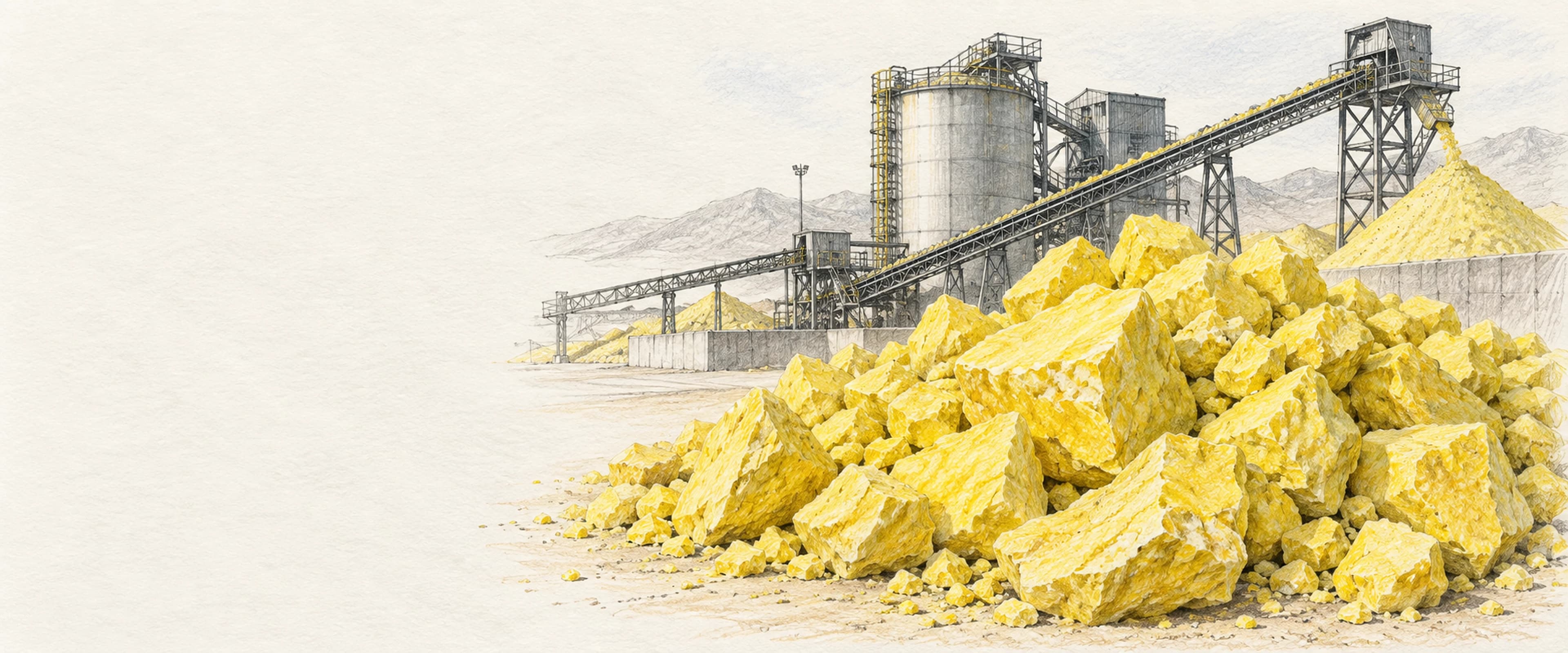
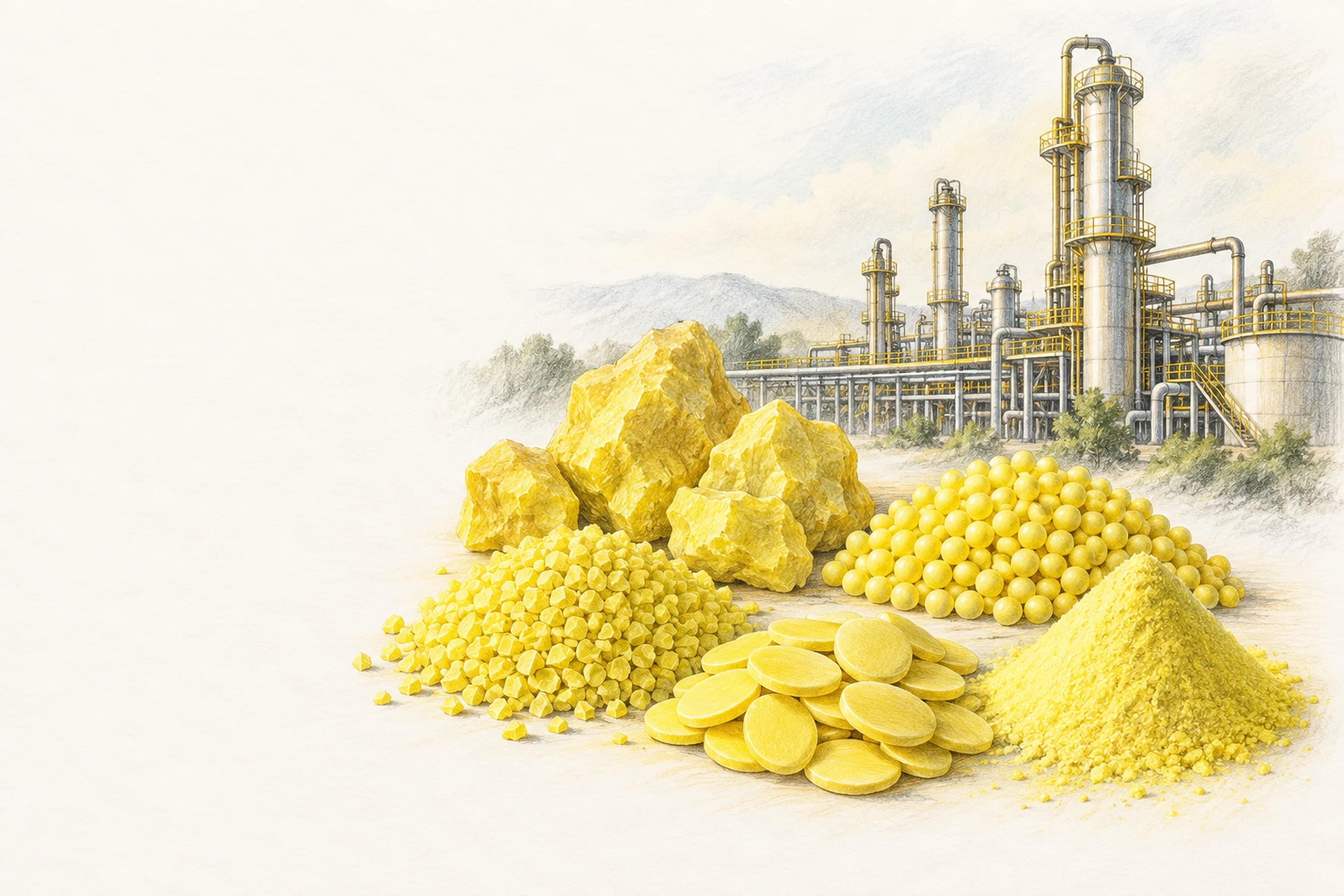
Most lump sulphur is bought to be melted. Acid plants, sulphur dioxide units and many chemical processes burn or react sulphur as a liquid, so the first job on site is to turn irregular solid pieces back into a clean, pumpable melt. Getting that step right decides how much ash reaches the burner, how fast the heating coils corrode and how much capacity the melter really delivers.
The temperature window is narrow
Solid sulphur melts at roughly 115 to 119 °C, depending on its crystal form. Liquid sulphur is unusual: its viscosity falls slightly as it warms, reaches a minimum somewhere around 157 to 160 °C, and then rises steeply as sulphur rings open into long polymer chains. Laboratory measurements show viscosity climbing from about 10 centipoise just above melting to tens of thousands of centipoise by the high 180s. Above about 160 °C the melt becomes too thick to pump.
In practice, melters and transfer lines are held between about 125 °C and 158 °C. The lower margin keeps the sulphur from freezing on cold spots; the upper margin keeps it out of the viscous zone. This is why sulphur systems use low-pressure steam or hot-oil coils, jacketed pipes, jacketed valves and jacketed instruments rather than direct firing.
How a melter works
The common arrangement is a tank or pit with submerged steam coils, already holding a pool of molten sulphur. Lumps are fed on a conveyor and drop into the hot liquid, which melts them much faster than heat applied to dry solid. An agitator keeps solids moving across the coils. The melt then overflows or is pumped to a so-called dirty sulphur tank, through a filter, and on to clean storage.
- Feed size matters. Very large pieces melt slowly and can bridge on the coils, so many plants crush oversize lumps before feeding.
- Keep water out. Wet sulphur or rainwater in the feed flashes to steam in a hot melt and can cause frothing and spattering. Covered feed hoppers and drained stockpiles help.
- Geometry affects heat transfer. In square in-ground pits, solids settle in dead corners and insulate the coils; conical-bottom tanks with agitators are easier to keep clean.
Why lime is added
Solid sulphur that has been stored outdoors, or that carries residual moisture, usually contains a little free acid. In the melter that acidity attacks carbon steel, heating coils, filter leaves and downstream equipment. Plants therefore dose hydrated lime with the feed to neutralise it.
Dosing needs regular checks. Too little lime leaves the melt acidic. Too much adds extra solids that settle on the coils, load the filters and lengthen the residence time the sulphur needs in the melter, which cuts throughput. Operators commonly check acidity and lime addition several times a day rather than setting a fixed rate.
Filtration before the burner
After melting, the liquid still carries ash, lime solids and any organic or bituminous matter. In an acid plant, ash that reaches the converter fouls the catalyst and interferes with the conversion of sulphur dioxide to sulphur trioxide. Most plants use pressure leaf filters or self-cleaning candle filters with a precoat layer, sometimes followed by a polishing filter as a safety stage. Experienced engineers note that poor filtrate is often a symptom of upstream problems, such as uneven lime dosing or settled solids, rather than a fault in the filter itself.
A melter runs best on lumps that are clean, reasonably sized, low in moisture and low in acidity. Each of those points can be written into the purchase specification.
Safety basics
Molten sulphur causes severe burns, and melters release sulphur vapour and small amounts of hydrogen sulphide, so vents, gas monitoring and suitable protective equipment are standard. Dust from the feed conveyor is combustible. Always follow the product SDS and your site procedures.
What to put in your enquiry
When buying lump sulphur for melting, state your melter type and capacity, the maximum lump size your feed system accepts, and limits for purity, ash, carbon, acidity and moisture. Ask for a certificate of analysis for each lot. Nuroil supplies lump sulphur with a CoA on every delivery, and an SDS or third-party inspection on request. You can request a quote or contact us with your melter details.