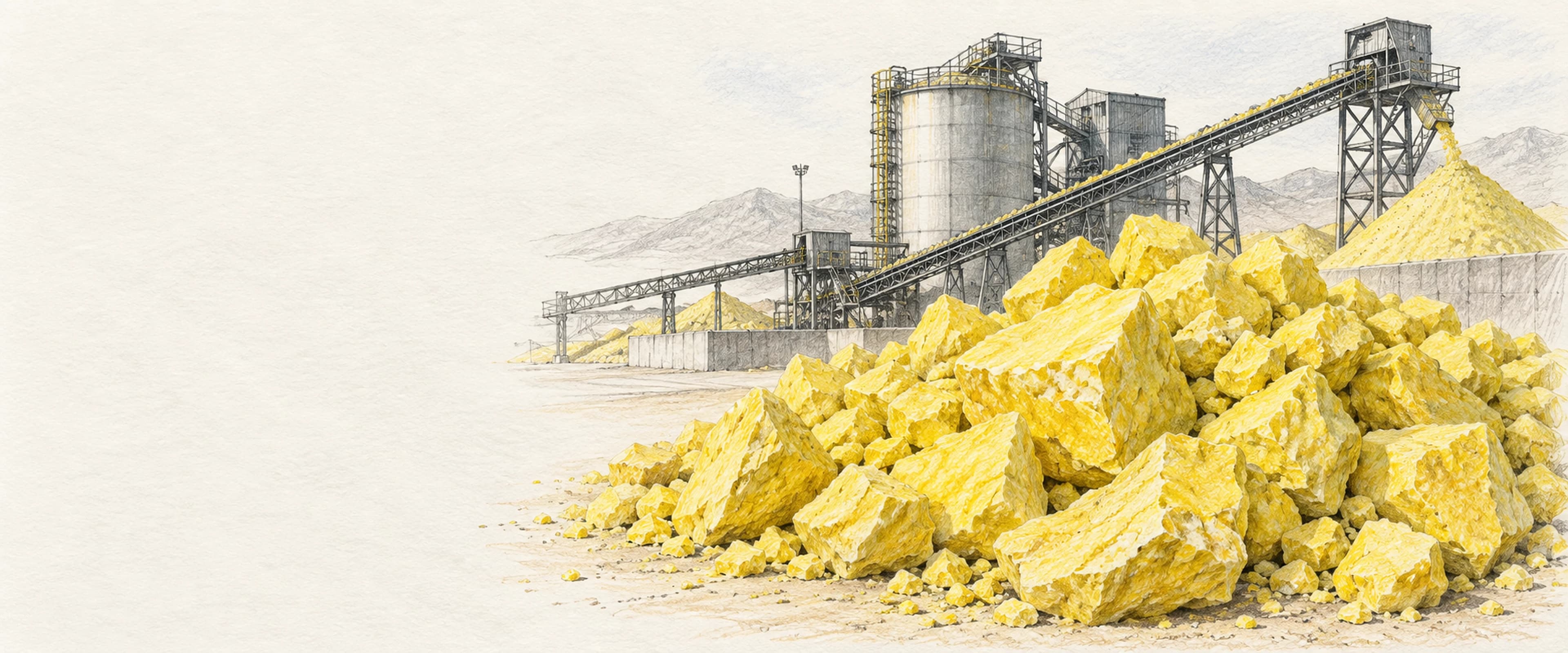
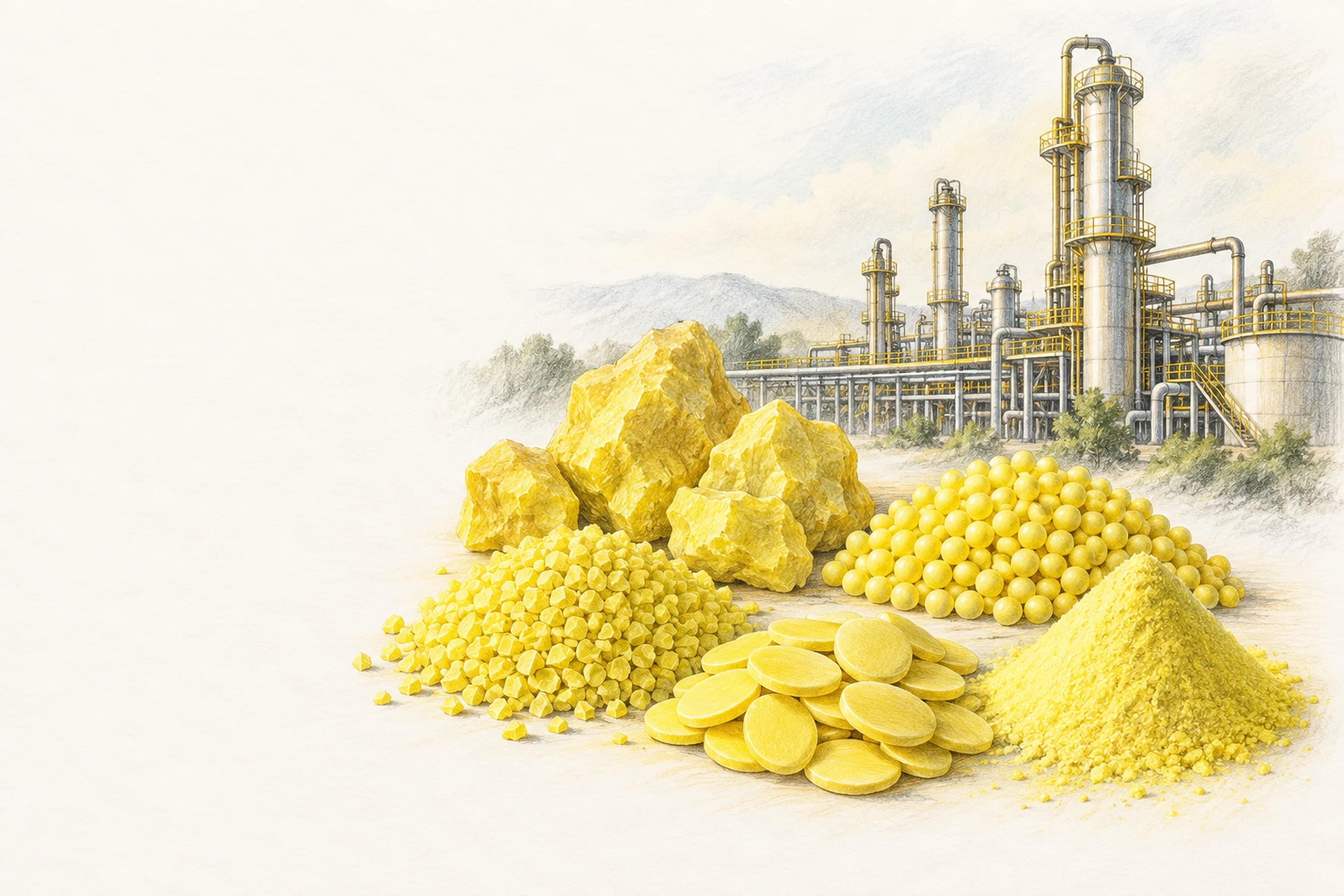
Lump sulphur often needs to be made smaller before use. Melters run better on a controlled feed size, and many users grind sulphur into powder for rubber compounding, agricultural dusting or chemical reactions. Size reduction, though, is where sulphur is most dangerous: every break creates fine dust, and fine sulphur dust is both flammable and explosive.
Why crushing creates the hazard
Solid sulphur is brittle. Crushers, hammers, saws and even loaders driving over a stockpile shatter it into an irregular mix of pieces and fines. Engineers working on large sulphur blocks have long reported that all mechanical break-up methods generate large amounts of dust and pieces of uneven size. The finer the particle, the easier it is to ignite and the faster it burns.
Sulphur dust can be ignited by static electricity, which sulphur itself generates readily when it slides, falls or is conveyed. A series of fires in air prilling towers was traced to electrostatic discharges igniting sulphur dust, which shows how little energy is needed. Hot surfaces, sparks from tramp metal and friction in mills are other common ignition sources.
The governing standard
NFPA 655, the Standard for Prevention of Sulfur Fires and Explosions, is the main reference. It covers the crushing, grinding and pulverising of sulphur and the handling of sulphur in any form, and it works alongside NFPA 654, the general standard for combustible particulate solids. Where the two conflict, NFPA 655 takes precedence. Local regulations may set further rules, so treat the standard as a baseline.
Controls plants commonly use
- Enclose and extract. Crushers, screens and transfer points are enclosed and connected to dust collection designed for combustible dust.
- Reduce oxygen in fine grinding. Pulverising mills that produce fine powder are often operated with an inert gas or reduced-oxygen atmosphere, or designed to contain or vent an explosion safely.
- Bond and earth everything. Chutes, mills, ducts and containers are bonded and earthed to limit static build-up.
- Remove tramp metal. Magnets ahead of crushers stop steel pieces from striking sparks.
- Control ignition sources. Hot work permits, suitable electrical equipment for dusty areas and a ban on smoking are standard.
- Keep housekeeping strict. Settled dust on beams and floors can be thrown into the air by a small event and feed a larger secondary explosion. Regular cleaning with methods that do not raise dust clouds is essential.
Choosing the right crusher setting
For melter feed, the aim is usually a moderate size that melts quickly without generating excess fines, so a coarse jaw or roll crusher set to the melter's maximum acceptable size is common. For powder products, grinding is a separate, more controlled stage, with classification to the target particle size and immediate bagging or enclosed storage. Producing a lot of dust at the crushing stage is a sign the equipment or settings are too aggressive.
| Purpose | Typical size reduction | Main concern |
|---|---|---|
| Melter feed | Coarse crushing of oversize lumps | Dust at transfer points, bridging of oversize pieces |
| Ground sulphur for industry | Fine milling and screening | Explosion risk inside the mill and collector |
| Agricultural dusting sulphur | Very fine milling | Highest dust explosion and static risk |
People and fire response
Sulphur dust irritates the eyes, skin and airways, so dust masks or respirators, goggles and covering clothing are normal in crushing areas. Burning sulphur releases sulphur dioxide, a toxic and irritating gas, so fire response plans should include breathing apparatus. Water spray or fog is generally preferred to a solid jet, which can raise more dust. The product SDS gives the specific advice.
Buying with crushing in mind
If you crush or grind on site, tell your supplier the size you need and how much fines your process can tolerate. Lump sulphur that has been handled less arrives with fewer fines. Ask for a CoA and the SDS, and if size matters, for a sieve analysis from the loading inspection. Nuroil can arrange third-party inspection on request; request a quote with your size requirements.