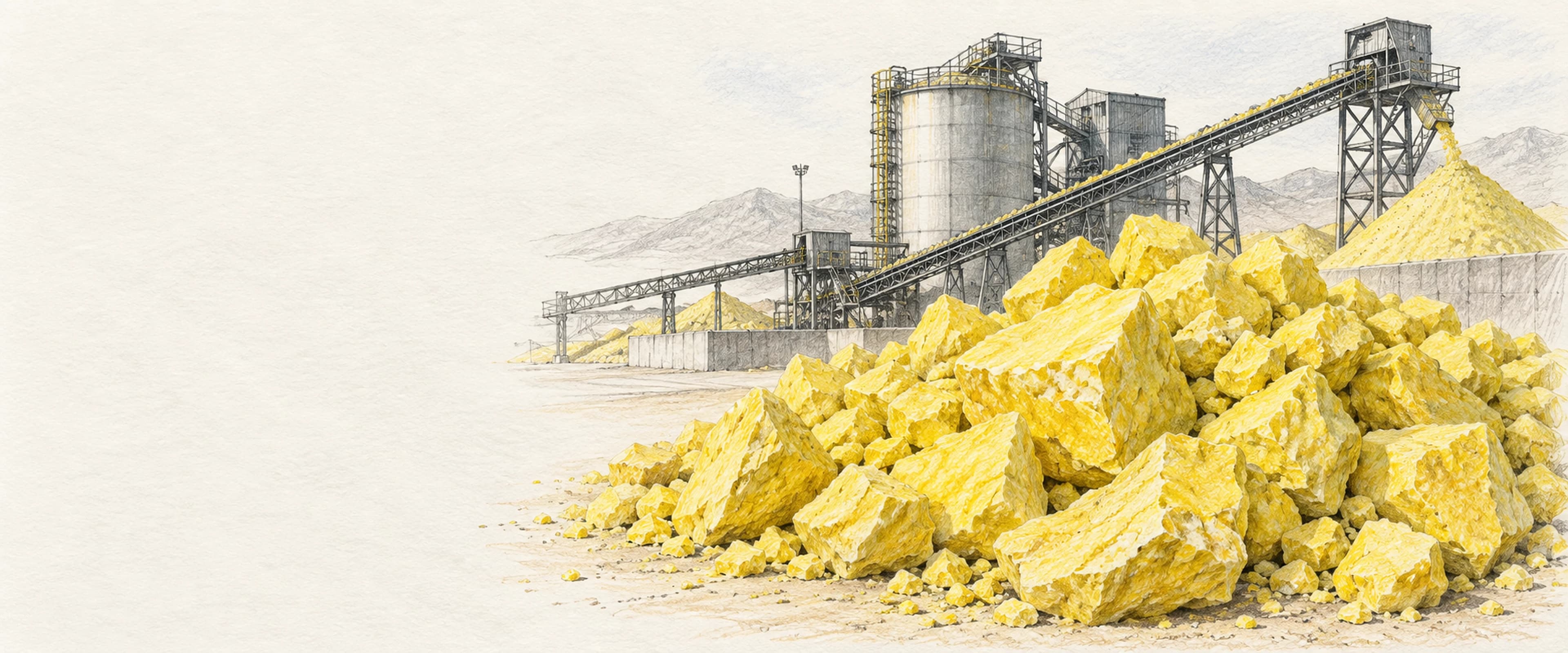
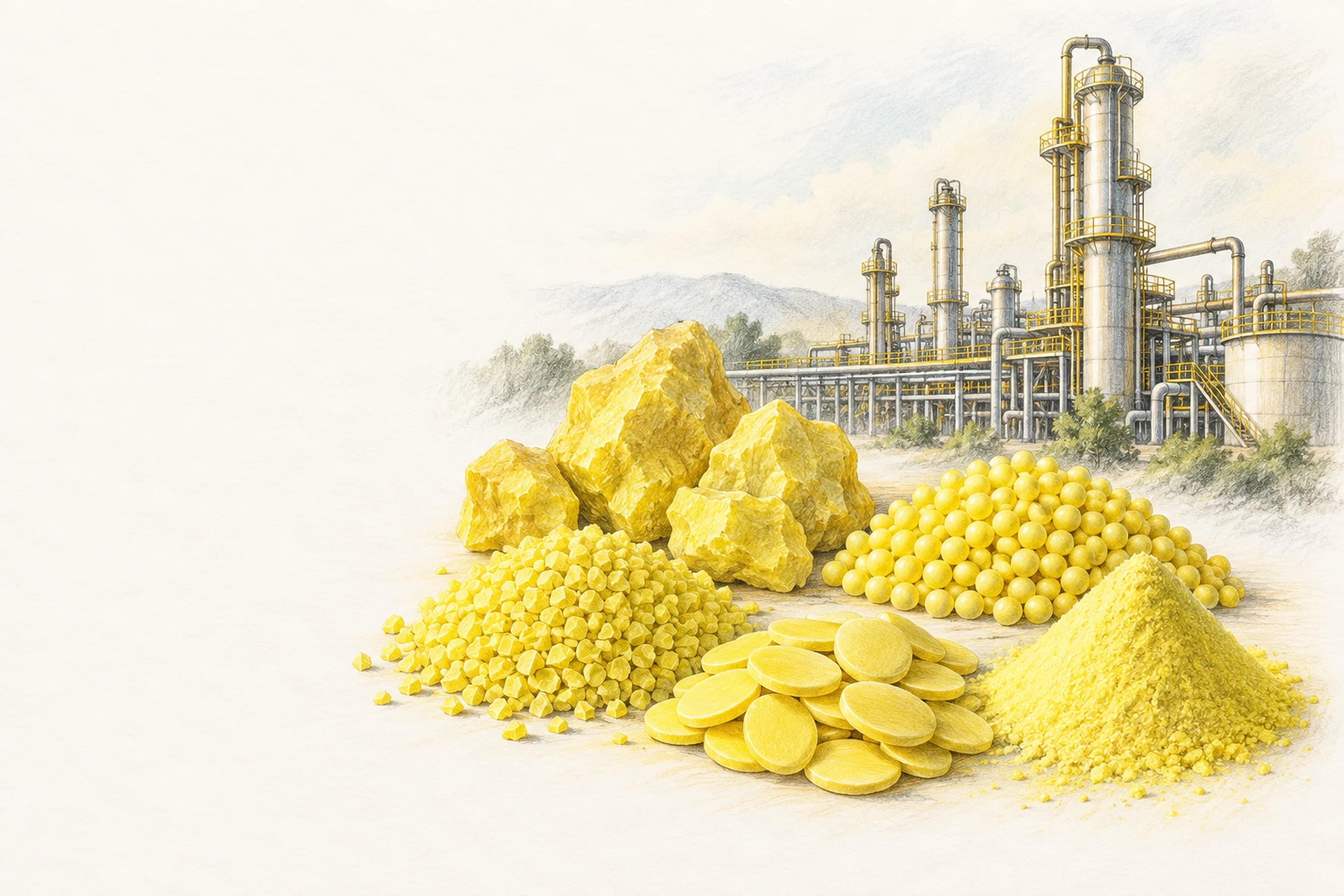
Sulphur recovered at refineries and gas plants leaves the recovery unit as a very pure liquid, often well above 99.5% sulphur. Lump sulphur, though, has usually spent time as a solid in the open, and that history is where most of its impurities come from. Knowing the sources helps buyers set realistic limits and spot problem cargoes early.
Where impurities come from
- Storage on the ground. Lump sulphur is often broken out of poured blocks or stockpiles. The bottom layers of a block or pad pick up soil, sand and stones.
- Organic matter. Leaves, grass, wood and other plant debris blow onto open stockpiles. Studies on reclaimed sulphur found that such material discolours sulphur after a few minutes at 250 °C, or after longer periods at about 140 °C, which is a normal melting temperature.
- Hydrocarbons. Traces of oil, bitumen or process hydrocarbons can be carried over from the source plant or picked up from equipment. In the melt they char, increasing carbon content and darkening the sulphur.
- Moisture and acid. Rain and humidity on stored sulphur, helped by bacteria and air, slowly produce small amounts of sulphuric acid on the surface of the pieces.
- Handling. Loaders, trucks and holds that are not clean add rust, coal, grain or other residues.
Why each impurity matters
| Impurity | Effect in use |
|---|---|
| Ash (soil, sand, rust) | Settles on melter coils, loads filters, and in acid plants can reach and foul the converter catalyst |
| Carbon and organics | Darkens the sulphur, raises filtration load and can affect colour-sensitive uses |
| Acidity | Corrodes steel stockpile equipment, ship holds and melter coils; requires lime dosing |
| Moisture | Adds weight you pay for, raises acidity and causes frothing in hot melts |
What a good lump looks like
Clean lump sulphur is bright yellow and fairly uniform in colour. Brown or greenish streaks, black specks, visible soil on the faces of pieces or a strong smell of decay all suggest contamination. These visual checks are no substitute for laboratory analysis, but they are a quick way to decide whether a lot needs closer testing at discharge.
Laboratory tests normally reported on a certificate of analysis include sulphur purity, ash, carbon (or organic content), acidity expressed as sulphuric acid, and moisture. Some buyers also ask for arsenic, selenium and tellurium, especially where the sulphur goes into food-grade or pharmaceutical acid or certain chemical processes.
Most contamination in lump sulphur is picked up after production, during storage and handling, so the supply chain matters as much as the source plant.
Reducing contamination before it reaches you
- Ask how the material has been stored and reclaimed, and whether the lower layers of stockpiles are excluded.
- Specify clean, dry hold or container conditions and request a hold inspection before loading.
- Keep receiving stockpiles on a hard, drained pad, away from vegetation and coal or grain handling.
- Sample at loading and at discharge so a change in quality can be traced.
Handling a contaminated lot
If a lot tests high in ash or acidity, many melter operators can still use it by adjusting lime dosing and filter precoat, or by blending it with cleaner material. Carbon is harder to remove. Agree in the contract how off-specification results are measured and settled before shipment, not after.
It is also worth keeping a short record of each lot's results. Over several deliveries, trends in ash or acidity show whether a source or a handling route is improving or getting worse, which is useful evidence when renewing a contract.
Writing it into the order
State your limits for purity, ash, carbon, acidity and moisture, the test methods you accept, and whether you need sampling by an independent inspector. Nuroil provides a CoA with every delivery and can arrange third-party inspection on request. To discuss a specification, contact us or request a quote.