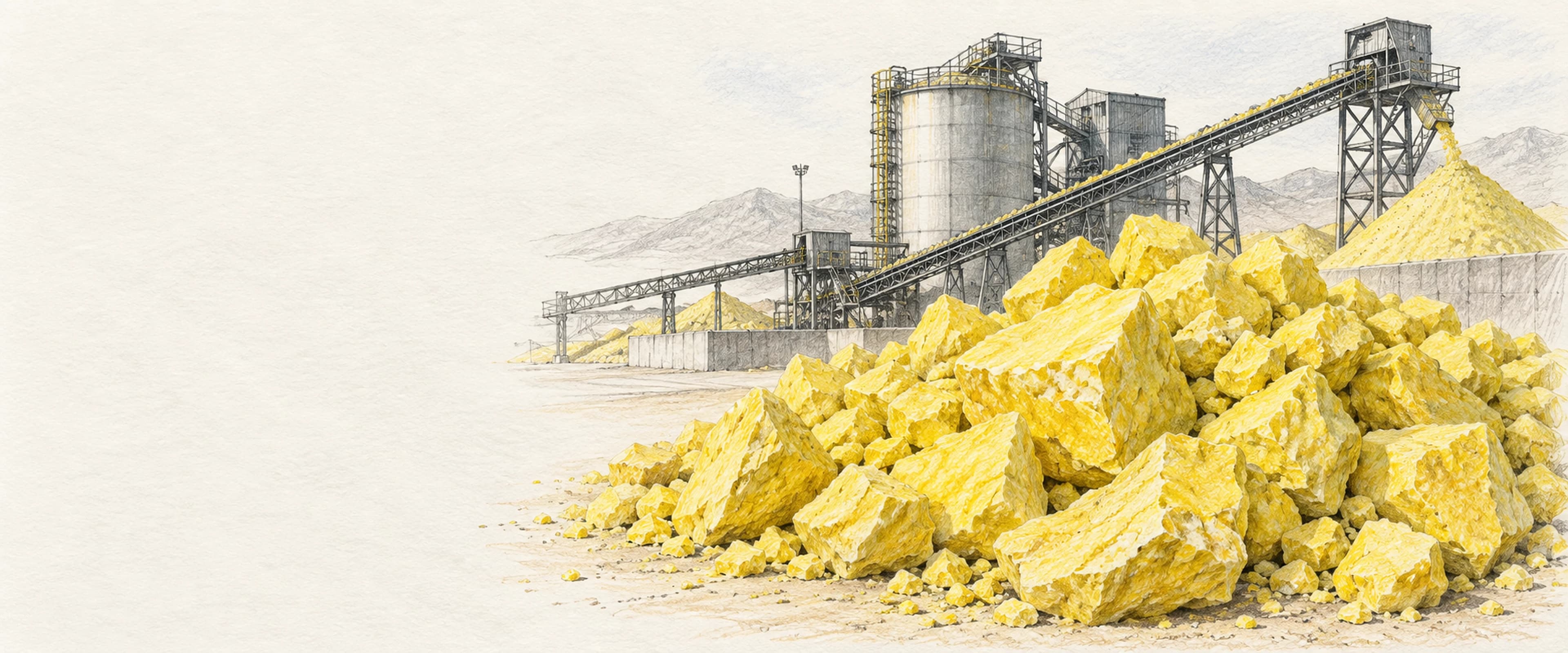
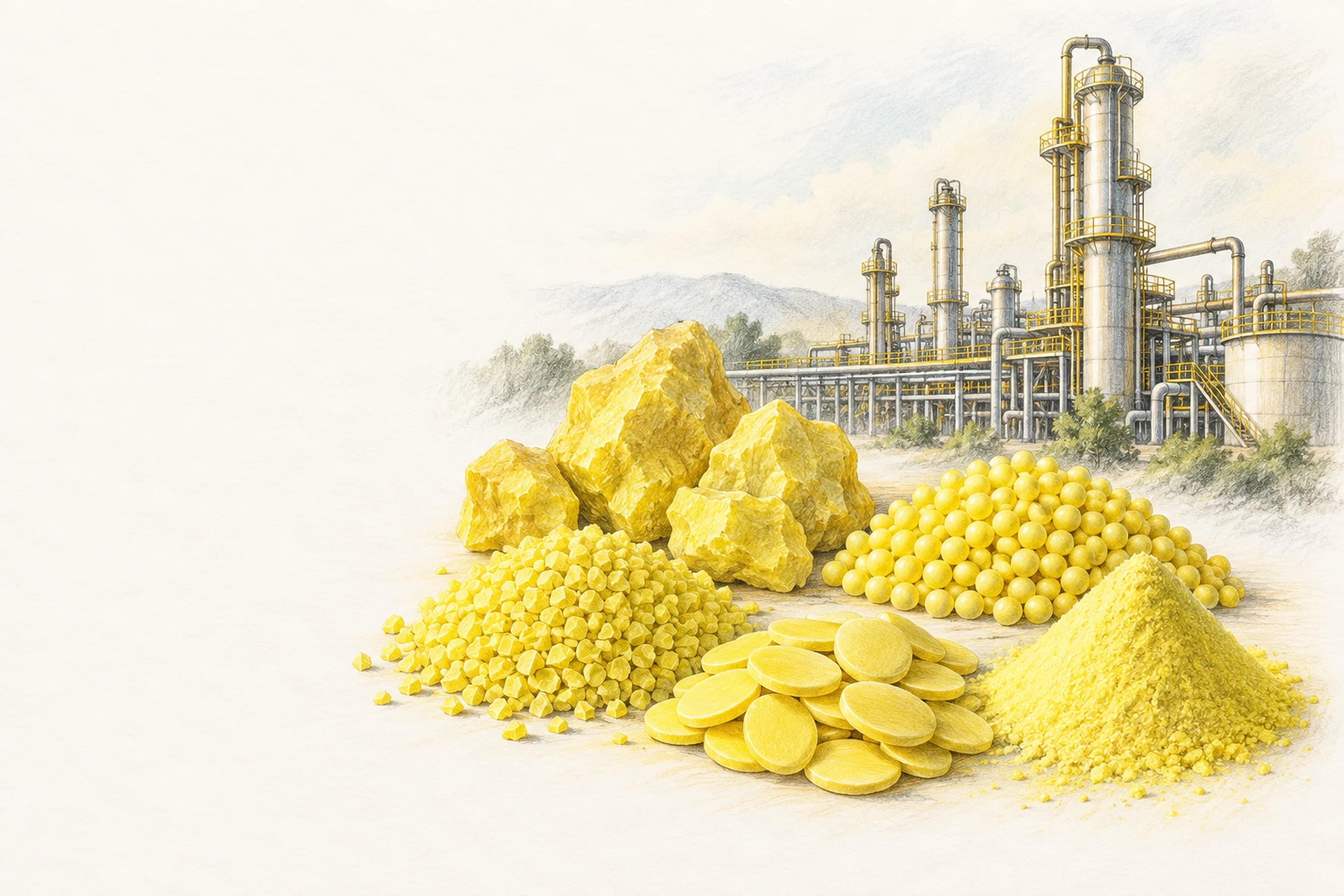
Lump sulphur is harder to sample than formed products. Pieces vary from fist-sized to fines, impurities sit unevenly, and moisture collects at the bottom of holds and stockpiles. A clear receiving procedure helps buyers compare what arrived with what was ordered and settle any quality claims fairly.
Before the cargo arrives
- Have the supplier's certificate of analysis and the loading inspection report, if any, in hand.
- Agree in the contract which laboratory, sampling standard and test methods decide disputes.
- Prepare a clean, dry and drained receiving area, away from other bulk materials.
- Brief the team on dust and fire precautions and check the product SDS.
Visual inspection at discharge
Look at the cargo before and during unloading. Note colour (bright yellow is normal), signs of soil, organic debris, oil staining or foreign materials, the amount of fines, and any free water in the hold or container. Photographs with dates and hold or container numbers are valuable if a claim follows. Unusual odours or heating in the cargo should be reported immediately.
Sampling irregular lumps
Because lump sizes vary so much, a single grab from the surface is not representative. Good practice is to take many increments across the whole discharge, spaced in time or tonnage, combine them, and then reduce the gross sample in a controlled way.
- Take increments from moving material. Sampling from a conveyor or grab discharge at regular intervals gives a better picture than sampling a static heap.
- Include fines and lumps in proportion. Do not pick out clean pieces or avoid the dusty fraction.
- Crush before dividing. Reduce the gross sample to a smaller size with suitable equipment, then divide by riffling or coning and quartering.
- Seal and label. Prepare separate sealed portions for buyer, seller and referee laboratory, recording vessel, lot and date.
- Protect moisture samples. Take them in airtight containers and test quickly, because sulphur loses surface water in warm air.
What to test
| Parameter | Why it matters for lump sulphur |
|---|---|
| Sulphur purity | The basic contractual value; most uses need high purity |
| Ash | Shows soil, sand and rust picked up in storage and handling |
| Carbon or organics | Indicates hydrocarbon or plant contamination; affects colour and filtration |
| Acidity (as H₂SO₄) | Drives corrosion and lime demand in melters |
| Moisture | Affects weight paid for and melter behaviour |
| Size distribution | Checks the share of fines and oversize against your feed system |
| Arsenic, selenium, tellurium | Requested for sensitive acid and chemical uses |
Recording weight. Weight is normally determined by draft survey for bulk vessels or by weighbridge for trucks and containers. Since moisture adds weight, record the moisture result alongside the weight so that dry tonnage can be calculated if the contract requires it.
When results differ from the CoA
Small differences are normal because of sampling variation. Larger differences in ash, acidity or moisture can indicate contamination or water ingress during the voyage or storage. Keep the sealed samples, notify the supplier promptly with photographs and test reports, and follow the dispute procedure agreed in the contract, usually a referee analysis.
Most quality disputes are settled by the quality of the sampling, not the laboratory. Agree the method before shipment.
For regular buyers, a simple receiving checklist signed by the person in charge of discharge, covering visual condition, sampling, weights and any incidents, makes it much easier to compare deliveries over time and to support a claim when one is needed.
Documents to ask for
For each lot, request the CoA, the SDS, the bill of lading and packing or weight list, and, where required, a certificate of origin and an independent inspection certificate covering quality and quantity at loading. Nuroil provides a CoA with every delivery and arranges CoO, MSDS and third-party inspection on request. Use our quote form to list the documents you need.