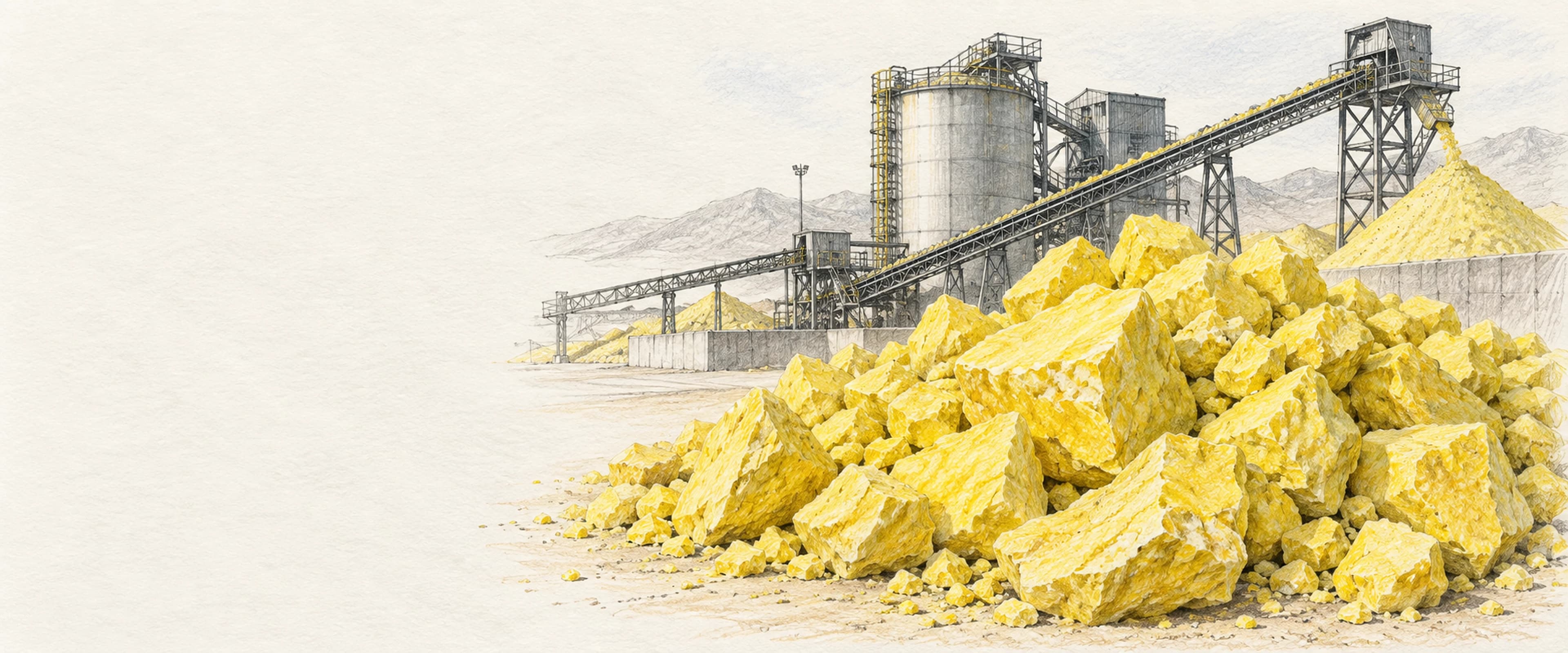
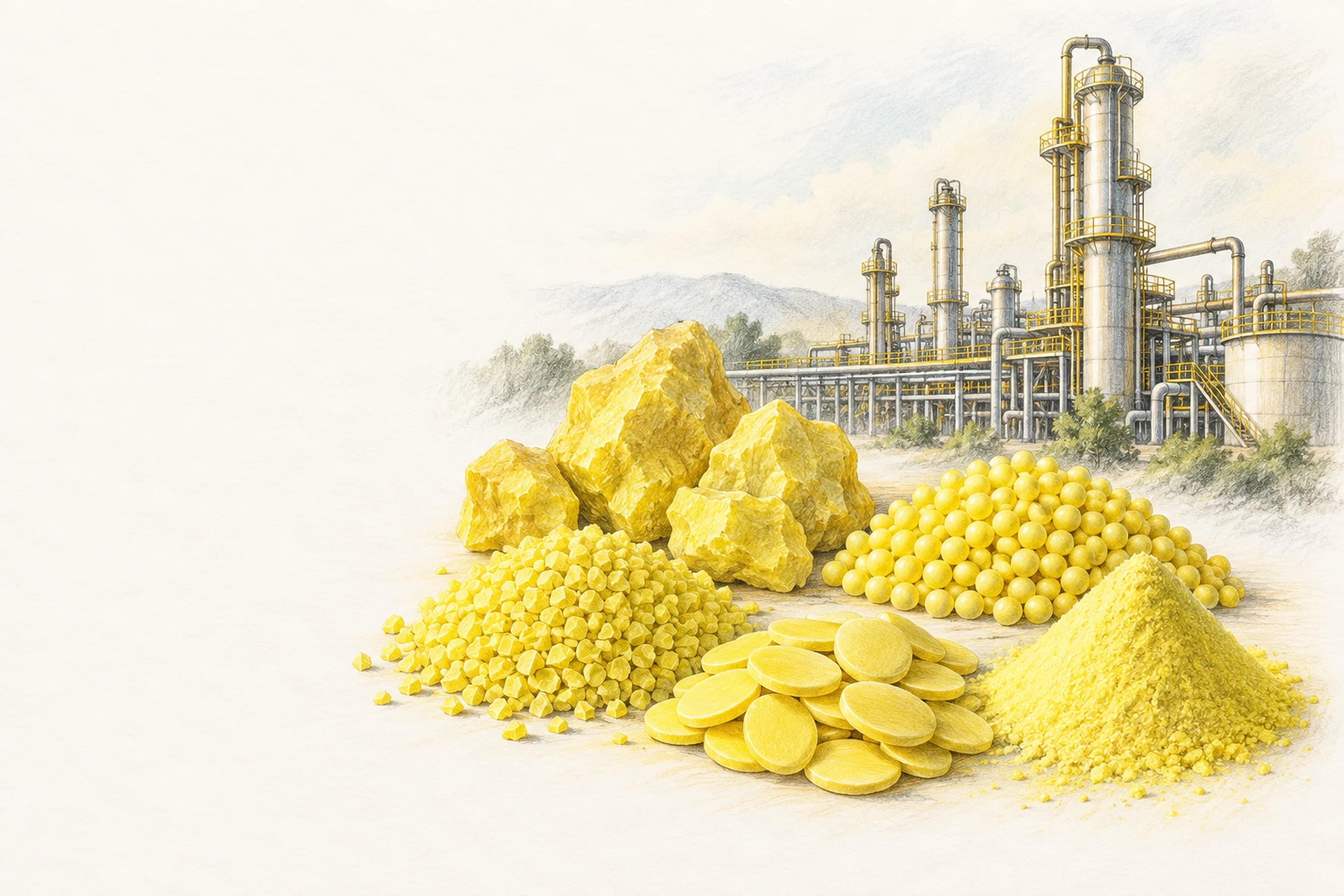
Under the International Maritime Solid Bulk Cargoes (IMSBC) Code, sulphur is not one cargo but two. Formed sulphur, such as prills, granules and pastilles, has its own schedule. Crushed, lump and coarse-grained sulphur is shipped under a separate schedule as UN 1350, and the difference affects stowage, documents and the precautions a ship applies. This guide summarises the practical points; the current IMSBC Code text is the authority.
How lump sulphur is classified
| Item | Crushed, lump and coarse-grained sulphur | Formed sulphur (prills, granules, pastilles) |
|---|---|---|
| IMSBC group | Group B (chemical hazard) | Group C |
| Dangerous goods class | UN 1350, Class 4.1 flammable solid | Not subject to the IMDG Code when formed to a specific shape |
| Fines | Fine-grained sulphur (flowers of sulphur) may not be carried in bulk | Formed product is expected to be low in fines |
The reason is dust. Irregular lumps carry fines and generate more as they are handled, and fine sulphur dust can ignite and explode. Formed products, when made and handled well, contain little dust, which is why they sit in a lower hazard group.
Precautions that typically apply
The schedule and the ship's procedures set the details, but buyers should expect the following themes:
- Ignition control. No smoking, hot work or naked flames near holds during loading and discharge; electrical equipment in cargo spaces suitable for dusty atmospheres or isolated.
- Dust control. Minimising free-fall height and wind exposure during loading, and limiting the amount of fines in the cargo.
- Separation. Keeping the cargo away from heat sources and segregating it from oxidising materials and other incompatible cargoes.
- Hold condition. Clean, dry holds, often protected with a lime wash or coating, because wet sulphur forms acid that corrodes steel.
- Ventilation and monitoring. Attention to the atmosphere in holds, since sulphur cargoes can release small amounts of hydrogen sulphide and, if burning, sulphur dioxide.
Moisture and corrosion
Lump sulphur is often shipped damp. Water on sulphur, especially with bacterial action, produces acid that attacks steel holds and can lead to iron sulphide deposits. Iron sulphide can heat and ignite when it dries and meets air. That is why owners pay so much attention to hold preparation and why post-discharge cleaning and washing of holds is thorough. Buyers may see these costs reflected in freight terms.
Cargo data you may be asked for
Before loading, the shipper must provide cargo information to the master, including the proper shipping name, UN number, moisture content and bulk density. Reference data list lump sulphur at around 1,050 to 1,180 kg per cubic metre, though each cargo should be declared on its own figures. An SDS is normally attached to the cargo declaration.
Discharge and receiving
At the receiving port, the same principles continue: control dust when grabbing and trucking, keep ignition sources away, and avoid leaving loose sulphur on quays and in drains. Grabs and hoppers should be cleaned after use. Receiving stockpiles should be on a hard pad that drains to collection, since run-off from sulphur piles is acidic.
Lump sulphur ships fine in bulk when it is clean, low in fines and loaded into well-prepared holds. Most problems start with dust or water.
For smaller volumes, lump sulphur can also travel in bags or bulk containers. The dangerous goods classification then follows the packaged-goods rules rather than the bulk schedule, so check the requirements for UN 1350 with your forwarder before booking.
Arranging lump sulphur shipments
When enquiring, state the quantity, discharge port and its handling equipment, any limits on fines and moisture, and whether you need FOB, CFR or CIF terms. Ask for the cargo declaration, SDS, CoA and any independent survey you require. Nuroil can supply lump sulphur on FOB UAE ports or CFR and CIF terms; request a quote with your port details.