
Technical document

· PDF

Tell us who you are and the document downloads straight away. We use these details only to follow up on your requirement.

Samples & documents

What can we send you?

Tick what you need
Request a quote
Guide3 min read5 sections

Knowledge centre · Sulphur

Lump sulphur end uses and the quality each one needs

Where lump sulphur is used, from acid plants to ground sulphur, and which quality points matter most for each application.

Written by the Nuroil trade desk, Sharjah

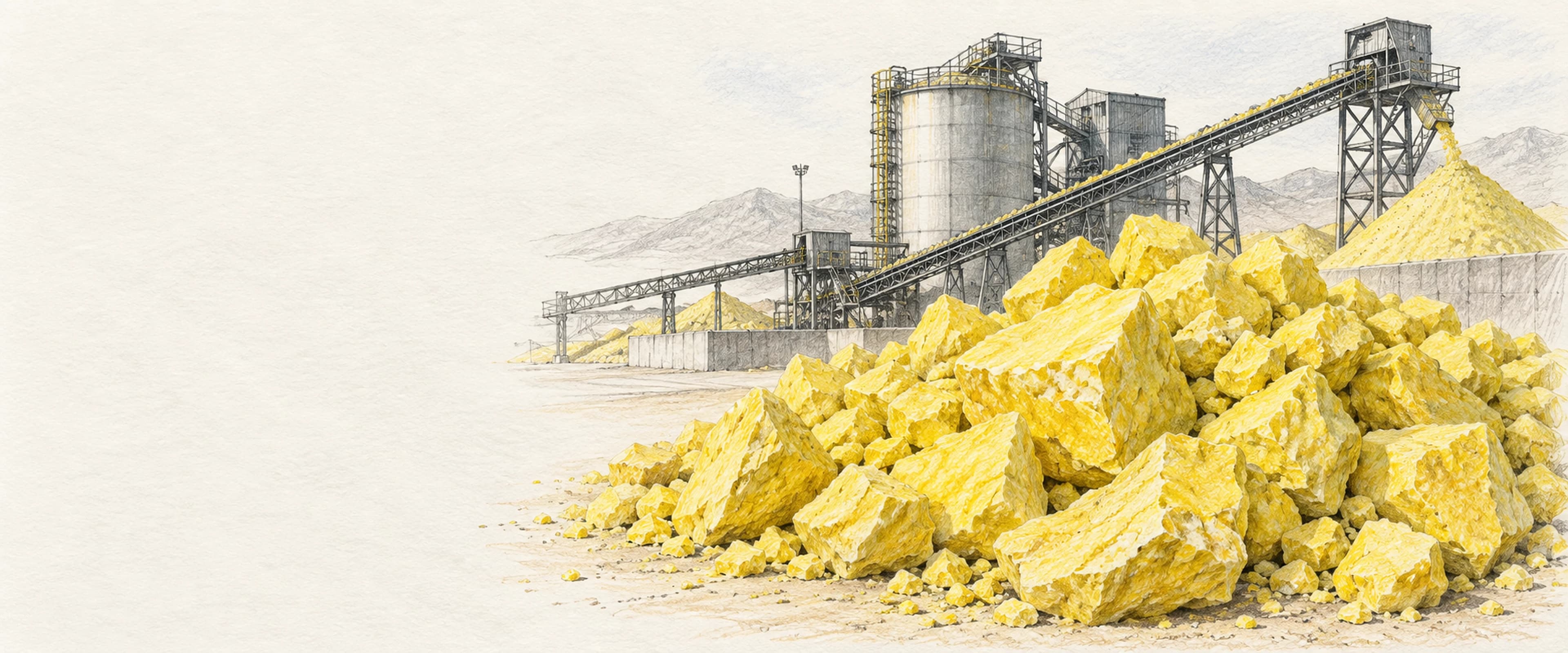
Pencil sketch of sulphur lumps at a terminal
On this page · 5 sections
  1. 01The main end uses
  2. 02Summary table
  3. 03When lump is not the right choice
  4. 04Lump size and your equipment
  5. 05Specifying lump sulphur for your use

Lump sulphur is the simplest solid form of elemental sulphur: pieces broken from solidified blocks or stockpiles rather than shaped in a forming plant. It is usually the lowest-processed form on offer, and it suits buyers who will melt or grind it anyway. This guide matches the main end uses with the quality points each one depends on.

The main end uses

01

Sulphuric acid plants

Sulphuric acid is by far the largest use of elemental sulphur. Acid plants melt the sulphur, filter it and burn it to sulphur dioxide, which is then converted to sulphur trioxide over a catalyst and absorbed to make acid. Since the sulphur is melted first, shape does not matter, which makes lump a practical feed for plants with a solid sulphur melter.
02

What matters

purity, ash (which can foul the converter), carbon (which darkens the acid and adds filter load), acidity (which corrodes the melter) and moisture.
03

Sulphur chemicals

Elemental sulphur is a raw material for sulphur dioxide and sulphites used in pulp, food and water treatment, for carbon disulphide, for sulphur chlorides and for many other sulphur compounds. Most of these processes also melt or vaporise the sulphur.
04

What matters

high purity and low carbon, plus low arsenic, selenium and tellurium for products that end up in food, pharmaceutical or high-purity applications.
05

Ground sulphur for rubber and industry

Rubber vulcanisation uses finely ground sulphur, and ground sulphur also goes into some pigments, matches and specialty chemicals. Producers of these powders often buy lump or other solid sulphur and mill it under controlled conditions.
06

What matters

purity, low ash and grit (which affect product quality and wear mills), low acidity and a clean, consistent colour.
07

Agricultural sulphur

Finely ground sulphur is used as a fungicide dust, as a soil amendment to lower pH, and as a raw material for sulphur fertilizers. Lump sulphur is not applied to fields as it is; it is first ground or processed into a fertilizer product.
08

What matters

purity and low levels of contaminants that could reach soil, plus the grinding fineness of the final product, which governs how quickly soil microbes can convert it to plant-available sulphate.

Summary table

End useProcessed by buyer asKey quality points
Sulphuric acidMelted and filteredPurity, ash, carbon, acidity, moisture
Sulphur dioxide and sulphur chemicalsMelted or vaporisedPurity, carbon, trace elements
Ground sulphur (rubber, industry)Crushed and milledPurity, ash and grit, acidity, colour
Agricultural sulphurMilled or formulatedPurity, contaminants, final fineness

When lump is not the right choice

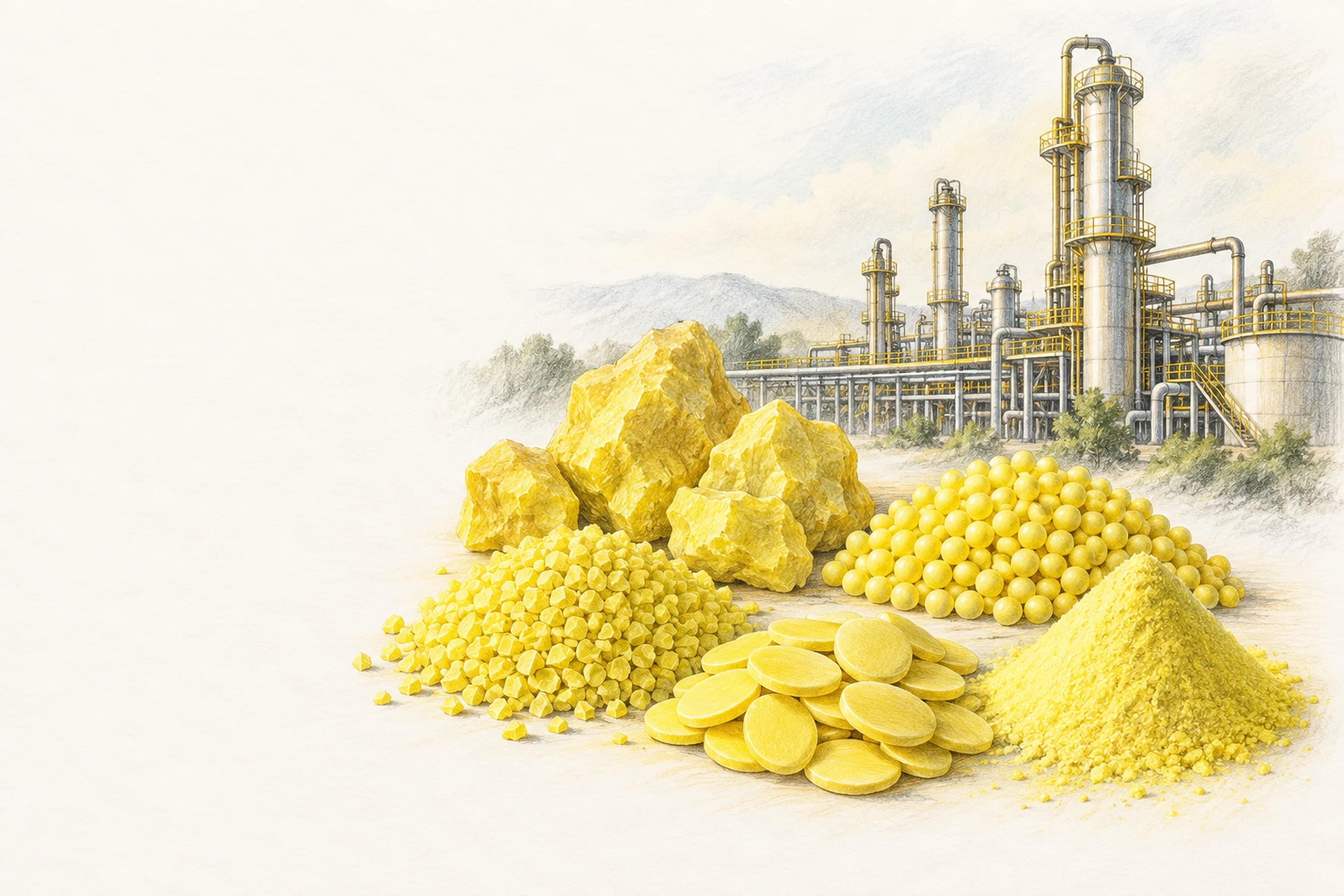
Lump sulphur is less suited to buyers without a melter or crusher, to automated handling systems designed for free-flowing material, and to sites where dust control is difficult. It also ships under stricter bulk cargo rules than formed sulphur. In those cases formed products such as granules or prills may be worth the extra processing. The general comparison of sulphur forms is covered on our sulphur page.

Lump sulphur makes sense when the buyer will melt or grind it anyway and has the equipment to handle dust safely.

Lump size and your equipment

Lump sulphur is not a sized product, so pieces can range from fines to large chunks. Before ordering, check what your receiving equipment can handle: grab and hopper openings, crusher feed size, conveyor widths and the largest piece your melter can take without bridging. If oversize is a problem, you can ask for a maximum lump size, accepting that extra crushing at origin may add fines. If fines are the bigger concern, ask for a limit on material below a stated size.

Specifying lump sulphur for your use

Tell your supplier the end use, the processing route on your site and the limits that matter for it, including maximum lump size, fines, and any trace element limits. Ask for a CoA per lot and the SDS. Nuroil sources lump sulphur from established producers and supplies a CoA with every delivery; request a quote with your application and volume.
PRODUCTS IN THIS GUIDE
KEEP READING

More from the Knowledge Centre.

STILL HAVE A QUESTION?

Ask the people who trade it every day.

Our trade managers answer technical and commercial questions about grades, specifications, packing and shipping.

LET’S TALK ABOUT YOUR REQUIREMENTS

Your next shipment starts here.

Request a quote