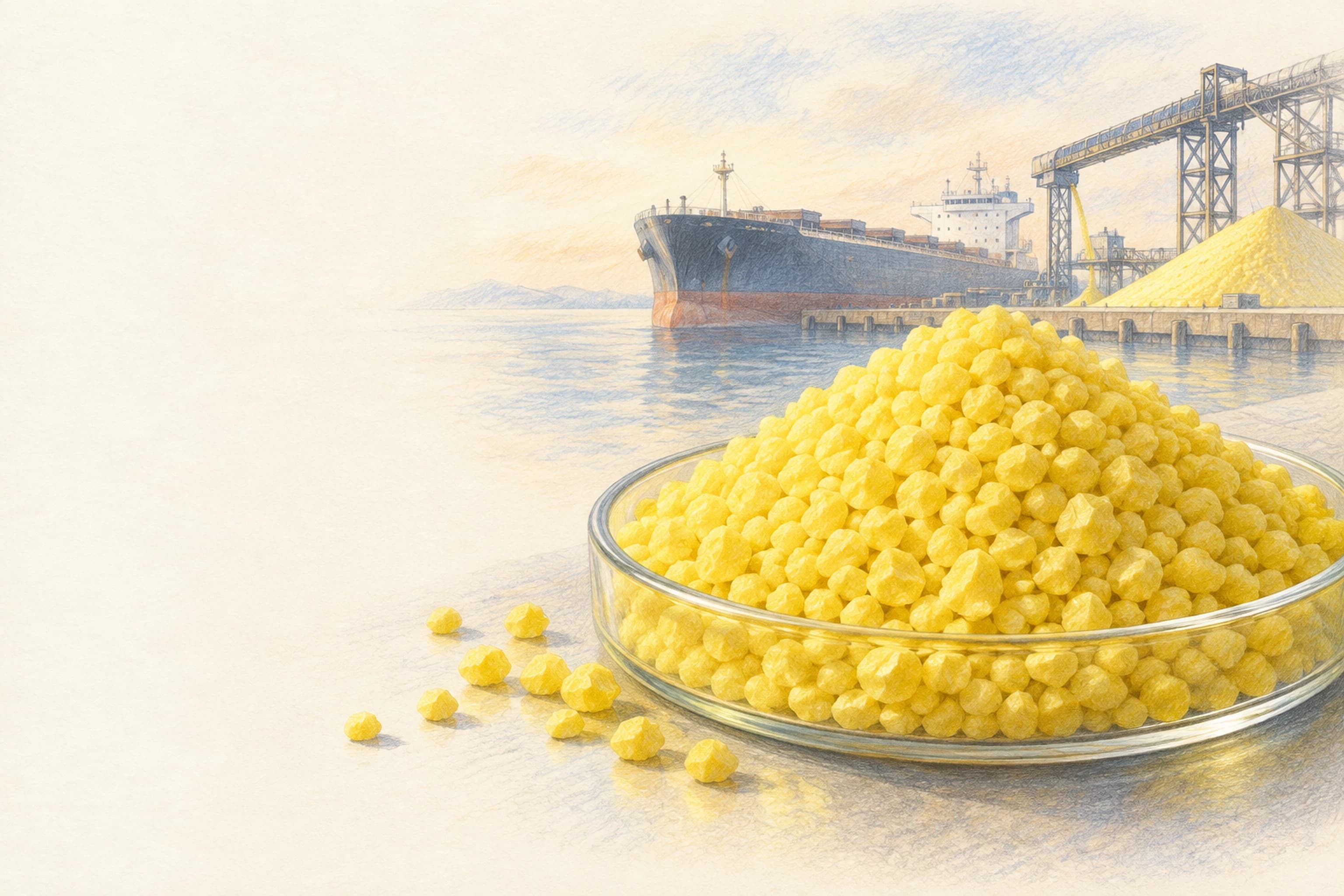
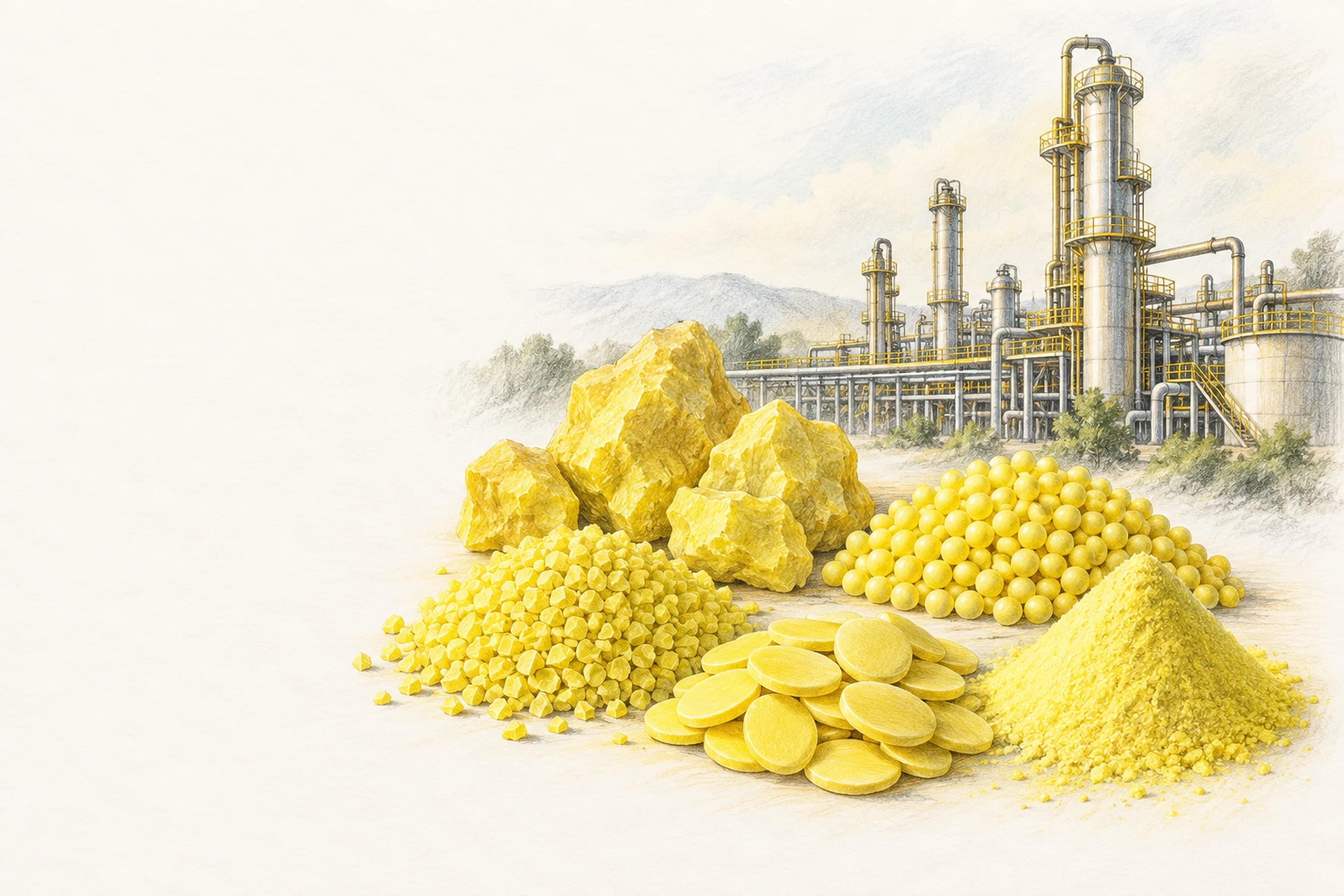
Granular sulphur is a traded form of elemental sulphur that suits users who want a clean, free-flowing solid. The same cargo might go to an acid plant, a fertilizer granulation line or a chemical maker, and each buyer reads the certificate with different priorities. This guide summarises the main end uses and what matters to each, so that you can write an enquiry that fits your process.
Why buyers choose the granular form
- It flows freely from hoppers and through conveyors and feeders.
- It makes far less dust than crushed lump sulphur, which reduces fire risk and losses.
- It melts quickly and evenly in melters.
- It ships well in bulk and in bags.
Uses at a glance
| End use | How sulphur is used | Main specification points |
|---|---|---|
| Sulphuric acid production | Melted, filtered and burned to sulphur dioxide | Purity, ash, carbon, moisture, acidity |
| Fertilizer manufacture | Ground and granulated with clay, or co-granulated with phosphates and nitrogen | Purity, size range, fines, moisture |
| Sugar mill sulphitation | Melted and burned; sulphur dioxide used to clarify cane juice | Purity, low ash, low organic residue |
| Sulphur chemicals | Feedstock for sulphur dioxide, sulphites, thiosulphates and other compounds | Purity, specific impurity limits from the process |
| Rubber | Raw material for ground or insoluble sulphur vulcanising agents | Purity, low ash and acidity; processed before use |
| Soil amendment | Slow source of sulphate and acidity in alkaline soils | Purity, size range; agronomic advice on rate |
Sulphuric acid and other melting users
Acid plants are by far the largest users of elemental sulphur. They melt it, filter out solids and burn the liquid. Ash adds to filter load, carbon can darken the sulphur and moisture affects melting. Our sulphur page covers the acid route more broadly.
Fertilizer makers
Fertilizer producers grind elemental sulphur finely before combining it with swelling clay or with phosphate and nitrogen granules, because only fine sulphur oxidises quickly enough in soil to feed a crop. For them, consistent size and low fines make grinding and feeding easier, and purity sets the nutrient content of the finished product.
Sugar mills
Many plantation white sugar mills use sulphitation, in which sulphur dioxide from a sulphur burner treats the cane juice. Mills generally keep the sulphur molten at about 135 to 140 °C and pump it into the burner. Low ash and low organic residue help keep burners running steadily and reduce cleaning.
Rubber
Rubber compounders use sulphur as a vulcanising agent, but they rarely use commodity granules directly. They need finely ground sulphur, or insoluble sulphur, a specially processed form that prevents sulphur blooming on the surface of uncured rubber. Granular sulphur is a raw material for producers of these grades. Rubber chemical makers usually set tight limits on ash and acidity.
The same granular sulphur can serve many industries; what changes is which lines on the certificate the buyer reads first.
Agriculture
Plain granular sulphur releases sulphate slowly, because soil bacteria oxidise it only at the particle surface. It is mainly used for gradual pH correction of alkaline soils, under agronomic advice, or as a raw material for faster-acting sulphur fertilizers.
Safety is common to every use
Whatever the end use, the same handling rules apply on site. Keep sulphur away from oxidising agents, control ignition sources and static where dust can form, and avoid raising dust clouds when cleaning. Users who melt sulphur also need controls for hot liquid and for hydrogen sulphide in tank headspaces. The product SDS sets out the full precautions.
Writing your enquiry
Tell the supplier your end use, the chemical limits, the size range and maximum fines, and whether you need bulk, bulk bags or smaller bags. Ask for a CoA, MSDS and, if needed, certificate of origin and independent inspection. Nuroil supplies granular sulphur worldwide on FOB, CFR or CIF terms with a CoA for every delivery. Send details through the quote request form or the contact page.